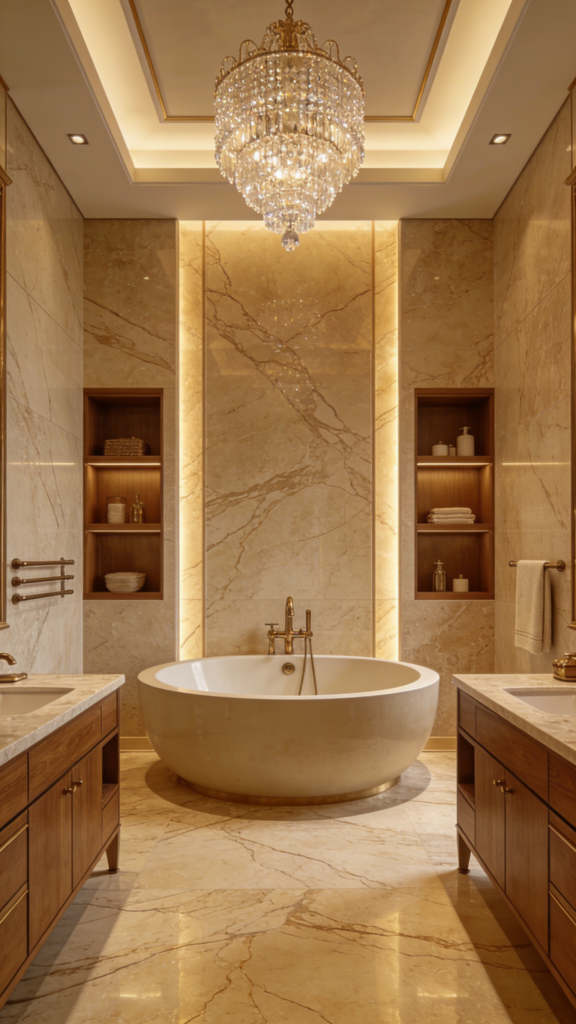

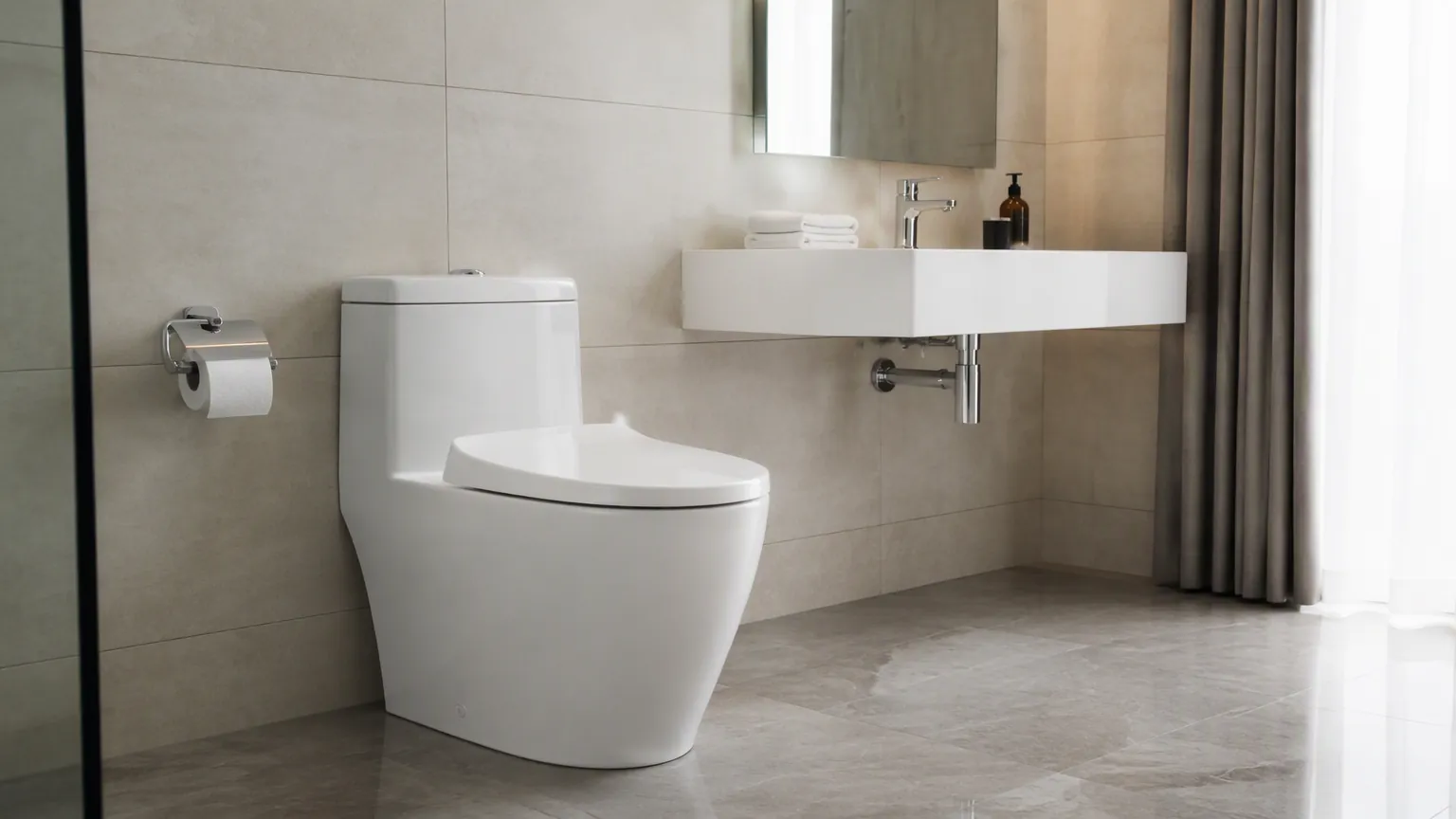
A handover meeting in Doha stalled for ninety minutes over three words. The consultant’s specification said vitreous china. Its proforma invoice said ceramic sanitary ware. And the customs broker’s entry said porcelain sanitary fixtures. Still, everyone at the table assumed somebody was lying. The fixture sat in a wooden crate while three people argued about what it was made of.
In fact it was made of all three, depending on who was talking. That is the uncomfortable truth about vitreous china: the name is not a grade, a ranking, or a quality tier. It is a dialect. Once you know which dialect you are hearing, the argument disappears, and a much more useful question takes its place. So what number was on the test report, and who ran it?
Why One Fixture Carries Three Names
Three industries touched that crate, and each one has its own vocabulary for the same object. Standards writers use the fixture term because their documents are built around plumbing fixtures. Factory sales teams say ceramic because their production lines are described that way in export catalogues. Customs officers say porcelain because the tariff schedule is decades old. So nobody at the port has any reason to update that language.
Yet none of them is wrong, and that is precisely the problem. So a specification that only names a material leaves a gap. Without a measurable limit, whoever fills in the paperwork first sets the definition. In practice that person works for the supplier.
The contractors who stop losing this argument do something simple. Instead, they stop treating the name as the requirement and start treating it as a shorthand label pointing at a number.
What Vitreous China Actually Means
A glazed ceramic body becomes this material when a kiln fires it hot enough to vitrify. The clay matrix then turns dense and glass-like rather than porous. As a result, the body absorbs very little water. For example, the North American fixture standard writes that limit into the material definition itself. The ASME code and standards catalogue carries the plumbing fixture standard for this material, and it pairs the name with a maximum water absorption figure. Also, the companion Canadian standard follows the same structure.
So the word vitreous is doing real work. It refers to the glassy, non-porous state of the fired body, not to the glaze you can see. A fixture can carry a thick, glossy glaze and still sit on a body that drinks water. That fixture fails the standard while looking perfect in a photograph.
Then comes the part that surprises most buyers. In practice the standard does not ask you to believe the word. Instead it asks you to boil a sample and weigh it.
Where Ceramic and Porcelain Sit in the Family
Ceramic is the family, not a member of it. Any inorganic, non-metallic solid that heat hardens belongs in that family. For instance, the range runs from a terracotta flower pot to an insulator on a power line. The general definition of ceramic covers an enormous range of bodies, firing temperatures, and end uses.
Porcelain, meanwhile, sits inside that family as a narrower category. Porcelain is a dense, usually white-bodied ware fired at high temperature. The standard description of porcelain ties it to vitrification and low porosity. The sanitary ware industry, in turn, uses its own working name for a glazed and vitrified body. That name covers basins, pans, urinals, and bidets in practice.
So read that as a set of nesting boxes. Every fixture in this category is ceramic. In most commercial contexts it is also reasonable to call it porcelain. The reverse does not hold, though. Plenty of ceramics are not porcelain, and a porcelain dinner plate has nothing to do with a floor mounted pan.
This is why the crate in Doha carried three honest labels. The labels were describing nesting boxes from three different vantage points.
The Only Number That Survives an Argument: Water Absorption
Water absorption is the measurement that cuts through the vocabulary, because it is the one number everyone can test. A technician dries a sample of fired body and weighs it, then boils it and weighs it again. The gain in mass is then expressed as a percentage of the dry weight. The ASTM standards catalogue includes the classic test method here. It covers water absorption, bulk density, apparent porosity, and apparent specific gravity of fired whitewares.
The reason this number matters is simple and physical, and our porcelain toilet material guide shows where it sits among the other quality checks. Water that gets into the body carries dissolved salts, and salts that crystallise inside a pore exert pressure. In a freeze-thaw climate, absorbed water expands on freezing. In a hot, humid plant room, absorbed water keeps the body permanently damp. Over time it stains through the glaze from behind.
A body under a half percent of absorbed water has almost no open porosity. None of those mechanisms has anywhere to go. That threshold separates a fixture lasting twenty years from one staining in year four. The name on the crate does neither.

How Vitreous China Is Made, and Where Quality Slips
Sanitary ware is made by slip casting. A liquid clay slurry goes into a plaster mould. The mould draws water out of the slurry, and a shell of clay builds against the mould wall. The operator drains the excess slurry once the wall reaches the right thickness. Workers dry, finish, and glaze the green body. Then a kiln fires it hot enough to vitrify the body and mature the glaze in one cycle.
Every one of those steps has a failure mode that a name cannot detect. Drain the slip too early and the wall is thin. Dry too fast and hairline cracks form in the green body. The glaze hides them, and the kiln turns them into a visible fault. Fire too cool and the body stays porous while the glaze still looks glossy. Fire unevenly and one end of the batch vitrifies while the other does not.
Kiln logs are the tell. Our ceramic toilet bowl guide goes deeper into production checks. A factory that can show you firing curves and holds them inside a narrow band is telling you something real. A factory that only tells you the product name is telling you nothing you can verify.
How Vitreous China Is Written in Four Different Documents
The same fixture travels through four documents on its way to a site. Each one uses a different word for the same object.
A specification says this material, and it should say it alongside an absorption limit and a test method. Our porcelain vs ceramic toilet comparison covers how the two labels get used in practice. A factory quotation says ceramic sanitary ware, because that is how export catalogues and production planning systems are organised. A customs entry says porcelain because tariff schedules predate today’s marketing language. The code does not move just because a consultant prefers another word. A marketing page says the same fixture term, because the phrase sounds technical and expensive.
Then a fifth document appears, and this is where projects get hurt. The test report, if anyone asks for it, may not exist. Asking for the report is the whole game. Absorption figures, glaze resistance results, and load test data turn a dialect argument into an engineering one.
The Vitreous China Premium: What You Are Really Paying For
Vitreous china has a reputation as an upgrade, and factories price against that reputation. A quotation that lists that term as a line item upgrade over ceramic is selling a word.
Sometimes the price difference is real and the word is just doing the marketing. Better bodies cost more, and the reasons are concrete. The raw material blend is more consistent, the firing cycle is longer, and the rejection rate at final inspection is higher. Factories write off cracked and warped units rather than patching and shipping them. Those costs are genuine, and they show up in the unit price.
The way to tell the two apart is to ask what the number is. The certification checklist for importers shows what a credible document set looks like. Check what comes with the upgrade. A stated absorption figure, a load test result, and a glaze resistance rating mean you are buying performance. If the upgrade comes with a paragraph of adjectives, you are buying typography.
Contractors who run volume programmes tend to settle on a blunt rule. Pay for the test data, never for the noun.
What Two Decades of Service Actually Depend On
Absorption gets a fixture through the door. Several other things decide whether it still serves twenty years later. Glaze quality comes first in daily use. A glaze with micro-pinholes collects staining that no cleaning schedule removes. A poorly matured glaze dulls under the abrasive side of a cleaning pad within a year.
Body thickness and structural design come next. A pan carries point loads at the seat fixing and at the floor contact without cracking. It has to keep doing that after a decade of thermal cycling and chemical cleaning. Wall thickness at the bolt holes is where cheap bodies split.
Batch consistency decides whether a phased project still matches in year three. Ceramic bodies and glazes shift slightly between production runs. So a white that matched in phase one can read a shade warmer in phase three. Build a project in stages and the risk multiplies. The specification should require batch-matched supply from a single firing schedule, or the client should accept a visible seam.
Then there is the installation, which ruins more good fixtures than any factory. Volume buyers should pair this section with the bulk porcelain toilet buying guide. Over-torqued floor bolts crack the base. A pan set on an uneven bed flexes under load and eventually splits. A cistern hung on a frame that was never levelled puts a permanent twist into the body.
Verifying Vitreous China at Delivery: A Ten-Minute Routine
Most of the verification you can do on site is non-destructive, and it takes minutes per unit.
Start with the tap test. Flick a well-fired body with a coin or a small spanner. It rings with a clear, high tone. A porous or cracked body gives a dull thud. The difference is obvious once you have heard both, and a trained ear can walk a pallet quickly.
Then inspect the glaze under raking light. Hold a lamp at a low angle across the surface. Look for pinholes, orange peel, and dull patches that indicate an underfired zone. Check the areas nobody photographs. Start with the underside of the rim, then the trapway entrance and the rear of the pedestal.
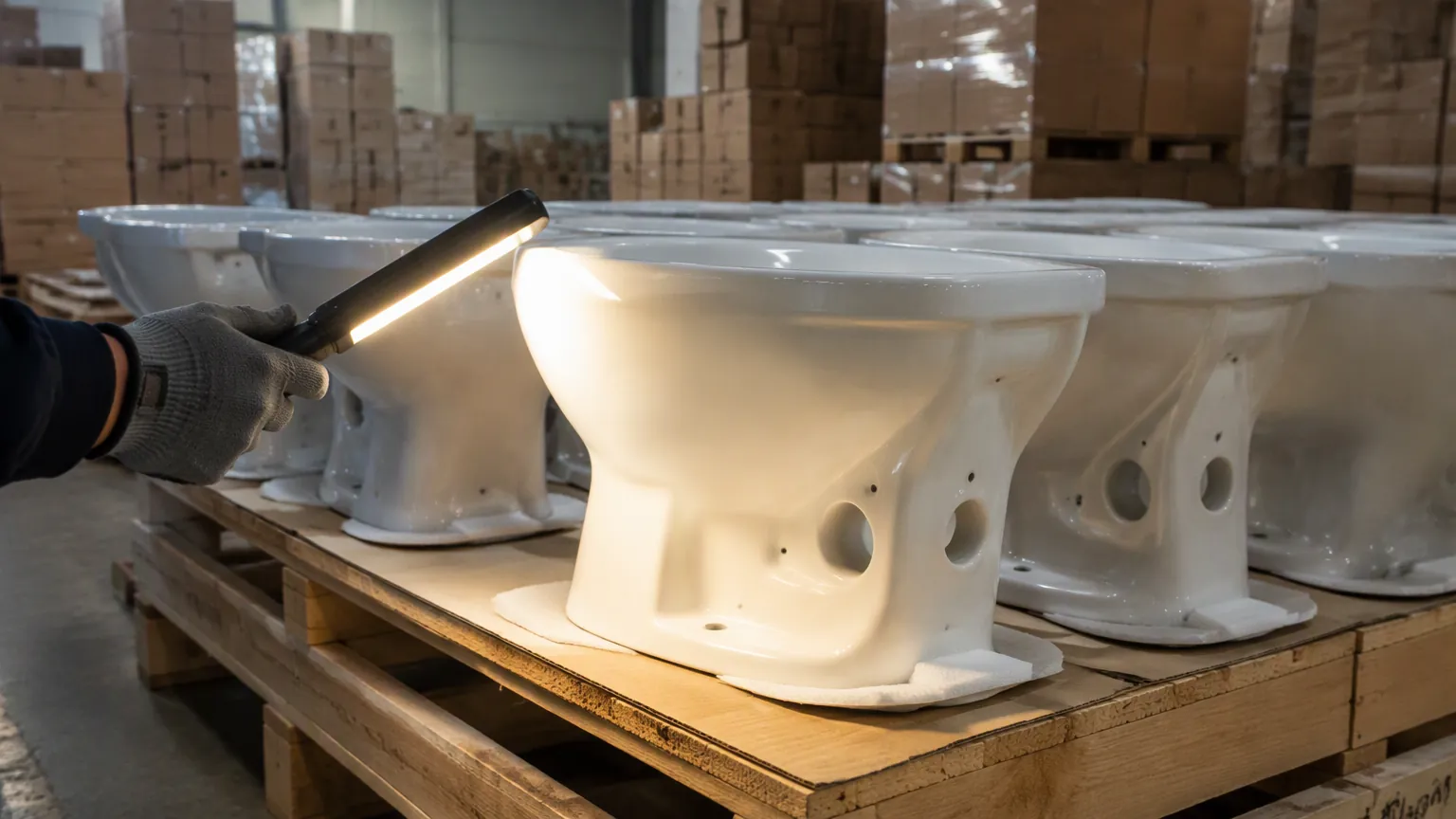
Weigh two units from the same batch against each other. Large unexplained variation suggests inconsistent wall thickness, which correlates with over-fast casting or an uneven mould.
Finally, ask for the absorption test report and read the method line. A figure with no method behind it is decoration. Confirm the report covers the same model as the shipment. Ideally it covers the same production period too, because a two-year-old report says nothing about the kiln load in front of you.
Where the Standards Disagree
Standards bodies write for their own markets, and the differences show up in the details that matter at handover.
North American fixture work runs through the ASME and CSA structure mentioned above. Those standards define the material alongside an absorption limit and fixture performance requirements. European work runs through the EN fixture standards, and the European standards catalogue indexes those documents. They frame material suitability and flushing performance together, rather than treating the body as a separate question. Gulf projects frequently add a national layer. SASO covers Saudi Arabia, and the GSO standardisation body operates across the wider region. Both may require conformity documentation beyond the base standard.
The practical consequence catches people out. One fixture can be compliant in one market and incomplete in another, with nothing wrong with the fixture itself. Any supplier who ships into all three regions will have the paperwork on file. One who is surprised by the question has not shipped there before.
Water performance certification adds another layer. In the United States, the EPA WaterSense product programme sets flush volume and performance criteria for labelled toilets. Many international green rating schemes borrow the figure. Note what that certification covers: water. It says nothing about the body, so a WaterSense label is not evidence of a vitrified body.
Specification Language That Ends the Argument
One paragraph in the specification prevents the entire Doha meeting. The pattern that works looks like this.
Name the material, then immediately name the limit and the method. State that absorption shall not exceed half a percent when tested to the cited method. Then require the test report to accompany the shipment. Add a glaze requirement, because absorption alone does not stop staining. Require batch-matched colour for phased deliveries. Finally, state which national conformity documentation applies for the destination market.
Two sentences do all of that, and they convert an unenforceable noun into a measurable clause. Pair them with the porcelain toilet supplier procurement checklist before you issue the RFQ. The argument stops because there is nothing left to interpret.
Vitreous China at a Glance
| Term | What it actually covers | Where you will see it |
|---|---|---|
| Ceramic | The whole family of heat-hardened inorganic, non-metallic materials | Factory quotations, export catalogues |
| Porcelain | A dense, vitrified, usually white-bodied ceramic | Customs entries, tariff schedules |
| Vitreous china | Glazed, vitrified sanitary ware body, defined with an absorption limit | Specifications, standards, marketing pages |
| Water absorption | The measurable property that separates a durable body from a porous one | Test reports, nowhere else |
The bottom row is the one that matters. Everything above it is vocabulary.
Frequently Asked Questions
Is one name better than the other?
The question does not resolve, because vitreous china is a kind of ceramic. Ask a better question instead. Does the body meet the absorption limit in the relevant standard, and can the supplier produce a test report?
Is it the same thing as porcelain?
In sanitary ware, the two usually describe the same object from different angles. Porcelain is the materials term. The fixture industry term arrives paired with a measurable limit.
Why does the invoice say ceramic when the specification asks for this material?
Because factories describe production by family, not by fixture standard. Ask for the test report rather than a corrected invoice, since the report is what settles compliance.
Does a WaterSense or similar water label prove the body is vitrified?
No. Water labels cover flush volume and flushing performance. Body density is a separate test with a separate method.
Can absorption be checked without destroying a unit?
Not directly. The standard method requires a sample. So projects either accept a reported figure with a method reference, or arrange destructive testing on a sacrificial unit.
Does a heavier fixture mean a better body?
Usually, but not always. Extra weight can come from a thicker section, which generally helps. It can also come from an over-thick glaze hiding a coarse body. Pair weight with the tap test and the paperwork.
Verdict
That crate in Doha contained exactly what the specification asked for. The meeting cost ninety minutes because three documents used three honest words, and no document used a number.
Treat the name as shorthand, never as a requirement. The requirement is a water absorption limit, cited with its test method. Support it with a report from the same production period, then add a glaze clause and a batch-matching clause for phased work. Write those four things into the specification and the argument never starts. The supplier either produces the number or does not get the order.
Then spend the saved time where the risk actually lives. Tap the bodies and rake the glaze. Check the bolt holes, and read the kiln data if the factory will share it. Vitreous china is the right word, and it was never the point.