
You are specifying toilets for a 40-unit apartment building. The client wants “good quality ceramic toilets.” You call three suppliers to compare **porcelain vs ceramic toilets**. One says their toilets are “vitreous china.” Another claims “ours are real porcelain — stronger and more durable.” The third says “they are the same thing.”
Who is right? The short answer: **porcelain and ceramic toilets are made from the same base material — kaolin clay, feldspar, and quartz — fired at high temperature. But the firing process creates measurable differences in water absorption, durability, and price.** This guide explains what those differences mean for your projects.
If you are comparing **porcelain vs ceramic toilets** for a commercial project, the choice matters more than most contractors realize. For a residential guest bathroom, it barely matters at all. Here is how to decide.
Porcelain vs Ceramic Toilets: What the Terminology Actually Means
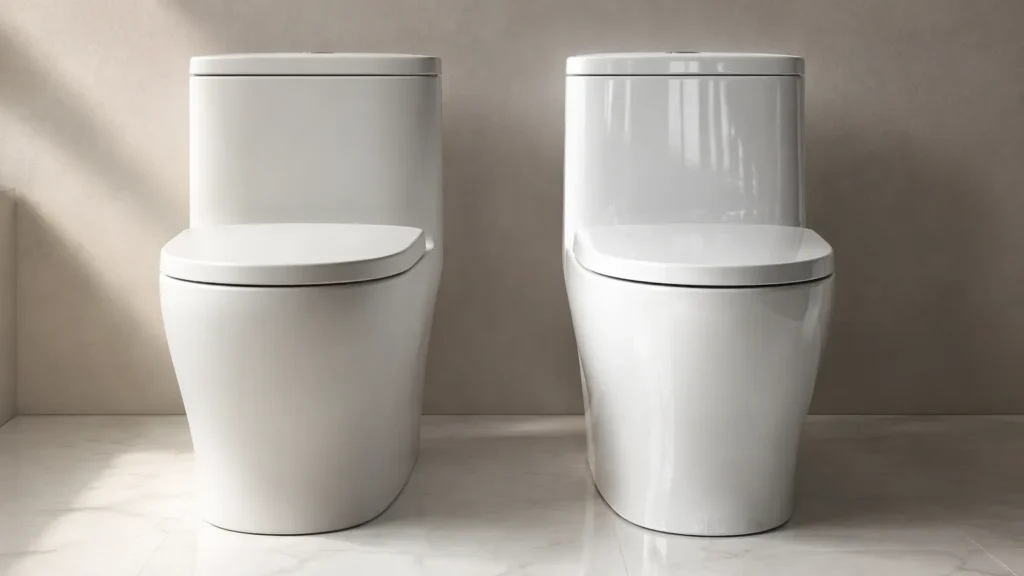
The difference between **porcelain vs ceramic toilets** starts with understanding what these terms mean in the sanitary ware industry. “Ceramic” and “porcelain” are often used interchangeably. Technically, all porcelain is a type of ceramic. But manufacturers distinguish them by two measurable criteria: firing temperature and water absorption rate.
| Property | Standard Ceramic (Vitreous China) | True Porcelain |
|---|---|---|
| Water absorption | 0.5% — 3.0% | < 0.5% |
| Firing temperature | 1,200°C — 1,250°C | 1,250°C — 1,300°C |
| Glaze type | Single layer standard glaze | Denser, often double-glazed |
| Relative strength | Good for most residential use | Higher, preferred for commercial |
In practice, most toilets labeled “ceramic” in the US and European markets are actually **vitreous china** — a specific ceramic type with a glass-like surface that makes it waterproof and stain-resistant. True porcelain goes through higher firing temperatures that create a denser body with significantly less porosity.
The key takeaway: when you compare **porcelain vs ceramic toilets**, the single most important number to ask for is the water absorption rate. Everything else follows from that number.
Difference #1: Water Absorption — The Most Important Metric in Porcelain vs Ceramic Toilets
A toilet body that absorbs moisture over time will become heavier as water seeps into microscopic pores. It can develop surface cracks after freeze-thaw cycles — which matters for unheated vacation homes or outdoor restroom facilities. It can also harbor bacteria in micro-pores, making sanitation harder to maintain. And it can show staining that cannot be cleaned because the pigment has penetrated below the glaze.
- **True porcelain:** water absorption below 0.5%. Suitable for commercial restrooms, outdoor installations, and high-moisture environments. This is the standard to specify when comparing **porcelain vs ceramic toilets** for demanding applications.
- **Vitreous china (standard ceramic):** water absorption between 0.5% and 3.0%. Adequate for most indoor residential installations. Specifiers who understand the **porcelain vs ceramic toilets** distinction use this threshold to match material to the project environment.
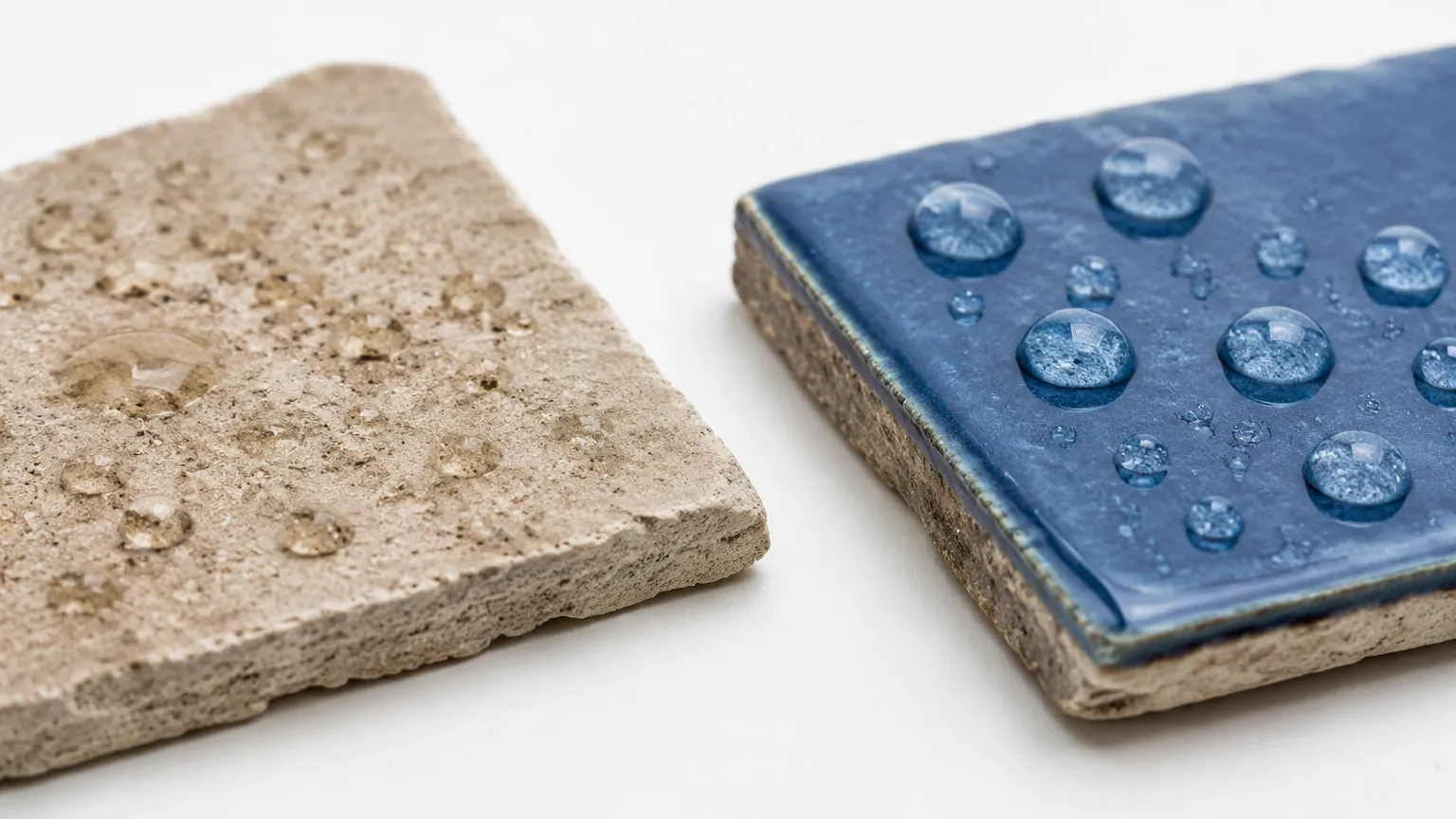
Do not ask “is it porcelain or ceramic.” Ask for the water absorption test report per ASTM C373 or EN 997. Without a report within 48 hours, treat the product as standard vitreous china regardless of its label.
**Quick check:** A factory that tests and publishes water absorption numbers usually has consistent quality control. One that only says “it is good quality” without data may signal lower manufacturing standards.
Difference #2: Glaze Quality and Durability in Porcelain vs Ceramic
The second meaningful difference between **porcelain vs ceramic toilets** is the glaze.
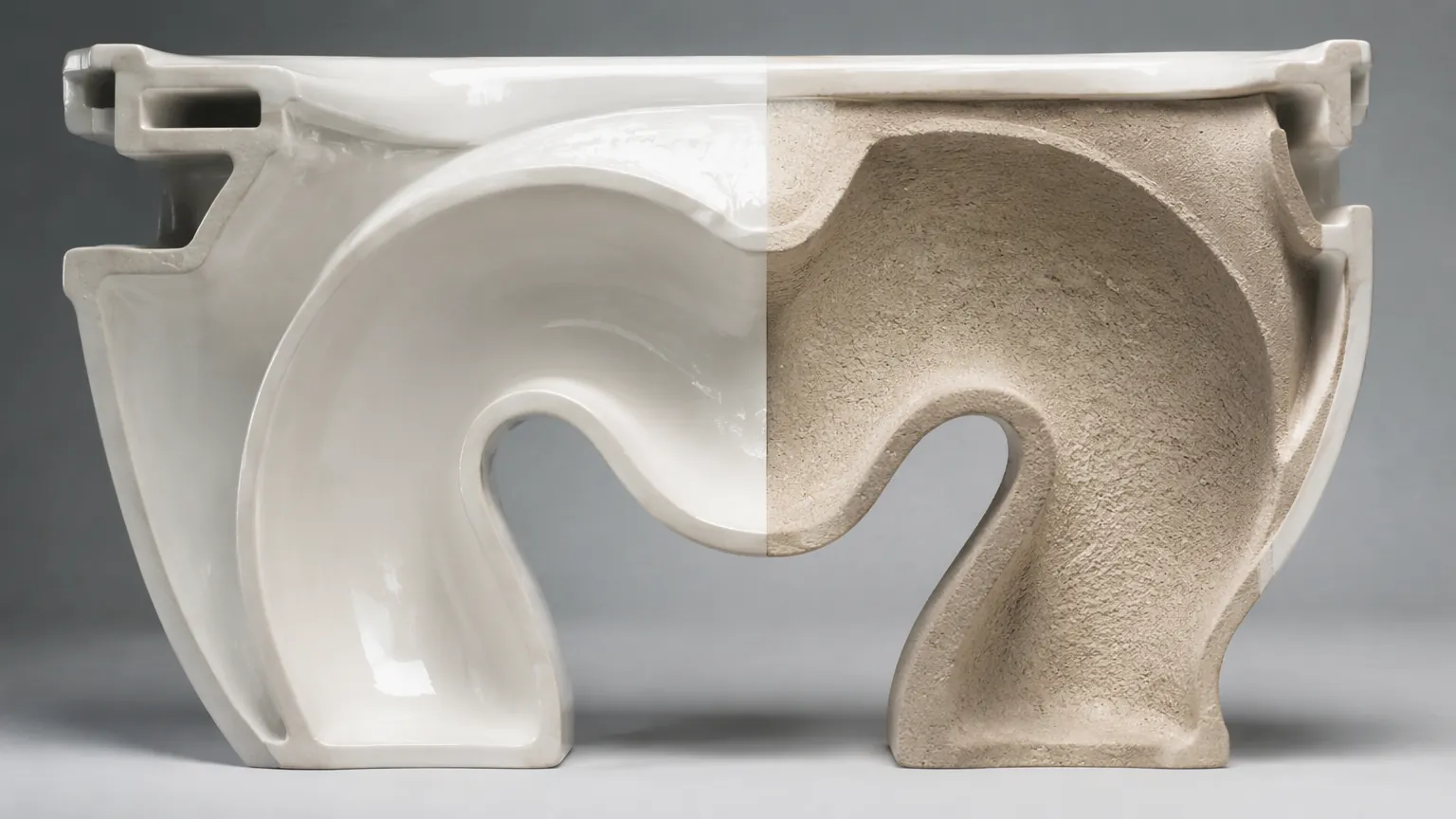
Verify whether the **trapway** — the curved channel inside the toilet base — is fully glazed. On many toilets, only the exterior surfaces get full glaze coverage. The trapway is sometimes left unglazed or partially glazed to save cost. An unglazed trapway collects waste and odors over time and is much harder to clean. This detail can matter more than the **porcelain vs ceramic toilets** debate. A ceramic toilet with a fully glazed trapway outperforms a porcelain one with a bare channel.
When a supplier claims their toilets are premium, ask if the trapway is fully glazed. This single question reveals more about their quality standards than any marketing brochure.
Difference #3: Price Comparison at the Wholesale Level
| Type | One-piece | Two-piece |
|---|---|---|
| Standard vitreous china | $45 — $65 | $25 — $40 |
| True porcelain (< 0.5% absorption) | $60 — $90 | $35 — $55 |
| Premium porcelain (double-glazed) | $75 — $120 | $45 — $70 |
When to Specify Porcelain vs Ceramic Toilets
| Installation scenario | Recommended type | Why |
|---|---|---|
| Residential guest bathroom | Standard vitreous china | Cost-effective, adequate durability |
| Residential master bathroom | Either | Personal preference; both work well |
| Apartment complex (rental units) | Vitreous china, reinforced glaze | Balance cost and turnover durability |
| Hotel guest rooms | Porcelain preferred | Higher traffic justifies the upgrade |
| Hotel public restrooms | Porcelain required | Continuous cleaning demands durability |
| Outdoor or unheated bathroom | Porcelain required | Freeze-thaw resistance is mandatory |
| Healthcare facility | Porcelain, antibacterial glaze | Sanitation requirements |
| School or institutional | Porcelain recommended | Heavy daily use cycles |
Summary: Porcelain vs Ceramic Toilets Side by Side
| Criterion | Standard Ceramic (Vitreous China) | True Porcelain |
|---|---|---|
| Water absorption | 0.5% — 3.0% | < 0.5% |
| Firing temperature | 1,200 — 1,250°C | 1,250 — 1,300°C |
| Glaze | Single layer | Double layer or denser |
| Scratch resistance | Moderate | High |
| Freeze-thaw suitable | No | Yes |
| Commercial use | Limited | Recommended |
| Weight (two-piece) | 25-30 kg | 30-38 kg |
| FOB price (two-piece) | $25 — $40 | $35 — $70 |
| Typical lifespan | 10-15 years | 15-25 years |
MaP and Flush Performance: Why It Matters in Porcelain vs Ceramic Toilets
When comparing **porcelain vs ceramic toilets**, the flush mechanism often gets overlooked. The material determines durability, but the flush determines whether the toilet works well daily.
The industry standard for measuring flush performance is the MaP (Maximum Performance) score. MaP testing measures how many grams of solid waste a toilet clears in a single flush. A score of 600g or higher is considered good. Scores below 350g indicate poor performance, regardless of whether the body is porcelain or ceramic.
- **1,000g MaP score:** Premium performance. Suitable for commercial restrooms and high-traffic installations.
- Porcelain Toilet Buying Guide for Contractors (https://www.yidabath.com/porcelain-toilet-buying-guide-contractors/)
- Siphonic vs Wash-Down Toilet Flush Guide (https://www.yidabath.com/siphonic-vs-wash-down-toilet-flush-guide/)
- Browse Toilet Product Sets (https://www.yidabath.com/sets/toilet/)
- View Our Certifications (https://www.yidabath.com/certificate/)
- Contact Us (https://www.yidabath.com/contact-us/)
- ASTM C373-18 Standard Test Method for Water Absorption (https://www.astm.org/c0373-18.html)
- EN 997:2018 Ceramic WC Pans with Integral Trap (https://www.en-standard.eu/bs-en-997-2018-ceramic-wc-pans-with-integral-trap/)
- MaP Testing – Maximum Performance (https://www.map-testing.com/)
600-1,000g: Good performance. Adequate for most residential and light commercial use.
350-600g: Acceptable but not ideal. May require double flushing in heavy use.
Below 350g: Avoid. These models will generate complaints.
Check the MaP score before specifying. A well-designed siphonic flush in a vitreous china body outperforms a poor gravity flush in a premium porcelain body.
Three Specification Mistakes to Avoid
Many toilets sold as “porcelain” in the US market meet only the vitreous china standard. For most indoor residential jobs, this is irrelevant. But for a project with freeze-thaw exposure or heavy commercial cleaning, that mis-specification becomes a warranty risk. Always verify with the water absorption test report.
A standard vitreous china toilet in a single-family guest bathroom will perform well for decades. Paying the porcelain premium on every unit in a residential development adds $40-80 per fixture without measurable benefit. Reserve porcelain for high-traffic or demanding environments.
The bowl material matters, but the flush mechanism determines daily performance more than whether the body is porcelain or ceramic. A well-designed siphonic flush in a vitreous china toilet will outperform a poor gravity flush in a porcelain body. Check the MaP (Maximum Performance) score regardless of material choice.
What to Ask Suppliers
When evaluating a toilet supplier, ask these specific questions:
1. “What is the water absorption rate per ASTM C373 or EN 997?”
2. “Is the trapway fully glazed?”
3. “What is the glaze type — single or double layer?”
4. “What is the firing temperature in degrees Celsius?”
5. “Do you have MaP test results for flushing performance?”
6. “What certifications does this model have — cUPC, CE, SASO, or WaterMark?”
A quality supplier answers all six without hesitation. A supplier who cannot answer the water absorption and trapway questions is selling on price, not on quality.
Real Project Example: Porcelain vs Ceramic Toilets on Site
A contractor in Chicago won a bid for a 120-unit apartment renovation in 2023. The spec called for “porcelain toilets.” He sourced from a new supplier offering “commercial-grade porcelain” at vitreous china prices. The first 50 units arrived with patchy trapway glaze. The contractor asked for the water absorption report. The supplier could not produce one.
He switched to a different manufacturer. This time he verified water absorption (0.3%) and fully glazed trapways in writing before ordering. The porcelain premium added $18 per unit, but two years into the project, this batch has had zero callback issues. The first batch? Nine callbacks came in the first year. All related to odor complaints from unglazed trapways that could not be properly cleaned.
The lesson: verify the numbers, not the label.
FAQ
For commercial projects, high-traffic restrooms, or outdoor installations, choose porcelain for its lower water absorption and higher durability. For standard residential bathrooms, vitreous china is perfectly adequate and more cost-effective.
Check the water absorption test report. True porcelain tests below 0.5% per ASTM C373. When no test report is available, treat the product as vitreous china regardless of its label.
In many cases, yes. A well-glazed vitreous china toilet can outperform a poorly glazed porcelain one. Always check for fully glazed trapways — this often matters more than the ceramic vs porcelain classification.
Porcelain. Its lower water absorption makes it more resistant to cleaning chemicals, scratching, and staining. For hotels, schools, and healthcare facilities, specify true porcelain with double glaze.
At wholesale level, true porcelain costs 20-40% more than standard vitreous china. A two-piece porcelain toilet typically ranges from $35-70 FOB China, compared to $25-40 for standard ceramic.
Standard vitreous china is not recommended for unheated or outdoor installations. Freeze-thaw cycles can cause micro-cracks in the body. Use true porcelain for any installation exposed to freezing temperatures.
Ask for three documents: water absorption test report, MaP flushing test results, and certification for your target market (cUPC, CE, SASO, or WaterMark). Suppliers who provide all three without delay are likely reliable partners.