

A hotel project in Dubai came back with a familiar complaint: guests kept pulling the hand shower out of its cradle, and the fixed rain head never got used. The spec called for a “shower head set,” but nobody defined how the two outlets should switch. The result was a row of chrome fixtures that frustrated everyone and a maintenance team that could not find spare parts. This guide explains what a 2 way shower head really is, which diverter design survives daily commercial use, and how to source it without repeating the same mistake.

What Is a 2 Way Shower Head?
A 2 way shower head is a single shower outlet that serves two spray functions. The usual pairing is a fixed rain head plus a handheld unit, or two spray patterns on one handheld. These two families serve different installation contexts, and contractors often confuse them.
The first family is the dual-outlet system: one wall or ceiling mount, one handheld shower, and a diverter that sends water to either outlet.
The second family is the two-mode handheld. It is a single head with a push-button or twist collar that switches between a wide spray and a concentrated jet. Both are marketed as “2 way,” but they install differently, cost differently, and fail differently.
Why it matters: ordering the wrong family means ordering the wrong rough-in. A dual-outlet system needs a two-outlet valve or diverter built into the wall; a two-mode handheld only needs a standard shower arm. If your project drawings call for one and procurement buys the other, the callback is on you.
Diverter Design: The Part That Actually Fails
In commercial bathrooms, the diverter is the first component to fail. A cheap rotary diverter with plastic internals wears out after roughly 15,000-20,000 switches, which a 200-room hotel can hit in under two years. The most durable designs use a ceramic disc cartridge, the same technology found in modern faucets, rated for 500,000 cycles.
Three diverter types dominate the market:
| Diverter type | How it works | Best for | Typical failure |
|---|---|---|---|
| Push-button | Spring-loaded button shifts water between outlets | Handheld + rain combos | Spring fatigue, leaking past the button |
| Rotary / twist | Turn the collar to align internal ports | Wall-mounted dual outlets | Worn seals, stiff operation |
| T-bar / lever | Lift a lever on the head itself | Two-mode handhelds | Internal O-ring wear |
Why it matters: a diverter that leaks past the cartridge wastes hot water and creates a temperature swing when someone flushes. Specify ceramic-disc diverters for hospitality projects and ask the supplier for the cycle rating in writing. If the factory cannot quote a cycle rating, treat that as a red flag.
Dual-Function vs. Single-Function Shower Heads
A single-function head does one job: a fixed rain head delivers a wide, low-pressure spray, while a standard handheld delivers a narrow jet. A dual-function head tries to deliver both from one installation, and that flexibility has a price.
| Factor | Single-function | Dual-function head |
|---|---|---|
| Installation cost | One outlet, one arm | Valve + diverter + two outlets |
| Parts count | Low | Higher; more to fail |
| Guest satisfaction | Predictable | Higher when specified well |
| Maintenance | Simple | Diverter service needed |
| Unit cost (FOB China) | $1.5-$5 | $4-$20 depending on body |
For a budget motel with a single shower arm, a two-mode handheld gives most of the flexibility at near-single-function cost. For a four-star property, a fixed rain head plus a handheld with a ceramic-disc diverter is the configuration guests actually praise in reviews. Match the product family to the project grade, not to the brochure.
Materials and Finishes for Dual-Function Shower Heads
The body material determines the price floor and the service life. ABS plastic bodies dominate the entry tier, stainless steel the mid-tier, and brass the premium tier. Chrome is still the default finish for commercial projects. It is cheap, durable, and easy to match, but matte black and brushed nickel are now common in boutique hotels.
| Body material | Durability | Surface options | FOB China (MOQ 100-500) |
|---|---|---|---|
| ABS plastic | 3-5 years typical | Chrome, matte black, white | $2.5-$6 |
| 304 stainless steel | 8-12 years | Brushed, chrome, PVD | $6-$15 |
| Brass | 15+ years | Chrome, brushed nickel, PVD gold | $12-$25 |
Why it matters: plastic bodies with chrome plating are fine for residential flips, but hotel maintenance crews replace them within a few years because the plating peels around the spray face. For projects with a five-year warranty, specify stainless or brass bodies and request a salt-spray test report (ASTM B117, 48 hours minimum) from the factory.
Flow Rate and Pressure Requirements
Flow compliance is a legal requirement, not a preference. In the United States, the federal maximum for shower heads is 2.5 GPM. This standard was set by the Energy Policy Act of 1992. California enforces 1.8 GPM, and WaterSense-labeled units meet 2.0 GPM while passing a spray coverage test. The EU follows a voluntary 9 L/min scheme, and Australia’s WaterMark requires compliance with AS/NZS 3662.
For a dual-function head with a diverter, the flow rating applies to each outlet individually. A common specification error occurs when a buyer orders a 2.5 GPM head for a California hotel. The local code caps the whole shower at 1.8 GPM. Confirm the destination state or province before you place the order, and ask for the flow data printed on the packaging.
Why it matters: a shower that delivers 2.5 GPM in a 1.8 GPM jurisdiction fails inspection and costs you a reorder. Ask the factory for a pressure-flow curve, and verify it against the project’s supply pressure. Low-rise buildings often sit at 45-60 psi, while high-rise towers need pressure-reducing valves to keep the top floors from starving the shower.
Threads, Connections, and Rough-In Compatibility
Standard shower arms use 1/2-inch NPT in North America and G1/2 BSP in most other markets. Most Chinese factories ship G1/2, which is compatible with 1/2-inch NPT for practical purposes but not identical. Always confirm the thread spec before bulk ordering.
For a dual-outlet configuration, the rough-in needs a three-port valve or a diverter body: one inlet, two outlets. If the project is still at the drawing stage, specify the valve model early so the plumber installs the right manifold. Retrofitting a diverter into an existing single-outlet wall is a demo job, not a swap.
Handheld units connect with a 1.5-meter stainless steel braided hose, standard 1/2-inch connections on both ends.
Confirm the hose length and the connection type in the spec; cheap hoses kink and blow out at the crimp within a year of daily use.
Certifications and Standards to Require
Certifications should match the destination market, not the supplier’s brochure. A factory can hold ten certificates, and none of them may apply to the exact model you are buying.
| Market | Requirement | What to verify |
|---|---|---|
| USA | ASME A112.18.1 / CSA B125.1, EPA WaterSense optional | Model listed on cert, 2.5 GPM max |
| California | Title 20 (1.8 GPM) | Model-specific flow listing |
| EU | EN 1112 / EN 1113, CE marking | Notified body, not self-declared |
| Australia / NZ | WaterMark, AS/NZS 3662 | License covers the exact model |
| Middle East | SASO / GSO where applicable | Certificate for the importing country |
Why it matters: importing a non-compliant shower head into Australia without WaterMark is a customs rejection and a chargeable offense. Ask the supplier for model-specific certificates before you pay, and keep PDF copies in your project file. If the supplier says “we have CE,” ask which standard it covers; CE on a shower head should reference EN 1112 or EN 1113, not a generic machinery directive.
2 Way Shower Head Wholesale Sourcing: What to Ask the Factory
When you source dual-function shower heads at wholesale, the price is only the opening bid. The questions below separate a trading company from a factory that can actually ship a compliant product.
Why it matters: the same-looking chrome head sells for $3 and for $9 on Alibaba. The difference is usually the cartridge, the plating thickness, and the QC process. For a project with a defect warranty, the $3 head is the expensive one.
Wholesale Price Ranges for a 2 Way Shower Head
Pricing below reflects FOB China estimates with a MOQ of 100-500 units per model, as of mid-2026. For instance, the price gap between ABS and brass bodies grows significantly at container scale. Freight, duties, and certification costs add 15-40% depending on the destination.
| Product type | FOB China per unit | MOQ | Lead time |
|---|---|---|---|
| ABS two-mode handheld | $2.5-$5 | 200-500 pcs | 20-30 days |
| Stainless dual-outlet set | $7-$14 | 100-300 sets | 25-35 days |
| Brass dual-outlet set, ceramic diverter | $14-$25 | 100-200 sets | 30-45 days |
| Premium set with PVD finish | $22-$40 | 100 sets | 35-50 days |
Small orders under 100 units typically add 15-30% per unit. Custom finishes or private-label packaging add tooling or setup fees of $300-$1,000. Compare landed cost, not unit price: a $3 head that fails at 12 months costs more than a $12 head that survives a five-year warranty period.
Common Specification Mistakes
The mistakes below come from real procurement cycles, and each one produced a callback or a reorder. As a result, the contractor absorbed both the material cost and the labor to fix it.
Mistake 1: ignoring the flow code. A California project ordered the standard 2.5 GPM head and failed inspection. The reorder cost the margin on the whole job.
Mistake 2: buying two-mode handhelds when the drawing showed dual outlets. The plumber had roughed in a diverter valve that the two-mode head never used.
Mistake 3: skipping the cartridge spec. The low-bid head used a plastic rotary diverter; after 14 months of daily use, guests complained about weak flow because the diverter was stuck halfway.
Mistake 4: one finish for the whole building. The spec said chrome, but the interior designer specified matte black on the vanity faucets. As a result, the shower heads had to be reordered in matte black at a 30% premium.
Mistake 5: no spare parts in the first order. When the hoses failed, the maintenance team could not find a matching crimp style, and the property had to buy full sets at retail.
FAQ
What is a 2 way shower head?
It is a shower fixture that delivers two functions from one installation. Either a fixed rain head pairs with a handheld unit, or a single handheld offers two selectable spray modes. Confirm which family the drawing requires before ordering.
Can I install a dual-function head on an existing single shower arm?
A two-mode handheld will fit a standard shower arm directly. A dual-outlet system needs a diverter valve or a three-port body, which usually requires opening the wall.
Is a dual-function shower head the same as a shower system?
No. A shower system includes the valve, the mixer, and sometimes a thermostat. The head itself is the outlet assembly. The two work together but are specified separately.
Which flow rate should I order for a hotel in the USA?
Check the state code first. The federal ceiling is 2.5 GPM, California enforces 1.8 GPM, and WaterSense products meet 2.0 GPM with better spray coverage. Order per model per destination.
How long does a ceramic diverter last?
Quality ceramic-disc cartridges are rated for 500,000 cycles, roughly 10+ years in a commercial bathroom. Plastic rotary diverters typically wear out in 2-3 years.
What is the typical MOQ for wholesale dual-function shower heads?
Most Chinese factories quote 100-500 units per model, with higher MOQs for matte black or custom finishes. Some accept 50 units at a 15-30% unit premium.
Do I need WaterMark for Australia?
Yes. Shower heads sold in Australia must carry WaterMark certification and comply with AS/NZS 3662. Importing without it risks customs rejection.
Contractor’s Checklist
- Are you the manufacturer or a trading company? Ask for a factory visit or a live video walkthrough of the production line.
- Which diverter cartridge do you use, and what is its cycle rating? Demand the brand and the test report.
- Do you have model-specific certificates for the destination market? Ask for PDFs, not screenshots.
- What is the MOQ per model and per color? Matte black finishes often carry a higher MOQ.
- What is the lead time for a container order? A 20-foot container holds roughly 8,000-12,000 shower heads depending on packaging.
- Can you provide a pressure-flow curve for each model? If not, ask for a sample test first.
- What is the warranty and the spare-parts policy? For hospitality, ask for diverter cartridges and hoses as spares with the first order.
- Confirm the product family: dual-outlet system or two-mode handheld
- Verify the diverter type and ceramic-disc cycle rating
- Match the flow rate to the destination code (2.5 / 2.0 / 1.8 GPM)
- Confirm thread spec: G1/2 BSP or 1/2-inch NPT
- Check rough-in compatibility with the specified valve
- Require model-specific certificates for the destination market
- Order spare cartridges and hoses with the first shipment
- Compare landed cost, not unit price
- Get a pressure-flow curve or test a sample before the container order
Related Guides
- Exposed vs Concealed Shower System: Which to Specify
- Shower Enclosure Buying Guide for Contractors
- Frameless vs Framed Shower Enclosure: Contractor Guide
- Wholesale Bathroom Faucets: Contractor Sourcing Guide
- How to Choose a Bathroom Manufacturer in China
- Bathroom Supplier in Saudi Arabia: Procurement Guide
Maintenance and Care for Dual-Function Shower Heads
Commercial shower heads accumulate mineral deposits, soap residue, and limescale faster than residential units. The reason is higher daily usage. A regular maintenance routine keeps the spray pattern consistent and extends the service life of both the body and the diverter cartridge.
Finish Care by Material
Stainless steel heads clean up with a soft cloth, warm water, and a mild pH-neutral cleaner. For hard water deposits, a monthly soak in equal parts water and white vinegar for 30 minutes restores the shine without damaging the surface. Abrasive pads or acidic cleaners will scratch the brushed finish.
Brass heads benefit from occasional polishing with a dedicated brass cleaner. As a natural alternative, a half-cut lemon rubbed on the surface or a thin coat of ketchup removes light tarnish. Avoid acidic or abrasive cleaners on unlacquered brass, as they strip the protective layer.
ABS plastic bodies with chrome plating are the most sensitive to harsh chemicals. Clean with warm soapy water and a soft cloth. A monthly soak in warm vinegar solution prevents limescale buildup around the spray face. Dry with a microfiber cloth after each cleaning to prevent water spots.
Diverter and Hose Maintenance
Inspect the diverter mechanism every six months, especially in properties with hard water. Mineral buildup around the cartridge can cause stiffness and premature wear. Flush the system every quarter by running hot water through both outlets for two minutes. Check hose connections at both ends for any signs of corrosion or leaking at the crimp; replace hoses proactively rather than waiting for a blowout.
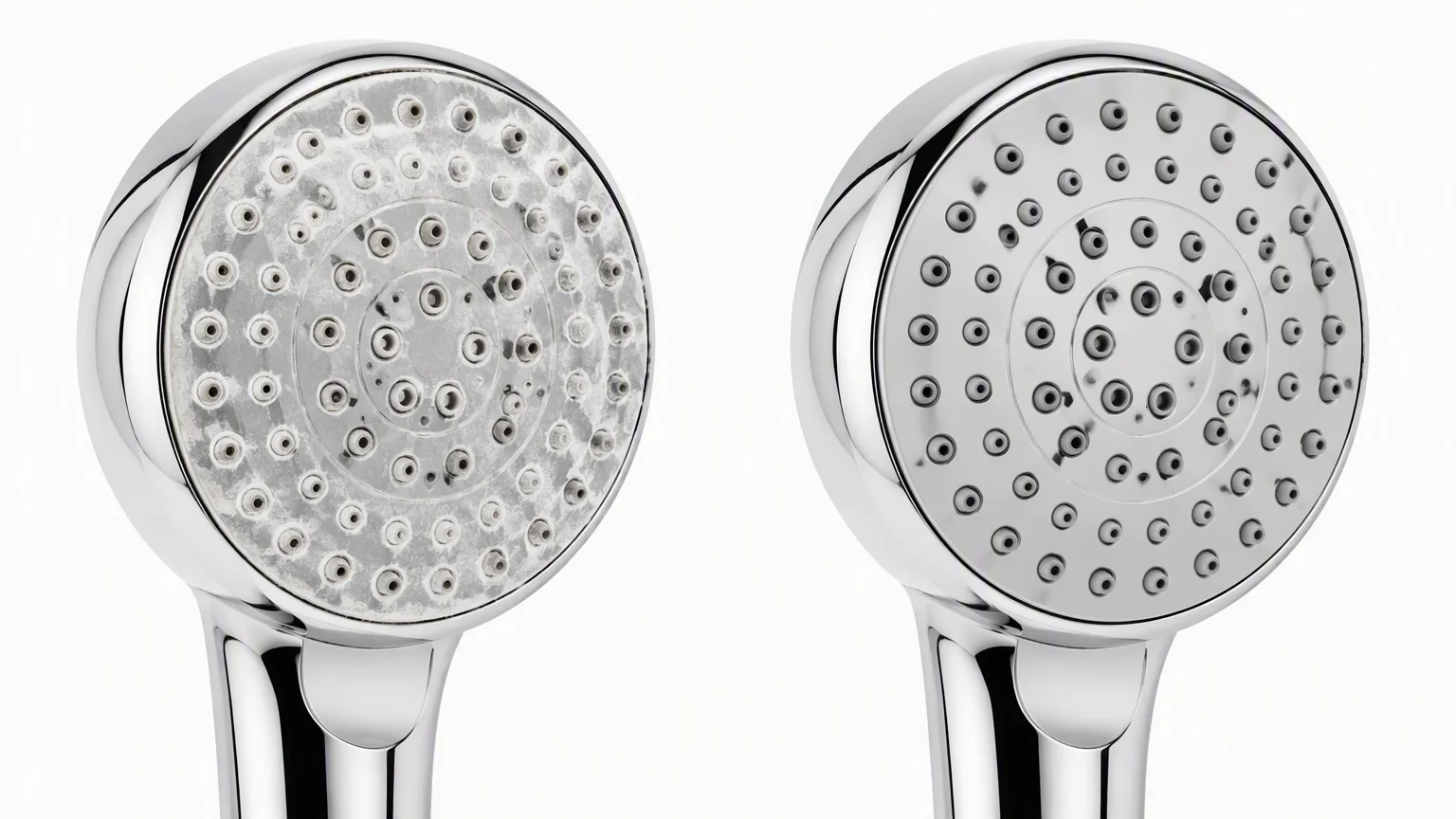
Spray nozzle cleaning is often overlooked. Unscrew the face of the handheld or the rain head, then soak it in white vinegar for 30 minutes. This dissolves the calcium deposits that restrict flow. Clogged nozzles reduce the spray pressure and create uneven coverage that guests notice immediately.
A hotel maintenance log should include a monthly checklist. Inspect the diverter, check hose condition, clean the spray face, and verify that both outlets deliver full pressure. This takes 15 minutes per unit and prevents most callbacks.
Total Cost of Ownership: Why the Cheapest Unit Is Not the Least Expensive
The unit price is only part of the landed cost. A $3 shower head that fails at 18 months costs more than a $12 unit that lasts five years. When you factor in replacement parts, labor, and room downtime during the swap, the math is clear.
A hospitality property with 200 shower heads in service should calculate total cost of ownership over the warranty period. Do this before deciding on a supplier. The math is straightforward. Multiply the unit cost by 200, then add freight and duties. Next, estimate maintenance per head per year using the diverter cycle rating and the supplier’s spare-parts policy.
For a stainless steel head with a ceramic-disc diverter rated at 500,000 cycles, the expected service life in a commercial setting is 8-12 years. In contrast, a plastic rotary diverter lasts 2-3 years in the same conditions. The $7-9 price premium per unit translates into thousands of dollars saved over the property lifetime.
Contractors who specify only on unit price often end up managing callbacks instead of new projects. The architect who quotes the $12 head and a five-year warranty builds a reputation for durability that wins the next job. The one who specifies the $3 head to win the bid manages callbacks for two years.