A facilities manager in Riyadh was replacing 80 toilets across four staff housing blocks. Every supplier quoted a different model, and every quote claimed to be the best value for money. After the first batch arrived, three bowls had hairline glaze cracks and two flush valves leaked within a month. The problem was never the price. Nobody had specified the bowl by the characteristics that actually matter. This guide fixes that, so your specification survives the project handover and the first year of use.
Why the Right Choice Matters
The fixture is the most-specified item in commercial and residential projects, yet it is also the one most often chosen on price alone. That is a mistake with real consequences: a poor glaze absorbs stains and odors, weak flushes clog in daily use, and a mismatched seat or rough-in turns into a callback. Each failure costs far more than the few dollars saved at purchase.
The selection process is not complicated once you know the four decision layers. Glaze quality comes first, then bowl shape and size, then flush system performance, then supply-side verification. This guide walks through each layer in the order experienced buyers apply it, so you can reuse the same framework on your next project.
Glaze Quality: The First Decision Layer
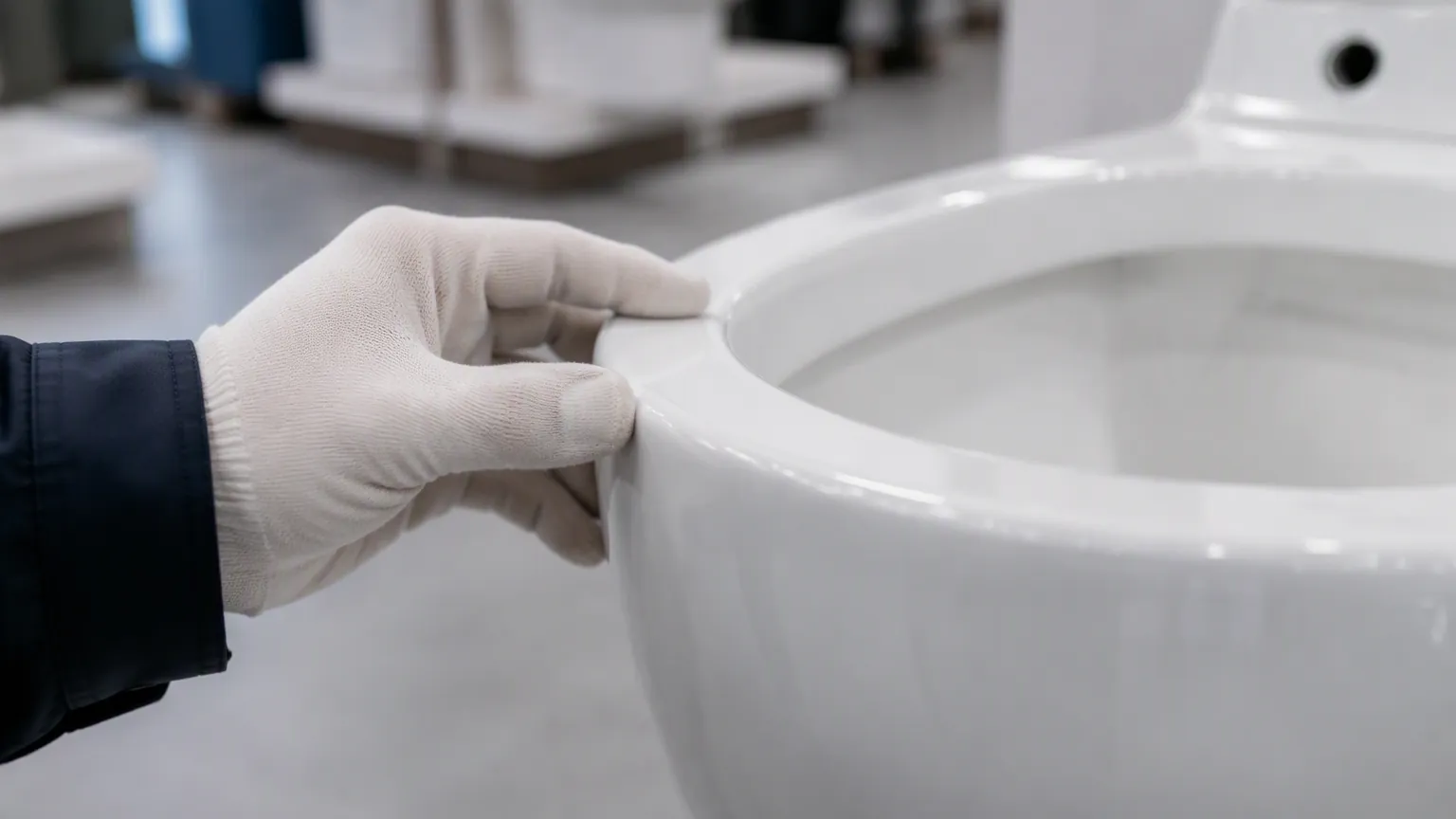
The glaze is the surface that touches everything — water, waste, cleaning chemicals, and daily use. It determines how the bowl looks in year one and how it behaves in year five.
What makes a good glaze. Quality bowls are fired at high temperatures, typically 1,200–1,300°C. This vitrifies the body and fuses the glaze into a hard, non-porous surface. As a result, the bowl resists stains, does not absorb odors, and cleans with a single wipe.
What to check at the showroom or on a sample.
- Surface uniformity: Run your hand across the interior and the rim. A smooth, continuous surface with no pinholes or bare spots indicates consistent glazing.
- Edge coverage: The glaze must cover the trapway and the underside of the rim. Unglazed or partially glazed trapways collect waste and odor over time.
- Color consistency: Batch-to-batch color variation is a red flag. Therefore, ask for samples from the same production batch you will receive.
- Anti-bacterial options: Silver-ion or nano coatings are available on premium models. They add cost, but they matter in healthcare and hospitality projects.
Why glaze thickness matters in practice. Thin glazes wear through at high-contact points — the rim, the trapway entrance, and the seat area. Once the glaze wears, the porous body underneath absorbs moisture, stains, and odors. Consequently, two bowls that look identical in photos perform completely differently after two years. When you compare quotes, ask each supplier for the glaze specification: raw material, application method, and fired thickness. Suppliers with a real factory can answer; trading companies usually cannot.
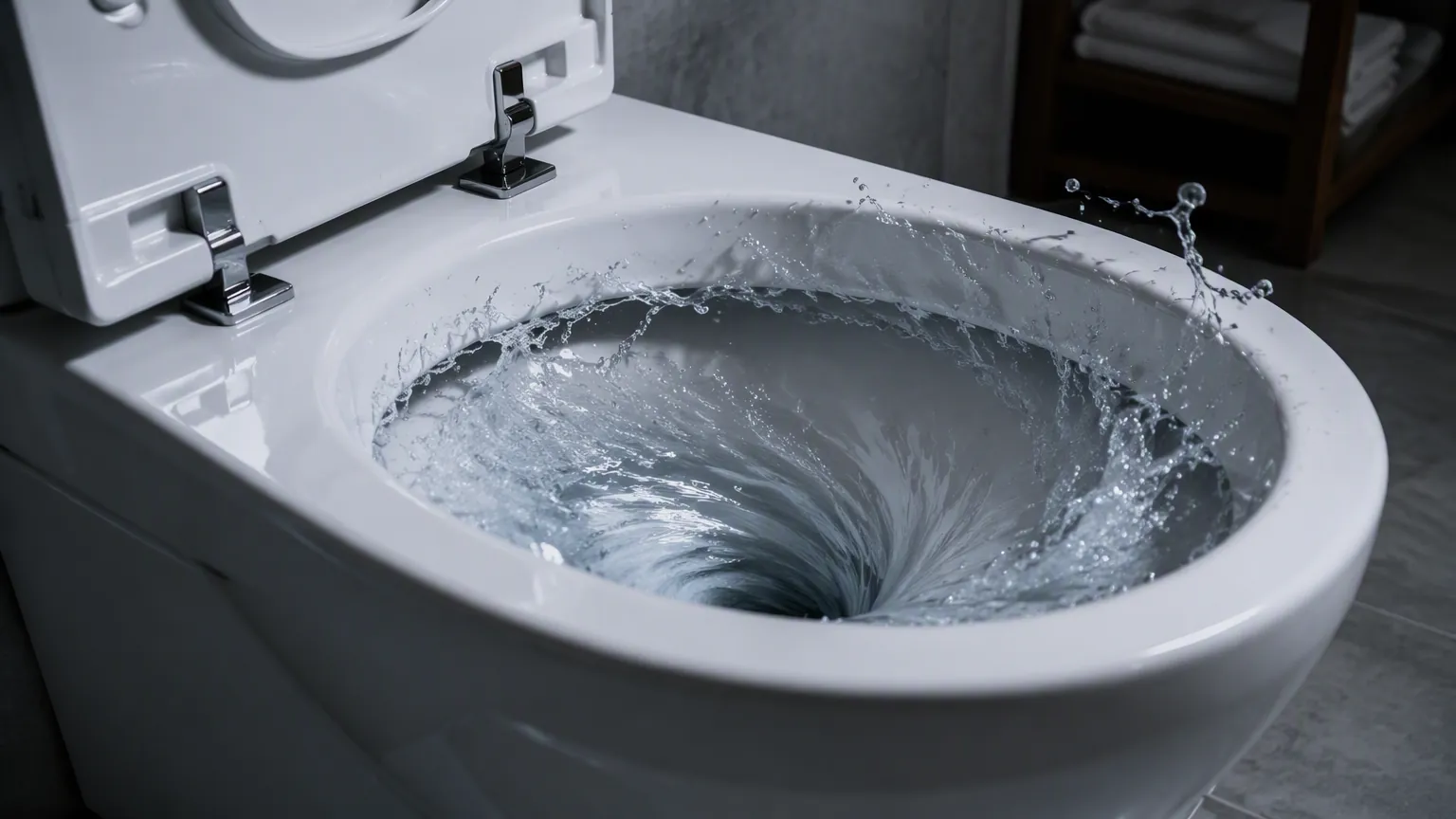
Bowl Shape and Size: Choosing the Right Ceramic Toilet Bowl Profile
The bowl shape affects comfort, space planning, and price, but there is no universal best. The right choice depends on the room and the users.
| Shape | Depth | Typical use | Notes |
|---|---|---|---|
| Round front | 16–17 in (41–43 cm) | Small bathrooms, apartments | Shortest footprint, less comfortable for tall users |
| Elongated | 18–19 in (46–48 cm) | Hotels, homes, commercial | More comfortable, needs more depth |
| Compact elongated | 16.5–17.5 in (42–44 cm) | Tight commercial spaces | Middle ground, growing in popularity |
Rough-in compatibility is the second half of the sizing decision. The standard US rough-in is 12 in (305 mm) from finished wall to center of the floor flange. The 10 in and 14 in sizes exist for retrofit projects. Always verify the rough-in before ordering, because it is the most common field mistake in toilet replacement. For the full treatment of dimensions, see our Porcelain Toilet Dimensions & Rough-In Guide.
Matching the bowl to the room type. A hotel bathroom and a staff restroom need different bowls even when the price is the same. Hotels favor elongated bowls with soft-close seats because guest comfort drives reviews. Apartment blocks favor compact or round bowls because space is tight and unit count is high. Healthcare projects favor elongated bowls with anti-bacterial glaze and easy-clean hinges. Define the use case first, then let the shape and features follow.
Flush Systems: What the Ceramic Toilet Bowl Actually Does
Flush system choice, first of all, determines whether the bowl works reliably for years or clogs from week one. Two main technologies dominate the market.
Gravity flush. Water flows from the tank into the bowl using gravity alone. It is simple, quiet, and reliable, with no moving parts in the water path. Most residential and many commercial bowls use this system, and performance depends on the trapway design and the rim wash coverage. Pressure-assisted flush. A sealed tank uses line pressure or a pressurized vessel to force water through the bowl with more velocity. It delivers stronger clearing power and is favored in high-traffic commercial restrooms; the trade-offs are louder operation and slightly higher cost.
What to verify before ordering.
- MaP score: The Maximum Performance test measures how many grams of waste a bowl clears in a single flush. Look for a MaP score of 800g or higher for commercial use.
- Water consumption: 1.28 gallons per flush (GPF) is the WaterSense threshold. The 1.6 GPF spec remains common in older projects. Confirm the local code requirement before ordering.
- Flush valve vs tank: Wall-mounted flushometer valves are common in commercial projects. Tank systems dominate residential and hospitality.
Trapway design is the hidden variable. Two bowls with identical MaP scores can behave differently in daily use because of trapway geometry. A wide, smooth trapway passes waste with less resistance. A narrow or rough trapway clogs on paper-heavy waste even when the flush is strong. Therefore, ask suppliers for the trapway diameter, and prefer bowls with fully glazed trapways. This single detail separates cheap bowls from durable ones more than any marketing claim.
Seat and Lid Compatibility: The Overlooked Detail
The seat, meanwhile, is the highest-touch component of the toilet, yet it is routinely overlooked at specification time.
- Standard vs elongated seats: Seats are shaped to match the bowl. Round seats do not fit elongated bowls, and vice versa. Confirm the seat SKU matches the bowl model.
- Hinge spacing: Most residential bowls use 5.5 in (140 mm) hinge spacing. Commercial models vary. Verify before ordering seats in bulk.
- Soft-close and quick-release: Soft-close seats reduce slamming in hotels. Quick-release hinges make cleaning easier. Both are worth the small premium in hospitality, for instance.
- Material: Polypropylene seats resist chemicals and UV. Wooden seats are warmer but less durable in humid environments.
Budgeting for seats. In many quotes, the seat price is hidden inside the bowl price — or missing entirely. Always ask for a line-item breakdown: bowl, tank, seat, and mounting hardware. A USD 25 bowl with a USD 12 seat is a different total than a USD 35 bowl with no seat included. Moreover, when ordering 500 units, this difference amounts to thousands of dollars.
One-Piece vs Two-Piece: A Configuration Decision
Beyond the bowl itself, you will choose between one-piece and two-piece configurations. Both use the same ceramic bodies; the difference is manufacturing and installation.
One-piece toilets mold the bowl and tank as a single ceramic unit. They are easier to clean, look more modern, and have no tank-to-bowl gasket to fail. However, they cost more and weigh more, which raises freight cost.
Two-piece toilets ship as separate bowl and tank joined at installation, by contrast. They are cheaper, easier to handle, and the tank can be replaced independently. The trade-off is the tank-to-bowl gasket, which is a common long-term leak point if installed poorly.
For high-volume projects, the decision is usually economic: two-piece for budget-driven work, one-piece for hospitality and premium residential. Our Porcelain Toilet Buying Guide covers this trade-off in more detail.
Certifications and Standards to Require
A ceramic toilet is a plumbing fixture, and most markets regulate its safety and performance. Require the relevant certification for your destination market before you commit to a supplier.
- ASME A112.19.2 — the US standard for ceramic plumbing fixtures, covering dimensions, materials, and performance.
- cUPC — certification for the US and Canada, verifying compliance with plumbing codes.
- WaterSense — EPA label for water-efficient toilets using 1.28 GPF or less. Many US projects now specify it as a default.
- CE — required for sanitary ware sold in Europe.
- WaterMark — mandatory for plumbing products in Australia.
- SASO — required for Saudi Arabia; also verify SABER certification for imports.
Still, certification documents should match the exact model you are buying, not just the factory’s general claims. Ask for the certificate number and verify it online. A supplier that cannot produce a model-specific certificate is not a supplier; it is a risk.
Wholesale Ceramic Toilet Bowl Sourcing: What to Ask the Factory
When buying bowls in volume, the supplier conversation changes from product to process. Here is the checklist experienced contractors use, because price follows specification, not the other way around.
- Factory capability: Does the manufacturer produce the bowl body, glaze, and assembly in-house? Factories that control the full process deliver more consistent quality than trading companies.
- Firing and kiln control: High-temperature firing and consistent kiln profiles reduce defects. Ask about the factory’s defect rate and how it is measured.
- MOQ and lead time: Typical MOQ is 100–300 units per model. Lead time runs 25–45 days. Custom colors or branding raise both.
- Packaging: Bowls ship with foam corner protectors and carton reinforcement. Confirm the packaging standard — transit damage is the largest source of arrival defects.
- Spare parts: Order spare seats, flush valves, and wax rings with the initial shipment. Reordering single parts later costs more than the part itself.
- Sample policy: A good factory sends pre-production samples for approval. Insist on it for any order above one container.
For the broader supplier evaluation framework, see our How to Choose a Bathroom Manufacturer in China guide.
Wholesale Price Ranges for a Ceramic Toilet Bowl
Price is the last variable, and it should be compared only after the specification is fixed. FOB China estimates for 2026, with MOQ of 100–300 units:
| Configuration | Price range (USD) | Typical buyers |
|---|---|---|
| Two-piece, standard white | 15–30 | Apartment blocks, budget hotels |
| Two-piece, premium glaze | 25–40 | Mid-tier hotels, offices |
| One-piece, standard white | 40–70 | Hotels, premium residential |
| One-piece, anti-bacterial | 60–90 | Healthcare, luxury hospitality |
These are estimates, not quotes. Freight, duties, and certification add 15–40% depending on destination. For Saudi Arabia and GCC projects, factor in SASO/SABER compliance costs — our Saudi Arabia procurement guide explains the process.
Common Ceramic Toilet Bowl Specification Mistakes
- Buying on price alone: The cheapest bowl in the catalog usually has the thinnest glaze and the weakest flush. Compare by specification, not by unit price.
- Ignoring the rough-in: A 12 in rough-in bowl will not fit a 10 in rough-in space without a retrofit flange. Measure first, order second.
- Mixing seat standards: Ordering standard seats for commercial bowls with different hinge spacing creates an installation-day surprise.
- Skipping sample approval: Bulk orders without pre-production samples are a gamble. The few weeks of sample review save months of rework.
- Forgetting spare parts: Every project needs spare seats and flush valves from day one. Order them with the main shipment.
FAQ
What is the best material for a toilet bowl?
Vitreous china — a high-fired ceramic — is the industry standard. It is non-porous, stain-resistant, and durable. The difference between ceramic and vitreous china is firing temperature and density, which is covered in our Ceramic vs. Porcelain comparison.
How much does a toilet bowl cost wholesale?
FOB China estimates for standard white bowls range from USD 15–40 for two-piece models to USD 40–90 for one-piece designs, with MOQ of 100–300 units. Branded finishes, anti-bacterial coatings, and custom packaging add 10–30%.
How do I know if a toilet bowl is good quality?
Check the glaze uniformity, verify the MaP score (800g+ for commercial), confirm the certification for your market, and inspect a pre-production sample. Price alone never tells the full story.
What is the difference between a toilet bowl and a toilet?
The bowl is the ceramic fixture itself. A complete toilet includes the tank (or flushometer), seat, and mounting hardware. When sourcing, confirm whether the quote includes the tank and seat or only the bowl.
How long does a toilet bowl last?
A well-made vitreous china bowl typically lasts 20–30 years. The components that fail first are the flush valve, fill valve, and seat — which is why spare parts matter.
Can a toilet bowl be recycled?
Yes. Ceramic waste from production is often crushed and reused in construction materials, and some factories recycle rejected bowls. End-of-life recycling options depend on local facilities.
Contractor’s Checklist
- Verify rough-in distance (10/12/14 in) before ordering
- Confirm bowl shape matches room and user needs
- Check glaze uniformity on sample (interior + trapway)
- Verify MaP score ≥ 800g for commercial use
- Confirm water consumption meets local code (1.28 GPF WaterSense)
- Match seat SKU and hinge spacing to bowl model
- Require certification for destination market (ASME/cUPC/CE/WaterMark/SASO)
- Order pre-production samples before bulk shipment
- Include spare seats, flush valves, and wax rings in initial order
Related Guides
- Porcelain Toilet Buying Guide for Contractors
- Porcelain Toilet Dimensions & Rough-In Guide
- Ceramic vs. Porcelain Toilets: A Complete Comparison
- How to Choose a Bathroom Manufacturer in China
- Bathroom Supplier in Saudi Arabia: A Complete Procurement Guide
- Commercial Urinal Buying Guide