
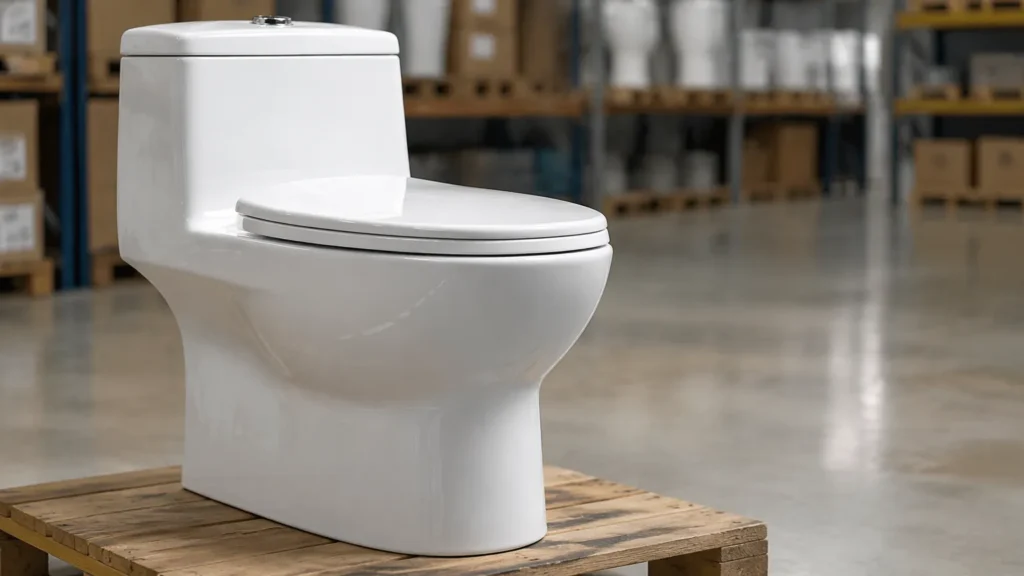
If you’re a contractor ordering toilets for a 200-unit apartment complex or a hotel renovation, you’ve probably asked yourself: Why do some toilets last 15 years without issues while others start cracking, sweating, or clogging within months?
The answer usually isn’t the brand — it’s the porcelain specification.
Porcelain toilet procurement is a technical game disguised as a commodity buy. Get the body type, glaze quality, and flush system right, and your client relationship stays solid. Get them wrong, and you’re fielding callback calls for years.
This guide walks through everything a contractor needs to know before placing that wholesale order.
1. The Two Porcelain Bodies That Matter
Not all “porcelain” toilets are the same. The industry uses two distinct ceramic bodies:
Vitreous China (VC)
Standard for most residential and mid-range commercial toilets. Fired at ~1,200°C, glass-like surface layer. Pros: Affordable, widely available, decent durability. Cons: Can micro-crack under extreme temperature shifts.
Fine Fire Clay (FFC) / Fire-Clay Porcelain
Fired at ~1,300°C, denser and more vitrified. Pros: Near-zero water absorption (<0.5%), resists thermal shock, lasts decades. Cons: Heavier, more expensive (15–25% premium over VC). Best for: High-traffic commercial, outdoor installations, luxury hospitality.
Contractor’s Take: For standard residential projects, vitreous china is sufficient. For hotels, resorts, or any project where toilets will see heavy daily use, specify fire-clay porcelain. The upfront cost difference is minor compared to replacement labor.
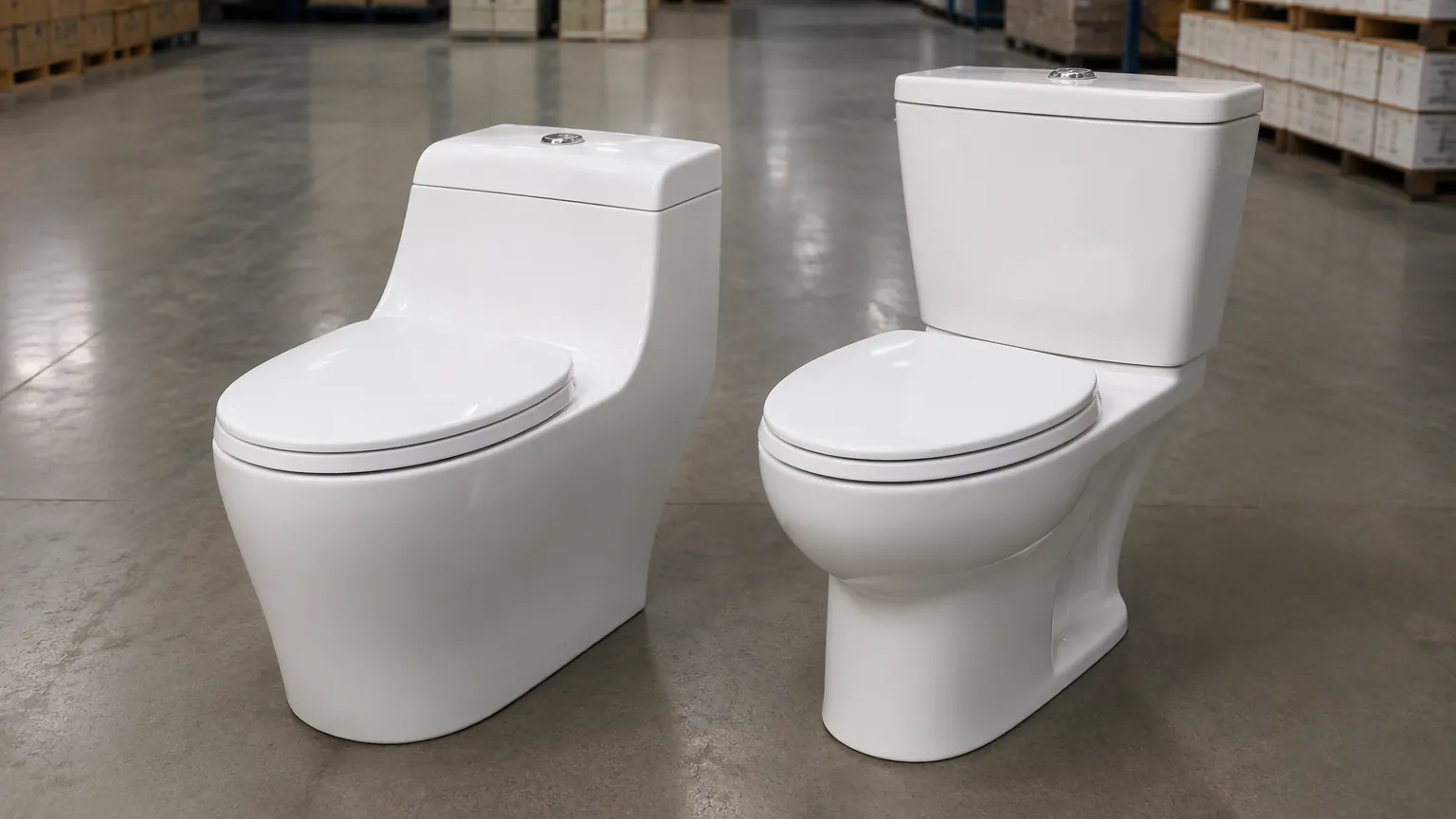
2. One-Piece vs Two-Piece: An Honest Comparison
| Factor | One-Piece | Two-Piece |
|---|---|---|
| Cleaning Ease | No crevices, one seamless surface | Gap between tank and bowl collects dust |
| Installation | Heavier (25–40 kg), harder to maneuver alone | Lighter bowl + separate tank, one-person install |
| Repair Cost | Entire unit must be replaced if tank cracks | Replace tank only, bowl stays |
| Leak Risk | Internal gasket, fewer connection points | Tank-to-bowl gasket can fail over time |
| Price (Wholesale) | $80–150 per unit | $40–90 per unit |
| Best For | Hotels, high-end residential | Apartments, budget projects, large-volume |
Contractor’s Take: Don’t default to two-piece just because it’s cheaper. For hotel chains or developer projects where user experience drives repeat bookings, one-piece is worth the premium — easier cleaning means lower housekeeping costs over the building’s life.
3. Flush Systems: What Actually Works in the Field
Gravity Flush — Water weight from the tank creates pressure. Reliability: Excellent, minimal moving parts, decades of field proof. Water efficiency: 1.28 GPF (6.0 LPF) standard, 1.0 GPF available. Best for: Any project where reliability is the #1 priority.
Pressure-Assisted Flush — Pressurized air tank inside the china body forces water down. Reliability: Good, but the pressure vessel has a 10–15 year lifespan. Water efficiency: 1.0–1.28 GPF. Noise: Noticeably louder (50–60 dB vs 30–40 dB gravity). Best for: Commercial restrooms, high-traffic areas.
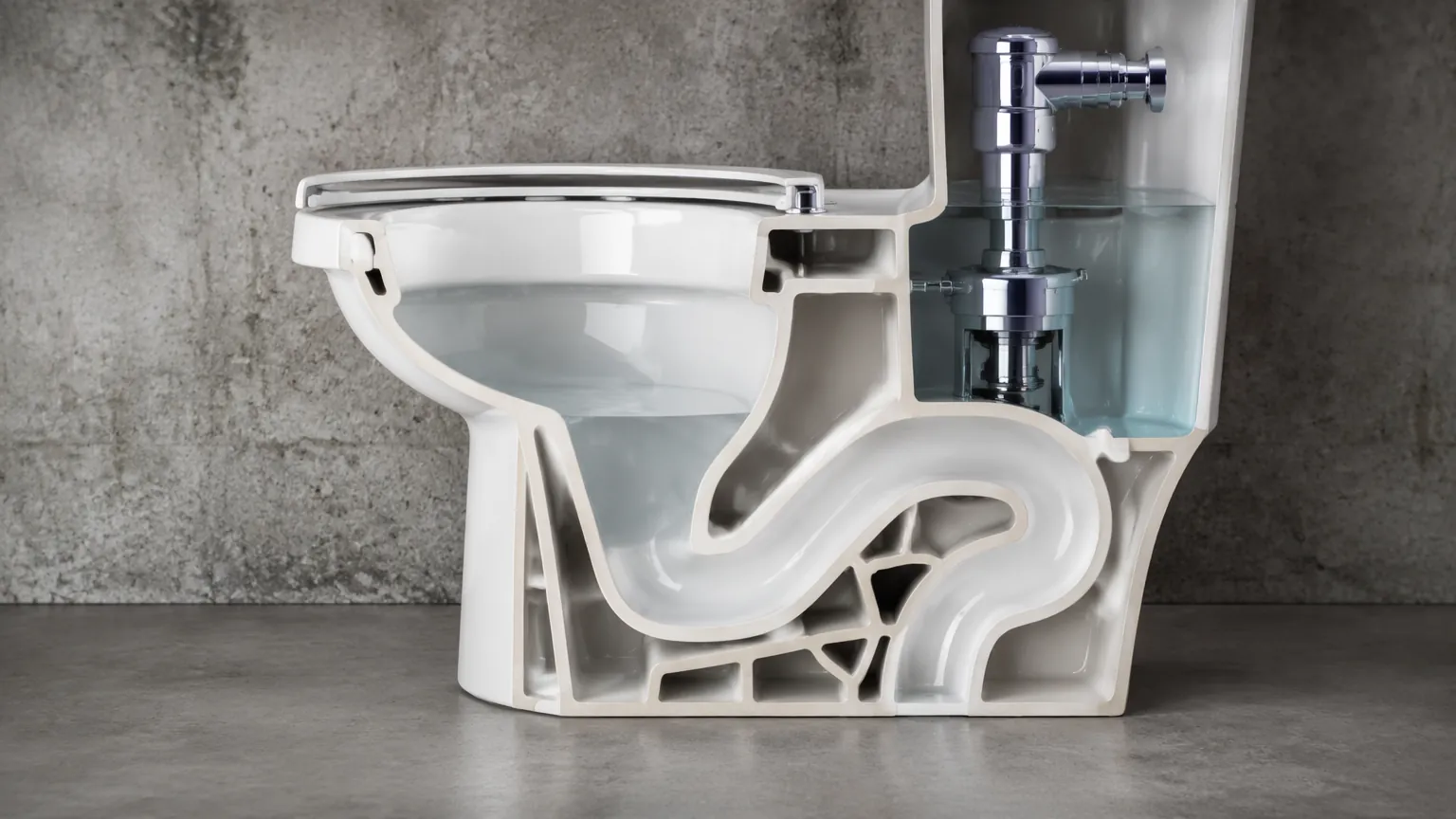
What About Dual Flush? Ceramic engineering has improved to the point where a well-designed single-flush 1.28 GPF toilet performs as reliably as an older dual-flush. Dual flush adds mechanical complexity (two buttons, more seals) for marginal water savings. For contractor projects, prefer single-flush gravity unless the spec explicitly requires dual flush for LEED points.
4. Glaze Quality: The Hidden Longevity Factor
Standard Glaze — Single-coat application. Adequate for 3–5 years of daily use. Starts showing micro-abrasions in high-traffic settings. Price: Baseline.
Multi-Coat / Double-Glaze — 2–3 coats applied, fired between coats. Much harder surface, resists scratching. Stays stain-free 2–3x longer than standard. Price: +10–15%.
Anti-Bacterial / Ion-Bonded Glaze — Silver ion or titanium dioxide infused into the top coat. Inhibits bacterial growth. Increasingly specified in healthcare, hospitality. Price: +15–25% over standard.
Contractor’s Take: For hotel and hospital projects, multi-coat or anti-bacterial glaze isn’t optional — it directly affects guest satisfaction and hygiene audit scores.
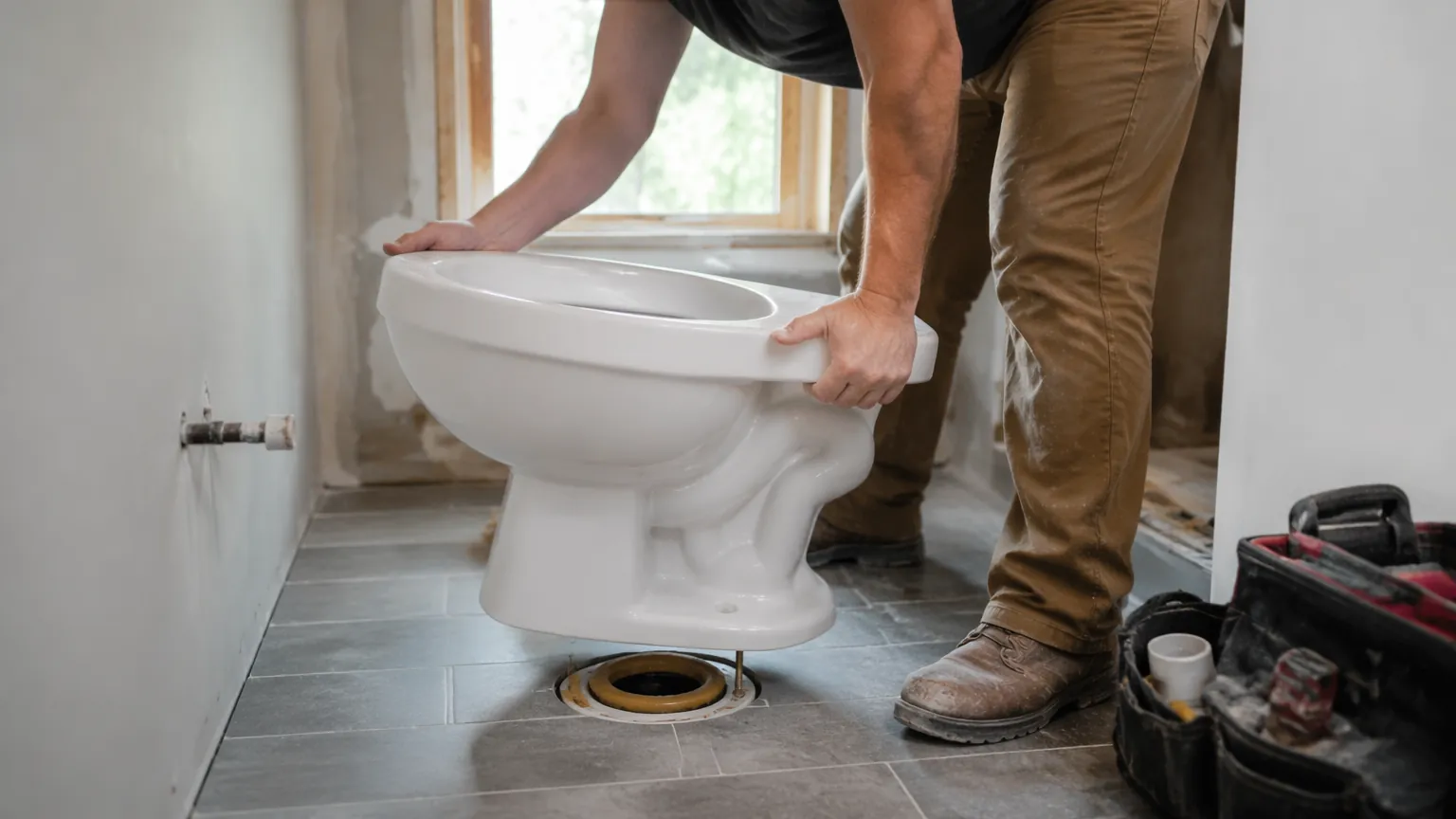
5. Rough-In Measurements (The #1 Field Mistake)
| Standard | Distance | Region |
|---|---|---|
| 10″ (254mm) | 254 mm | Older US construction |
| 12″ (305mm) | 305 mm | Modern US and Middle East |
| 14″ (356mm) | 356 mm | Some European spec |
| 180mm / 200mm | 180–200 mm | Parts of Asia |
- Measure rough-in on 3 different units on the floor (variations happen)
- Confirm with the general contractor before placing the PO
- Order a 10″/12″ adjustable rough-in model for renovation projects
- For Middle East projects: 305 mm is most common, but Saudi projects sometimes use 254 mm in older buildings
6. Certifications That Actually Matter
Must-have (non-negotiable): ISO 9001, ISO 14001, CE Marking, WaterMark. Nice-to-have: CUPC (IAPMO), ASME A112.19.2, GB/T 6952, SASO, WRAS.
Contractor’s Take: Don’t pay a premium for certification stacking. ISO 9001 + CE covers 90% of international projects. CUPC and SASO are only worth it when the project spec explicitly requires them.
7. Price Benchmarking (Wholesale, Q3 2026)
| Type | Standard Glaze | Multi-Coat Glaze | Fire-Clay Body |
|---|---|---|---|
| Two-Piece | $35–55 | $50–70 | $80–110 |
| One-Piece | $60–90 | $80–110 | $120–160 |
Volume leverage: Orders over 500 units typically unlock 10–15% discount. Over 1,000 units, negotiate with 2–3 suppliers simultaneously for best leverage.
8. Red Flags When Vetting Suppliers
- Can’t show glaze test data
- Minimum MOQ but no track record
- Porcelain weight doesn’t match standard (one-piece should weigh 28–35 kg)
- Shows CAD only, no physical samples
- Warranty less than 5 years
9. Decision Framework: Which Toilet for Which Project
| Project Type | Recommended Spec |
|---|---|
| Budget Apartments (100+ units) | Two-piece, VC, gravity, standard glaze |
| Mid-Range Hotel (3–4 star) | One-piece, VC, gravity, multi-coat glaze |
| Luxury Hotel (5 star) | One-piece, fire-clay, gravity or pressure-assisted, anti-bacterial glaze |
| Commercial Restroom | Two-piece, VC, pressure-assisted, multi-coat glaze |
| Hospital/Healthcare | One-piece, fire-clay, pressure-assisted, anti-bacterial glaze |
| Renovation (mixed inventory) | Adjustable 10/12″ rough-in, two-piece, VC |
10. Summary Checklist for Your RFQ
- Body type specified — VC or fire-clay?
- Configuration — One-piece or two-piece?
- Rough-in confirmed — 10″, 12″, or other?
- Flush system — Gravity or pressure-assisted?
- Glaze tier — Standard, multi-coat, or anti-bacterial?
- Certifications required — ISO 9001 + CE minimum
- Volume and packaging — Loose or branded packaging?
- Lead time — Standard production 25–35 days