A 200-room business hotel in Shenzhen switched from standard toilets to bidet seats across every guest bathroom in 2024. Within six months, guest satisfaction scores for the bathroom category rose 22%. The general manager reported a 35% drop in maintenance callbacks compared to the previous year.
Hotel procurement managers are increasingly looking for a smart toilet hotel package that covers both the bidet seat and the bowl in one spec. The driving factors are not luxury branding — they are operational. A well-specified smart toilet hotel solution reduces toilet paper consumption, improves hygiene perception in online reviews, and differentiates a property in a competitive market. If you are currently evaluating bidet options, our Smart Bathroom Market Analysis provides the broader market context behind this shift.
This guide covers the key specification criteria for hotel procurement teams and their contractors: features that matter, certifications to verify, installation dimensions, plumbing requirements, and the questions to ask before issuing a purchase order for any smart toilet hotel project.
Wash Features: Which Settings Actually Matter for Hotel Guest Bathrooms
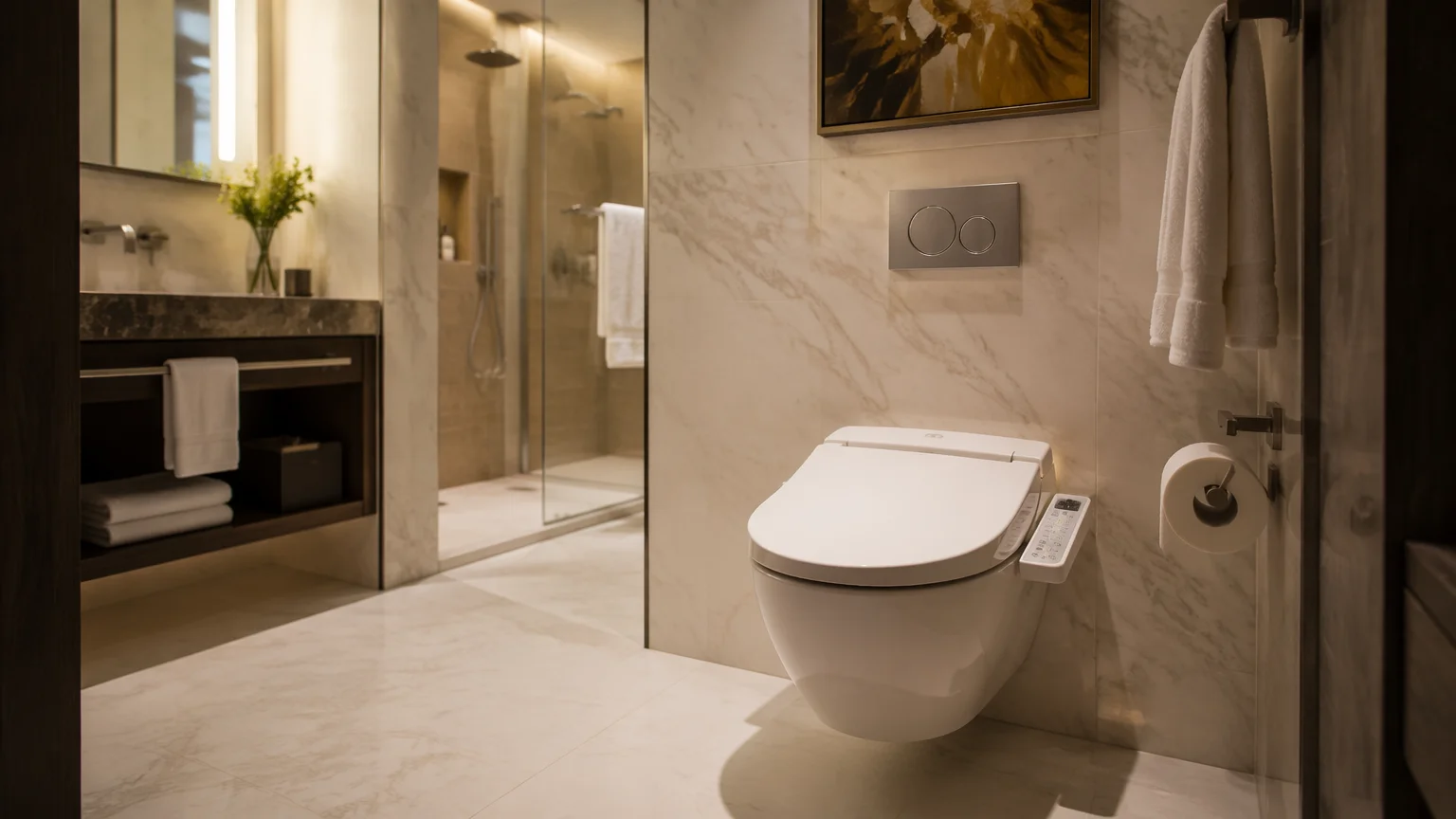
Not all smart toilet features translate to guest satisfaction. The most commonly used features in hotel installations differ from residential expectations.
Essential
The following features should be considered table stakes for any hotel-grade smart toilet hotel spec or bidet seat:
- Rear wash and front wash — adjustable water pressure, at least 3 levels
- Heated seat — adjustable temperature, minimum 3 settings
- Warm air dryer — adjustable temperature and fan speed
- Deodorizer — activated carbon or catalytic filter, auto-activated on occupancy
- Soft-close seat and lid — mandatory for noise control in hotel bathrooms
Nice to Have (but check ROI)
- Remote control — wall-mounted or handheld; consider battery vs. hardwired for maintenance overhead
- Night light — a small LED that illuminates the bowl; appreciated by guests but adds $8–15 to unit cost
- Self-cleaning nozzle — UV sterilization or electrolyzed water; worth it for premium properties only
Usually Overkill for Hotels
- Music player or Bluetooth speaker — added maintenance point with limited guest use
- Voice control — not reliable enough for consistent guest experience
- Automatic lid open/close — motion sensor adds false triggers in small hotel bathrooms
Bidet Seat vs. Integrated Smart Toilet: Which to Specify for Your Smart Toilet Hotel Project
This is the first decision a hotel procurement manager needs to make. The choice affects the entire bathroom layout, electrical planning, and long-term maintenance budget.
Bidet Seat (Retrofit)
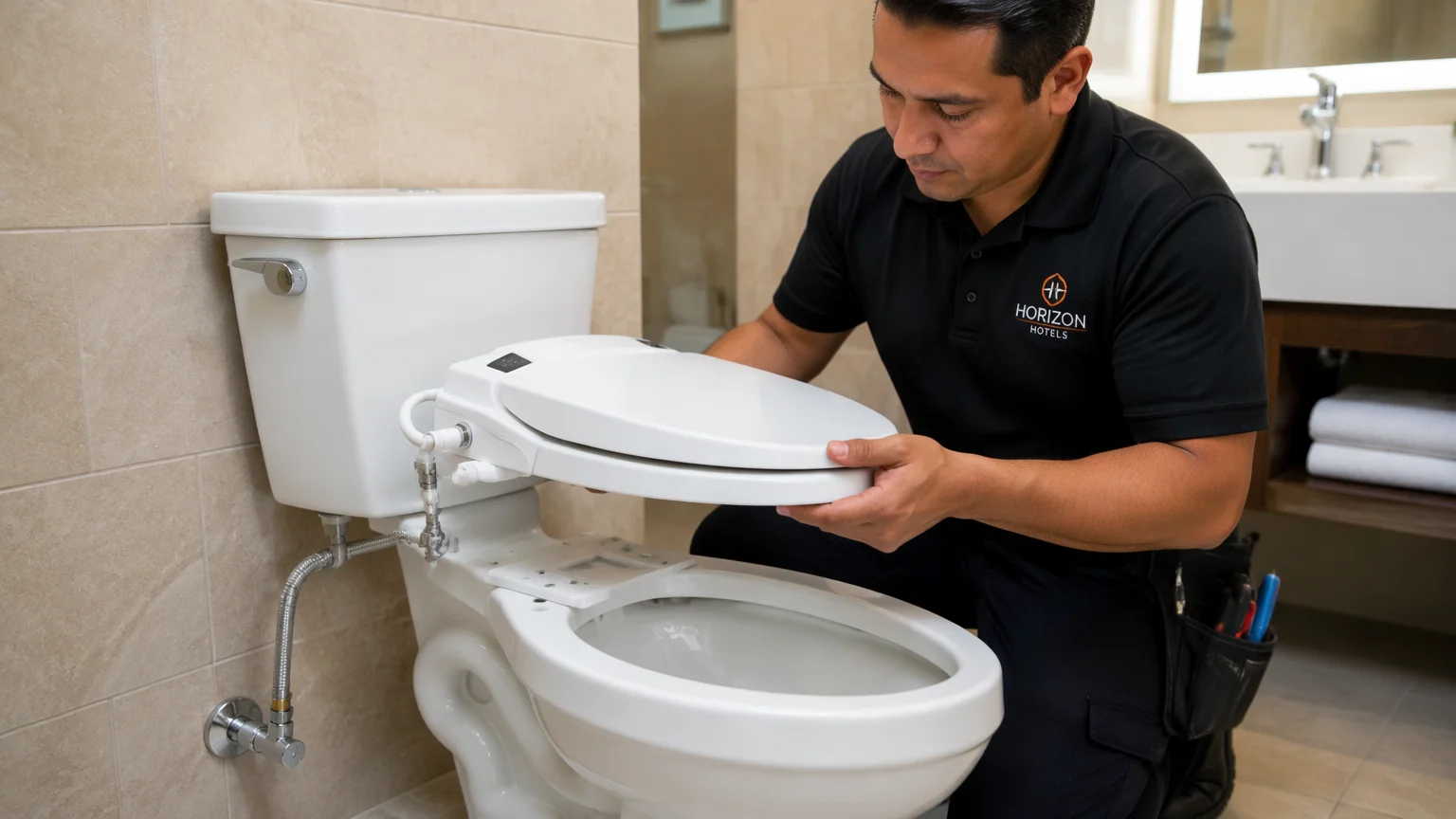
A bidet seat replaces the existing toilet seat and connects to the toilet water supply and a nearby electrical outlet.
| Factor | Assessment |
|---|---|
| Cost per unit | $180–$400 (FOB China, MOQ 200–500) |
| Installation | Retrofit onto existing toilet bowl; 20–30 minutes per unit |
| Compatibility | Requires standard two-piece or one-piece bowl; confirm round vs elongated |
| Electrical | Requires GFCI outlet within 3 feet of toilet |
| Maintenance | Seat removal for toilet servicing; filter cleaning every 6 months |
Best for: Renovation projects where toilet bowls are already installed; mid-scale hotels.
Integrated Smart Toilet (All-in-one)
A complete unit that combines the bowl and bidet functions in one seamless ceramic piece.
| Factor | Assessment |
|---|---|
| Cost per unit | $500–$1,200 (FOB China, MOQ 100–300) |
| Installation | Full toilet replacement; requires 1–2 hours per unit plus rough-in verification |
| Compatibility | Self-contained; no bowl compatibility concerns |
| Electrical | Requires GFCI outlet within 3 feet |
| Maintenance | Less crevices for cleaning; dedicated service channels for electronics |
| Aesthetics | Sleek, seamless look preferred by upscale hotels |
Best for: New construction; luxury hotel renovations where bathroom design is a key selling point. Browse our smart toilet collection for examples of integrated units suitable for these projects.
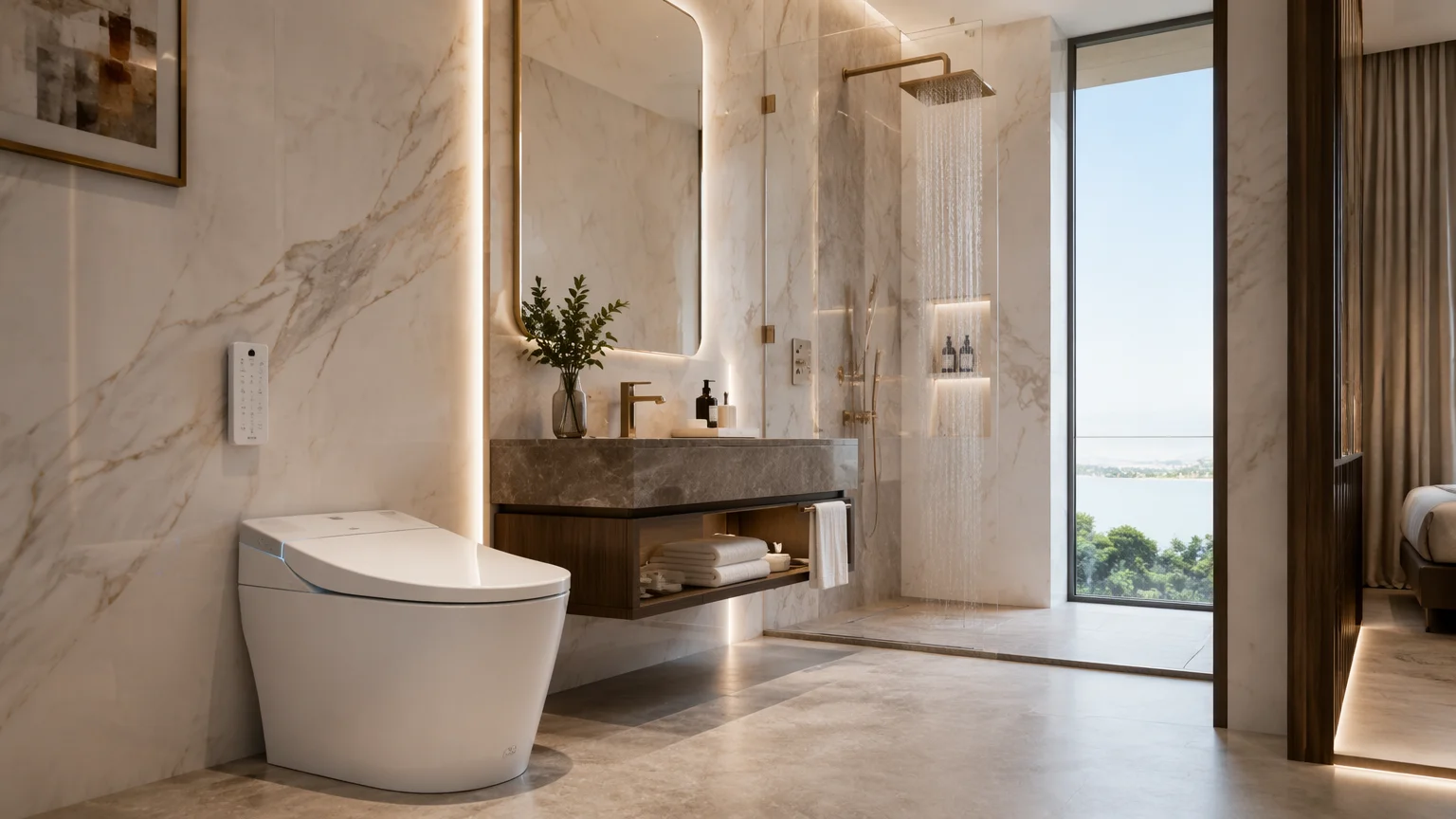
Power and Electrical Requirements for Smart Toilet Hotel Installations
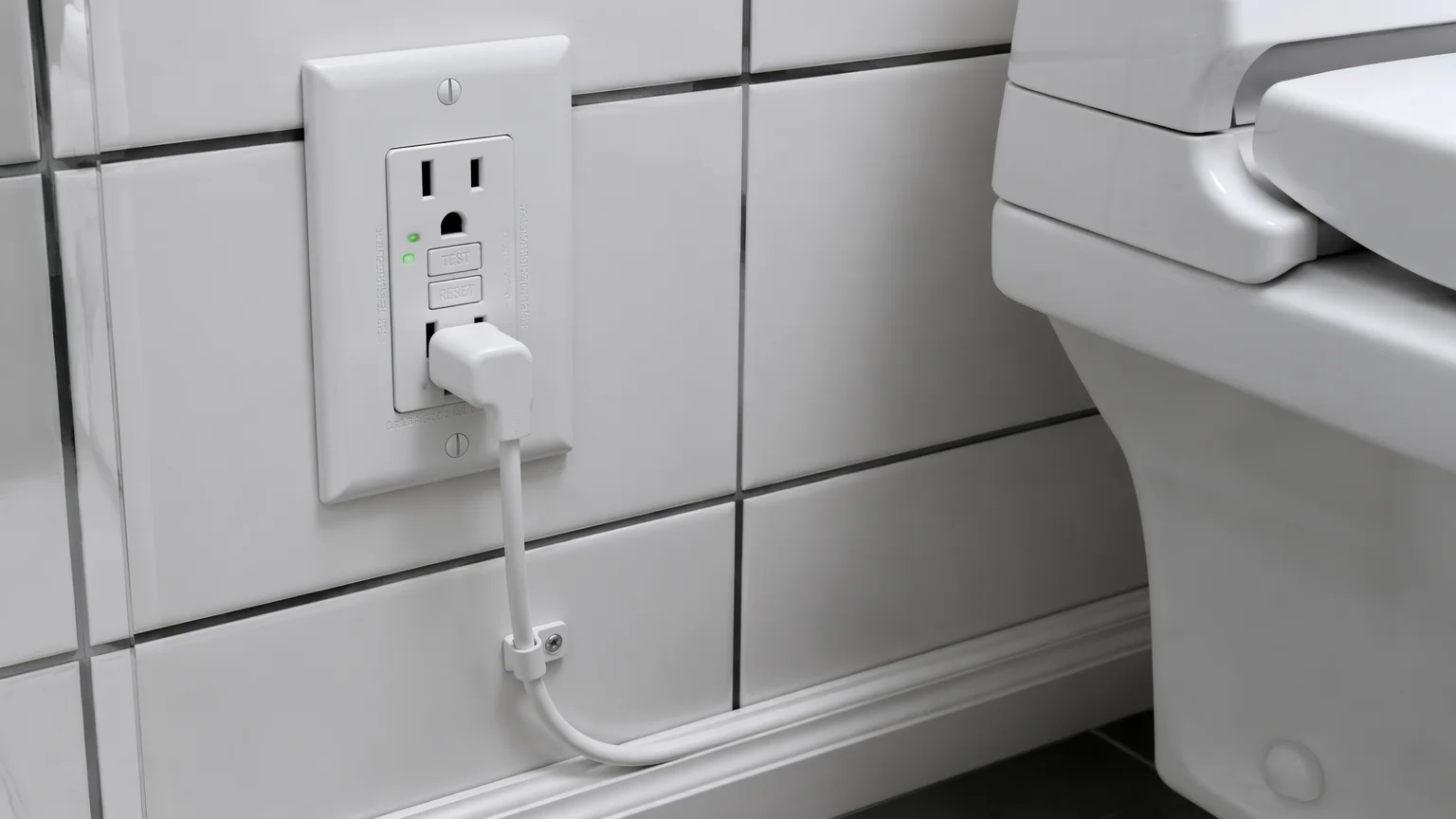
One of the most common planning mistakes in hotel installations is underestimating the electrical requirements. A standard toilet alcove rarely has a power outlet nearby.
Minimum electrical specifications:
- GFCI protected outlet within 36 inches of the toilet (per NEC Article 210.8)
- Dedicated 15A circuit — bidet seats can draw 10–12A during heated seat + wash + dryer simultaneous operation
- Outlet placement: 12–18 inches above the finished floor, offset 6–12 inches to the side
- Battery backup — specify models with battery flush override for power outages
For a related discussion on retrofitting bidet functions onto existing toilets, see our guide Can You Install a Bidet Attachment on Any Toilet?
Why this matters: A 150-room hotel specifying bidet seats without planning electrical rough-in will end up wall-cutting every bathroom after the toilet is in place. Retrofit cost: $150–$250 per bathroom — often exceeding the bidet seat cost itself.
Bowl Configuration and Rough-In Verification
A bidet seat will not fit a toilet bowl it was not designed for. This sounds obvious, but bowl shape mismatches are the most common compatibility issue in hotel installations.
Key measurements to confirm:
| Dimension | Standard | Verify |
|---|---|---|
| Bowl shape | Round (16.5–17 in.) or Elongated (18.5–19 in.) | Measure seat screw holes to bowl front edge |
| Seat screw spacing | 5.5 inches center-to-center | Confirm with supplier spec sheet |
| Rim-to-wall depth | Minimum 2 inches from back rim to wall | Bidet seat rear housing needs clearance |
| Water inlet location | 6–8 inches above floor, left side | Confirm existing rough-in or plan relocation |
Tip: Standardize one toilet model across all guest bathrooms. If the spec calls for elongated bowls but your hotel has round ones, you are looking at 150 bowl replacements or a different bidet seat model.
Certifications and Compliance for Smart Toilet Hotel Projects
| Market | Required Certification | What It Covers |
|---|---|---|
| USA | UL 1431 or ETL | Electrical safety for bidet seats and smart toilets |
| USA | ASME A112.19.2 | Ceramic bowl material and dimensional standards |
| USA | ADA | Height (17–19 in.), clear floor space, controls reach |
| Canada | CSA C22.2 No. 68 / cUPC | Electrical safety and plumbing backflow prevention |
| Europe | CE (EN 17194) | Smart toilet functional and safety requirements |
| UK | UKCA | Post-Brexit equivalent of CE |
| Australia | WaterMark | Plumbing and drainage compliance |
| Saudi Arabia | SASO | Imported electrical and plumbing fixtures |
Common oversight: Specifying a bidet seat with CE certification for a US hotel project. CE covers European standards, which differ from UL. A CE-only bidet seat will not pass inspection on a US job site. Always verify that your smart toilet hotel supplier provides the correct certification for your destination market.
Water Supply and Plumbing Requirements
Bidet seats and smart toilets require cold water supply only — internal heating elements handle warm water wash. This simplifies plumbing compared to traditional bidet fixtures.
- Supply connection: 1/2 inch NPT (North America) or G1/2 (Europe/Asia)
- Water pressure: 20–80 psi (1.4–5.5 bar)
- Flow rate: 0.5–1.0 GPM during wash — minimal impact on building system
- Backflow prevention: Integrated check valve required by IPC
Installation Checklist for Hotel Projects
Before issuing a purchase order, confirm:
- Bowl shape verified and matched to bidet seat spec
- GFCI outlet within 36 inches of toilet
- Dedicated 15A circuit available or planned
- Seat screw spacing measured (5.5 inches standard)
- Wall clearance behind toilet ≥2 inches for bidet seat housing
- Water supply accessible with compatible thread
- Certification: UL/ETL (USA), CE (Europe), WaterMark (Australia)
- Sample tested on-site before full order
- 5% spare units ordered for a 200+ room property
- Maintenance staff trained on filter cleaning and diagnostics
Project Example: 200-Room Business Hotel, Shenzhen
The challenge: A 200-room hotel completed a full bathroom renovation with standard two-piece toilets. After six months, the GM wanted to upgrade to bidet seats across all guest bathrooms.
The solution: The team selected retrofit bidet seats compatible with existing elongated bowls — heated seat, wash, dryer, and deodorizer. Outlets were added under the vanity to avoid wall cutting behind the toilet.
The result: Guest bathroom satisfaction scores rose 22%. Toilet paper consumption dropped 40%. The 5% bidet seat maintenance rate was lower than the 8% flush valve issue rate tracked previously.
Common Specification Mistakes
- Not verifying bowl shape before ordering. Round vs. elongated — they are not interchangeable.
- Assuming GFCI outlet exists behind the toilet. Most standard rough-ins place outlets near the vanity.
- Skipping UL/ETL for US projects. CE is not enough.
- Too many features. A remote with 20 buttons confuses guests and generates maintenance calls.
- No spare units. Bidet seat electronics are not field-repairable; spare units avoid extended downtime.
FAQ
What is the difference between a bidet seat and a smart toilet?
A bidet seat retrofits onto an existing toilet bowl. A smart toilet is an all-in-one unit. Bidet seats are better for renovations; smart toilets suit new construction.
Do smart toilets require special electrical work?
Yes. They need a GFCI outlet within 36 inches. A dedicated 15A circuit is recommended. Most standard bathrooms need an electrician for this.
Can a bidet seat be installed on any toilet?
No. Bidet seats are designed for specific bowl shapes (round or elongated). Verify compatibility with the supplier spec sheet.
What certifications should a smart toilet hotel have?
For US projects: UL 1431 or ETL. For Europe: CE (EN 17194). For Australia: WaterMark. ADA compliance if accessible rooms are required.
Are smart toilets expensive to maintain?
The electronics add maintenance. Filter cleaning every 6 months and occasional control board replacements are common. Ordering 5% spare units is recommended for properties over 200 rooms.
What is the typical smart toilet lifespan in a hotel?
Five to eight years for bidet seat electronics. The ceramic bowl lasts 20+ years. Plan for seat replacements at the bathroom lifecycle midpoint.
Do smart toilets save water in hotels?
Yes. Dual-flush smart toilets reduce water per flush. Bidet seats reduce toilet paper by up to 40–60%, which also cuts plumbing clog incidents.
How long does it take to install a bidet seat?
Approximately 20–30 minutes per unit for an experienced installer with compatible bowl and accessible outlet.
References
- UL 1431: Standard for Personal Hygiene and Health Care Appliances. Underwriters Laboratories.
- ASME A112.19.2-2023: Vitreous China Plumbing Fixtures. American Society of Mechanical Engineers.
- IPC 2024: International Plumbing Code. International Code Council.
- EN 17194: Electronic Bidet Appliances for Household Use. European Committee for Standardization.
- NEC Article 210.8: GFCI Protection for Bathrooms. National Electrical Code.
- DOE – Water Heating Energy Conservation Standards