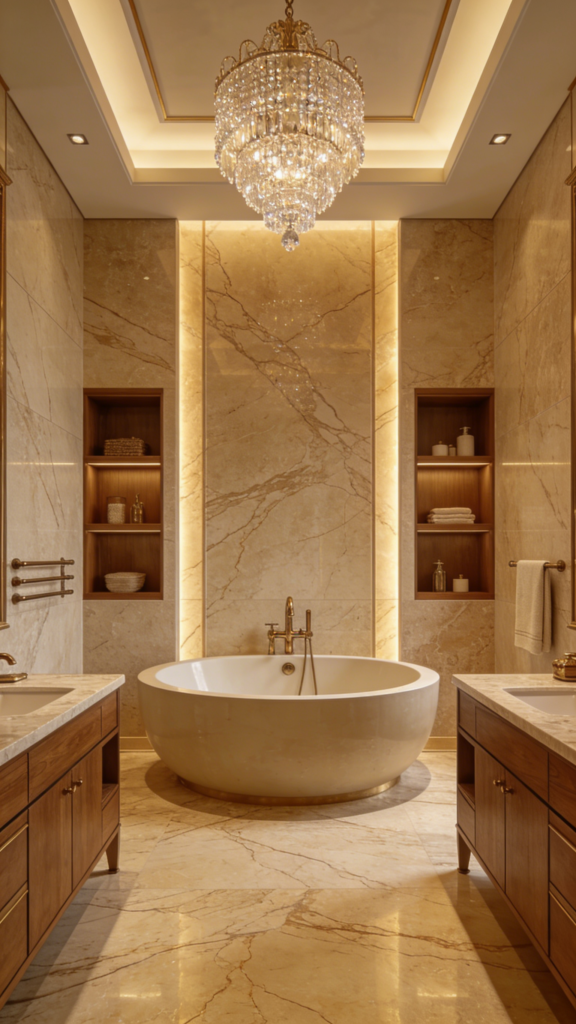

A bathroom vanity UAE order succeeds or fails on four decisions: substrate, basin mounting, mirror and lighting power, and packing. Specify all four before you request a quote. Most Gulf project delays trace back to one of them being left open.
Ask a supplier for a bathroom vanity UAE quotation, and in most cases you will get a price per unit. You will not get the MOQ ladder behind that price. You will not get the packing method, the spare-part allowance, or the wall load the cabinet expects. Those four gaps are where schedules slip. This guide closes them, in the order a contractor actually meets them on site.
What a Bathroom Vanity UAE Order Actually Involves
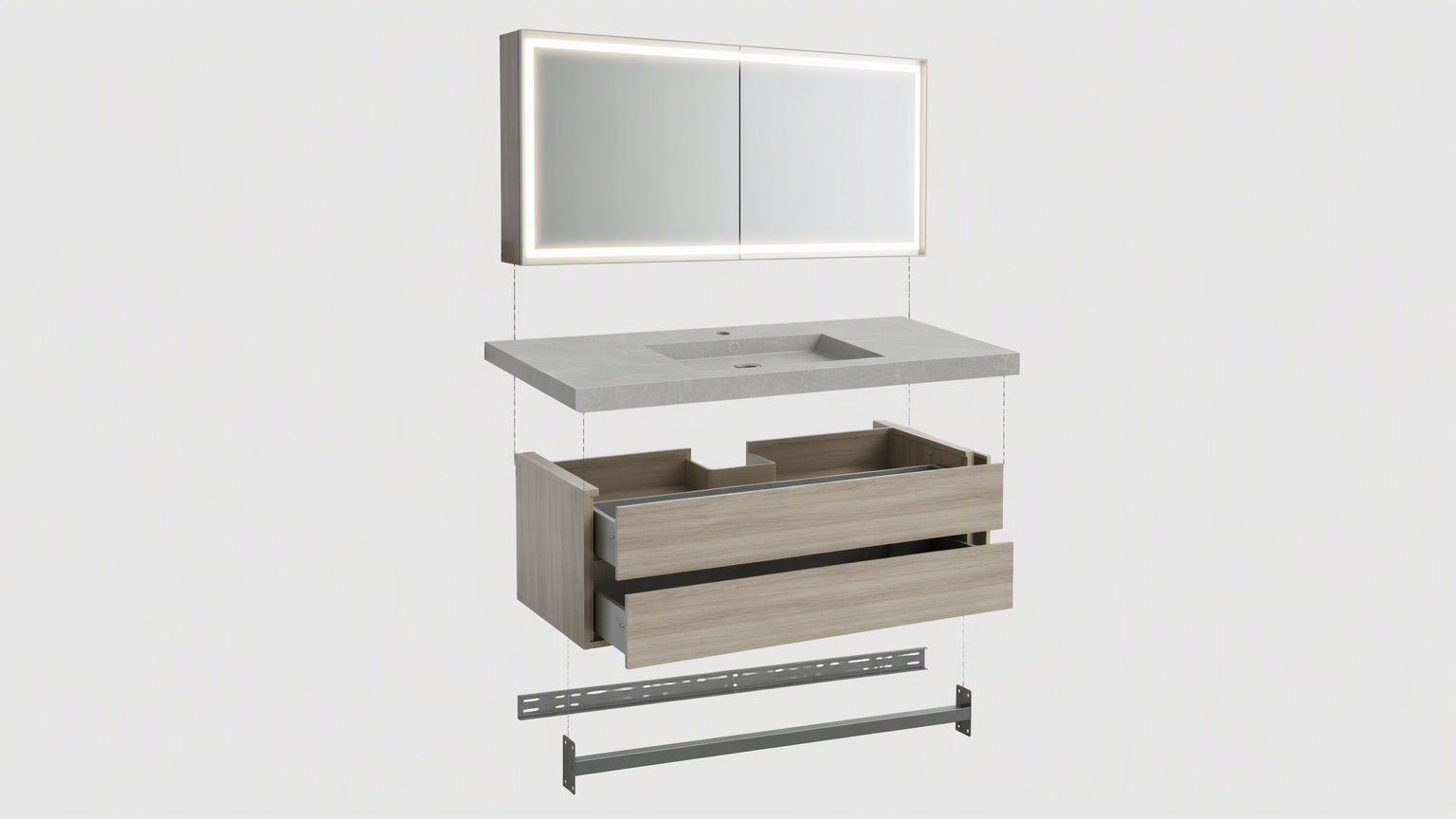
A vanity, in practice, is not one product. It is a carcass, a worktop, a basin, a mirror or mirror cabinet, and a set of fixings. Each part has its own lead time and its own failure mode. When the parts arrive on different weeks, the tiling team waits and the handover date moves.
Specify the assembly, therefore, not the cabinet alone. Name the worktop material, the basin mounting type, the mirror power requirement, and the fixing method. A quotation that lists only “vanity unit, 1000mm” leaves four decisions to the factory. The factory will make them for you, and you may not like the result.
The bathroom vanity UAE market, moreover, adds one more layer. Gulf projects run on air conditioning almost year round, so indoor humidity swings hard between occupied and empty periods. Materials that behave well in a temperate climate can move, swell, or crack here. That is why substrate sits first in this guide.
Vanity Substrate: The Decision That Sets Everything Else
Four carcass materials dominate project work, and each one suits a different job.
| Carcass Material | Moisture Behaviour | Weight | Relative Cost Band | Best Project Type |
|---|---|---|---|---|
| Multi-ply plywood | Stable, edge-sealed | Medium | Mid to high | Hotels, long-hold rentals |
| Moisture-resistant MDF | Swells if edges fail | Medium | Low to mid | Dry zones, apartments |
| PVC or aluminium | Fully waterproof | Light | Mid | Coastal, high-humidity, public washrooms |
| Solid wood veneer | Moves with humidity | Heavy | High | Villas, low-volume feature bathrooms |
Plywood remains the default for hotel work, and the reason, in practice, is simple. Its cross-laminated layers resist the swelling that kills MDF when a seal fails. You can read the construction detail on the plywood reference if you need to brief a client’s engineer. Moisture-resistant MDF, sometimes sold as MR MDF, costs less and machines cleaner, so it suits apartment blocks where the bathroom door stays shut. Its weakness is the cut edge. Once water reaches an unsealed edge, the board lifts within weeks.
PVC and aluminium carcasses, in contrast, solve the humidity question completely. They weigh less, so wall mounting gets easier, and they never swell. In practice, they suit coastal towers and public washrooms where cleaning crews hose things down. The trade-off is rigidity under a heavy stone top.
MDF has one more advantage worth naming, however. It takes paint and veneer evenly, so a feature colour matches across a batch more reliably than plywood does. For a villa project with a strong design intent, that consistency can matter more than moisture resistance.
Vanity Basin Mounting: Undermount, Drop-In or Vessel
Three mounting methods cover almost every vanity sold into Gulf projects.
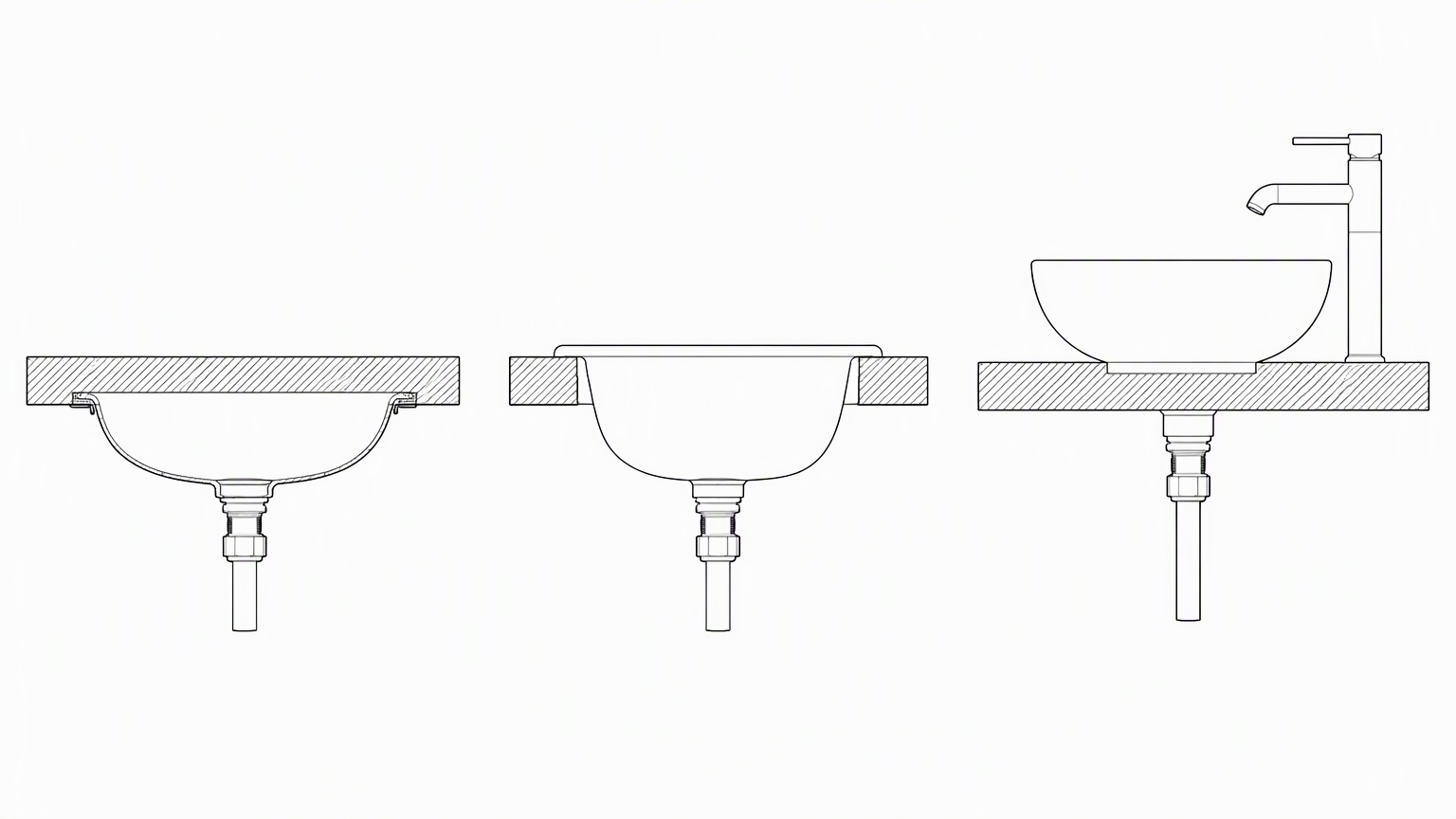
Undermount, as the name suggests, fixes the basin below the worktop. The rim stays hidden, so wiping the counter into the basin works. It demands a precise cutout, and the silicone joint must be maintained. On a hotel floor with 200 rooms, that joint is a recurring maintenance item.
Drop-in, by contrast, sits the basin into a cutout with a visible rim. Installation tolerance is forgiving, which means fewer site rejections. The rim collects grime, so housekeeping works harder.
Vessel bowls, instead, sit fully above the counter. They look strong in a villa or a hotel lobby washroom. They also raise the tap height requirement by roughly 100 to 150mm, so the faucet spec has to follow, not lead. Skipping that step produces splash complaints.
An integrated basin moulded into the worktop removes the joint entirely. For high-turnover hotel bathrooms, that is usually the right call, because it deletes the most common callback on the whole assembly.
Wall Hung or Floor Standing: Check the Wall First
Wall hung vanities clean faster and, in addition, make a small bathroom feel larger. They also transfer the full load, including a full basin of water, into the wall. Expect 150 to 250kg on a 1000mm unit once water and stone are counted.
That load is fine on a blockwork wall. It is not fine on stud partition without a backing board. Confirm the wall build-up before you order, because a retrofit bracket costs more than the cabinet.
Floor standing units avoid the wall question entirely, however. They do put a toe kick near standing water, so the plinth material has to be waterproof, not just the carcass. For public washrooms and staff facilities, floor standing usually wins on both count.
The wall hung route pairs well with a raised tiled plinth, which gives the floating look while hiding the waste line. See the detail in our wall hung vanity installation guide.
Mirror Cabinet and Lighting: Where Most Site Failures Start
More vanity orders go wrong at the mirror than at the cabinet. The reason is simple: LED mirror cabinets need power, and drawings often place that power too late.
Confirm three things before production. First, the supply position, measured from the finished wall and the finished floor level, not from the slab. Second, the IP rating for the bathroom zone the mirror sits in. Third, whether the client wants a demister pad, because that adds load and needs its own switch leg.
Light colour is the other repeat argument, in fact. Warm light near 3000K flatters faces but reads dim for shaving. Cooler light near 4000K reads clean in a hotel bathroom. Pick one standard for the whole floor and write it into the spec, or you will get mixed deliveries.
Our mirror cabinet specification guide covers the wiring positions in detail.
Vanity Sizes That Fit Gulf Bathroom Layouts
Four widths cover most project work, and each maps to a room type.
- 600mm suits a compact apartment bathroom or a cloakroom.
- 800mm is the apartment standard, with one basin and useful counter space.
- 1000mm fits a hotel standard room with genuine storage.
- 1200mm and above supports two basins, and two people, without elbow contact.
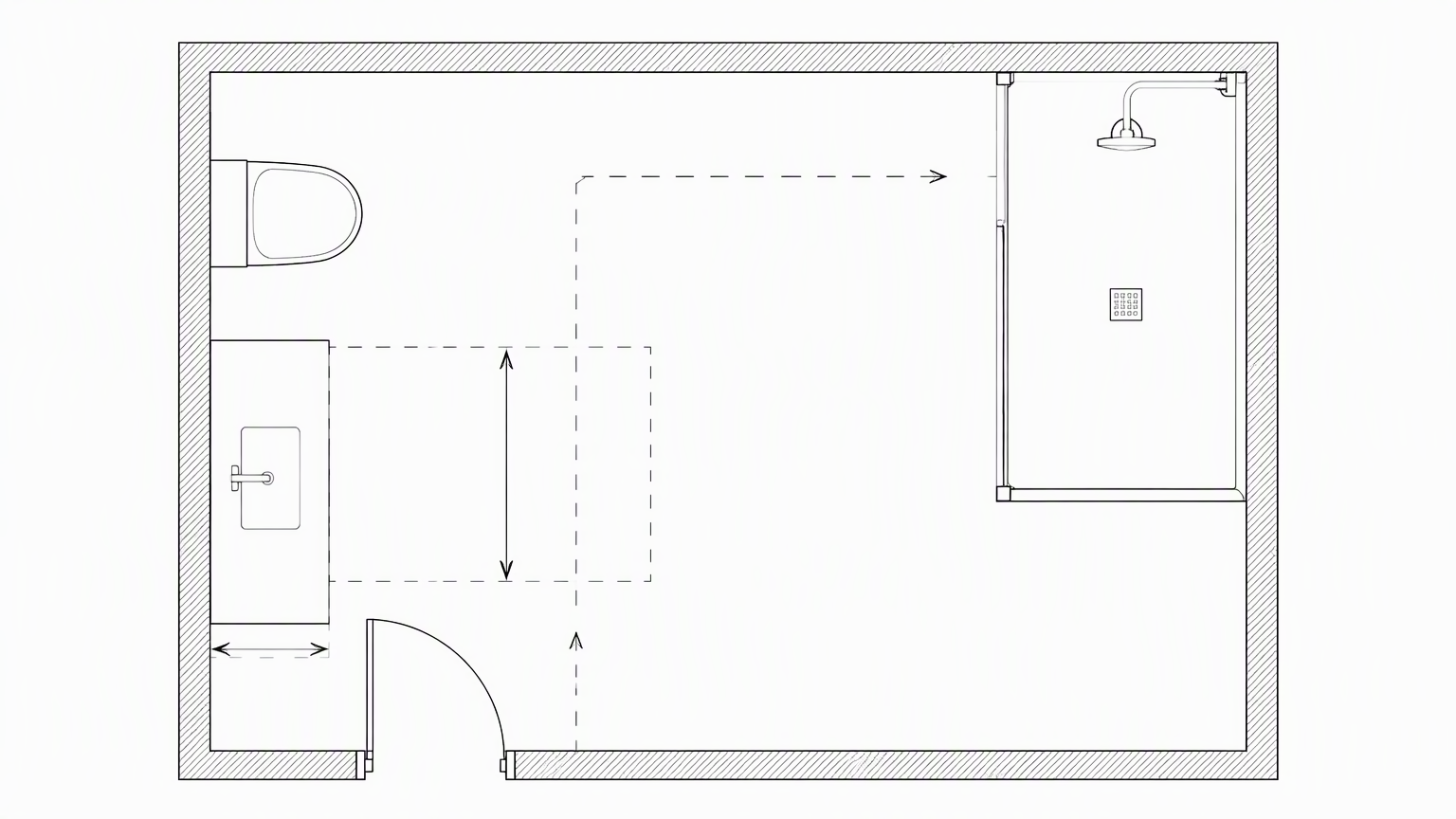
Depth matters as much as width. Most units run 450 to 500mm deep. Below 450mm, a vessel bowl crowds the user. Above 500mm, the unit steals circulation space in a small room.
Worktop height sits at 850mm for most Gulf projects, a little above the European 800mm norm. Confirm it with the client, because the tiling thickness changes the final figure.
What Never Appears on a Vanity Quotation
Six commercial terms stay off most supplier paperwork. Ask for each one explicitly.
- The MOQ ladder. Unit price usually steps at 50, 100 and 200 pieces. Ordering 60 units can cost nearly what 100 units cost, so check the step before you sign.
- Mixed container rules. A 40HQ holds far more flat-packed units than assembled ones. Whether colours can mix in one container changes freight per unit.
- Spare part allowance. Breakage on a long sea route runs 1 to 2 percent. Decide who carries it before shipping, not after.
- Packing method. Flat pack cuts volume by roughly 40 percent, but it adds assembly labour on site.
- Lead time by finish. Standard finishes run 25 to 35 days. Custom veneer or stone can push past 45 days.
- Incoterms. The term decides who pays what, and where risk transfers. The Incoterms list is worth reading once if you sign these regularly.
None of these items are hidden deliberately. They simply fall outside what a price list shows. Asking for them is normal, and a supplier who answers quickly is usually one who ships on time.
A Decision Tree for Picking the Right Vanity
Start from the building type, then walk down.
Hotel, high turnover. Specify an integrated basin, a sintered stone or quartz top, and a wall hung carcass. Add a demister mirror with a single colour temperature across the floor. Housekeeping speed drives the whole spec.
Apartment or long-hold rental. Choose moisture-resistant MDF or plywood, drop-in basins, and floor standing units. Repairs are easier, and tenants treat fittings roughly.
Villa or feature bathroom. Pick a vessel bowl, a veneer carcass, and a wall hung frame with a backing board. Design intent leads here, so confirm tap heights early.
Public washroom or staff facility. Use PVC or aluminium, floor standing, and a rimless worktop with no joint. Cleaning crews use water freely, so waterproofing beats appearance.
Two bathroom vanity UAE examples show the pattern. A 120-room hotel in Dubai specified MDF with drop-in basins to save on unit cost, then replaced 18 swollen carcasses within the first year. A 60-unit apartment block in Riyadh spent slightly more on plywood and had no carcass claims at all.
Mistakes We Keep Seeing on Gulf Orders
Six errors repeat across projects, and every one is cheap to avoid.
- Ordering the cabinet without the mirror. The power point then lands in the wrong place.
- Forgetting tap hole and soap dispenser hole positions. Stone tops cannot be drilled on site.
- Skipping the wall build-up check. Stud walls need a backing board for wall hung units.
- Ignoring batch variation. Veneer and stone patterns shift between production runs, so order 3 to 5 percent extra for a large floor.
- Omitting the spare part clause. One cracked basin then holds up a whole room handover.
- Mismatching tap height to a vessel bowl. The result is splash, not style.
Notice that none of these are manufacturing defects. They are specification gaps, and they all happen before production starts.
Pre-Shipment Checklist for Vanity Orders
Run this list, then, before you release payment.
- Confirm carcass material against the approved sample.
- Check worktop thickness and edge finish on one unit.
- Verify basin mounting type on every size ordered.
- Measure tap hole positions from the finished edge.
- Test one mirror cabinet for light colour and demister function.
- Count spare parts against the agreed percentage.
- Photograph the packing method inside one carton.
- Match carton labels to the room-by-room delivery schedule.
Certification and Documentation by Destination
Documentation varies by market, so match the country, not the product.
The UAE requires ECAS or EQM certification for a range of regulated products. Saudi Arabia runs imports through the SABER platform, and sanitary ware needs a SASO certificate of conformity before it clears. European destinations ask for CE marking on electrical parts, including LED mirrors.
Ask the supplier for certification on the exact model. Certificates held for a similar model do not cover the one you are importing. A full breakdown sits in our UAE bathroom fixtures procurement guide.
FAQ
What size bathroom vanity suits a standard hotel room?
A 1000mm unit with a 500mm depth works for most standard hotel rooms. It gives real storage and still leaves circulation space.
Is wall hung or floor standing better for a coastal tower?
Floor standing with a PVC or aluminium carcass usually performs better. Coastal humidity and frequent washing favour waterproof materials over appearance.
How much spare stock should a project order?
Order 3 to 5 percent extra for large floors. That covers breakage in transit and damage during installation.
Do LED mirror cabinets need a separate circuit?
They need a switched supply at the mirror position. Whether it sits on its own circuit depends on local electrical rules.
Can one container mix vanity colours?
Often yes, though it depends on the MOQ per finish. Confirm the mixing rule before you finalise the order.
How long does a custom bathroom vanity UAE order take?
Standard finishes take 25 to 35 days. Custom veneer or stone tops can run past 45 days.
What is the usual worktop height in Gulf projects?
Most projects set the worktop at 850mm from finished floor level. Confirm it against the tiling build-up.
Where to Go From Here
If your project is a hotel or apartment block, start with the substrate and the basin joint. Those two choices decide your maintenance cost for the next ten years. If it is a villa or a feature washroom, start with tap heights and the wall build-up, because both are hard to change later. If it is a public facility, start with waterproofing and ignore fashion entirely.
Ready to turn a spec into a quotation? Send the room schedule, the wall build-up, and the mirror power positions to the team at YIDA, and you will get a line-by-line answer.
For a production-ready starting point, browse the double wash basin vanity unit, the 900mm wall hung unit, and the commercial vanity range.
References
Wikipedia contributors. (2026). *Plywood*. Wikipedia. https://en.wikipedia.org/wiki/Plywood
Wikipedia contributors. (2026). *Medium-density fibreboard*. Wikipedia. https://en.wikipedia.org/wiki/Medium-density_fibreboard
Wikipedia contributors. (2026). *Incoterms*. Wikipedia. https://en.wikipedia.org/wiki/Incoterms