
A plumbing contractor in Jeddah took over a shopping mall washroom fit-out. The client had specified sensor urinals from three different suppliers. The bank of twelve fixtures looked identical from the front. Behind the wall, the story changed: two valve voltages, three battery types, and no common spare part. When the first sensor failed during Ramadan rush, the maintenance team had to wait a week for a replacement board.
This guide covers what you need to lock down when you specify touchless fixtures. It walks through sensing technology, flush valve types, power strategy, water efficiency, rough-in coordination, and the failure modes that turn an automatic fixture into a maintenance problem.
Why the Sensor Urinal Spec Matters
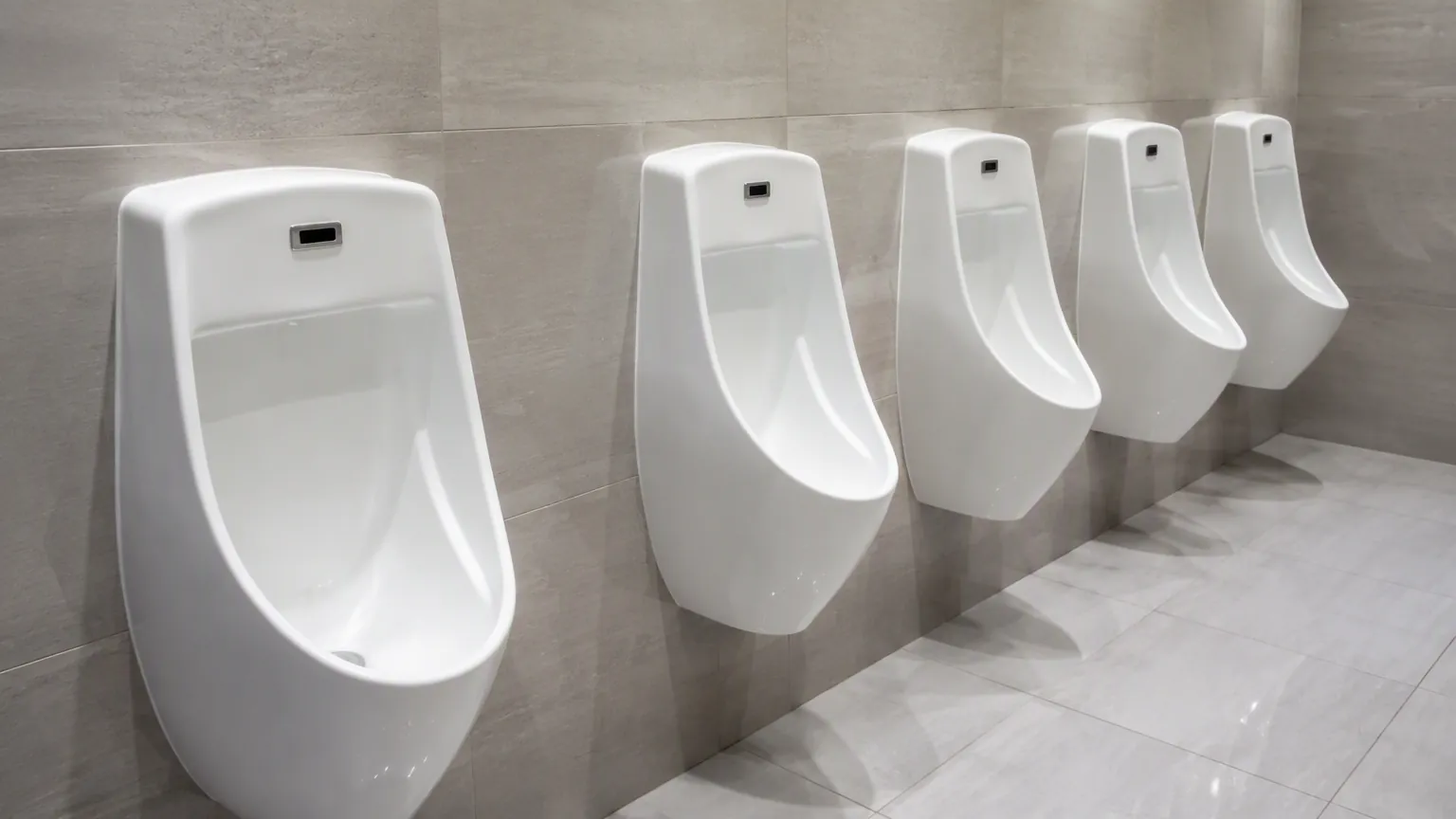
A touchless urinal is a hygiene product first and a water-saving device second. Touchless flushing removes the handle that users avoid touching, which is why airports, malls, and stadiums keep specifying it. The sensor also prevents the “flush and leave” behavior that wastes water with manual valves.
The commercial case is about usage data too. Automatic fixtures in high-traffic bathrooms cycle hundreds of times a day. A valve that is cheap to buy but hard to service costs more in its first year. A premium unit often saves that difference over five years. That is why the specification has to cover the parts strategy, not just the fixture price.
User perception is part of the decision as well. Facilities that install touchless controls report fewer hygiene complaints than those with manual handles, and the difference shows up in washroom audits. Stadiums and transit hubs now treat the hand-off from manual to automatic as expected rather than optional. Budget the sensor premium as a hygiene line item, not as a luxury extra.
How Sensor Urinals Detect Presence
The sensing technology decides how well the fixture performs in real conditions. The urinal has been a plumbing staple for over a century, but the electronics that automate it are a recent addition. Three sensing types dominate the market.
Infrared sensors are the most common. An infrared emitter and receiver sit in the sensor housing. They detect a change in reflected light when a user stands in front of the bowl. Infrared is reliable in most bathrooms and cheap to produce. It can struggle, though, when the sensor window is dirty or when dark clothing absorbs the beam.
Microwave sensors use Doppler radar to detect movement. They sense motion rather than reflected light, so they are less affected by dirt on the lens. Microwave units are better for heavy-use washrooms, but they can false-trigger when someone walks past the fixture.
Dual-technology sensors combine infrared and microwave detection. They cost more and are usually reserved for premium projects or for spaces where false flushing is a known complaint.
Placement changes the outcome as much as the technology does. A sensor mounted too high reads the wall behind the user, and one mounted too low reads the floor. Most manufacturers publish the detection window in the datasheet. Check that the window covers the standing zone, not the approach lane. This is one of the details that separates a reliable install from a callback list.
| Sensing Type | Detection Method | Best Use | Watch Out For |
|---|---|---|---|
| Infrared | Reflected light | Standard commercial | Dirty lens, dark clothing |
| Microwave | Movement (Doppler) | Heavy traffic | False trigger on passers-by |
| Dual tech | Light plus movement | Premium washrooms | Higher unit cost |
Flush Valve Types and Solenoid Life
The flush valve sits behind the urinal or inside the body. In touchless models, a solenoid opens the valve when the sensor sends the signal. A flow control then regulates the flush volume.
Solenoid life is the number one reliability question. Cheap solenoids fail after 200,000 to 300,000 cycles. Quality units are rated to 500,000 cycles or more. Ask the factory for the cycle rating in writing, and compare it against the expected usage of the washroom.
Estimate the cycle load from traffic, not from guesswork. A mall washroom with one thousand users a day puts about one hundred thousand cycles a year on each fixture. A stadium that only runs on match days is far lighter. Choose the valve rating to match the busiest month, because that is when failures surface.
The flush volume also matters. Water-saving automatic urinals flush 0.5 to 1.0 gallon (1.9 to 3.8 liters) per use. Some dual-flush models add a smaller flush after the first use in a short window. Confirm the volume rating matches the local water standard you are targeting.
Power Options: Batteries vs Hardwired
Power strategy is where touchless specs go wrong most often. Three options exist.
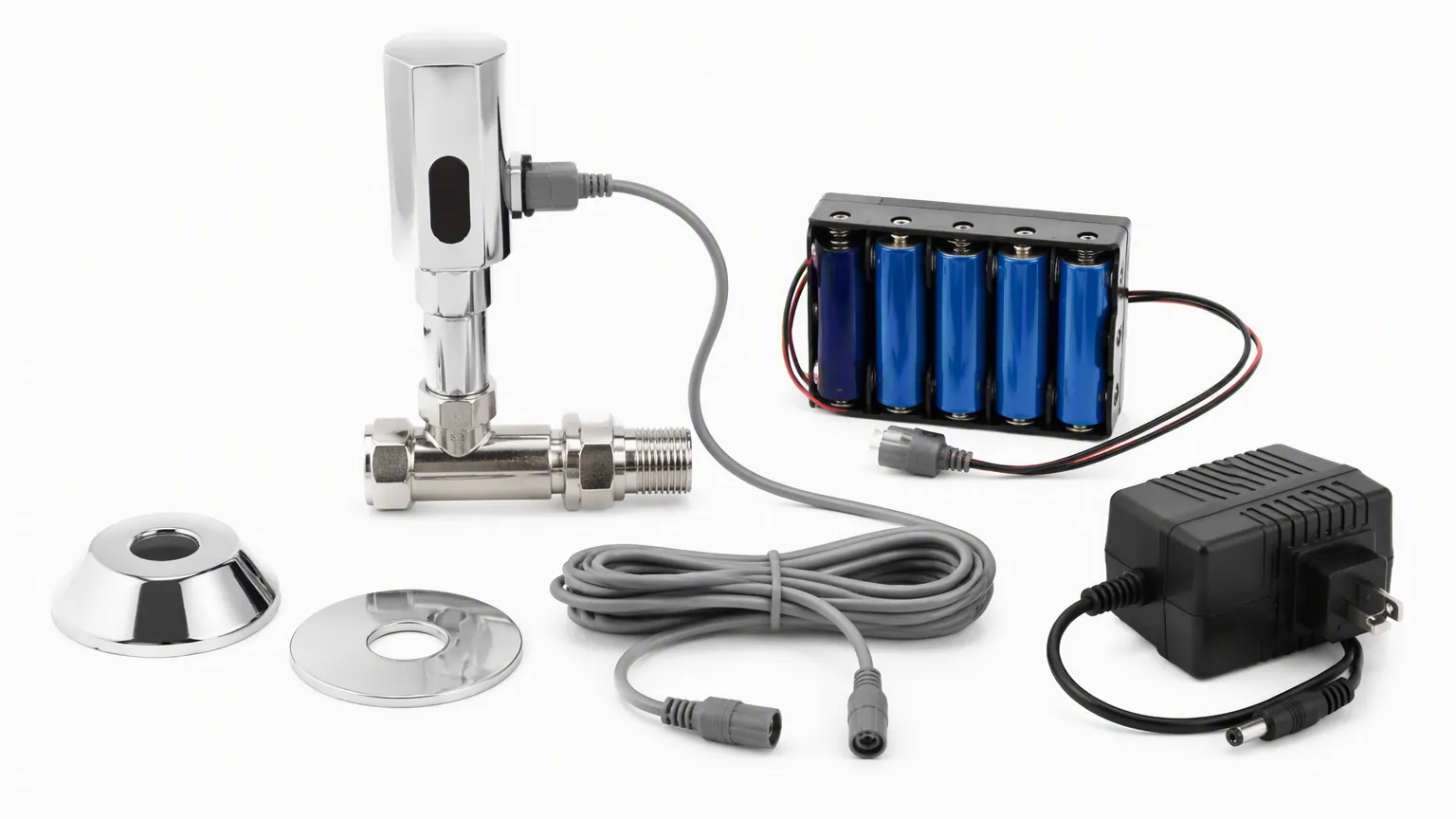
Battery-powered valves run on AA or C-cell packs and need no electrical rough-in. They are the easiest retrofit and the default for small projects. The trade-off is battery life: 6 to 12 months in heavy traffic, and each change requires opening the access panel.
Check the cell count before you standardize. Some valves run on two AA cells, others on six C cells, and the replacement cost and the change interval differ accordingly. When the washroom is open around the clock, schedule battery changes during low-traffic hours.
Hardwired valves connect to a low-voltage transformer and eliminate battery changes. They suit high-traffic washrooms where access panels are hard to reach. Hardwired units need an electrical rough-in, which adds cost if the wall is already closed.
Hybrid units accept either power source and switch automatically when batteries run low. They are the most flexible option for projects where the electrical rough-in is uncertain.
Water Efficiency and Code Compliance
Water consumption is the measurable payoff of a sensor urinal. In the United States, WaterSense-labeled urinals flush at 0.5 gallon (1.9 liters) or less. This labeling program covers the complete fixture, so the flush valve and the bowl must be matched.
The EPA WaterSense spec is the benchmark for projects in North America. The commercial urinal buying guide for contractors covers the wider range of fixtures and flush volumes. For projects elsewhere, check the local code. The ICC codes cover urinal flow rates and trap requirements. The ADA Standards set the mounting height and clear floor space for accessible fixtures.
A touchless urinal that flushes 0.5 gallons per use saves roughly 60 to 80 percent of the water used by an older 1.0-gallon manual fixture. That number drives the payback calculation that wins the project.
Some valves add a second flush level for repeated use within a short window. That trims consumption further in male washrooms. When the project targets a green-building rating, keep the flush volume certificates from the factory. The rating body will ask for them at audit time.
Rough-In and Mounting Coordination
Touchless urinals come in wall-hung and floor-mounted configurations, and the rough-in differs for each.
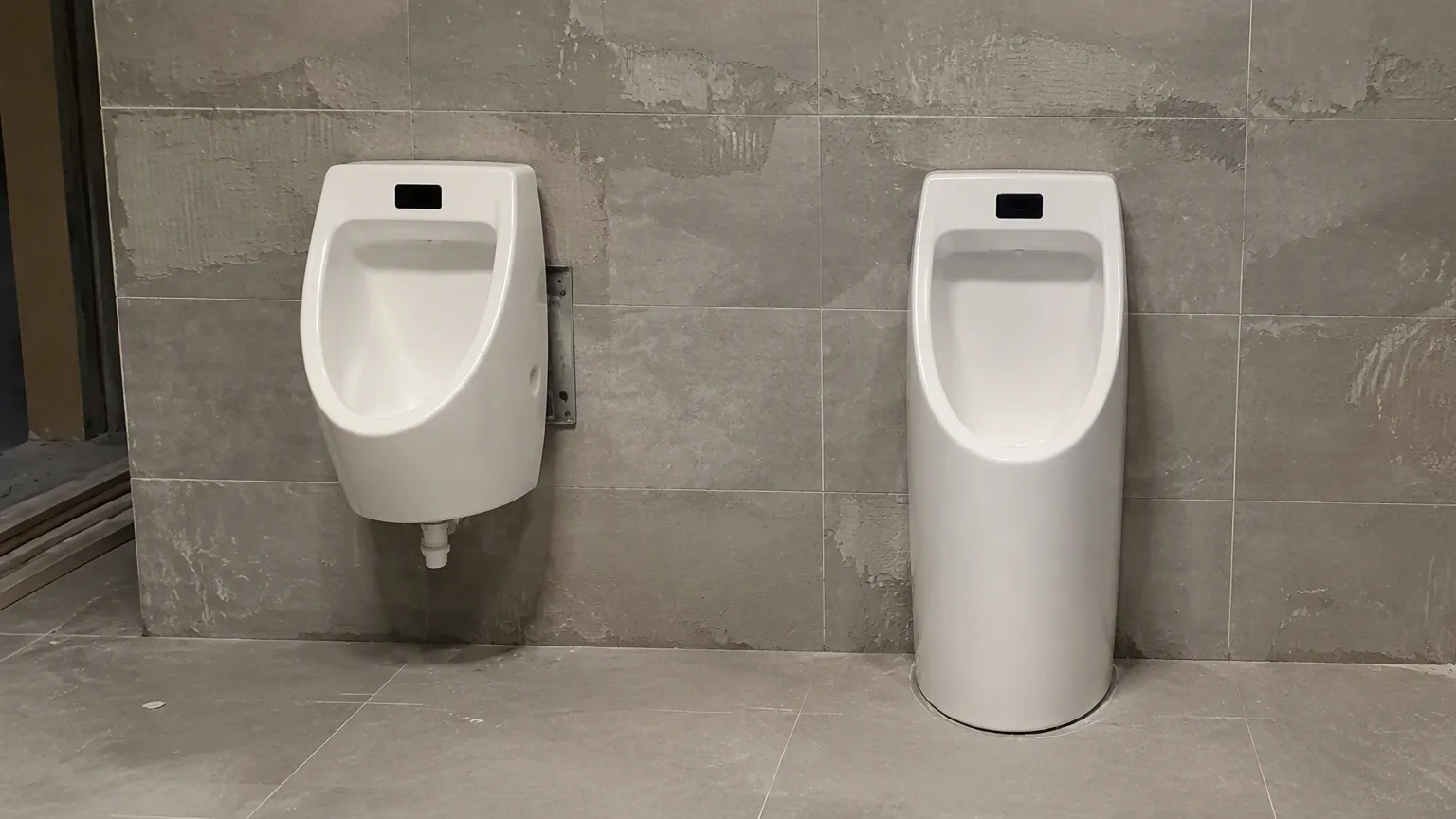
Wall-hung sensor urinals need a concealed carrier or a wall bracket rated for the fixture weight plus live load. The wall mount back inlet urinal with automatic sensor is a typical spec for this layout. The water supply enters through the wall or the bottom, and the waste outlet exits through the wall. Confirm the rough-in height for the supply before the wall is closed. Record it on the as-built drawing, and mark the valve access point on the tile layout.
Floor-mounted models sit on the floor with the waste outlet in the slab. The commercial male urinal with senso valve shows this layout. They are simpler to install and are common in stadiums and airports where wall structure is not available. The sensor and valve sit higher on the body, which changes the maintenance access point.
For either type, confirm the sensor range setting on site. A sensor that triggers at 1.5 meters will false-flush every time someone walks past the row. Most units let you adjust the detection distance and the flush delay.
The water supply line and the trap also need coordination. Urinal supply lines typically run 3/8 or 1/2 inch, and the trap outlet ties into a 2-inch waste line. In a bank of six or more fixtures, slope the waste line correctly. Otherwise the last urinal in the row drains slowly and traps odors. Add an accessible shut-off valve for each fixture so maintenance can isolate one unit without draining the whole row.
Sensor Failure Modes and Fixes
The failures that create callbacks are predictable. Knowing them lets you write the maintenance plan before the fixture is ordered.
False flushing is the most common complaint. It usually comes from an over-wide sensor range or a sensor aimed at the traffic lane. Fix it by narrowing the detection zone or angling the sensor down.
No-flush failures usually trace to a dead battery, a dirty sensor window, or a blocked solenoid. Specify units where the sensor window is easy to clean and the battery pack is accessible without removing the urinal.
Minerals in hard water build up on the valve seat over time. In regions with hard supply water, add a strainer upstream of the valve and schedule a descaling pass twice a year. That single step prevents most of the slow-flush complaints that come back to the contractor.
The “ghost flush” pattern, where the fixture flushes repeatedly overnight, points to a faulty sensor board or a power surge. Design-stage placement guidance lives in our commercial urinal specification guide.
Write the service interval into the building maintenance schedule. A quarterly check that cleans the sensor window, tests the solenoid, and records battery voltage catches most failures before users do. Keep one spare valve board per ten fixtures on site. Hardwired units should sit on a protected circuit, and battery units should use the factory-specified cell type. Third-party batteries with different discharge curves cause erratic behavior in some valves.
Common Specification Mistakes
The first mistake is mixing valve voltages in one project. A bank of urinals with mixed 6 V and 12 V valves creates a spare parts problem from day one. Standardize on one valve family.
The second mistake is forgetting the access panel. The valve, battery pack, and filter all need service access. If the access panel is behind a locked door or under a counter, maintenance will be skipped.
The third mistake is ignoring water pressure. Sensor valves need a minimum flow pressure to close cleanly. The floor standing urinal with back spud shows the outlet config that pairs with a pressure-regulating valve. Low-pressure sites need a pressure-regulating valve or a different flush valve selection.
The fourth mistake is skipping the flush volume check. The automatic fixture must match the water standard for the destination market.
FOB Price Benchmarks
Prices below are FOB China estimates with MOQ 100 to 300 units. They vary with valve brand, sensor type, and certification. Use them as a budget baseline, then ask each factory for a landed quote that includes the valve set, the carrier, and the flush plate. Compare like-for-like, because a bare bowl price looks attractive until the valve and the bracket are added.
| Item | Low End | Mid Range | High End |
|---|---|---|---|
| Wall hung urinal (manual) | $25 | $35-$50 | $70 |
| Wall hung urinal with sensor valve | $45 | $60-$90 | $130 |
| Floor standing urinal with sensor | $55 | $75-$110 | $160 |
| Sensor flush valve (retrofit) | $15 | $20-$35 | $55 |
| Battery pack and transformer kit | $5 | $8-$12 | $18 |
Budget 10 to 15 percent extra for WaterSense, SASO, or other market certifications. Lead times typically run 25 to 45 days, longer for custom sensor housings or branded valve sets.
Volume orders change the math. A 100-unit hotel or mall order can move the unit price down 10 to 20 percent. Asking for a valve family that the factory already assembles avoids tooling charges. Request a sample valve with the order. Test it against the site water pressure, and confirm the sensor reads through the actual bowl geometry before the container ships.
FAQ: Sensor Urinal Questions Contractors Ask
How long do sensor urinal batteries last? In normal commercial traffic, 6 to 12 months. High-traffic washrooms should use hardwired units or plan quarterly battery checks.
Can a manual urinal be converted to sensor? Yes, with a retrofit sensor flush valve that replaces the manual valve. Confirm the inlet size and the flush volume match the bowl.
What is the standard mounting height for a urinal? The rim typically sits 24 inches (610 mm) above the finished floor for adults, with accessible fixtures adjusted to code.
Do sensor urinals save enough water to justify the cost? Yes, when the flush volume drops from 1.0 to 0.5 gallons per use. The payback depends on traffic volume.
What causes a sensor urinal to flush randomly? An over-wide sensor range, a mis-aimed sensor, or a faulty sensor board. Adjust the range first, then replace the board.
Are automatic urinals more expensive to maintain than manual? Yes, on a per-fixture basis. Standardizing on one valve family and keeping spare boards cuts the cost. The maintenance saving comes from fewer hygiene complaints and predictable water use, not from cheaper service visits.
Contractor’s Sensor Urinal Checklist
- Standardize on one valve voltage and one valve family for the whole project.
- Confirm the sensor type matches the washroom traffic pattern.
- Verify the flush volume rating against the target water standard.
- Choose battery, hardwired, or hybrid power before the rough-in.
- Confirm the supply height and waste outlet position for the mounting type.
- Adjust the sensor range and flush delay during commissioning.
- Specify an accessible location for the valve and battery pack.
- Check the solenoid cycle rating in the factory datasheet.
- Order spare sensor boards and batteries with the main order.
- Confirm the certification documents match the destination market, and file a copy with the O&M manual for the building handover.
Conclusion
A touchless fixture looks simple, but a long list of decisions sits behind it. The sensing technology, the valve, the power source, and the rough-in all have to be specified together. The maintenance plan has to be written before the tile goes up. Standardize the valve family, confirm the flush volume, and adjust the sensors during commissioning. Spares go on the shelf before the punch list does. The rest of the job follows the drawings.
For the full range of fixture types and mounting options, see our commercial urinal buying guide for contractors. If you are specifying for an architectural project, the commercial urinal specification guide covers the design-stage mistakes to avoid. Compare wall hung and floor standing sensor models in the urinal category. Or contact us with your rough-in details for a matched quote.
References
- Urinal. Wikipedia. (https://en.wikipedia.org/wiki/Urinal)
- ICC Codes. International Code Council. (https://www.iccsafe.org/)
- WaterSense. U.S. EPA. (https://www.epa.gov/watersense)
- ADA Standards. U.S. Department of Justice. (https://www.ada.gov/)