
I have walked through enough newly built commercial bathrooms to spot the patterns. The same mistakes keep appearing, project after project, across hotels, airports, and office towers. A urinal partition ends too high, leaving an awkward sightline. A flush sensor sits where nobody’s hand naturally falls. A drain line slopes just enough to pass inspection but not enough to carry waste quietly for the next twenty years. These are not construction defects. They are specification errors. Someone drew a line on a floor plan without understanding what happens after the building opens.
This article covers the urinal specification mistakes I see most often in commercial projects. It also explains how to get them right the first time, whether the building is in London, Dubai, Singapore, or Chicago.
1. Partition Height and Sightlines: The Privacy Nobody Specifies
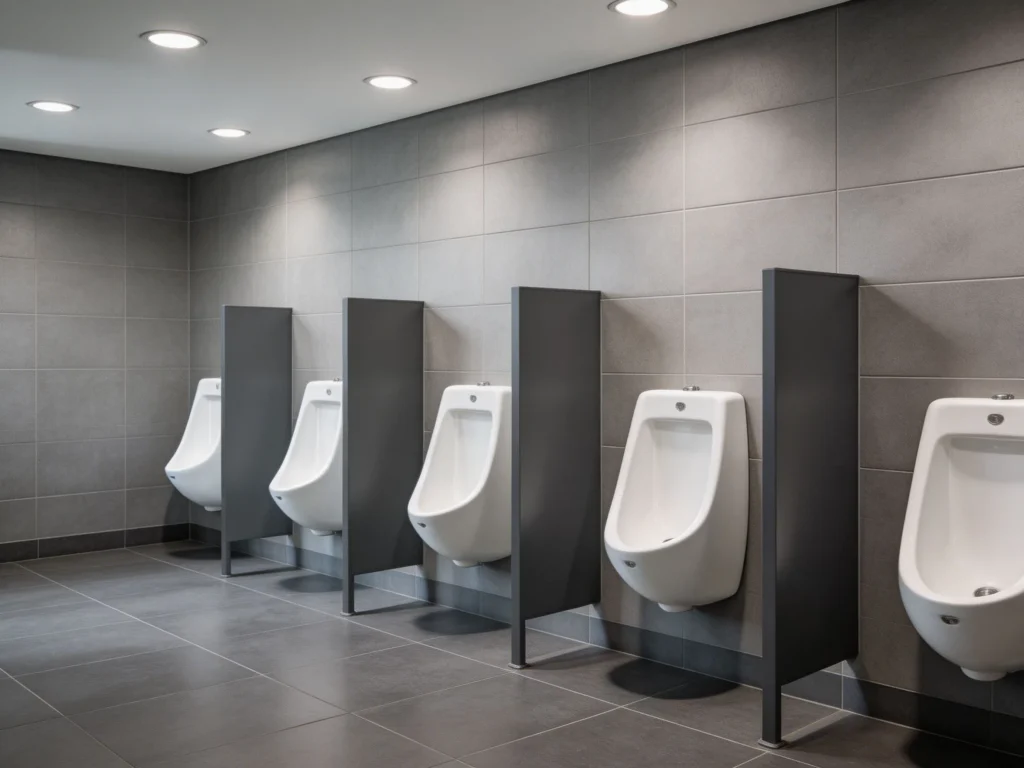
The most common urinal specification error is not the urinal itself. It is the partition. Architects routinely call out a standard divider on the elevation drawing and move on. However, partition height, depth, and side projection determine whether a user feels exposed or comfortable. These standards also vary significantly by region and building type.
The Fundamental Rule for Partition Depth
A urinal partition should extend at least 350 to 400 mm beyond the front rim of the urinal. I have seen partitions that stop flush with the urinal face. A person standing at that urinal has zero lateral privacy from anyone walking behind them. In a high-traffic airport restroom, that is a genuine user complaint. In an office building, it is a quiet dissatisfaction that nobody reports but everyone notices.
How High Should the Partition Go?
Partition height matters just as much as depth. A partition that stops at chest height does nothing for the person at the adjacent urinal. I recommend floor-to-1,400 mm minimum from finished floor level for standard installations. For projects aiming for a higher privacy standard — executive office floors, private clubs, premium hospitality — extend the partition to 1,600 mm or even full height. The cost difference is marginal in the context of the overall fit-out budget. The user experience difference, meanwhile, is significant.
Regional Privacy Expectations
In the Middle East, privacy expectations run higher than in many Western markets. Full-height partitions or individual urinal cubicles are increasingly standard in new luxury hotel and high-end commercial projects. I have worked on Dubai office towers where the client explicitly required full-height enclosed urinal stalls. The feedback from building occupants was overwhelmingly positive. In North America, the International Plumbing Code requires partitions for urinals installed closer than 760 mm center-to-center. But the code minimum is just that — a minimum. Good design exceeds it.
2. Mounting Height and Accessibility: One Size Does Not Fit All
I can walk into almost any commercial bathroom built in the last decade and spot urinals mounted at the wrong height within thirty seconds. The error is not a matter of aesthetics. It is a matter of daily usability for every person who walks through the door.
Standard Adult Height
The standard rim height for a wall-hung urinal in a commercial male bathroom ranges from 600 to 650 mm from finished floor level. This range accommodates the majority of adult users comfortably.
Children and Accessible Heights
Lower urinals — rim height around 430 to 480 mm — must serve children in schools, family restrooms, and childcare facilities. Accessible urinals, required by ADA in the US and equivalent accessibility codes in Europe and the Middle East, need a rim height of no more than 430 mm. They also require clear floor space for wheelchair approach and grab bars mounted on the adjacent wall.
The Accessibility Mistake I See Repeatedly
The mistake I see repeatedly is spec’ing the accessible urinal at the same height as the standard units. Designers often assume that grab bars will compensate. They will not. A wheelchair user cannot comfortably use a urinal whose rim sits 600 mm off the floor. The forward reach and the angle are simply wrong. The grab bars help with stability, not with reach geometry.
Another common height error involves spec’ing standard adult-height urinals in a secondary school washroom. Most users there are 12 to 16 years old. The urinals are usable but awkward. A 580 to 600 mm rim height would serve that age group far better than the full adult 650 mm.
3. Sensor Placement: The Wave Dance Nobody Enjoys
The infrared flush sensor on a commercial urinal has one job. It must detect a user standing in front of the urinal, and it must flush after the user steps away. When someone positions the sensor incorrectly, the user ends up waving a hand in front of it, or stepping back and forward until the flush triggers. This “urinal dance” is a universal commercial bathroom experience. It almost always comes from a sensor position error during specification or installation.
The Optimal Sensor Position
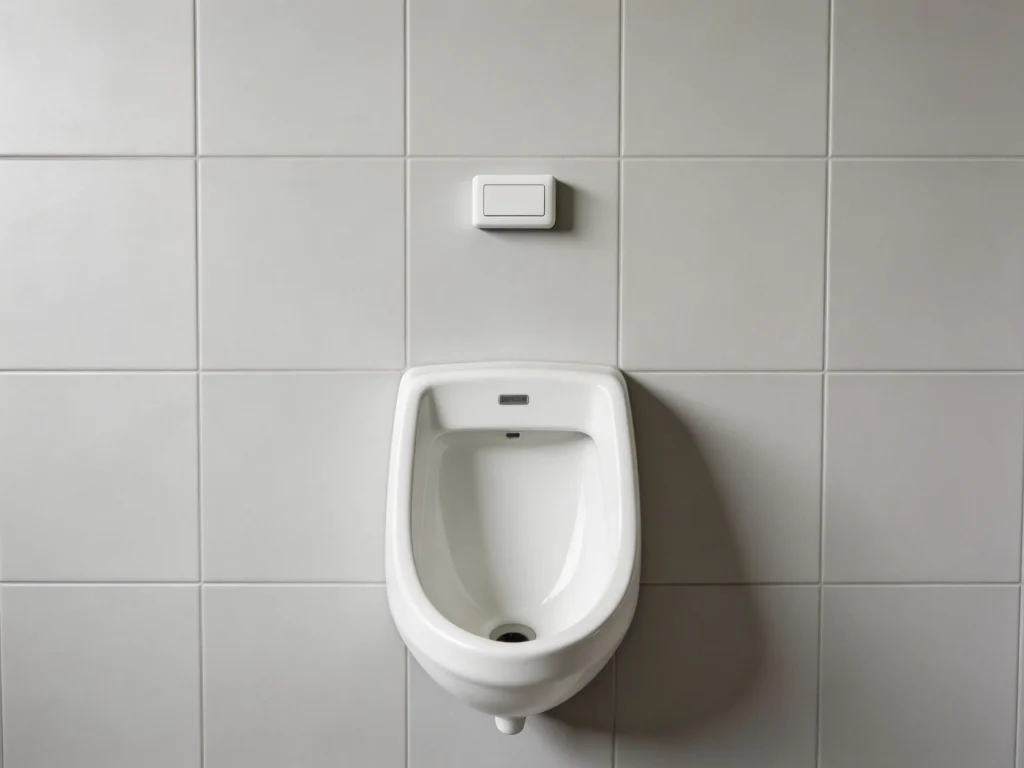
The optimal sensor position sits on the wall directly above the urinal, centered horizontally, at approximately 1,200 to 1,350 mm from finished floor level. This position aligns with the torso of a standing adult. That zone is exactly what the sensor is designed to read. Sensors mounted too high — above 1,500 mm — miss shorter users. Sensors mounted too low detect the lower body inconsistently. They may also trigger from passing foot traffic in narrow bathroom layouts.
Side-Mounted Sensors: An Alternative with Complications
Side-mounted sensors on the partition wall introduce their own complications. You must position them to avoid detecting the person at the adjacent urinal. This requires careful angling and sensitivity adjustment. I generally recommend rear-wall center mounting wherever the urinal design supports it. The detection zone is more predictable, and the installation is simpler to coordinate across multiple urinal bays.
Battery Access: A Maintenance Detail
Battery-powered sensors avoid the need to run wiring to each urinal location. However, the battery compartment must be accessible for replacement without removing the urinal from the wall. I have seen sealed sensor units where a dead battery meant replacing the entire flush valve assembly. That is a maintenance headache that a small design decision could have prevented.
4. Water Supply and Drainage: The Pipes Behind the Wall
The visible part of a urinal is the china fixture on the wall. The invisible part — the water supply, the waste pipe, the vent — determines whether the bathroom functions quietly and odour-free for the life of the building.
Trap Design and the Dry Trap Problem
A urinal trap holds water to create a seal that prevents sewer gas from entering the bathroom. In a busy commercial bathroom, this trap should never dry out. The urinal gets flushed dozens or hundreds of times per day. But in a low-use bathroom — a private office floor, a storage area washroom, a seasonal facility — the trap can dry out between uses. As a result, sewer odour seeps in.
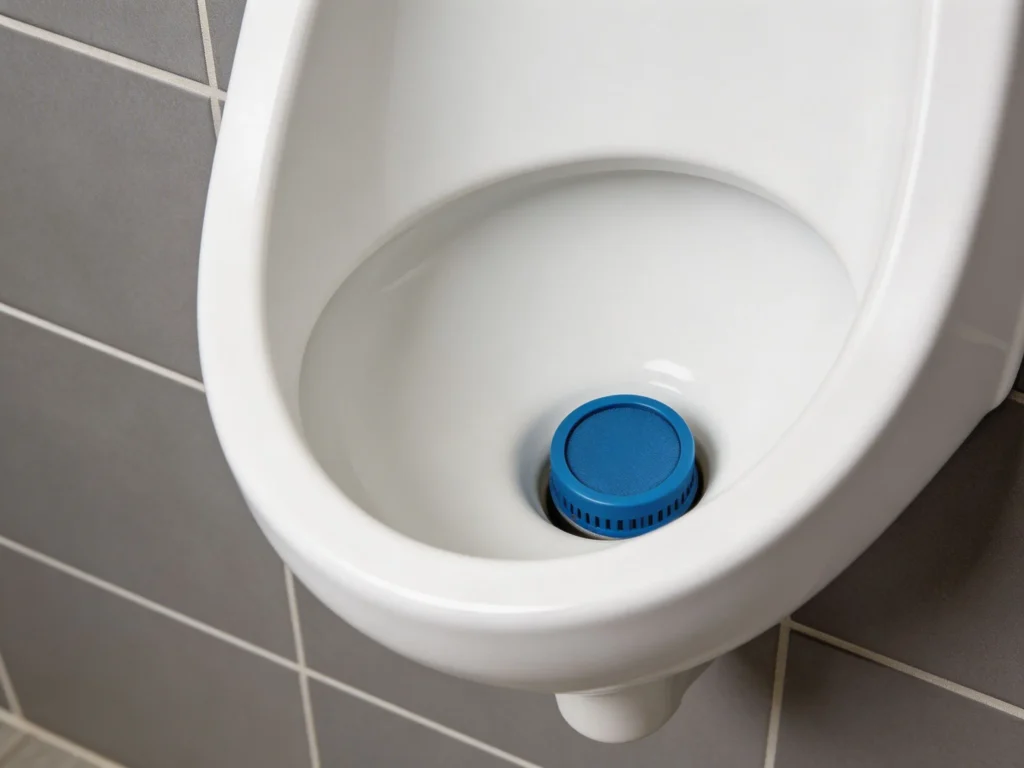
The specification solution is either a urinal with an integral trap that holds a larger water seal, or a waterless urinal that uses a chemical or mechanical seal instead of a water trap. I have seen buildings where waterless urinals solved a persistent odour problem in low-use bathrooms. They eliminated the water seal altogether and replaced it with a liquid-seal cartridge that does not evaporate.
Waste Pipe Sizing and Slope
For flush urinals in high-use bathrooms, the waste pipe diameter and slope are the critical numbers. A 50 mm diameter waste pipe is the minimum for a single urinal. For a bank of urinals, the common waste line should be 75 mm or larger. It must slope at a minimum of 2% (20 mm per meter). A shallower slope allows solids and uric acid deposits to settle in the pipe. This eventually causes blockages and odour. I have reviewed commercial bathroom drawings where the common urinal waste line sloped at 1%. Within two years, the building maintenance team was hydro-jetting the line quarterly.
Water Supply and Flow Rate
A standard commercial urinal requires 1.0 to 3.8 liters per flush. The exact volume depends on the model and local water efficiency regulations. Low-flow urinals operating at 1.0 to 1.9 liters per flush are the standard in Europe, Australia, and Singapore. In the US, WaterSense-certified urinals flush at no more than 1.9 liters. In the Middle East, where water conservation regulations are tightening, I see projects spec’ing 1.0-liter flush urinals as a matter of code compliance.
The water supply line must deliver the required flush volume at adequate pressure. A 15 mm supply line is standard for a single urinal. For a bank of urinals, the supply should handle simultaneous flush demand. In high-traffic bathrooms, sensors are likely to trigger at the same time during peak usage.
5. Waterless Urinals: The Solution Nobody Maintains Correctly
The Technology and the Water Savings
Waterless urinals have been commercially available for over two decades. The technology is mature. The water savings are genuine — a single waterless urinal saves between 40,000 and 150,000 liters of water per year compared to a standard flush model. The exact figure depends on traffic volume. In a large office building with a hundred urinals, the annual water savings are measured in millions of liters.
Why They Fail in the Real World
Despite these advantages, I consistently encounter buildings where waterless urinals smell bad. The building manager then blames the technology. In almost every case, the fault is not the urinal. It is the maintenance program.
A waterless urinal uses a replaceable cartridge or a liquid sealant. This floats on top of the urine in the trap, blocking sewer gas. The cartridge must be replaced on a schedule — typically every three to six months, or after a set number of uses, whichever comes first. The liquid sealant must be topped up regularly. When the maintenance team skips these replacements, the seal fails and the bathroom smells. Budget cuts or a lack of tracked schedules are usually the culprits.
The Specification Fix
The specification fix is to mandate a maintenance contract or a cartridge replacement schedule in the building operations manual. In addition, spec a urinal with a simple, widely available cartridge rather than a proprietary system that only one supplier stocks. In Southeast Asia and the Middle East, supply chains for specialty plumbing components can be unreliable. I strongly recommend choosing a waterless urinal cartridge that at least two local distributors stock. A urinal with a unique, single-source cartridge may save water perfectly for two years. Then it will sit out of order for six months while the replacement part ships from a factory in Europe.
6. Urinal Screens and Hygiene: The Little Things That Count
The Urinal Screen: Not an Afterthought
The urinal screen — that small plastic or rubber mat that sits inside the bowl — gets treated as an afterthought in most specifications. It should not be. A quality urinal screen catches debris, reduces splashback, and holds a deodorizing block that controls odour between flushes. A cheap screen curls at the edges within a week. It then ends up floating in the trap, blocking the drain.
I spec urinal screens that are flexible enough to conform to the bowl shape. The drainage slots must align with the urinal’s outlet. The deodorizing insert should be replaceable without removing the entire screen. The cost difference per unit is negligible. The maintenance difference over a year is substantial.
Bowl Geometry and Splashback
Splashback is another under-addressed specification issue. Urinal bowl geometry varies significantly between manufacturers. A deep bowl with a contoured back wall reduces splashback far more effectively than a shallow, flat-backed design. If the project allows for product selection rather than whatever the contractor supplies, I test the splashback characteristic of the exact urinal model. I pour water into a showroom unit and watch the result. The difference between models is immediately visible. It directly affects how wet the floor in front of the urinal stays throughout the day.
7. Floor Drainage and Cleaning Access
Why a Floor Drain Matters
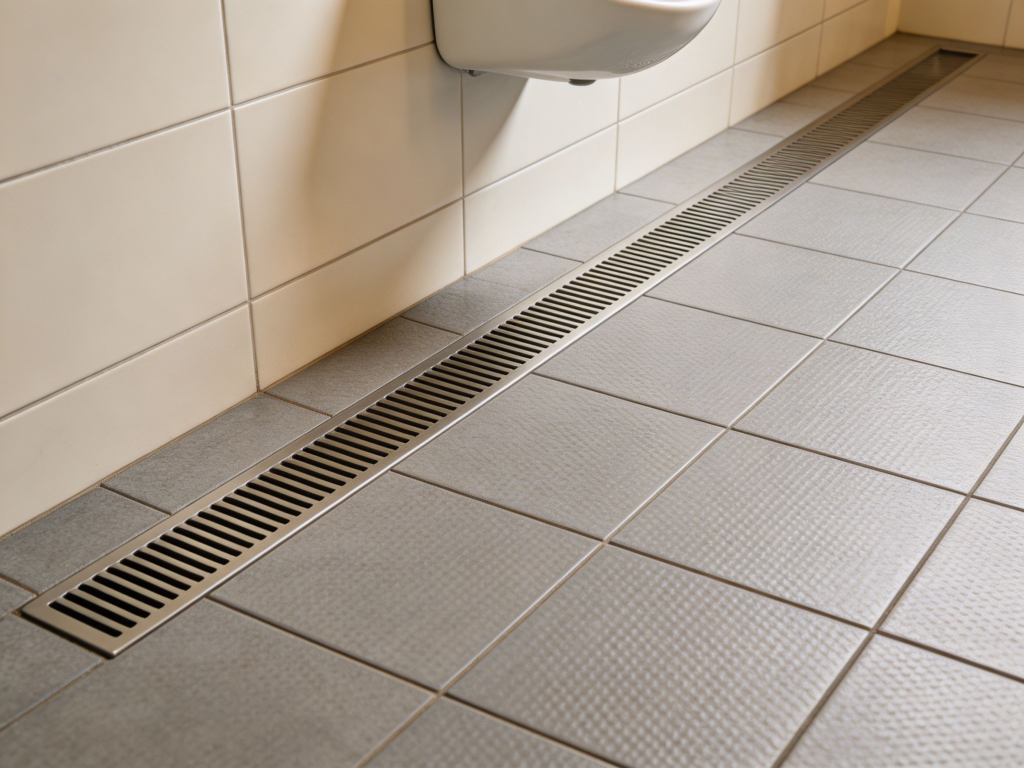
The floor in front of a urinal bank gets wet. This is a fact of commercial bathroom operation, regardless of how well the urinals are designed. Splashback, overspray from cleaning, and occasional user misdirection all contribute. If the floor in front of the urinals has no drain, that water sits, evaporates, and leaves behind uric acid residue. This residue generates odour over time.
I always recommend a continuous floor drain — a trench drain or a linear slot drain — in the floor immediately in front of urinal banks in high-traffic commercial bathrooms. The drain should run parallel to the urinal wall. Position it approximately 300 to 400 mm out from the urinal face. This catches overspray and cleaning water. It also allows the cleaning crew to hose down the area without flooding the rest of the bathroom.
Choosing the Right Floor Finish
The floor finish in front of urinals must also be specified with real-world cleaning in mind. Polished porcelain tile looks beautiful on a mood board. However, under a urinal bank that gets scrubbed daily with strong chemicals, it develops a hazy film from acid etching within months. I spec unpolished, through-body porcelain tiles for urinal bay flooring. They need a slip resistance rating of R10 or higher. The matte finish hides etching, and the slip resistance is a genuine safety requirement, not a design preference.
8. Regional Code Variations That Trip Up International Projects
A specification that works in one country can fail a building inspection in another. Here are the regional urinal specification differences I have learned to check before finalizing any international project drawing set.
Europe
The European standard EN 13407 governs wall-hung urinal specifications. Most European commercial bathrooms favor individual urinal cubicles or deep-partition bays with a high standard of privacy. Water consumption is tightly regulated under the EU Water Label scheme. Flush volumes of 1 to 2 liters per flush are standard. Waterless urinals enjoy wide acceptance and support from maintenance infrastructure in most major European cities.
Middle East
The Gulf states use a mix of European and American standards. The choice depends on the project’s design origin and consultant team. Urinal privacy expectations are high. Full-height partitions or enclosed urinal stalls are common in premium commercial projects. Water conservation is increasingly mandated through Estidama in Abu Dhabi and Green Building Regulations in Dubai. These regulations reward low-flow and waterless urinal specifications. However, the key specification error I see in the Middle East involves using chrome-plated metal urinal partitions in coastal locations. Salt-laden air corrodes the plating within two years. Stainless steel grade 316 or solid surface partitions are the correct specification for coastal projects.
Southeast Asia
Floor-standing urinals — often called squat urinals or trough urinals — remain common in older commercial buildings, public facilities, and industrial sites across the region. Wall-hung urinals are standard in new commercial construction. High humidity and inconsistent maintenance mean that waterless urinals require a funded and enforced cartridge replacement program. Without it, they fail within months. I recommend spec’ing waterless urinals only if the building has a documented maintenance contract in place.
Americas
The International Plumbing Code and ADA set the compliance framework for US commercial bathrooms. Urinal rim height of 430 mm maximum for accessible units is non-negotiable. Clear floor space of 760 mm wide by 1,220 mm deep for forward approach is also required. Grab bars on the adjacent wall complete the accessible setup. In Canada, similar accessibility requirements apply under provincial building codes and the National Building Code. Latin America follows a mix of local codes, often influenced by US standards. The emphasis there falls more on cost-effective materials and simpler maintenance profiles.
9. A Specification Checklist for Commercial Urinal Projects
- Partition depth: Extend at least 350 mm beyond the urinal front rim. For privacy markets, specify full-height or enclosed stalls.
- Mounting height: Standard rim at 600–650 mm. Accessible rim at 430 mm maximum. Children’s rim at 430–480 mm. Measure from finished floor.
- Sensor position: Center-mounted above urinal at 1,200–1,350 mm AFFL. Avoid side-mount detection overlap.
- Waste pipe: Minimum 50 mm diameter per urinal. Common line minimum 75 mm. Slope at 2% or greater.
- Floor drain: Specify a trench or slot drain parallel to the urinal wall, 300–400 mm out from the urinal face.
- Floor tile: Unpolished through-body porcelain, R10 slip resistance minimum. Avoid polished finishes under urinal banks.
- Waterless urinal maintenance: Specify cartridge replacement schedule in the building operations manual. Verify local spare parts availability for the selected model.
- Regional code check: Verify accessibility standards, water efficiency requirements, and material suitability for the project’s climate and location.
Final Thoughts: The Urinal Wall Is a System, Not a Fixture
A urinal is not a standalone product. It is part of a system. That system includes the partition, the sensor, the trap, the drain line, the floor finish, and the maintenance program that will clean it every night for the next twenty years. When an architect treats the urinal as a symbol on a floor plan and specifies it in isolation, the system fails somewhere down the line. The failure usually appears within the first two years of occupancy. It is also usually expensive to retrofit.
The good news is that getting it right does not cost more. It costs attention. Check the partition projection. Measure the sensor height against the expected user population. Slope the waste line properly. Put a drain in the floor. Verify that the maintenance team can actually source the replacement cartridges. These are small decisions on a drawing set. They make the difference between a bathroom that works silently for a decade and one that smells, splashes, and frustrates every person who uses it.