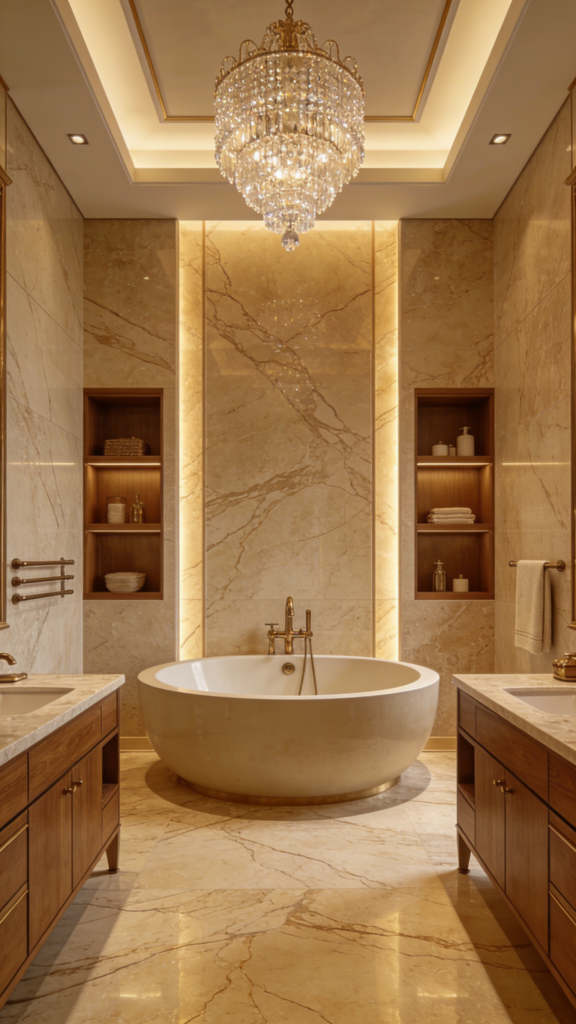

A contractor in Dallas ordered 60 acrylic bathtubs for a hotel renovation. Six weeks after install, the first callback came in: a hairline crack along the drain flange on unit 14. By the end of the season, eleven tubs had failed the same way. Blame landed on the install crew at first. But the crew’s foreman pulled the spec sheet and found the answer. Those tubs were 2 mm acrylic with a single sprayed backing layer. And the price had looked too good to ignore.
Material was not the problem. The real failure sat in the specification.
An acrylic bathtub is only as good as three things. Sheet thickness, reinforcement underneath, and factory QC all decide the outcome. This guide walks contractors through the material science and the factory checks that matter. It also covers the price signals that separate a 10-year tub from a 3-year tub.
Why Acrylic Dominates Contractor Bathtub Specs
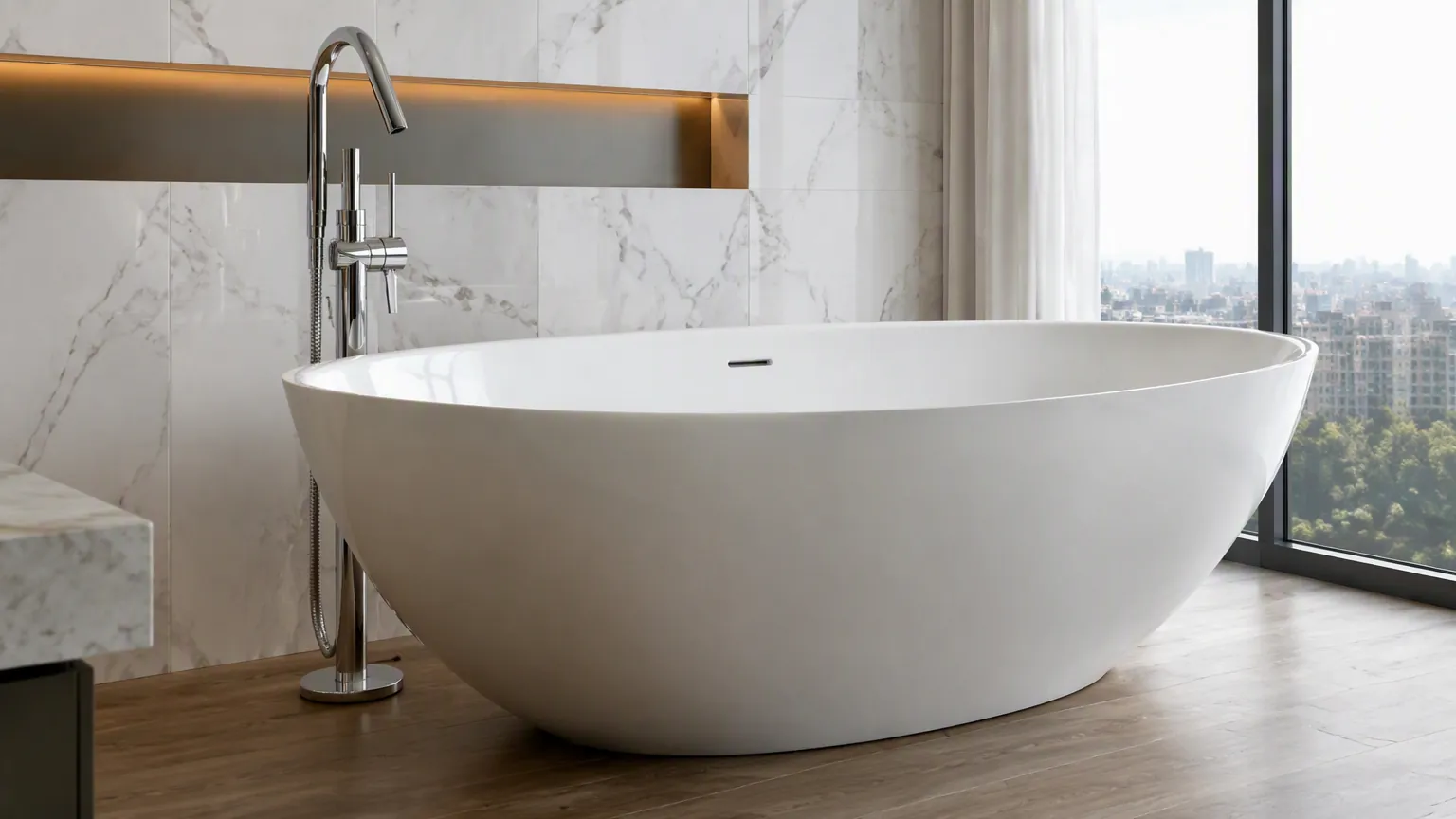
Acrylic is the default material for hotel and apartment bathtubs for three practical reasons: weight, repair, and cost. A 1700 mm freestanding acrylic tub weighs 30-45 kg, versus 120-180 kg for cast iron. For a full overview of tub categories, see the bathtub buying guide. Two installers can carry it up stairs without a crane. The tub also does not stress floor joists the way enameled steel does. When a surface scratch appears, a contractor can wet-sand it out on site. Cast iron cannot be repaired that way. Cast iron cannot be repaired that way.
The material also prices well. FOB China estimates for a standard 1500 mm alcove acrylic tub run $45-90 depending on sheet thickness and backing. Cast iron equivalents start near $180. For a 200-room project, that gap decides the budget. Premium specifications are covered separately in the premier bathtub guide.
How Acrylic Bathtubs Are Made: What the Layers Mean
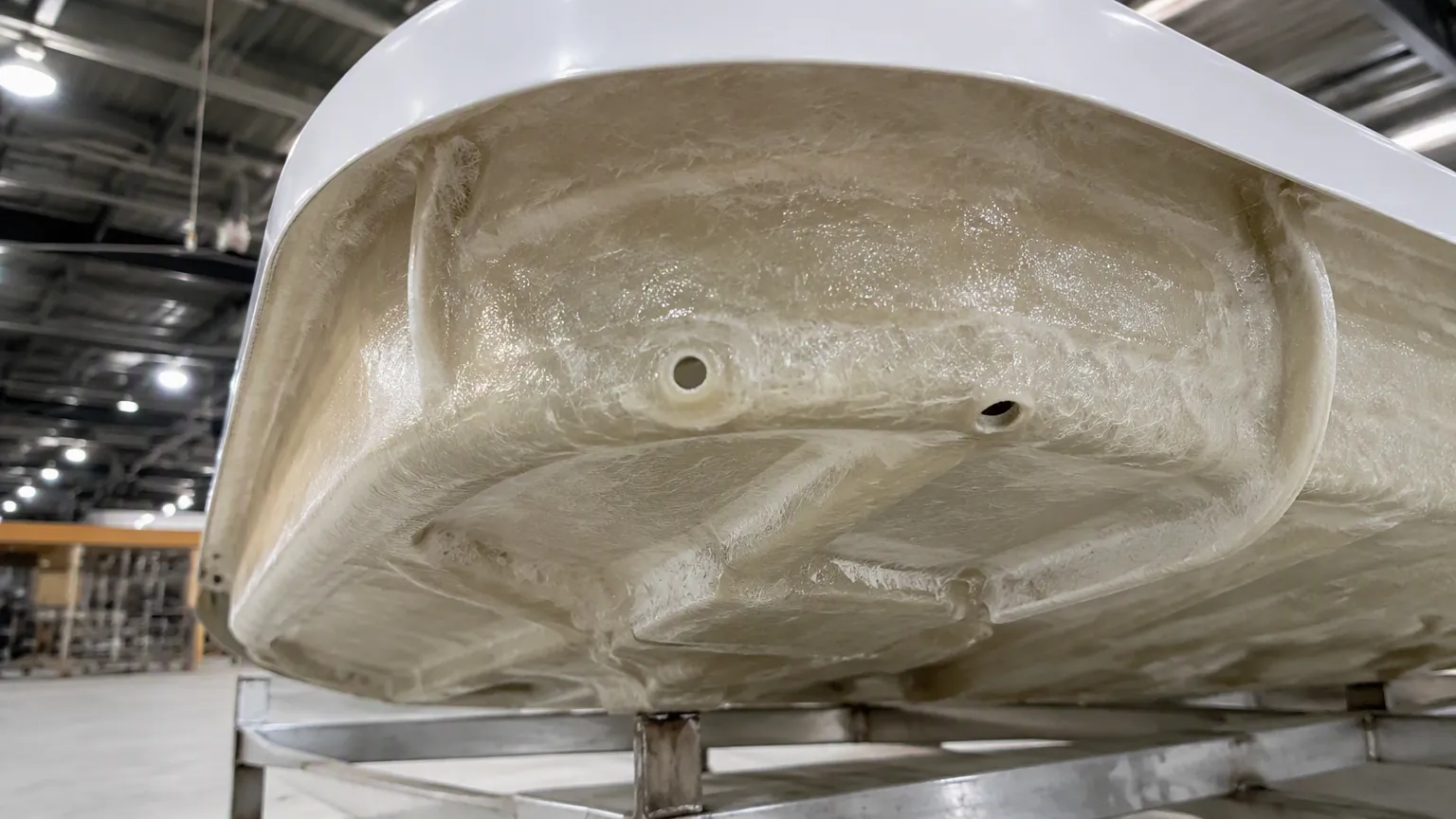
An acrylic bathtub starts as a vacuum-formed sheet of polymethyl methacrylate (PMMA), heated and drawn over a mold. The sheet keeps its glossy, non-porous surface. Then a backing layer of fiberglass resin or sprayed material is applied to the underside for rigidity. That layer carries the load. Quality lives in three numbers: sheet thickness, backing type, and backing coverage.
Sheet thickness is the first spec to verify. Cheap tubs use 2-3 mm acrylic. Commercial-grade tubs use 4-5 mm. The thicker sheet resists flexing. That resistance prevents the stress cracks that appear around drain flanges and rim edges. A simple way to check: press on the bottom of the tub with your palm and watch the surface react. A 3 mm sheet flexes visibly; a 5 mm sheet feels solid.
Backing type matters more than most buyers assume. It is also the spec that factories most often change without telling you. Hand-laid fiberglass mat (chopped strand) gives the strongest bond. It also distributes point loads across the shell. Sprayed gel backing is cheaper but thinner and can delaminate under repeated thermal cycling. For hotel use, specify fiberglass mat reinforcement on the bottom panel and around the drain. Factories that build for this segment list their options on the bathtub manufacturer page.
Backing coverage varies by factory. Some apply reinforcement only to the flat bottom, leaving the walls and rim flexible. Others back the entire shell. For a tub that will sit on a full mortar bed, bottom-only backing is acceptable. For a freestanding tub supported on a pedestal, full coverage prevents flex cracks at the base.
Acrylic vs. the Alternatives: What the Comparison Table Misses
Most material comparison tables list weight, price, and heat retention. Contractors should add two columns: field repairability and installation tolerance.
| Property | Acrylic | Stone resin | Cast iron | Fiberglass |
|---|---|---|---|---|
| Weight (1700 mm tub) | 30-45 kg | 60-90 kg | 120-180 kg | 20-30 kg |
| Surface repair | Wet-sand, polish | Fill and recoat | Professional reglaze | Gel coat repair |
| Scratch resistance | Good | Good | Excellent | Fair |
| Heat retention | Good | Excellent | Excellent | Poor |
| Flex under load | Low (5 mm) | Very low | None | High |
| FOB price (est.) | $45-90 | $120-220 | $180-350 | $30-55 |
The table hides the field reality. Cast iron holds heat beautifully. Yet a contractor cannot fix a chipped rim without a specialist. Stone resin looks premium. It weighs enough to require floor reinforcement in older buildings. Fiberglass is cheap and light. It flexes, and the gel coat dulls within two years in commercial use. Acrylic sits in the middle. It is light enough to handle, tough enough to repair, and cheap enough to replace if a unit arrives damaged.
The Two Failure Modes That Kill Cheap Acrylic Tubs
Cracking around the drain flange. The drain hole is the thinnest, most stressed point on any tub. This is where the sheet flexes first, and where most warranty photos are taken. When a 2 mm sheet flexes under a bather’s weight, the flange area works like a hinge. Hairline cracks appear within months. The fix is specification, not installation: require 4-5 mm sheet and fiberglass backing around the drain area.
Delamination of the backing. Sprayed backing can separate from the acrylic sheet when the tub is filled with hot water repeatedly. The symptom is a hollow sound when you tap the bottom, followed by surface crazing. This failure is invisible at delivery and appears 12-18 months later. A contractor can catch it early. Tap every tub at the warehouse before shipment.
Factory Quality Checks: A 10-Minute Verification Routine
When you visit a factory or inspect samples, run these checks in order. The whole routine takes about ten minutes per tub, and it catches the failures that surface after install. Most factories will walk you through their own QC sheet as part of the tour.
- Tap test. Knock on the bottom panel and the walls. A solid, uniform sound means the backing is bonded. A hollow rattle means the backing has separated, and the tub should be rejected on the spot.
- Thickness gauge. Ask for the QC record or measure the edge with a caliper. Confirm the sheet is 4-5 mm, not 2-3 mm.
- Flex test on a sample. Place a sample over two supports and press the center. A commercial-grade sheet should not deflect more than a few millimeters.
- Surface check. Look for pinholes, waviness, or dull patches under raking light. Gloss should be even across the whole shell.
- Drain area inspection. Confirm extra reinforcement around the drain flange. This is the first place failures appear.
- Backing coverage documentation. Request the factory’s QC sheet showing where reinforcement was applied and the resin type used.
Certifications to Request, and What They Actually Prove
Certifications are market-specific, so match them to the destination country rather than collecting a wall of logos.
- ANSI Z124.1.2 covers plastic bathtub and shower units in the US. It tests structural integrity, surface resistance, and stain resistance. Ask the supplier for the certificate for the exact model number, not the factory’s general claims about its whole product range.
- cUPC / UPC matters for plumbing connections in California and other US states that enforce the Uniform Plumbing Code.
- CE marking applies to the European market. Confirm the tub meets the relevant harmonized standard for bathroom fixtures.
- WaterMark is mandatory for Australia and New Zealand. Verify it is listed for the model number on the order.
A factory that cannot produce the model-specific certificate will usually offer a discount to close the deal quickly. Decline it. The certificate is cheap insurance against a failed inspection at the port. Request the certificate again in writing with the PO, so the document trail is complete before payment.
Wholesale Pricing Benchmarks for Acrylic Bathtubs
Prices below are FOB China estimates with MOQ 100-300 units per model, current for mid-2026. Lead times run 25-45 days depending on mold availability and finish options.
| Configuration | Sheet thickness | FOB estimate | Notes |
|---|---|---|---|
| 1500 mm alcove | 3 mm | $45-60 | Budget spec, thin backing |
| 1500 mm alcove | 4-5 mm | $65-90 | Commercial-grade, fiberglass mat |
| 1700 mm freestanding | 4-5 mm | $120-180 | Includes pedestal and drain kit |
| 1800 mm freestanding oval | 5 mm | $160-220 | Premium, full backing coverage |
The price spread between budget and commercial grade is roughly 40-50%. For current factory-direct pricing, check the factory-direct bathtub suppliers product page. That spread buys sheet thickness, backing quality, and QC documentation. On a 100-tub order, the difference is $2,000-4,500. One failed tub with freight, removal, and reinstall costs more than that. The calculation ignores the schedule impact, which usually hurts worse than the invoice.
Common Mistakes in Acrylic Bathtub Orders
Skipping the drain kit specification. Tubs ship without drains by default in most factories. If the order does not state the drain type and finish, the contractor discovers a missing part at the jobsite. The schedule then slips a week.
Assuming all 1700 mm tubs fit the same footprint. Acrylic tubs are vacuum-formed, so the external shape varies by mold. Check the actual outer dimensions and the tub’s support requirements against the measured bathroom layout before placing the order.
Ignoring the reinforcement spec on freestanding models. A freestanding tub on a pedestal flexes differently than an alcove tub on a mortar bed. If the backing is bottom-only, the base can crack under load.
Ordering white gloss without a finish sample. Gloss levels vary between factories. What looks “white” in a photo can be matte in person. Request a physical sample card before committing to a container.
Not testing the first article. For any order over 50 units, ask for a pre-production sample. Test it with the 10-minute routine above. The cost of one sample is trivial compared to a container of bad tubs. Ship it by air freight if the lead time is tight, and keep the sample as the reference for the production run.
Installation Notes That Affect the Material Choice
The way a tub is installed changes which material spec makes sense. Alcove tubs sit on a mortar bed or a leveling frame, so the bottom panel carries most of the load. Freestanding tubs balance on a pedestal base, which concentrates the weight on a small contact area. That difference explains why the same acrylic sheet can perform well in one project and crack in another.
For alcove installs, set the tub on a full mortar bed instead of shims. A mortar bed supports the entire bottom panel and spreads the load evenly. Contractors who shim the corners create a point-load condition. The tub then flexes between the shims every time it is filled. The result is a hairline crack at the drain within the first year.
For freestanding installs, confirm the pedestal base is level and the floor under it is rigid. Acrylic tubs need a stable foundation because the shell itself is not structural. A soft subfloor or a warped pedestal transmits movement into the tub body. The backing layer is the first thing to fail.
Water supply placement is another variable. Most factories drill the tub for the faucet configuration at production time. If the order does not state the hole pattern, the tub arrives undrilled. The contractor then has to drill on site. Drilling acrylic with a hole saw is routine, but it voids the surface warranty in some factories. State the hole pattern in the PO and save the callbacks.
Drain location follows the same logic. Confirm whether the drain is centered, offset, or floor-mounted before ordering. A mismatch between the tub drain and the building drain means a plumbing rework that the material spec cannot fix.
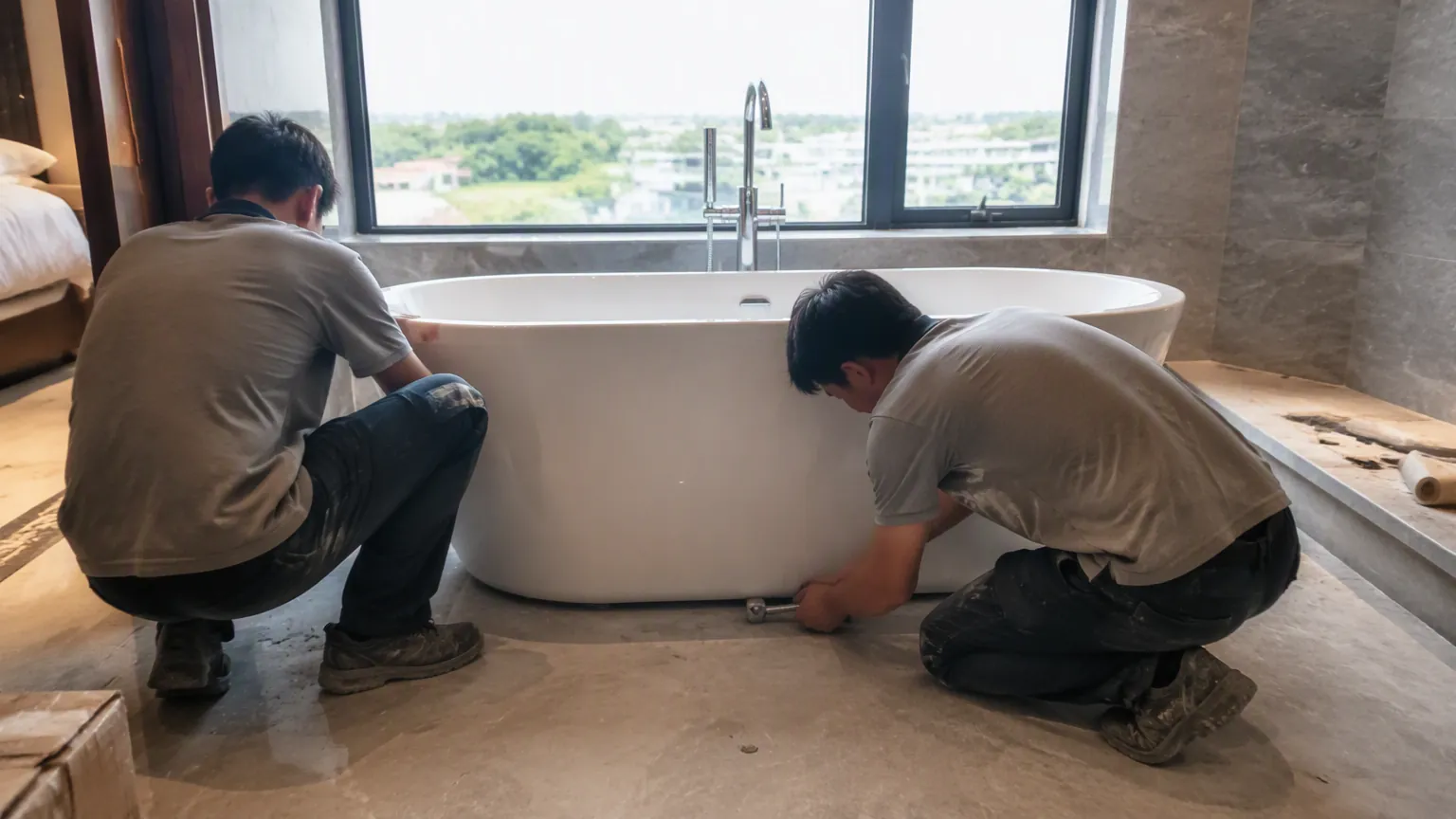
Finally, plan the access for the overflow. Some acrylic tubs include an overflow assembly that must be connected behind the shell. If the tub is installed against a wall with no service opening, the overflow cannot be serviced. The only fix is removing the tub. Add an access panel or choose a tub with a front-accessible overflow for tight layouts.
Frequently Asked Questions
Is a 3 mm acrylic tub acceptable for residential use?
Yes, for light residential use with a mortar bed. For hotels, apartments, or any rental turnover, spec 4-5 mm. The upgrade is roughly $15-25 per unit.
How long does an acrylic bathtub last?
With 4-5 mm sheet and proper backing, expect 15-20 years in commercial use. Thin 2-3 mm tubs typically start showing stress cracks in 3-5 years.
Can you repair a cracked acrylic bathtub?
Surface scratches can be wet-sanded and polished. Cracks through the sheet need a professional repair kit with acrylic filler and color match. Test the repair for water tightness after it cures.
What is the difference between acrylic and fiberglass tubs?
Acrylic is a solid PMMA sheet with a consistent color through the thickness. Fiberglass uses a gel coat surface that is thinner and dulls faster. Acrylic costs more and lasts longer.
Do acrylic tubs need special cleaning products?
Avoid abrasive pads and solvent-based cleaners. Use mild soap or non-abrasive bathroom cleaner. This is a maintenance briefing you should hand to the client with the handover documents.
Why do some acrylic tubs feel flimsy while others feel solid?
The difference is sheet thickness and backing coverage. The tub that feels flimsy is usually 2-3 mm with sprayed backing. The solid-feeling tub is 4-5 mm with fiberglass mat reinforcement.
Contractor’s Checklist Before You Order
- Confirm sheet thickness: 4-5 mm for commercial, 3 mm only for light residential
- Specify backing: fiberglass mat on bottom and drain area
- Verify outer dimensions against the bathroom layout
- Order the drain kit and finish in the same PO
- Request ANSI Z124.1.2 certificate for the exact model
- Confirm destination-market certification (cUPC, CE, or WaterMark)
- Ask for a physical finish sample card
- Run the 10-minute QC routine on a pre-production sample
- Confirm MOQ and lead time (typically 25-45 days)
- Confirm packaging: foam cradle or wood crate for freestanding models
Conclusion
The Dallas contractor who lost eleven tubs did not buy a bad material. He bought a bad specification at a good price. Acrylic remains the most practical bathtub material for contractors who control the spec. It is light enough to install, repairable in the field, and priced for volume projects. The discipline is the same as any other material purchase. Verify the sheet, verify the backing, verify the certificate, and test the first article. Do that, and the acrylic tub you specify today will still be holding water when the warranty runs out.
For the full range of factory-direct options, see the bathtub category or compare models through the bathtub buying guide.