

I once watched a luxury hotel project lose six weeks because the specified bathtub arrived with a hairline crack nobody spotted until the bathroom was fully tiled. This is the kind of risk that premier bathtubs carry—they are heavier, more expensive, often custom-finished, and subject to lead times that can stretch beyond four months. Removing that damaged tub meant dismantling a marble surround, redoing waterproofing, and explaining to the client why the suite wouldn’t be ready for the soft opening. The tub itself wasn’t defective by manufacturing standards. The issue was that the packaging hadn’t been designed for the freight route it traveled. Furthermore, the site team hadn’t been briefed to inspect it before the stone masons moved in.
High-end bathtub specification carries risk that standard sanitary ware doesn’t. When something goes wrong with a premier bathtub, the cost isn’t just the replacement unit. It’s the tile work, the waterproofing, and the mechanical access panel that now needs to be cut into a finished ceiling below. This guide is written for contractors, project managers, and procurement teams. It covers how to get premier bathtubs to arrive on site intact, install correctly the first time, and satisfy a client who expects perfection.

1. What “Premier” Actually Means for Premier Bathtubs
The word premier gets used loosely in product marketing, but in a specification context, premier bathtubs have real implications. A premier bathtub is not simply expensive. It occupies the intersection of material quality, manufacturing precision, and the ability to meet project-specific requirements that standard bathtubs cannot handle.
The Four Material Categories That Define Premier Bathtubs
Premier bathtubs fall into four material groups, each with distinct engineering properties, installation requirements, and risk profiles.
Stone Resin and Mineral Composites
Stone resin and mineral composites dominate the high-end freestanding market. Manufacturers blend crushed limestone, marble dust, or quartz aggregate with acrylic or polyester resin to create these premier tubs. When cast at high density—a 1700 mm tub weighing 90 kg or more empty—the material feels solid underhand, holds heat well, and resists staining. The factory can apply the gel-coat finish in matte or gloss white, and textured stone-look finishes are increasingly common. For the contractor, the key quality indicator is the density specification. A premier bathtub that weighs significantly less than a comparable model from a different manufacturer likely uses a lower-density fill mix. That mix will prove less durable over time.
Cast Iron with Enamel
Cast iron with enamel is the traditional material for premier bathtubs. It is virtually indestructible and holds heat longer than any alternative. In addition, it carries an heirloom quality that clients in period properties and heritage projects specifically request. The catch is weight: a 1700 mm cast iron premier tub weighs 140 to 180 kg empty and over 350 kg filled. This is not a bathtub you can place anywhere. A structural load calculation is mandatory for any installation above a ground-floor slab.
Acrylic with Heavy-Gauge Reinforcement
Acrylic with heavy-gauge reinforcement occupies the entry-level premier segment. The acrylic sheet itself is thicker than standard—typically 5 mm to 8 mm rather than 3 mm to 4 mm. The underside reinforcement uses multiple layers of fiberglass and resin, not a single spray coat or particle board backing. A well-made heavy-gauge acrylic premier bathtub weighs 60 to 75 kg for a 1700 mm model. Consequently, it is the lightest option while still feeling solid. For projects where weight is constrained—upper-floor installations in buildings with tight structural margins—this is often the most practical premier choice.
Copper, Stainless Steel, and Solid Surface
Copper, stainless steel, and solid surface are niche materials for premier bathtubs. Artisans hand-hammer copper tubs, and they carry a natural patina that evolves over time. They require compatible cleaning products and a client who understands the maintenance. Solid surface tubs, made from the same acrylic-mineral composite as solid surface countertops, can be seamlessly integrated with the bathroom floor and walls. This look appeals in minimalist and spa-inspired projects.

2. Weight, Structure, and Loading Calculations for Premier Bathtubs
Premier bathtubs are heavy. This is not a design flaw—it is a natural consequence of the material density that gives them their heat retention and solid feel. However, it creates a structural requirement that standard bathroom specifications rarely address.
How to Calculate the Load
The total floor load beneath a premier bathtub combines three components: the empty tub weight, the water weight, and the occupant weight. Water weighs roughly 1 kg per liter. A tub with a 250-liter capacity adds 250 kg of water to the structural load. A 1700 mm cast iron premier tub weighing 160 kg empty therefore imposes a total load of approximately 480 kg when filled and occupied. That is nearly half a metric ton, concentrated on a footprint of roughly 1.5 square meters.
In contrast, a stone resin premier bathtub of the same dimensions weighing 95 kg empty and holding 220 liters of water imposes a total load of roughly 385 kg. A heavy-gauge acrylic premier tub at 65 kg empty with the same water capacity imposes roughly 345 kg.
Structural Implications by Building Type
For ground-floor installations on a concrete slab, these loads are generally unproblematic. For upper-floor installations, you must check the load against the floor’s design capacity. Most residential floors in North America and Europe have a design live load of 40 pounds per square foot (approximately 195 kg per square meter). A cast iron premier bathtub filled with water and an occupant can impose a load exceeding 300 kg per square meter over its footprint.
This is not theoretical. I have reviewed a penthouse renovation in Dubai where the designer specified a 200 kg empty-weight stone composite premier tub for a bathroom on the 38th floor. The structural engineer approved the load, but only after reinforcing the floor assembly beneath the tub position. The reinforcement added two weeks to the structural program and a cost that the client absorbed only because the team caught the issue during the design phase. If the premier bathtub had arrived on site before anyone raised the loading question, the delay would have been far more expensive.
What the Contractor Needs to Do
For any premier bathtub installation above a ground-floor slab, request the empty weight and the filled capacity from the manufacturer’s technical data sheet. Pass those numbers to the structural engineer on the project. Do not wait until the tub is on site. The structural review should happen during the submittal phase, before anyone orders the premier bathtub. If the floor requires reinforcement, that work must be completed before the bathroom finishes begin—not after the tiles are up and the client is asking why the bathroom isn’t ready.

3. Water Supply and Heating for Premier Bathtubs
A premier bathtub with a 250-liter capacity will expose the limitations of an undersized hot water system within the first week of occupancy. This is one of the most common callbacks on luxury bathroom projects, and it is almost entirely avoidable during specification.
Calculating Hot Water Demand
A standard residential hot water cylinder in the UK holds 120 to 180 liters. In the US, a 50-gallon (190-liter) tank is common. A large soaking premier tub filled to 60% capacity with hot water at 40°C will draw roughly 120 to 150 liters of hot water. This figure depends on the incoming cold water temperature and the cylinder’s thermostat setting. If the household also needs hot water for showers, basin taps, and the kitchen, a standard cylinder will run cold before the premier bathtub is full.
For a premier bathtub in a master bathroom, you should size the hot water system to fill the tub to capacity at the desired temperature without depleting the supply for the rest of the house. This typically means a cylinder of 250 to 300 liters for a dedicated bathroom supply. Alternatively, an on-demand system rated for the required flow rate—typically 20 to 30 liters per minute at the specified temperature rise—will do the job.
Filler Selection and Flow Rate Matching
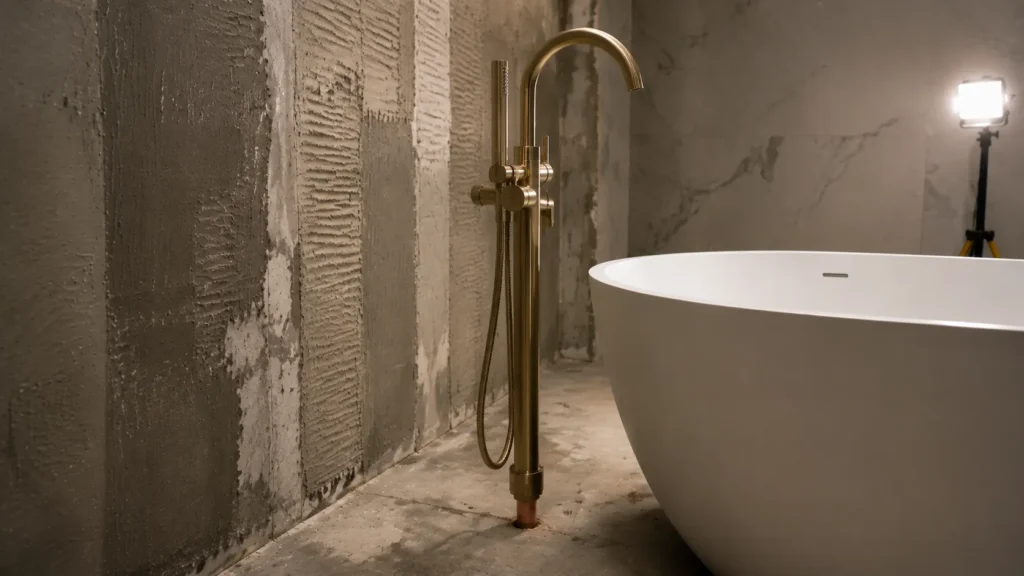
A floor-mounted tub filler looks elegant, but the plumbing that feeds a premier bathtub matters more than the visible brass. A standard 15 mm supply line delivers roughly 12 to 18 liters per minute at typical residential pressures. Filling a 250-liter premier tub through that line takes 14 to 20 minutes. That is long enough for the water to cool noticeably before the tub is full, especially in a cold climate. A 22 mm supply line reduces fill time to 8 to 12 minutes. For a client who expects a premier experience, the larger supply line is the correct specification.
For projects in the Middle East, incoming water temperatures can be high in summer and cool in winter depending on the storage tank location. You should specify mixing valves that compensate for variable inlet temperatures. In Southeast Asia, instantaneous water heaters are common but often have limited flow capacity. A dedicated storage-type heater for the premier bathtub is sometimes the only way to achieve acceptable fill performance.
4. Regional Compliance for Premier Bathtub Projects
Europe
European premier projects emphasize material certifications, water efficiency, and understated design. A stone resin or solid surface premier bathtub in matte white or soft grey, with a wall-mounted or floor-mounted filler in brushed nickel, is the default luxury specification in Germany, Scandinavia, and the UK. CE marking and compliance with the EU Construction Products Regulation are baseline requirements. In the UK, WRAS approval for the filler and any connected fittings is mandatory for water regulation compliance.
Middle East
The Gulf luxury market favors oversized freestanding premier bathtubs—1800 mm and longer—in stone resin with custom finishes. Matte black exteriors, hand-hammered copper, and gold or rose gold PVD fillers are common. The client expects the premier bathtub to function as a design centerpiece. Designers often position it under a feature chandelier or within a bay window. Water conservation regulations in Dubai and Abu Dhabi are tightening. However, tubs are often exempt from flow-rate limits in luxury residential. The focus instead is on efficient recirculation pumps that maintain temperature without requiring constant refilling during long soaks.
For contractors, the key regional challenge is logistics. Most premier bathtubs specified in the Gulf are imported from Europe. Sea freight to Jebel Ali adds three to five weeks to the delivery schedule. The tub must be inspected for transport damage immediately upon arrival—not after someone has uncrated it and moved it to the installation floor.
Southeast Asia
Premier bathtubs in this region are concentrated in luxury condominiums, five-star hotels, and high-end serviced apartments. Japanese-style deep soaking tubs—shorter in length, deeper in profile—are gaining share alongside Western-style freestanding premier designs. High humidity demands materials that resist mold and staining. Stone resin with a sealed gel coat performs well. Unsealed natural stone tubs, on the other hand, develop issues quickly in bathrooms without mechanical ventilation.
Americas
North America is the largest market for large-format premier bathtubs by volume. The preference is for freestanding soaking tubs in stone resin or acrylic. There is also widespread acceptance of smart features—chromatherapy lighting, integrated heating, and digital temperature control. ADA and accessibility compliance is project-dependent but relevant for hospitality and healthcare. In Latin America, premier bathtubs are a smaller segment concentrated in luxury hospitality. The key specification challenges involve reliable import logistics. In addition, local plumbing contractors need to understand the installation requirements of heavy freestanding units.
5. Custom Finishes for Premier Bathtubs
A defining feature of a premier bathtub is the ability to order it in a finish or configuration that standard product lines do not offer. This adds complexity to the procurement process and extends lead times. However, it is often the reason the client chose the premier product in the first place.
Custom Color and Texture
Matte white remains the dominant finish for premier bathtubs. However, demand for custom colors—warm greys, sand tones, matte black exteriors with white interiors—is growing across all luxury markets. The key specification point is whether the color is integral to the material or applied as a surface coating. Integral color, where the pigment mixes into the stone resin or acrylic during casting, will never chip or wear through. Surface-applied color, whether paint or gel coat, is a finish layer. Abrasive cleaners or impact can damage it. For a hotel or a high-use residential bathroom, integral color is the safer specification for a premier bathtub.
Custom Dimensions and Overflow Positioning
Most premier manufacturers offer some degree of dimensional customization. They can extend a premier bathtub by 100 mm, adjust the rim width, or reposition the overflow to suit an unusual installation. These modifications add six to ten weeks to the standard lead time and typically carry a non-refundable deposit. For the contractor, the message to the client is simple: finalize custom dimensions early. A change order issued after the premier bathtub has entered production may not be accommodated at all. If it is, the cost may rival the original purchase price.

6. Logistics and Site Handling for Premier Bathtubs
A premier bathtub is a large, heavy, easily damaged item. Getting it from the factory to the bathroom without incident requires planning that commodity sanitary ware does not.
Packaging and Transit Specifications
You should specify the packaging for the transit route, not assume it. A premier bathtub traveling by sea freight to the Middle East or Southeast Asia needs a fully enclosed timber crate. The crate must include internal bracing that prevents movement during container handling. A premier tub traveling by road within Europe can use a reinforced cardboard carton with foam inserts. The packaging specification should come from the manufacturer’s logistics department, not the sales representative. The logistics team knows which packaging configurations have resulted in transit damage claims and which have not.
Site Access Assessment
Before ordering the premier bathtub, confirm that it can physically reach the installation floor. A 1700 mm stone resin tub in a crate measures roughly 1900 mm long by 900 mm wide by 800 mm high. It also weighs well over 100 kg. If the building has a narrow stairwell, a tight elevator, or a corridor with a right-angle turn, the premier bathtub may not fit. Complete a site access assessment before the purchase order is issued. Measure the lift car interior, the stairwell width, and any doorways along the route. If the access route is constrained, a hoist or crane lift through a window or balcony opening may be the only solution. You must schedule that before the building envelope closes.
On-Site Inspection Protocol
Open the crate and inspect the premier bathtub on arrival. Do not wait until someone has carried it to the bathroom and the plumber is ready to install it. Check for hairline cracks, chips, and surface scratches. Photograph any damage. Note it on the delivery receipt. A damage claim filed weeks after delivery is far harder to resolve than one filed immediately. If the premier bathtub is being stored on site before installation, keep it in its crate in a dry, secure area. An uncrated premier tub on a construction site will become a work surface. Consequently, the resulting scratches will be discovered only after someone peels off the protective film during final clean.

7. After Installing Premier Bathtubs: What Gets Overlooked
The premier bathtub is installed, the plumbing is tested, and the bathroom is handed over. Several things still determine whether the client remains satisfied or starts raising issues.
Waterproofing the Surround
A freestanding premier bathtub surrounded by a wet floor requires waterproofing across the entire floor area, not just the shower zone. Water will splash over the tub rim and pool on the floor. If the waterproofing membrane stops short of the tub area, water will find the gap and migrate into the subfloor. This is a tiling and waterproofing issue, not a bathtub issue, but the premier bathtub’s presence creates the condition. The contractor should verify that the bathroom’s waterproofing extends across the full floor area, including under and around the tub position.
Cleaning and Maintenance Briefing
The client or the housekeeping team needs to know which products are safe for the premier bathtub material. Avoid abrasive powders or strong acids on stone resin tubs. Cast iron enamel can handle most cleaners, but a heavy object dropped on the rim will chip it. Copper tubs develop a natural patina; if the client wants to preserve the bright copper look, they will need a specific maintenance routine. A one-page care sheet left with the client costs nothing to produce. It prevents a maintenance-related complaint from turning into a product defect claim.
Access for Future Servicing
If the premier bathtub has a whirlpool or air bath system, the pump and blower need an access panel for future servicing. An access panel tiled over and grouted shut is not an access panel. It is a future tile demolition. The access panel must allow a technician to reach the pump connections and remove the pump if necessary. Ideally, locate the panel in an adjacent room or closet rather than on the visible face of the tub surround. If it must sit on the visible face, use a tile-faced panel with concealed magnetic catches that can be removed without tools.
8. The Premier Bathtub Specification Checklist
- Material and weight confirmed. Request the technical data sheet with empty weight and filled capacity for the premier bathtub. Pass to the structural engineer for floor loading approval.
- Hot water system sized for the premier tub capacity. A 250-liter premier bathtub needs a cylinder of at least 250 to 300 liters, or an on-demand system delivering 20 to 30 liters per minute.
- Filler supply line sized for acceptable fill time. For premier bathtubs over 200 liters, we recommend a 22 mm supply line.
- Access route verified. Measure the elevator, stairwell, and doorways. If constrained, arrange a hoist or crane lift before the building envelope is closed.
- On-site inspection completed on delivery. Open the crate, inspect the premier bathtub for damage, photograph, and note on the delivery receipt.
- Waterproofing extended across the full bathroom floor. Verify membrane coverage under and around the premier tub position.
- Access panel for mechanical systems. Confirm that technicians can reach any pump or blower for servicing without tile removal.
- Care and maintenance brief provided to the client or facilities team. Include approved cleaning products and procedures for the premier bathtub.
Final Thoughts
A premier bathtub is not just a larger, more expensive version of a standard tub. It is a project within a project—one that touches structural engineering, mechanical systems, international logistics, and high-end finish trades. When you specify and handle a premier bathtub correctly, it becomes the feature the client shows to every guest. When you handle it poorly, it becomes a warranty claim, a delayed handover, and a relationship you would rather not have with the manufacturer’s claims department.
The difference between those two outcomes is rarely the premier bathtub itself. It is the planning that happened before the order was placed, the inspection that happened when the crate arrived, and the coordination between the plumber, the tiler, and the structural engineer that happened while the bathroom was still a bare concrete shell. Do those things properly, and your premier bathtub will deliver exactly what the client paid for. Skip them, and you will learn about the consequences the hard way.