
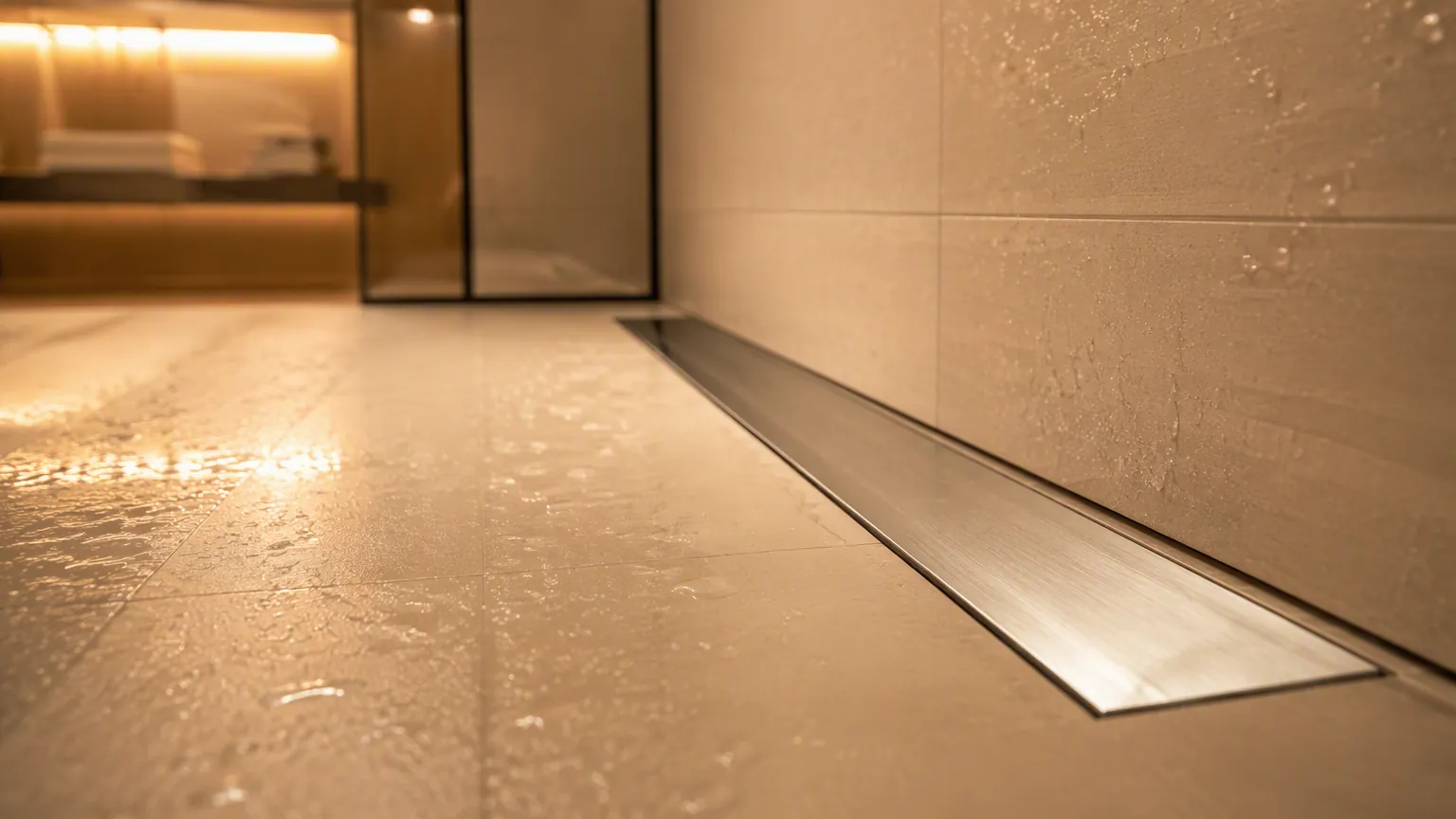
A hotel renovation crew in Dubai called us after the third callback: shower water pooling on the tile, a sour smell rising from the drain, and a grate that had started to pit after eight months. The spec sheet read stainless steel, but nobody had verified the grade, the water seal depth, or the load rating. This guide gives contractors the exact checklist we use before ordering floor drains in volume. The goal is simple: the same failure should not repeat on your project.
Why the Floor Drain Spec Matters More Than You Think
Floor drains sit at the bottom of the drainage hierarchy, yet they cause some of the most expensive callbacks in wet-area construction. Tiles must be lifted, waterproofing repaired.
Finishes replaced when a drain leaks, rusts, or smells. In a 200-room hotel, a single failed drain model means 200 identical failures waiting to happen.
The practical consequences of a weak spec are easy to quantify. Corrosion shortens the visible life of the grate.
Is the part guests actually see. A shallow water seal lets sewer gas into guest bathrooms. A grate rated for residential loads bends under a housekeeping cart. Each of these failures traces back to one decision made at the specification stage.
For contractors, the drain is also a margin item. Standard models carry thin margins, while specified models with documented grades and certifications protect both the project and the supplier relationship. In other words, the specification is where quality is decided, not on site.
What Is a Stainless Steel Floor Drain?
A stainless steel floor drain is a plumbing fitting installed at the lowest point of a wet area. It collects surface water and directs it into the drainage system.
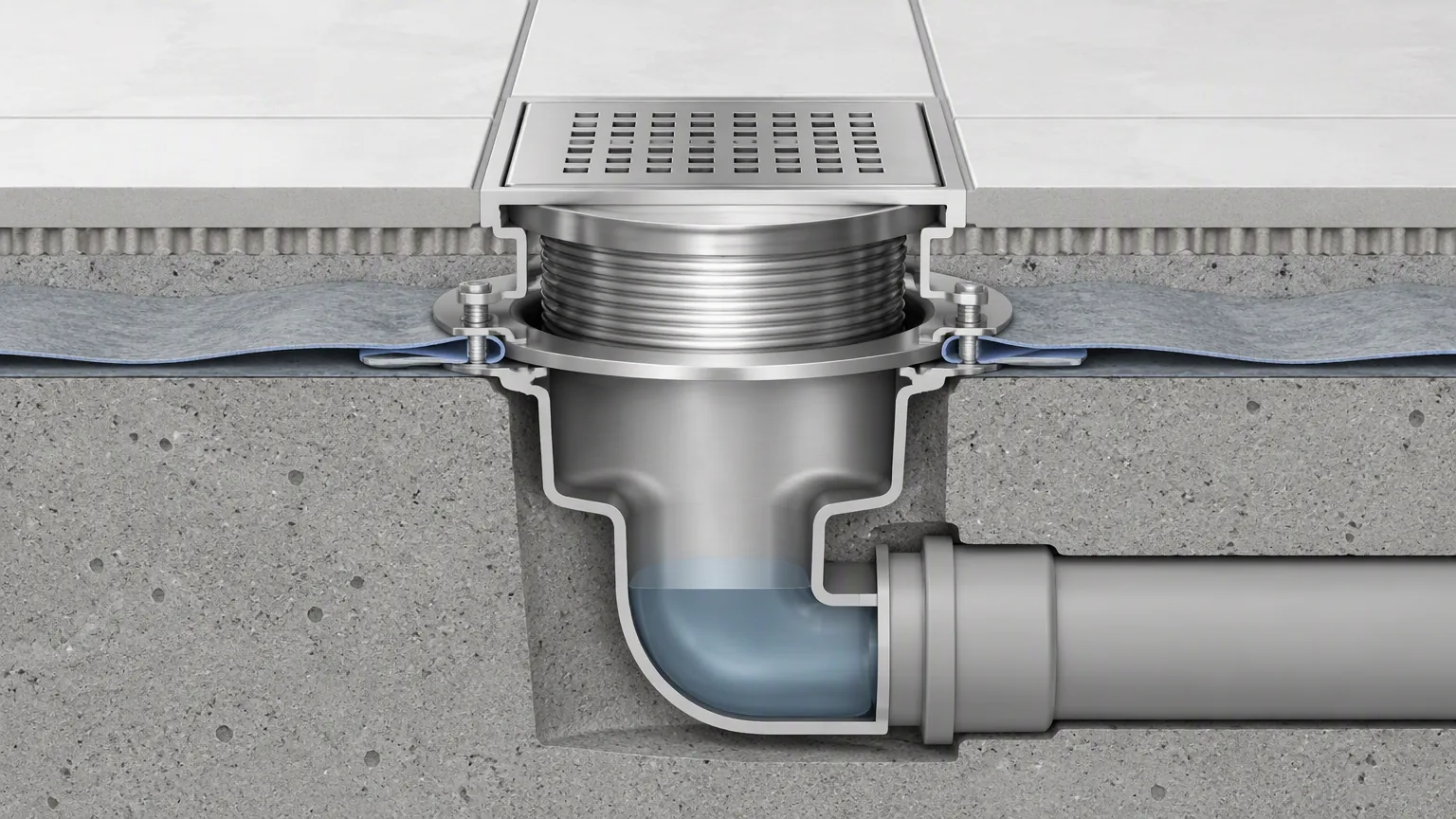
The complete unit contains several components that each deserve specification attention.
The grate is the visible cover that supports foot traffic and filters large debris. Below it sits a strainer basket that catches hair, soap residue, and sediment before they enter the pipe. The body holds the water seal, and the outlet connects to the drainage pipework. Many modern drains also include a height-adjustable collar that lets the installer match the finished tile level without cutting the pipe.
Component quality varies widely between factories. For instance, a stamped 0.8 mm grate bends under point loads, while a cast or laser-cut 2-3 mm grate holds its shape for decades. Ask the supplier for the exact thickness of the grate, the body, and the collar before comparing prices.
Point Drains vs. Linear Drains
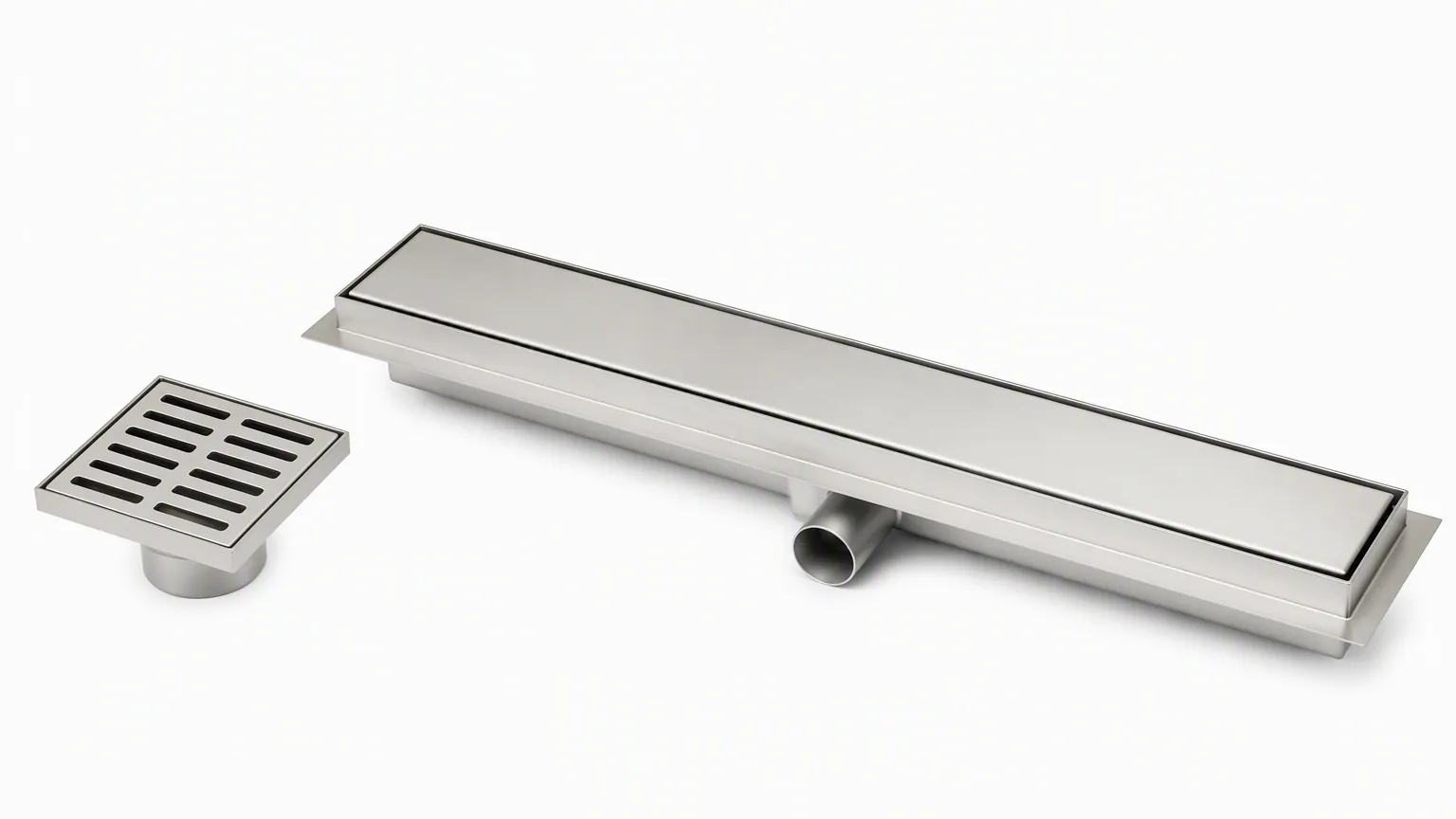
Drains fall into two broad families: point drains and linear drains.
The choice affects the tile layout, the slope work, and the final look of the shower.
| Feature | Point Drain | Linear Drain |
|---|---|---|
| Typical size | 100 x 100 mm to 200 x 200 mm | 600-1200 mm long, 60-110 mm wide |
| Slope needed | Four-way slope to one point | Single-direction slope to one line |
| Tile layout | Diagonal cuts to the center | Full tiles, minimal cutting |
| Drainage speed | Slower, single outlet | Faster, larger collection area |
| Appearance | Traditional, discreet | Minimalist, flush with tile |
| Typical FOB cost | $4-$15 | $10-$30 |
| Best for | Budget projects, small baths | Hotels, walk-in showers, premium work |
Point drains remain the default for cost-sensitive projects because they are simple to install and inexpensive to replace.
Linear drains, on the other hand, dominate premium hotel showers, where full-size tiles and a flush floor look are part of the design brief.
There is a practical installation difference as well. A linear drain installed against the back wall of a walk-in shower needs only a single slope.
Is easier for tilers to execute correctly. That single-slope advantage reduces the risk of standing water, a common complaint that generates callbacks.
304 vs. 316 Stainless Steel: Which Grade to Specify
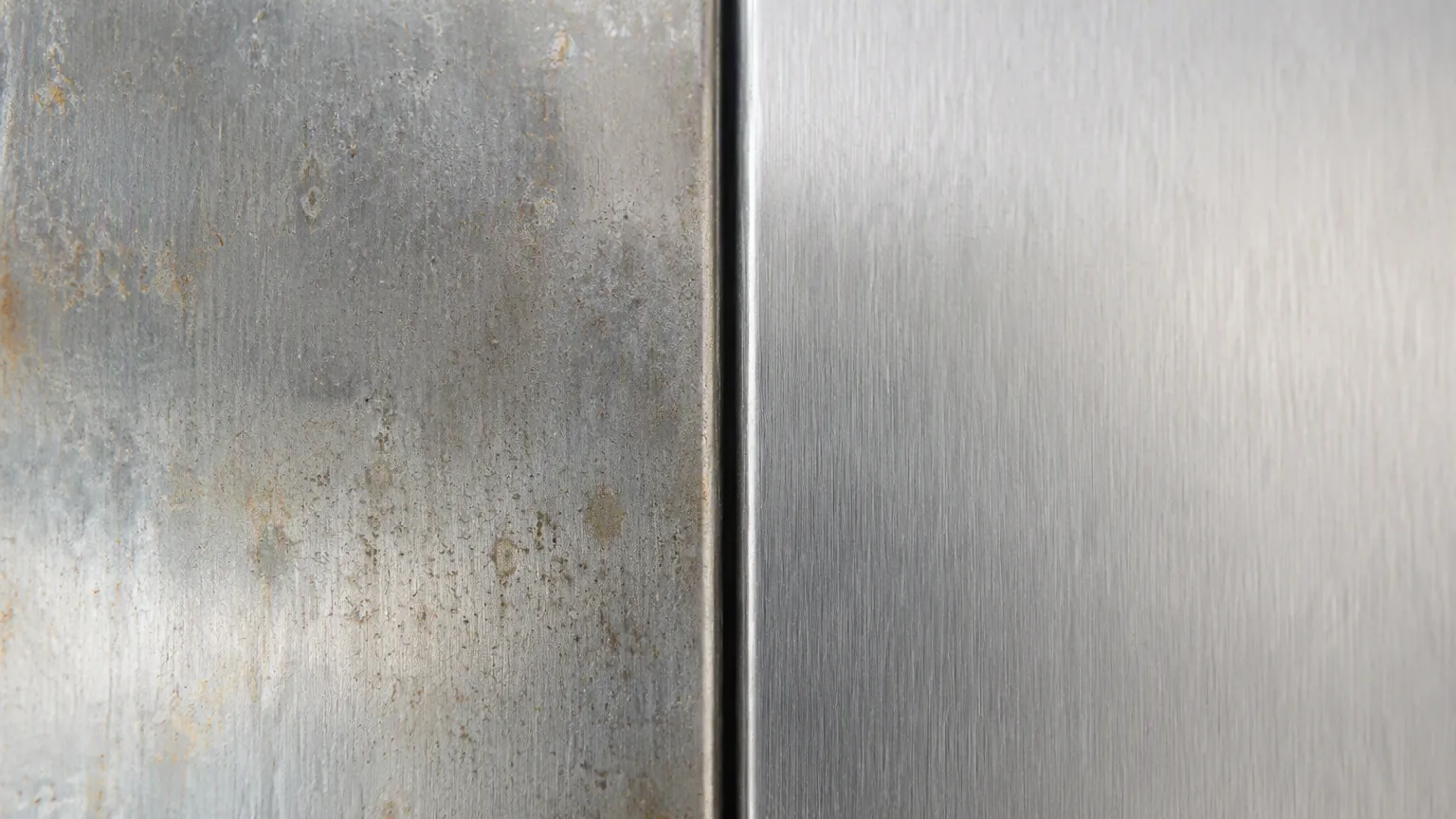
Stainless steel is not a single material. The grade determines corrosion resistance.
The grade is the first thing to verify on any quotation.
| Property | 304 Stainless Steel | 316 Stainless Steel |
|---|---|---|
| Chromium | 18% | 16-18% |
| Nickel | 8% | 10-14% |
| Molybdenum | None | 2-3% |
| Chloride resistance | Good | Excellent |
| Best environments | Bathrooms, hotels, homes | Coastal areas, pools, chemical exposure |
| Relative cost | Baseline | +20-40% |
| Typical service life | 10-15 years | 15-25 years |
304 stainless steel is the correct choice for most indoor bathrooms because chlorides are limited to cleaning chemicals and occasional splashes.
It resists the mild acids found in soap and shampoo residue when rinsed regularly.
316 stainless steel adds molybdenum, which protects against chloride pitting. For that reason, it is the right specification for coastal hotels, poolside changing rooms.
Any space where salt air or aggressive cleaning agents are present. Many contractors standardize on 316 for coastal hospitality projects because the premium is small relative to the cost of replacing corroded drains later.
Here is the trap: some low-cost drains are stamped from 201 stainless steel.
Contains less nickel and corrodes far faster. Demand a material certificate and a salt spray test report from the factory, and verify that the grade matches the certificate.
Water Seal Depth: Fresh Water, Not Foul Air
The water seal is the body of water held inside the drain between uses.
It blocks sewer gas from rising into the room. If the seal is too shallow, it evaporates or siphons away, and the bathroom starts to smell.
European standard EN 1253-1 requires a water seal depth of at least 50 mm for trapped floor gullies. Many premium drains use 70 mm seals.
Stay effective longer in low-use spaces where evaporation is the main risk. For hotel bathrooms used daily, 50 mm is adequate; for vacation rentals that sit empty for weeks, a deeper seal or a refillable trap is a smarter choice.
Dry areas create a different problem. Balconies, laundry rooms, and planters use drains that see water only occasionally, so the seal evaporates and odors escape. In these locations, specify a mechanical seal drain that closes with a spring or magnetic mechanism. An unsealed gully with a removable trap also works, as long as staff can refill it manually.
Flow Rate: Match the Drain to the Shower
A drain that cannot keep up with the water supply turns a shower into a paddling pool.
Flow capacity depends on the outlet diameter and the internal geometry of the body.
A standard DN50 outlet (50 mm internal diameter) handles roughly 0.8-1.0 liters per second.
Suits a normal handheld shower. Rain shower heads and body jets, however, can deliver 15-20 liters per minute combined, which approaches the limit of a DN50 drain. For those installations, specify a DN75 or DN100 outlet, or a linear drain with a large internal channel.
Verify the flow rate on the product datasheet rather than assuming it.
Some linear drains look wide but contain a narrow internal channel that chokes the flow. In addition, check the outlet orientation: side outlets are common for retrofit work, while vertical outlets simplify new construction.
Load Ratings: Choose the Class That Matches the Space
Floor drains are load-tested under the EN 1253 series, which assigns classes based on the point load a grate can withstand.
Choosing the wrong class leads to bent grates, cracked tile, and trip hazards.
| Class | Point Load | Typical Location |
|---|---|---|
| K3 | 300 kg | Domestic bathrooms, hotel shower rooms |
| K4 | 600 kg | Public washrooms, commercial kitchens |
| K5 | 1,250 kg | Parking garages, loading areas, industrial |
| K6 | 1,500 kg | Heavy industrial, airport concourses |
For standard hotel and commercial bathrooms, K3 is normally sufficient because foot traffic and housekeeping carts stay within its limits. Use K4 where wheeled equipment is frequent.
K5 or higher for vehicle areas. Moreover, verify that the grate itself carries the rating, not just the body, since the grate is the exposed component.
Certifications for Stainless Steel Drain Exports
Certifications map to destination markets, and the correct one depends on where the project ships.
A drain certified for Europe does not automatically satisfy North American requirements.
For European projects, EN 1253-1 and EN 1253-2 cover trapped gullies and testing methods.
CE marking under the Construction Products Regulation applies where relevant. For North America, ASME A112.18.2 and CSA B125.2 cover plumbing supply and drainage fittings, and the International Plumbing Code (IPC) governs installation practice. For Australia and New Zealand, WaterMark certification is the accepted evidence of compliance.
Ask the factory for the certification that matches your target market and the exact model number.
Generic claims such as “CE certified factory” do not prove that a specific drain model carries the marking. Request the certificate document and confirm the model number listed on it.
Stainless Steel Floor Drain Installation Considerations
The way a drain is installed affects its long-term performance as much as the material grade does.
Even a 316 stainless steel unit leaks if the waterproofing detail is wrong or the slope is insufficient.
Height adjustment is the first site detail to confirm. The collar or riser ring on most quality drains allows ±10 mm of height adjustment after the pipe is set. Check the finished floor level before ordering, because cutting the drain body to fit is not a standard repair. Some projects use a height-adjustable collar that threads into the body, which gives more range but requires a longer solvent weld if the outlet is solvent-socket.
Slope work must direct water toward the drain without creating low spots.
In a large-format tile shower, a single slope to a linear drain is easier for the tiler to execute correctly than a four-way slope to a point drain. The minimum slope is 1:50 (20 mm per meter) under most plumbing codes. Many contractors specify 1:80 to 1:100 for a smoother appearance where the flow rate is low.
Waterproofing is applied before the drain is set and after the tile is laid.
The membrane laps over the drain flange and is clamped between the flange and the strainer body. Verify that the membrane detail matches the drain model, because some flanged drains require a liquid-applied membrane while others work with sheet membrane. The most common callback from a floor drain is a slow leak at the membrane interface, which shows up as moisture in the ceiling below.
Pipework connections need a test before the floor is closed. Fill the drain with water and check the outlet connection for 30 minutes before tiling. A point leak at the outlet costs a tile repair; a hidden leak costs a ceiling.
Wholesale Sourcing: Questions to Ask a Chinese Manufacturer
When buying stainless steel floor drains in volume, the quotation is only the starting point. These seven questions separate serious factories from traders:
A factory that answers all seven questions with documents is a partner worth keeping.
One that answers with vague assurances is a pricing risk, regardless of how attractive the quote looks.
FOB Price Ranges for Floor Drains
Prices below are FOB China estimates for this product family, with an MOQ of 100-500 units per model. Actual quotes vary with grade, finish, and order size.
| Type | Grade | FOB Price Range |
|---|---|---|
| Point drain, 100 x 100 mm | 304 SS, brushed | $4-$9 |
| Point drain, 150 x 150 mm | 304 SS, brushed | $6-$12 |
| Point drain, heavy grate | 316 SS | $10-$20 |
| Linear drain, 600 mm | 304 SS | $10-$18 |
| Linear drain, 900-1200 mm | 304 SS | $15-$30 |
| Invisible drain with tile insert | 304 SS | $18-$35 |
Small orders under 100 units add 15-30% per unit, and PVD-colored finishes (black, gunmetal, brass) add roughly $3-$8 depending on size.
Salt spray performance varies with the finishing process, so do not compare prices without comparing the finish specification.
Common Specification Mistakes
Contractors repeat the same five errors when specifying this fixture.
Each one is avoidable with a few extra lines in the specification.
The first mistake is trusting the word “stainless” without verifying the grade.
Allows 201-grade drains into projects that should use 304. The second is ignoring the water seal depth, which leads to odor complaints in low-use bathrooms. Selecting the load class without considering housekeeping equipment and traffic is the third error. The fourth is assuming flow capacity from the drain width rather than the datasheet. A fifth is ordering from the lowest quote without a salt spray report, which trades a small saving for a large rework risk.
Each of these mistakes surfaces months after handover, when the contractor’s warranty is already being tested.
Consequently, the specification phase is the cheapest place to prevent them.
Stainless Steel Floor Drain FAQ
What is the difference between a point drain and a linear drain?
A point drain collects water at a single outlet and needs a four-way slope. A linear drain collects water along a channel and needs only a single-direction slope.
Linear drains suit large-format tile and premium showers; point drains cost less and install faster.
Is 304 or 316 stainless steel better for a shower floor drain?
304 stainless steel is sufficient for most indoor showers and costs less.
Choose 316 for coastal buildings, poolside areas, or aggressive cleaning environments, because the added molybdenum resists chloride pitting.
How deep should the water seal be to prevent odors?
At least 50 mm under EN 1253-1. For infrequently used drains, specify a 70 mm seal or a mechanical seal to avoid evaporation.
Use mechanical-seal drains in dry areas such as balconies and laundry rooms.
What load rating do I need for a hotel bathroom?
For a standard hotel shower room, K3 (300 kg) is adequate.
Move to K4 for public washrooms with wheeled cleaning equipment, and K5 or higher for vehicle traffic areas.
Can a floor drain work with a waterproofing membrane?
Yes. Flanged drains integrate with liquid-applied membranes, and clamping-ring models work with sheet membranes. Confirm the flange design with the installer before ordering, because the two systems use different details.
What certifications should a floor drain have for export?
EN 1253 and CE marking for Europe, ASME A112.18.2 and CSA B125.2 for North America.
WaterMark for Australia and New Zealand. Verify the certificate covers the exact model number.
Floor Drain Contractor’s Checklist
- Outlet size (DN50/DN75/DN100) matches the site pipework
- Steel grade confirmed as 304 or 316 with material certificate
- Salt spray test report available (ASTM B117, 48 hours minimum)
- Water seal depth at least 50 mm for wet areas
- Flow rate on the datasheet covers the maximum shower output
- Load class (K3/K4/K5) matches the traffic level of the space
- Certification document covers the exact model for the target market
- Grate, body, and collar thickness confirmed on the drawing
- Sample ordered and tested before volume production
- Packaging prevents surface scratches during shipping
Related Guides
- Floor Drain Manufacturer China — factory-direct supply for the XFD series
- 304 Stainless Steel Shower Floor Drain Factory — shower-specific drain models
- Long Straight Floor Drain Manufacturer China — linear drain options for premium showers
- Exposed vs. Concealed Shower System — pairing drain choice with the shower delivery system
- Commercial Hand Wash Basin Spec Guide — wet-area specification for commercial bathrooms
- How to Choose a Bathroom Manufacturer in China — vetting factories before volume orders