
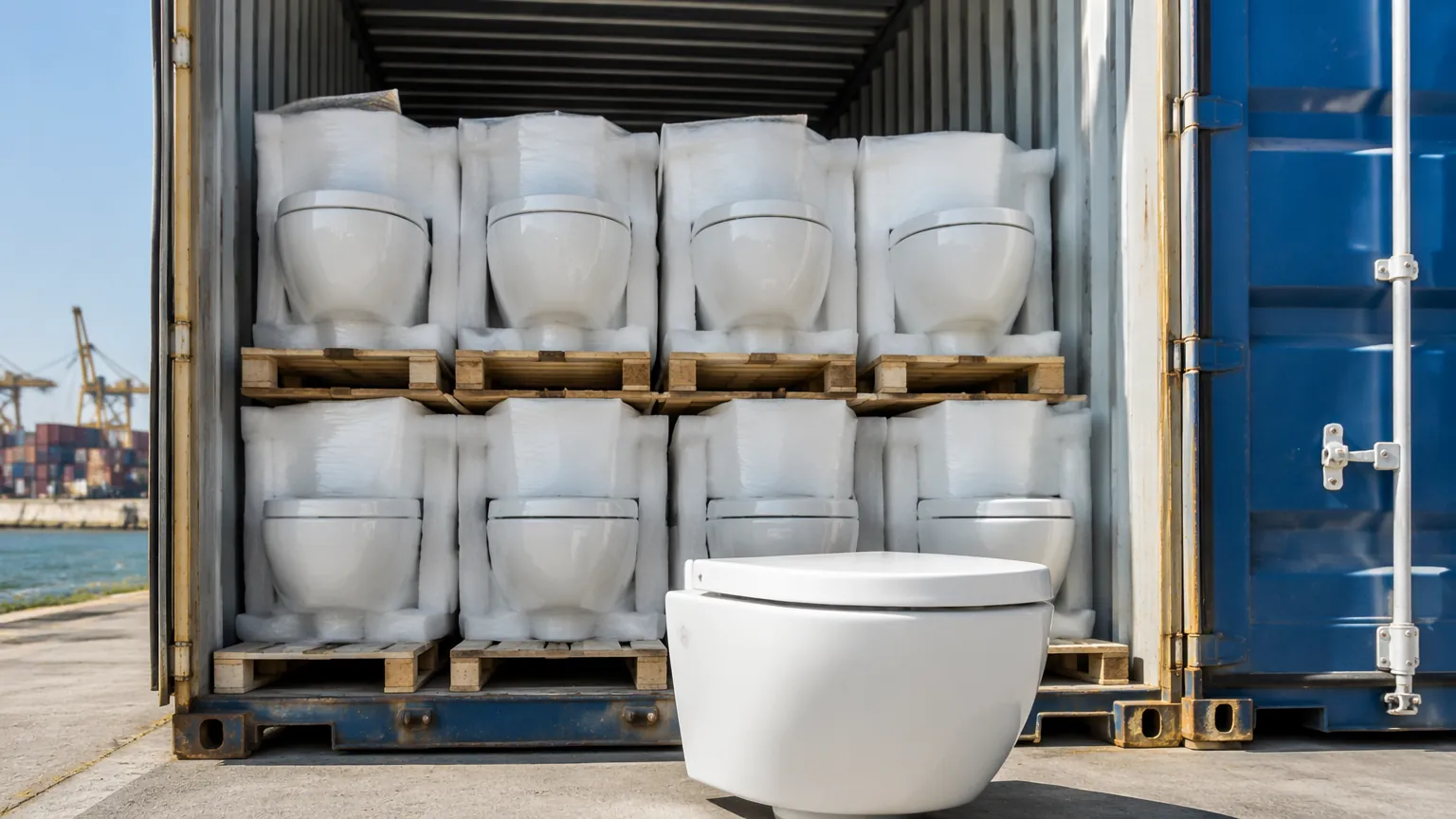
A procurement manager in Riyadh ordered 400 wall-hung toilets from a supplier who promised “SASO handled.” When the container landed at Jeddah Islamic Port, customs held it for three weeks. The supplier had issued a test report from a lab that was not accredited by SASO, so the SCoC could not be issued. As a result, the project lost its schedule slot, and the client paid $18,000 in demurrage and re-testing fees.
That story repeats across the Kingdom every month. The problem is rarely the product. In most cases, it is the compliance and supplier-vetting process that happens before the order. This guide walks through how to select and work with a bathroom supplier in Saudi Arabia. It covers SABER certification, factory evaluation, product specifications, lead times, and shipping terms. The goal is simple: your first container clears customs without surprises.
Why the Saudi Bathroom Market Deserves a Dedicated Sourcing Strategy
Saudi Arabia is not another GCC market with similar rules. It is the largest construction market in the Middle East. Giga projects such as NEOM, Qiddiya, and the Red Sea development drive much of the demand. A wave of hospitality and residential builds under Vision 2030 adds further momentum. Industry estimates put the Kingdom’s planned development pipeline above US$1.25 trillion. Every hotel room, hospital ward, and residential tower needs bathrooms.
The practical effect for buyers: demand for bathroom fixtures outstrips local ceramic production. Most sanitary ware comes from imports, and the import route runs through a mandatory compliance system that is stricter than in neighboring countries. Therefore, a supplier who works well for Dubai does not automatically work for Saudi Arabia. Certification, documentation, and even product preferences differ.
SABER Certification: The Non-Negotiable First Step
The single most common reason containers get held at Saudi customs is missing or incorrect SABER registration. SABER is the online conformity platform operated by the Saudi Standards, Metrology and Quality Organization (SASO). Since its phased rollout, it has replaced the older paper-based SASO certificate system for most regulated products. This includes building materials and sanitary ware.
The system issues two certificates:
| Certificate | Full name | Validity | Issued for |
|---|---|---|---|
| PCoC | Product Conformity Certificate | 1 year (renewable) | A product model, based on testing against Saudi technical regulations |
| SCoC | Shipment Conformity Certificate | Single shipment | Each consignment, tied to the PCoC and the invoice |
In practice, this means two things. First, a SASO-accredited laboratory must test the supplier’s product against the relevant Saudi technical regulation. Second, every single shipment needs its own SCoC, generated through the SABER platform by the importer or the supplier’s local representative.
What buyers should verify with any bathroom supplier in Saudi Arabia before placing an order:
- The exact product model you are ordering has a valid PCoC — not just “the factory has SASO”
- The PCoC covers the model number, not a similar-looking product
- The test report comes from a laboratory recognized by SASO
- The supplier can name who handles the SCoC per shipment and how long it takes (typically 3-7 working days)
How to Vet a Bathroom Supplier in Saudi Arabia: Factory-Level Checks
Certification documents can be shared by any trader. However, faking factory capability is much harder. When shortlisting a bathroom supplier in Saudi Arabia, structure your audit around four areas.
1. Manufacturing vs. trading. Ask whether the supplier owns the factory. A genuine manufacturer can show kiln capacity, production lines, and quality control stations. A trading company can only show catalogs. For ceramic sanitary ware, single-fire glaze quality and body density determine long-term performance. Only factory visits — physical or virtual — can confirm those.
2. Testing and quality control. Look for in-house water-tightness testing, glaze inspection, and flushing performance checks. Ask for the defect rate on the last three production batches. Notably, a credible factory tracks this number; a trader does not.
3. Export experience to the GCC. Past shipments to Saudi Arabia, UAE, or Qatar matter because those markets enforce similar compliance regimes. Ask for shipping documents from previous Saudi orders. For example, customs release confirmations are hard to fabricate convincingly.
4. After-sales and spare parts. Bathroom fixtures last for years after a single installation. Confirm the supplier can ship spare parts (flush valves, seats, cartridges) quickly. Also ask whether they hold a local stock or a local partner in the Kingdom.
For a deeper framework on evaluating factories, our guide on How to Choose a Bathroom Manufacturer in China covers the audit process in detail, including kiln capacity analysis and sample testing protocols. For toilet-specific sourcing checks, see the porcelain toilet supplier procurement checklist.
Product Specifications That Match Saudi Project Requirements
Saudi projects favor specific product profiles. Matching these from day one avoids expensive rework and specification rejections.
Wall-hung toilets dominate commercial projects. Hotels, hospitals, and offices specify wall-hung (back-to-wall) toilets for easier floor cleaning and a modern look. Specify the carrier and concealed cistern together. A common error is sourcing the bowl and carrier from different suppliers with incompatible fixing centers. Our guide to Western Toilet Bowls in Saudi Arabia details the dimension and fixing considerations for the Kingdom.
Bidet functionality is expected. Bidet seats, bidet toilet sets, and hand sprayers are standard expectations in Saudi bathrooms, both residential and commercial. Specifying a bathroom set that integrates toilet, bidet, and basin saves procurement time and ensures matching finishes. See our overview of certified bidet toilet sets for the compliance and configuration options.
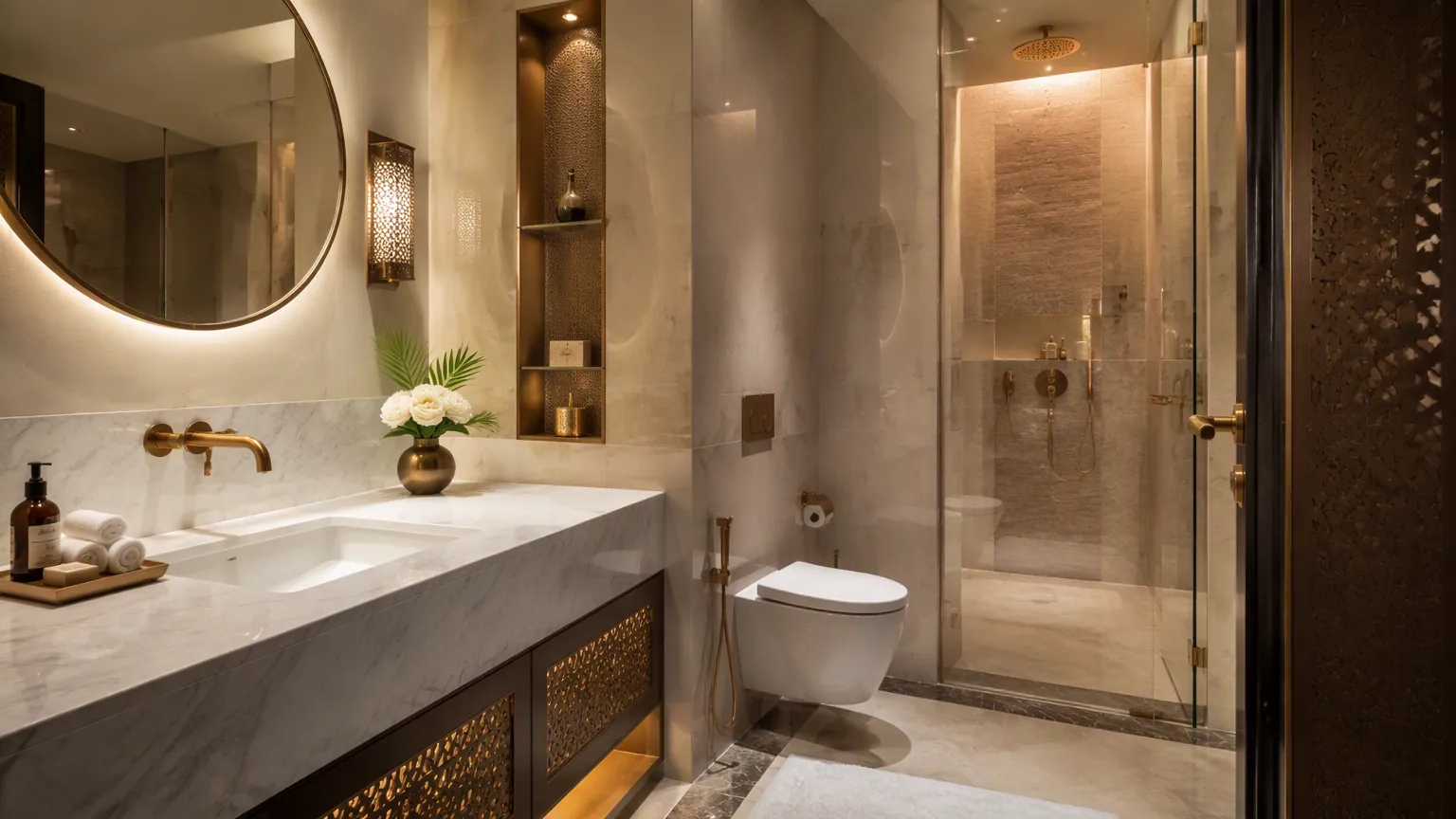
Gold and matte black finishes are in demand. The Saudi market has a strong preference for premium finishes — brushed gold, rose gold, and matte black on faucets, shower systems, and accessories. Confirm that the supplier applies the finish through PVD (physical vapor deposition) rather than electroplating. This matters for longevity in high-use projects.
Water efficiency matters for green building ratings. Projects pursuing LEED or Mostadam (Saudi Arabia’s green building rating system) need low-flow fixtures with documented flow rates. Request the flow-rate test certificates up front.
Lead Times, MOQs, and Payment Terms That Protect the Buyer
Commercial terms are where procurement deals succeed or fail. The numbers below are indicative ranges, not quotes. Always confirm them with your shortlisted suppliers.
| Term | Typical range | Why it matters |
|---|---|---|
| MOQ | 100-500 units per model | Below this, per-unit cost rises sharply (15-30%) |
| Production lead time | 25-45 days | Depends on glaze color, customization, and factory load |
| Sample time | 7-15 days | Always test before bulk production |
| Sea freight (China→Jeddah/Dammam) | 25-35 days | Factor SCoC issuance into the same window |
| Payment terms | 30% deposit / 70% against B/L | Avoid full prepayment to unknown suppliers |
Payment protection rules: For a first order, insist on 30% deposit and 70% against the bill of lading, or use a letter of credit. If a supplier demands 50%+ upfront from a new customer, treat it as a warning sign. Also confirm who bears the SCoC cost and the customs brokerage fee. These are often assumed to be “the supplier’s problem” and become the buyer’s invoice later.
Shipping and Customs Clearance: What to Prepare
A smooth Saudi import requires four documents to align: the commercial invoice, the packing list, the bill of lading, and the SABER SCoC. In addition, the product itself must match the PCoC model number on the invoice. Discrepancies of even one digit between invoice and certificate trigger inspection holds.
Common clearance pitfalls for bathroom fixtures:
- Inconsistent model numbers between invoice, PCoC, and product marking
- Incorrect HS codes — sanitary ware sits in several headings (6910 for ceramic sinks and toilets); a wrong code changes duty and may require additional certificates
- Missing country-of-origin marking — Saudi customs requires clear origin marking on the product or packaging
- Wooden packaging without ISPM-15 treatment — fumigation marks are mandatory, and untreated wood gets the container quarantined
Work with the supplier’s export team or a Saudi customs broker to pre-check these before the vessel sails. In short, a 3-day pre-shipment document review is far cheaper than 3 weeks of port storage.
Project Example: Supplying a 300-Room Hotel in Jeddah
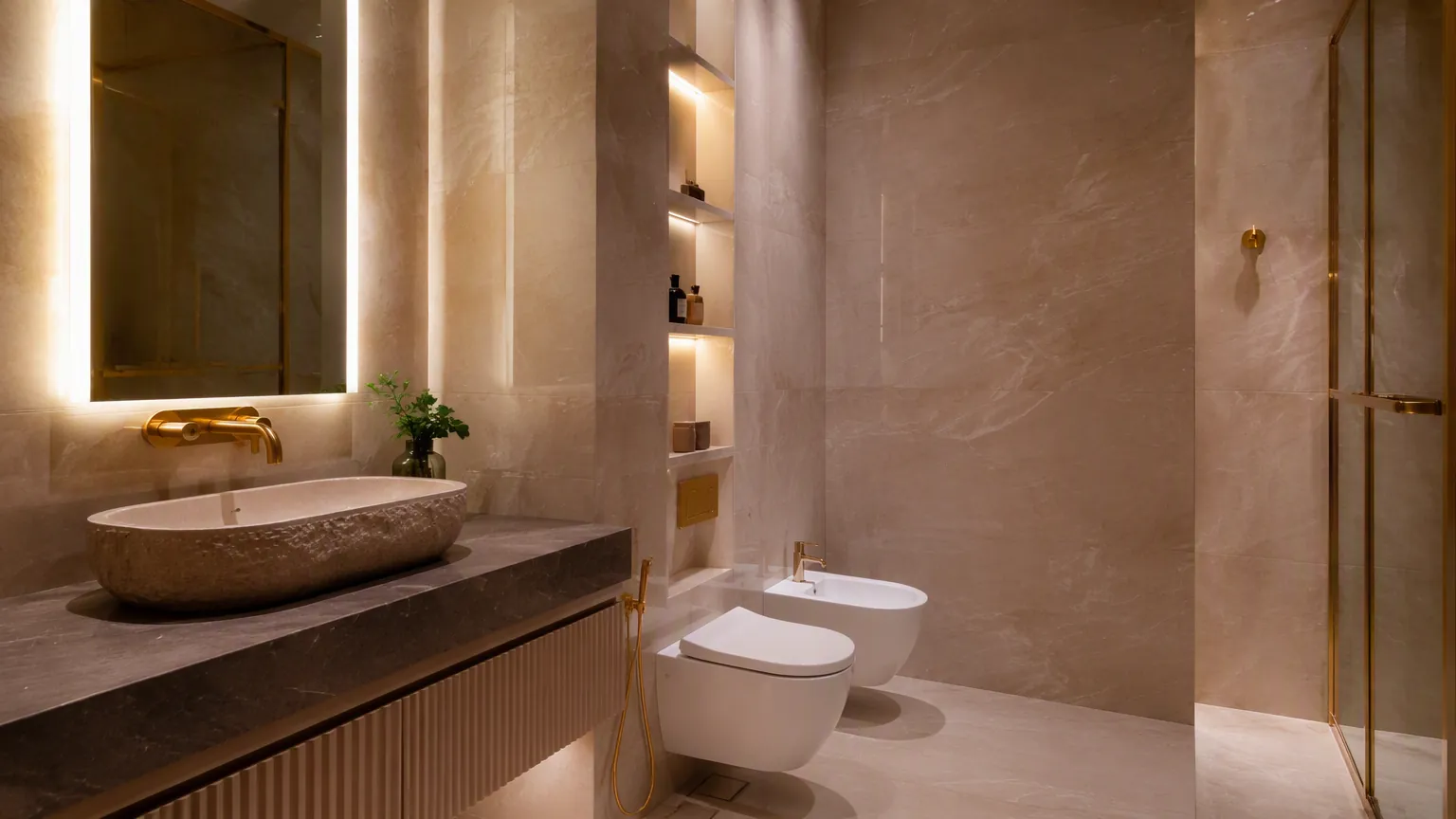
A hospitality developer in Jeddah needed wall-hung toilets, bidet sets, and basins for a 300-room hotel. The procurement team shortlisted three candidates — a local distributor, a Gulf-based brand agent, and a Chinese manufacturer with a Saudi branch presence.
Certification transparency and specification flexibility drove the decision. The manufacturer provided model-specific PCoC numbers before the order, arranged the SCoC per shipment through their local partner, and adjusted the basin dimensions to match the hotel’s stone countertop templates. In fact, the first shipment cleared Jeddah Islamic Port in four days, and the full program shipped in three containers with zero customs holds.
Moreover, the counterfactual mattered. The local distributor quoted 22% higher for equivalent products, while the brand agent could not match the bespoke basin dimensions. For projects with custom specifications and volume, factory-direct sourcing with local compliance support is the pattern that wins.
Common Mistakes Buyers Make with Saudi Bathroom Sourcing
1. Trusting “SASO certified” without a model number. The phrase is meaningless unless a specific model carries a valid PCoC. Ask for the certificate, read the model number, and keep a copy.
2. Ordering finishes that cannot be maintained. Some decorative finishes are not PVD-coated and will fade in hotels with daily cleaning. Specify the finish technology in the contract, not just the color name.
3. Ignoring spare parts planning. Saudi projects are occupied quickly after handover. Without a spare-part arrangement, a failed flush valve means a non-functional bathroom during operation. Plan 5% spares for toilets and cartridges.
4. Treating the SCoC as the supplier’s problem. It is a shared responsibility. Confirm who issues it, who pays, and the working-day turnaround before the order. Build it into the shipping schedule.
5. Choosing the cheapest per-unit price without comparing landed cost. Add freight, SCoC fees, customs brokerage, and demurrage risk to the unit price before comparing. The “cheapest” quote often becomes the most expensive container.
Procurement Checklist for Your First Saudi Order
- Supplier confirmed as manufacturer or verified trader
- Model-specific PCoC verified for every product in the order
- Test report from a SASO-accredited laboratory reviewed
- SCoC process owner and timeline confirmed (3-7 working days)
- Finish technology specified (PVD for premium finishes)
- Water flow rates documented for green building ratings
- MOQ and per-unit cost confirmed with conditionality
- Payment terms: 30/70 against B/L or L/C for first orders
- Spare parts (5%) included in the order
- HS codes, origin marking, and ISPM-15 packaging verified
- Customs broker or supplier’s export team assigned
FAQ
Is SABER certification mandatory for bathroom fixtures in Saudi Arabia?
Yes. Sanitary ware and building materials are within SABER’s regulated scope. Customs can reject or hold shipments without a valid SCoC.
What is the difference between PCoC and SCoC?
PCoC (Product Conformity Certificate) covers a product model for one year. SCoC (Shipment Conformity Certificate) applies to each shipment and must match the PCoC and the invoice.
Can a trading company provide SABER certification?
Yes, if the factory’s product is certified and the trader coordinates the process. However, verify the PCoC model numbers and the test laboratory’s SASO accreditation before relying on it.
How long does a typical order take from China to Saudi Arabia?
Production typically takes 25-45 days, followed by 25-35 days of sea freight. Add 3-7 working days for SCoC issuance and 2-5 days for customs clearance.
What finishes are most requested in Saudi projects?
Brushed gold, rose gold, and matte black are the most requested premium finishes. Specify PVD coating to ensure durability in high-use installations.
Do I need a local partner to import bathroom fixtures into Saudi Arabia?
The SABER platform requires an importer account in the Kingdom. Many buyers work with their supplier’s local partner or a customs broker. YIDA’s Saudi market operations include local compliance support for importers.
Are wall-hung toilets standard in Saudi commercial projects?
Yes, wall-hung toilets are the dominant choice for hotels, offices, and hospitals because they simplify floor cleaning. Specify the bowl, carrier, and concealed cistern together to avoid compatibility issues.
What should I check before signing a supplier contract?
Verify the PCoC model numbers, test laboratory accreditation, MOQ and payment terms, spare-part availability, and who handles SCoC per shipment. A pre-shipment document review is strongly recommended.
References
- SABER Platform. Saudi Standards, Metrology and Quality Organization (SASO). https://saber.sa/
- Saudi Standards, Metrology and Quality Organization (SASO). https://www.saso.gov.sa/
- Knight Frank. *Saudi Giga Projects Report: The Kingdom’s US$1.25 Trillion Development Plan*.
- Vision 2030. Kingdom of Saudi Arabia. https://www.vision2030.gov.sa/
—
*Need a supplier for your next Saudi project? Contact our export team for model-specific PCoC verification and a landed-cost quotation.*