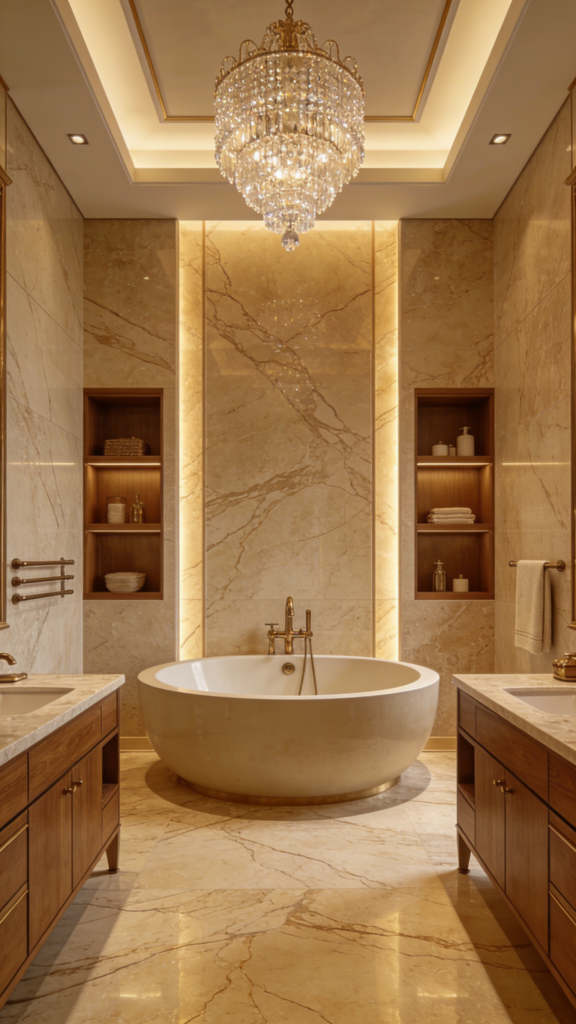

There is a look showing up in more and more bathrooms in 2026. It is not a single brand, not a specific collection, but a design language. The bottom of the vanity features woven baskets, cane panels, or barrel-shaped open shelving. The upper section is a solid wooden cabinet with clean-lined drawers. The mix feels warm, tactile, and unpretentious—a deliberate step away from the all-white lacquered boxes that dominated bathroom design for the last decade.
This “crate-and-barrel” aesthetic borrows its name from the materials it combines. The crate element is the structured wooden drawer box. The barrel element is the woven, curved, or staved texture that softens the cabinet’s lower half. The appeal is immediate. Natural fibers add warmth to a room dominated by hard surfaces. Mixed materials break up the visual mass of a vanity, making a floor-standing unit feel lighter and more considered. This article explores where the look came from, how to spec it well, what to watch for regarding durability, and how different global markets are interpreting the trend.
1. What Exactly Is the Crate-and-Barrel Vanity Aesthetic?
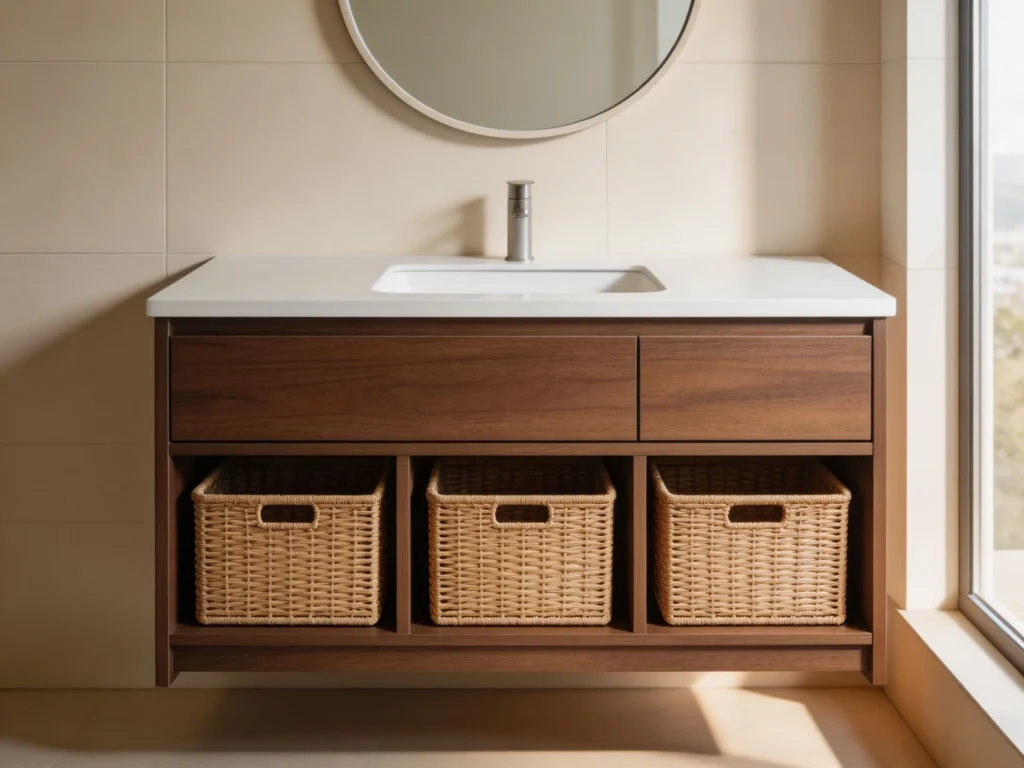
To understand the trend, it helps to separate the visual from the structural. The crate element refers to the upper portion of the vanity: a wooden cabinet body with flat-front or shaker-style drawers, typically finished in a warm mid-tone stain or a muted paint color. The lines are simple, square, and functional—like a vintage storage crate elevated to fine furniture.
The barrel element lives in the lower half. Instead of another row of drawers or a solid toe-kick, the vanity opens into one of several woven or curved forms. Most common are natural rattan or seagrass baskets that slide into cubby openings. Some designs use a cane-webbing panel across the lower cabinet face. Others take the barrel reference more literally, with curved wooden slats or staves running across the front—an echo of wine barrel construction applied to furniture.
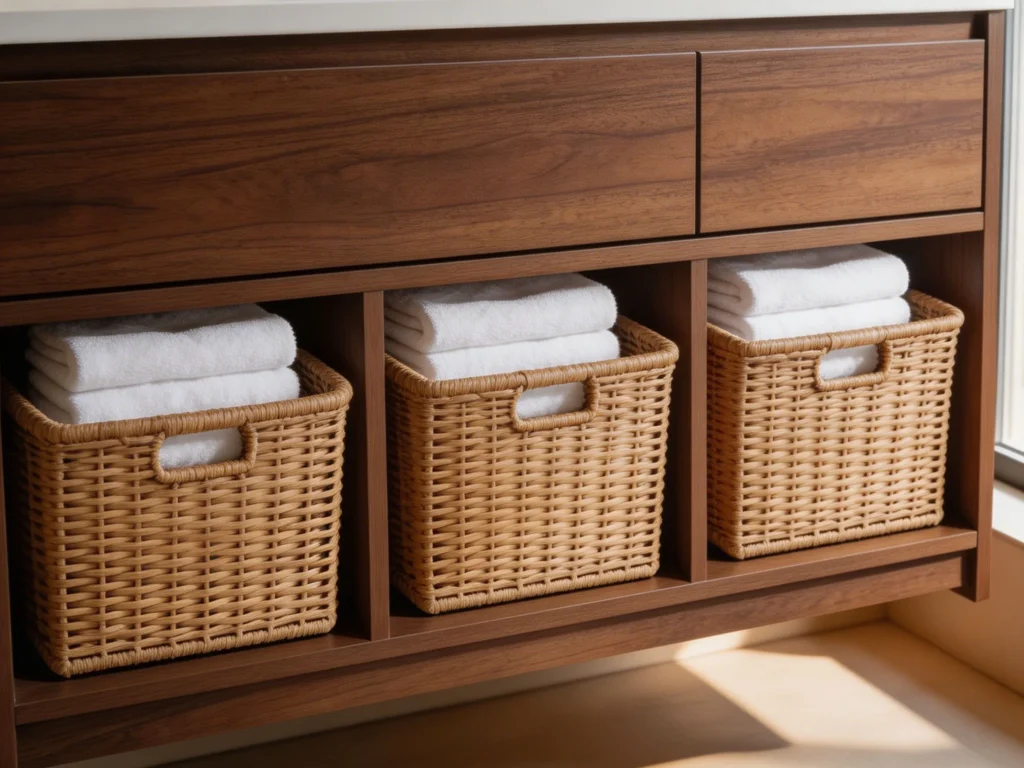
When designers combine these two elements, the result is a vanity that feels layered and collected rather than manufactured. The texture of the basket or weave breaks up the flat plane of the cabinet. The visual weight shifts upward, making the vanity feel less heavy in a small bathroom. Functionally, the open or basket-filled lower section provides accessible storage for towels, toilet paper, or toiletries, while the solid upper drawers hide away personal items.
The look fits naturally into several design vocabularies: coastal bathrooms where woven textures evoke beachside living, modern farmhouse spaces that layer wood tones with soft whites, spa-inspired bathrooms that prioritize natural materials, and even warm minimalism, where a single woven basket beneath a clean-lined vanity provides the room’s primary textural moment.
2. Why This Look Is Taking Off in 2026
The crate-and-barrel trend did not emerge in isolation. It represents the intersection of several forces reshaping how people think about their bathrooms.
First, there is a growing fatigue with the all-white, high-gloss bathroom. For twenty years, the dominant aesthetic was a wall of white lacquer cabinetry, white countertops, and chrome fixtures. That look is clean, but it is also cold and impersonal. The crate-and-barrel approach introduces warmth without tipping into heavy ornamentation. A vanity with a natural rattan panel and a simple oak drawer front feels approachable rather than clinical.
Second, the line between bathroom furniture and living room furniture is blurring. Homeowners increasingly treat the bathroom as a space to furnish, not just to plumb. A vanity with visible wood grain and woven baskets reads as a piece of furniture, not a built-in appliance. This shift is strongest in North America and Northern Europe, where freestanding vanities that resemble sideboards or credenzas have gained significant market share.
Third, sustainability consciousness is driving interest in natural, renewable materials. Rattan, bamboo, seagrass, and water hyacinth are fast-growing fibers that regenerate quickly. Using them in bathroom cabinetry, even as accent panels, signals environmental awareness in a way that MDF and laminate do not.
Finally, the look photographs beautifully. On social media, a bathroom with a textured vanity generates more engagement than a bathroom with a standard white cabinet. The contrast between smooth wood, rough weave, and polished stone creates visual interest that reads well in a thumbnail. This online visibility has accelerated the trend far beyond what traditional showroom adoption would suggest.
3. The Crate Element: Wood, Finish, and Drawer Construction
The upper section of a crate-and-barrel vanity is deceptively simple. It is a wooden box with drawers. But the quality of that box determines whether the vanity lasts ten years or starts sagging in three.
Material Choices for the Cabinet Box
The drawer fronts, face frame, and cabinet sides can use solid wood, but the cabinet box itself should be plywood. A hardwood plywood box with a veneered face frame gives you the stability of engineered wood where it matters, with the appearance of solid wood where it shows. I have seen imported vanities marketed as “solid wood” where the drawer boxes were stapled particle board with a thin wood front. The baskets may look beautiful, but if the drawer above them falls apart, the aesthetic does not rescue the purchase.
For painted crate-and-barrel vanities, manufacturers often use MDF for the drawer fronts because it takes paint smoothly and does not telegraph grain. This is acceptable in well-ventilated bathrooms in dry climates. In humid bathrooms—coastal properties, bathrooms without extractor fans, tropical regions—MDF drawer fronts will eventually swell around the edges. For those environments, specify a plywood or solid wood front with a moisture-resistant paint system.
Drawer Construction Matters
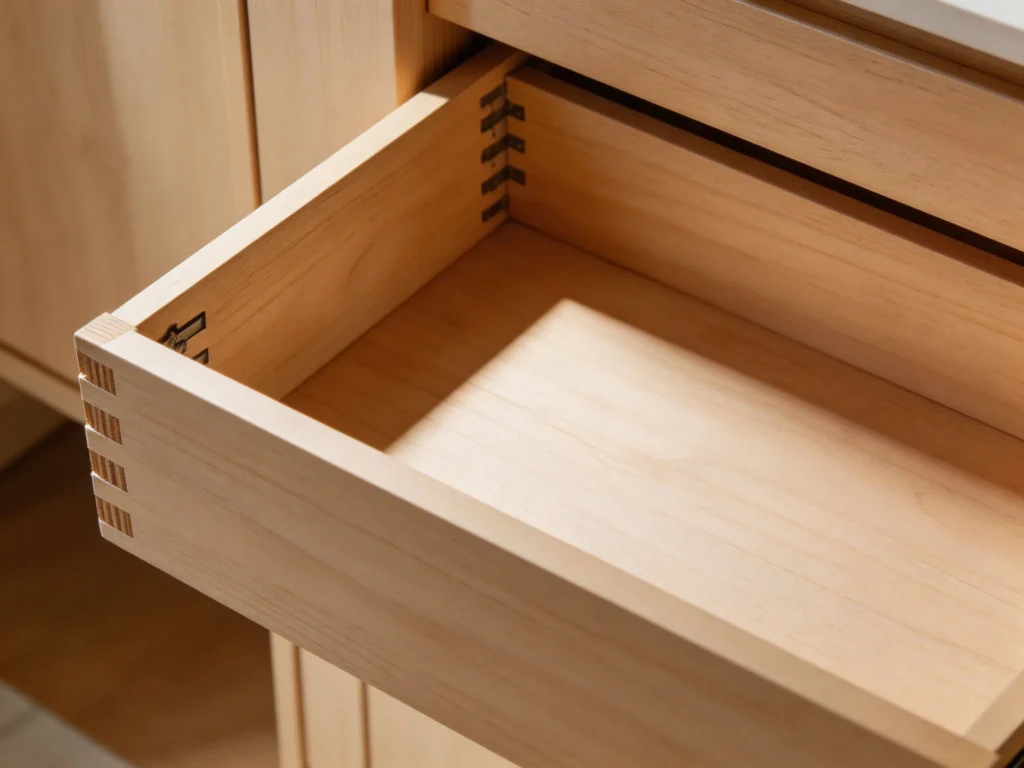
The drawer box is where the crate element either earns its name or betrays it. A quality drawer uses dovetail joinery at the front corners, a solid wood or plywood box, and full-extension soft-close slides rated for bathroom humidity. A cheap drawer uses stapled butt joints, a particle board box, and epoxy-coated slides that will rust. Open the drawer in the showroom. Wiggle it. If there is side-to-side play, walk away.
Finish Protection
The wood finish on the cabinet body must withstand bathroom humidity. A catalyzed conversion varnish or a high-quality polyurethane with a matte or satin sheen is standard for mid-to-upper-tier vanities. Avoid wax-only finishes in bathrooms; they offer minimal moisture protection and require frequent reapplication.
4. The Barrel Element: Woven Baskets, Cane Panels, and Curved Slats
This is where the crate-and-barrel look gets its character. The lower section of the vanity introduces a contrasting texture, and the choice of material affects both the aesthetic and the long-term durability.
Woven Baskets: The Most Common Approach
Removable baskets are the most practical barrel element because they slide out for cleaning and can be replaced if they wear. Natural rattan and seagrass baskets offer the most authentic texture, but they are organic fibers. In a consistently humid bathroom, they can absorb moisture and develop mildew if air circulation is poor. This is a real concern in bathrooms without mechanical ventilation, particularly in tropical climates.
A practical solution is to use baskets woven from synthetic materials—polyethylene rattan, for example—that mimic the look of natural fiber but resist moisture completely. From a distance of two feet, the visual difference is negligible. Up close, the synthetic weave feels slightly different, but the trade-off in durability makes it the better choice for bathrooms with daily shower steam.
Cane Webbing Panels
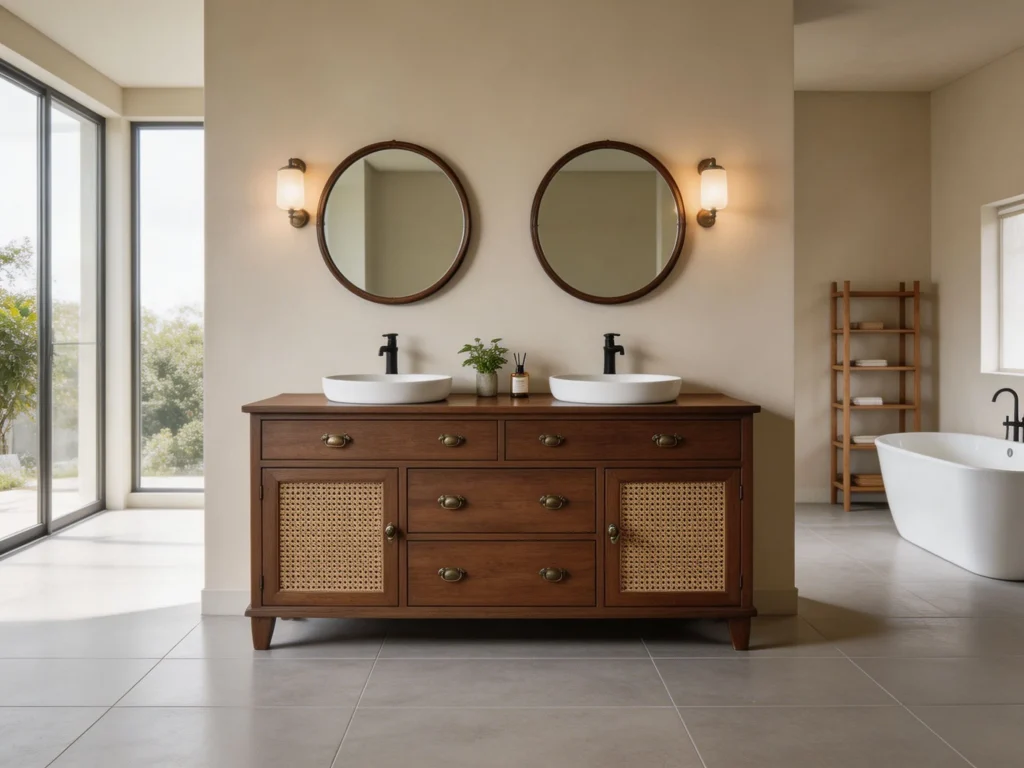
Cane webbing, pressed into a door or drawer front behind a wooden frame, creates the barrel texture without the basket format. Cane is a thin, flexible rattan skin woven into an open mesh. It is more delicate than basket-weave and can be punctured if something presses against it hard. For a guest bathroom or powder room with light use, a cane panel door is a beautiful detail. For a family bathroom where a toddler might kick the vanity front, cane panels are a vulnerability.
The cane should be sealed with a clear matte lacquer to prevent moisture absorption. Unsealed cane will swell and sag within months in a humid bathroom. If you are buying a cane-panel vanity, ask the manufacturer whether the cane has been sealed and with what product.
Curved Wooden Staves: The Literal Barrel Reference
Some designs take the barrel concept directly, with vertical wooden staves running across the lower cabinet front, held in place by horizontal metal bands or mortised rails. This is the most durable barrel interpretation because it uses solid wood rather than fiber. The staves should have small gaps between them to allow air circulation inside the cabinet, preventing stale air buildup. The metal bands should be stainless steel or coated brass; iron bands will rust.
The Trade-Off: Open Storage vs. Closed
The barrel element, whether a basket or an open shelf, exposes stored items to view and to bathroom dust. This is not a downside if you like the look of rolled towels and neatly arranged toiletries. If the bathroom is shared by multiple family members, the open storage may look cluttered more often than it looks styled. A hybrid approach—one basket for display, one closed drawer for the less photogenic necessities—offers a practical middle ground.
5. Countertops, Sinks, and Hardware: Completing the Look
The crate-and-barrel vanity carries enough visual texture on its own. The surrounding elements should support the composition without competing.
Countertops
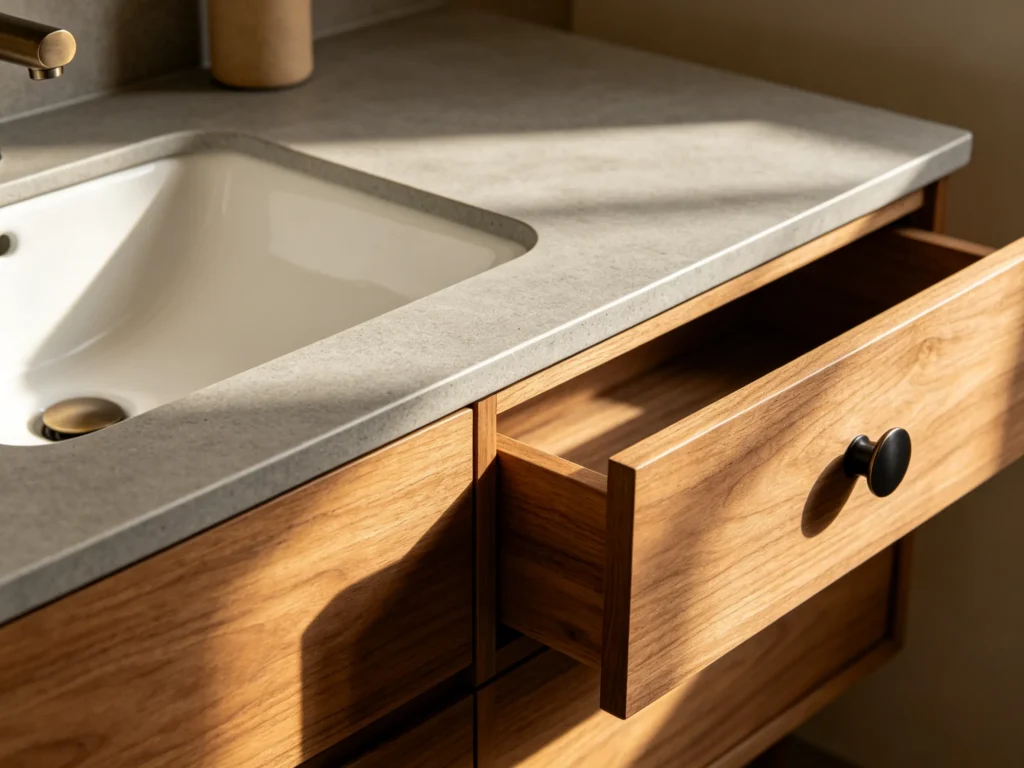
Natural stone, particularly honed marble or limestone, complements the organic feel of woven textures. Engineered quartz in a matte white or warm grey is a more practical alternative that resists staining and requires no sealing. Avoid high-gloss polished surfaces; the shine fights the matte, natural character of the vanity and creates visual tension.
Sinks
A white vitreous china undercounter or vessel basin works well because it creates a clean visual break between the countertop and the textured cabinet. For a more rustic interpretation, a hammered copper or natural stone vessel basin reinforces the crafted, artisanal feel. The sink should sit visually quietly—the vanity is the focal point, not the sink.
Hardware
Hardware on a crate-and-barrel vanity should feel like it belongs on furniture, not on plumbing. Aged brass, oil-rubbed bronze, or matte black cup pulls and bin pulls reinforce the vintage-crate aesthetic. Avoid polished chrome and glossy contemporary bar pulls, which pull the look toward modern commercial design and away from the warm, collected feel the style aims for.
6. Where This Trend Is Landing Around the World
The crate-and-barrel aesthetic is not a single global style. Different markets are interpreting it through their own material traditions, spatial constraints, and cultural preferences.
North America
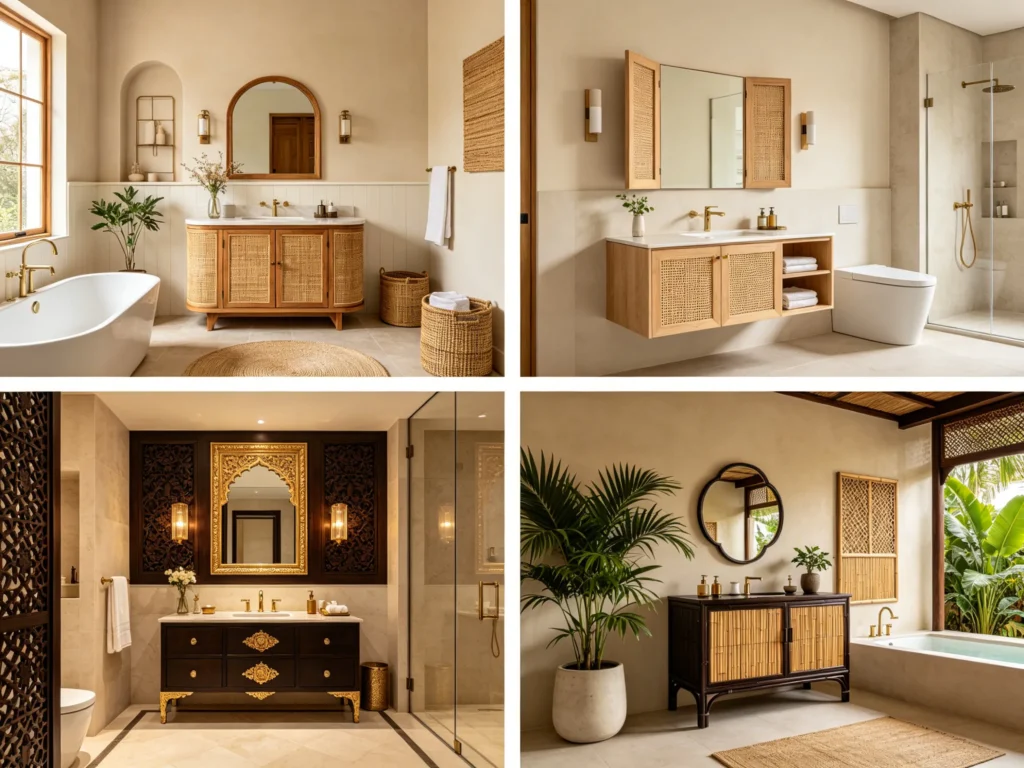
This is where the trend is most visible and most commercialized. Retailers are offering complete crate-and-barrel vanities with pre-fitted baskets, often in 48-inch to 72-inch double-sink configurations for master bathrooms. The popular finishes are warm oak, walnut, and painted sage or navy. The modern farmhouse movement has been the primary vehicle for the look, but it is increasingly crossing into transitional and soft contemporary interiors as well.
Europe
The European interpretation is tighter and more refined. Rather than rustic baskets, designers are using cane-webbing door panels and fluted wood details that reference barrel staves. The vanities tend to be wall-hung, with the woven or textured element integrated into the cabinet face rather than as a separate basket. Color palettes lean toward muted earth tones and soft whites. In Scandinavia, the look often appears in combination with light oak and simple ceramic basins, keeping the texture light and the overall feeling airy.
Middle East
The Gulf region’s interpretation emphasizes luxury materials. Instead of rattan baskets, specifiers are using hand-carved wooden panels with geometric patterns that evoke traditional mashrabiya screens. The cabinet body is often in a dark stain or matte black, with brass or gold inlays at the basket edges. The texture is not rustic; it is ornate and intentional. In luxury hotel projects, the barrel element may be a curved, upholstered panel rather than a woven basket, creating a softer, more opulent feel.
Southeast Asia
In tropical markets, the crate-and-barrel concept aligns naturally with local material traditions. Rattan, bamboo, and abaca weaving are indigenous crafts across the region, and vanities that incorporate these materials feel locally authentic rather than imported. The practical concern, as mentioned earlier, is humidity. Synthetic rattan and sealed natural fibers are both in use. Designers are increasingly specifying vanities with removable woven panels that can be taken outside to dry if they develop any signs of mildew.
7. What to Look for When Buying a Crate-and-Barrel Vanity
The mixed-material nature of this style creates specific quality checkpoints that a standard white vanity does not require. Here is what to examine before you buy.
- Basket fit and alignment. If the vanity includes baskets, pull each one out and push it back in. They should slide smoothly without catching. Check that the basket faces align evenly with the cabinet frame. Misaligned baskets are the quickest way to make a premium vanity look cheap.
- Drawer quality behind the texture. The baskets and cane panels are the visual draw, but the drawers are where you will interact with the vanity daily. Demand soft-close slides, dovetail joinery, and a plywood or solid wood drawer box. Do not accept particle board, regardless of how good the basket looks.
- Moisture protection on all woven elements. Ask whether the rattan, cane, or seagrass has been sealed. If the answer is vague, assume it has not been. For bathrooms with showers, sealed synthetic baskets or solid wood staves are the safer choice. For powder rooms without steam, unsealed natural baskets are acceptable but may still age faster.
- The vanity back panel. Turn the vanity around if you can. The back panel should be at least 6 mm thick plywood, not hardboard or cardboard. If the back panel is thin and unsealed, moisture from the bathroom wall will migrate into the cabinet over time. This is a common area where manufacturers cut costs, and it has nothing to do with the visible front.
- Hardware finish and corrosion resistance. If the vanity includes hardware, verify that it is rated for bathroom use. Zinc alloy handles with a thin chrome plate will pit within a year in a humid bathroom. Solid brass or stainless steel handles with a quality PVD or powder coat finish will last.
Final Thoughts: Texture Without Sacrifice
The crate-and-barrel vanity trend succeeds because it addresses something the all-white bathroom never did. Texture. Warmth. The feeling that the bathroom is a room in the home, not a laboratory. A well-made vanity in this style brings natural materials into a space that needs them, and it does so without sacrificing storage or durability.
The key is to buy with your eyes open. Examine the drawers as carefully as you admire the baskets. Match the materials to your bathroom’s humidity level. Choose hardware and countertops that support the composition rather than competing with it. A crate-and-barrel vanity done well is one of the most satisfying fixtures to live with. Done cheaply, it is a collection of wobbly drawers and mildewed baskets. The difference is in the details you check before you pay. Now you know which ones matter.