A contractor in Atlanta retrofitted 140 guest bathrooms for a mid-market hotel chain. The client wanted bidet features in every room, but the plumbing budget only covered one option. The contractor priced all three paths. Standalone bidets meant 140 new supply lines, 140 drain rough-ins, and a full rework of the toilet room layout. Bidet seats meant an electrical outlet and a GFCI circuit at every toilet. Handheld sprayers meant a tee on the existing supply and a wall bracket next to the toilet.
The hotel picked the handheld sprayer, and the project finished on schedule. Every room got the feature the guests expected, without a single new drain line. For the contractor, a clear lesson emerged. Choice on a bidet project is never about hygiene alone. It is about what the building can support.
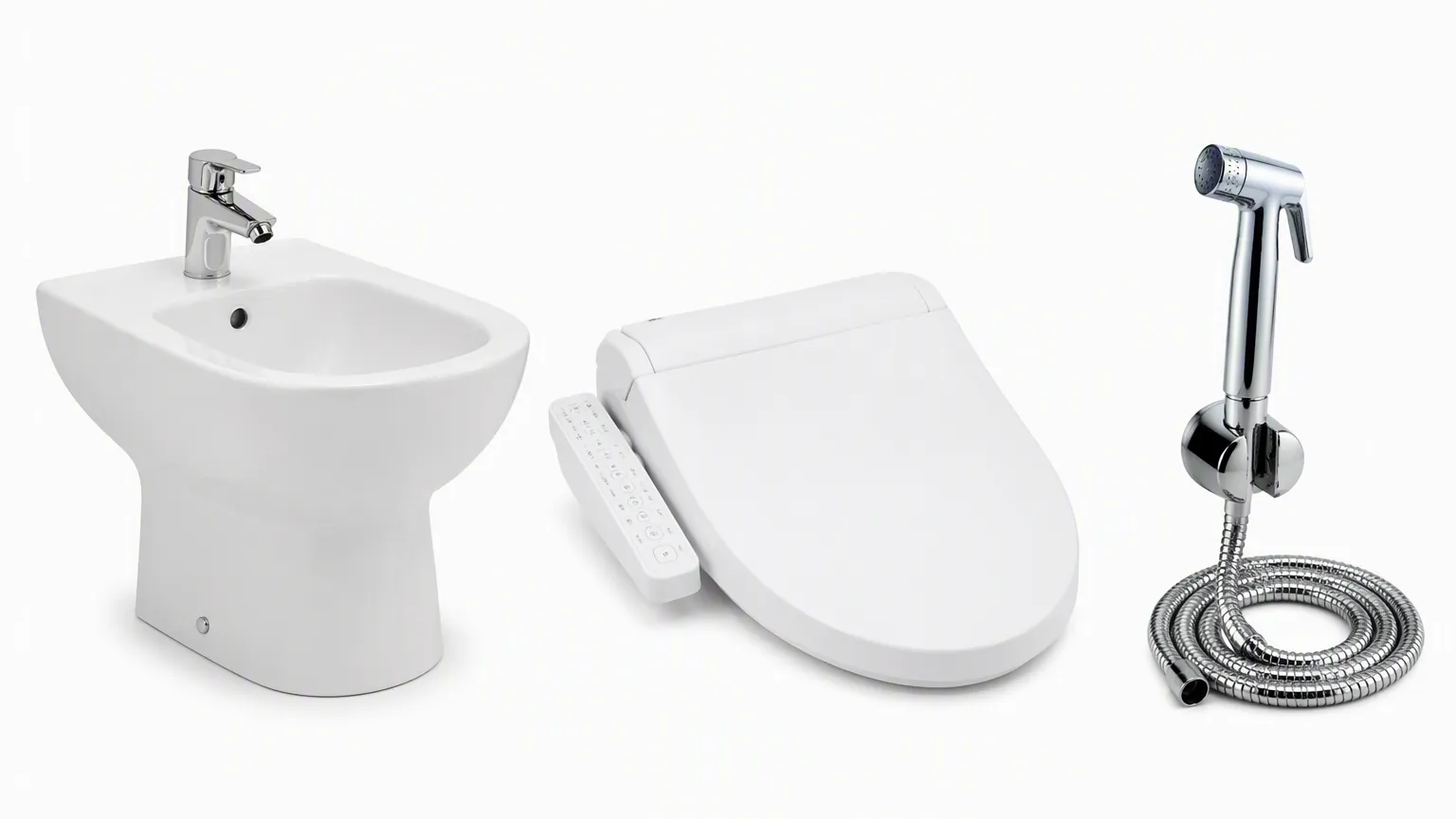
This guide compares the three options from a contractor’s viewpoint. It covers installation requirements, water and power consumption, and maintenance. It also covers cost and the project types where each option wins.
Bidet Options in One Minute: The Three Paths Compared
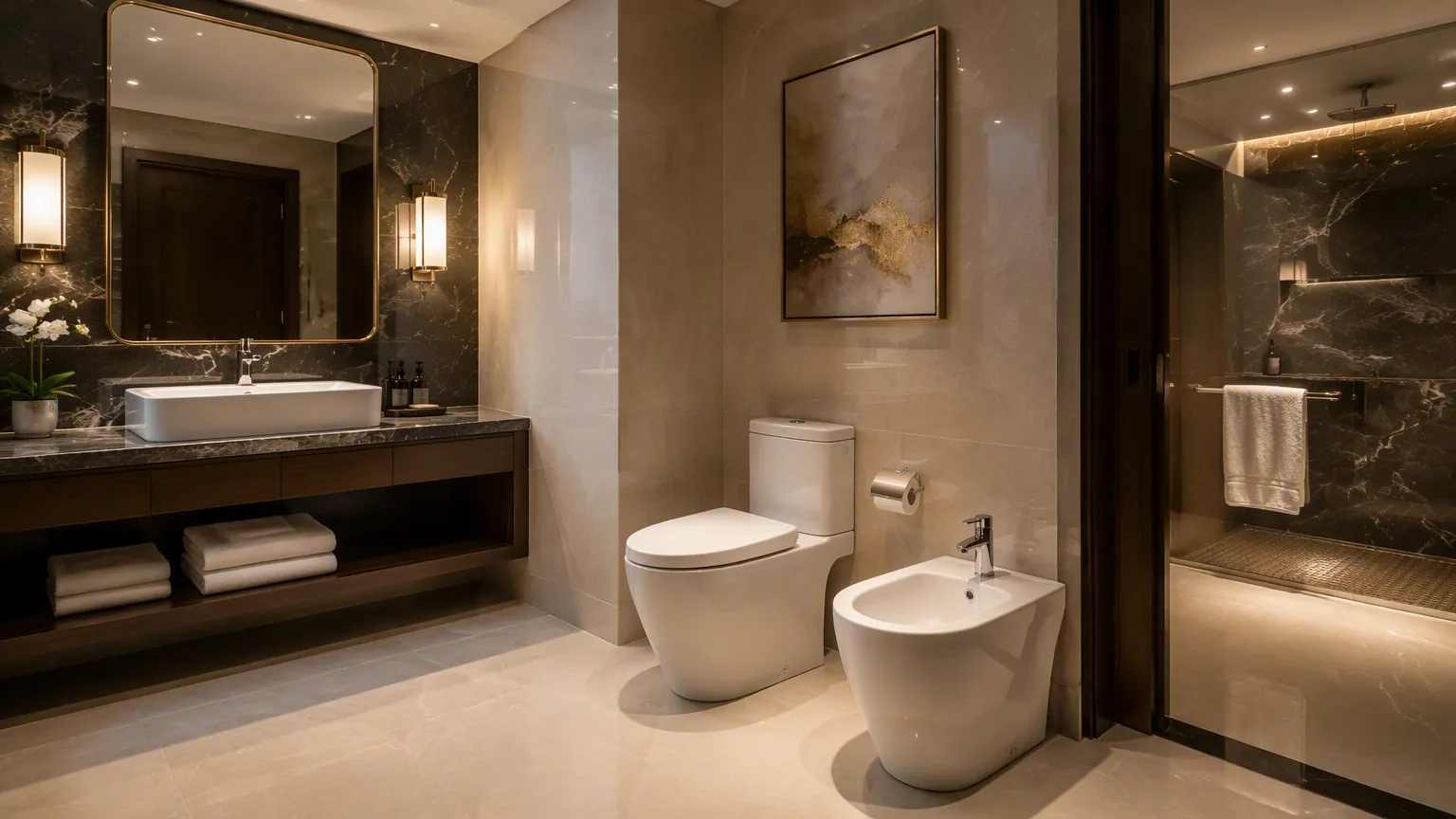
Standalone bidet. A separate ceramic fixture installed next to the toilet. It needs its own supply line, drain, and floor space of about 600 x 400 mm. Users straddle the fixture and use a vertical jet of water. Common in Europe, South America, and the Middle East, rare in North America. For importers, the standalone bidet often ships as part of a matched bidet-toilet set, which simplifies container planning.
Bidet seat. A replacement toilet seat with built-in nozzles, heater, and controls. It bolts onto an existing toilet. It also needs a cold water supply plus a nearby power outlet. Models range from a basic cold-water seat to a fully featured unit with warm air drying and a remote. The category sits between a fixture and an appliance, which is why the electrical planning matters. Hotels that want the upgrade path should read the hotel bidet seat spec guide before wiring the rooms.
Handheld sprayer. A small hand shower mounted on a wall bracket beside the toilet, connected to the toilet supply line with a tee and a diverter. Also called a bidet sprayer or shattaf. It gives the user a flexible spray head and requires almost no plumbing changes. In the Gulf region, the shattaf is expected in every bathroom, residential or commercial.
Standalone Bidet: The Traditional European Approach
Installation and Space Requirements
A standalone bidet is a full fixture with its own supply and drain. It is plumbed like a small washbasin, which is why the code review matters before the layout is fixed. The supply can be hot, cold, or mixed. The drain needs a trap and a vent connection that meets the local plumbing code. In a new build this is straightforward. In a retrofit it means opening the floor and extending the drain. The room layout usually needs to change as well. Plan the drain slope and vent access before the tile goes down, because fixing it later means breaking the floor.
The space requirement is the deciding factor in most projects. A bidet needs about 600 x 400 mm of clear floor area next to the toilet. Code in many regions also requires a minimum clearance around the fixture. Hotel bathrooms sized for a toilet and a vanity usually do not have that space. Residential bathrooms designed for a single occupant sometimes do.
Water Consumption
A typical wash cycle uses 2-4 liters of water, and the jet is adjustable on most fixtures sold today. The fixture runs from the building supply, so there is no standby draw. That makes it the most predictable option for operating cost and for utility billing across a property. If the bidet has a mixer, the hot water line runs to the fixture. The pipe run length decides how much cold water the user wastes before hot water arrives.
Price Range
Wholesale FOB prices for ceramic bidets run $15-45 depending on the model, glaze, and certification. The fixture itself is cheap, and factory-direct pricing confirms it on the bidet product page. A container of 500 units fits in a fraction of the toilet shipment. The cost that matters is the plumbing. A 100-room hotel in Europe can add a standalone bidet to each bathroom for roughly $1,500-4,500 in fixtures. The supply and drain work multiplies that figure several times over. A retrofit supply and drain can add $400-800 in labor and materials per unit in North America.
Bidet Seat: The Technology-First Upgrade
Installation and Space Requirements
A bidet seat bolts onto a standard toilet in about thirty minutes, using only the tools in a standard plumbing kit. It uses the toilet’s cold water supply through a tee, and the electrical requirement is the constraint. Most models need a 110-120V outlet within reach. In North America, that outlet must be GFCI protected. In commercial projects, adding an outlet at every toilet location is an electrical line item. Buyers regularly forget to budget for it.
Space is not an issue, because the seat replaces the existing one. The seat fits standard round or elongated bowls, and the model must match the bowl shape and the distance between the mounting holes. Measure the hole spacing on site rather than trusting the model number, because some factory runs change the pattern.
Function and User Experience
Bidet seats offer the best user experience of the three options. They add adjustable temperature, pressure, nozzle position, and warm air drying. Premium models add a heated seat and a remote. The trade-off is complexity, and complexity shows up in the warranty claims over the first three years of service. More features mean more components that can fail. Every electronic seat also needs a trained maintenance path in a commercial setting.
Water and Energy Consumption
A wash cycle uses 1-2 liters, similar to a standalone bidet. The energy draw is the difference. Heated seats, warm water tanks, and dryers draw 800-1500W when active. The standby load of an always-on seat heater can add $15-40 per unit per year in electricity. In a 200-room hotel, that is a line item worth checking before you spec.
Price Range
Wholesale FOB prices for bidet seats run $35-120 for basic models and $150-400 for full-featured units. The retail markup is significant, so contractor pricing depends on the order volume and the supplier relationship.
Handheld Sprayer: The Practical, Universal Solution
Installation and Space Requirements
A handheld sprayer installs in under an hour with basic hand tools. The kit includes a tee that taps the toilet supply line, a diverter valve, a hose, and a wall bracket. No drain work, no electrical work, and no floor space beyond the bracket. That simplicity is why it dominates retrofit and renovation budgets.
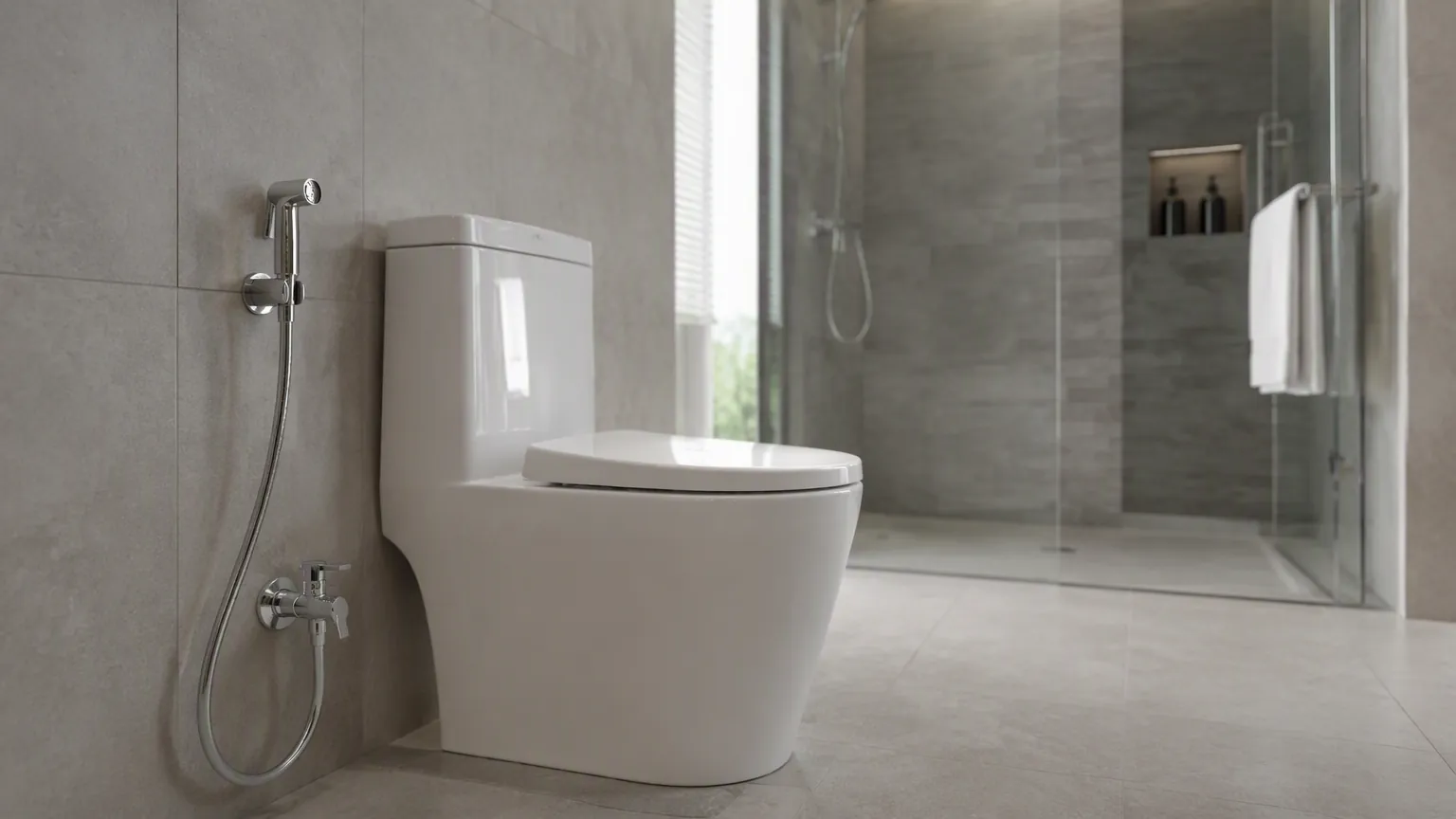
The sprayer hangs beside the toilet or mounts on the side of the vanity. For new construction, set the bracket at 700-800 mm above the finished floor. That height keeps it within easy reach of a seated user. Align the bracket so the hose does not kink when the sprayer is lifted.
This is the option that works in retrofits, rental units, and hotels. It also works in any building where opening walls and floors is not on the budget. Property managers in the US and Canada routinely add sprayers to existing toilets during unit turnovers. The install is fast and reversible. It also works where a bidet seat cannot. There is often no outlet at the toilet location.
Function and User Experience
The sprayer gives the user full control of direction and pressure, with no buttons to explain and no settings to reset. The learning curve is small, and maintenance is simple for any maintenance team. Replace the hose or the valve when it wears; each part costs $5-15. The main complaint is the manual nature of the experience. Users who want warm water need a mixer or a sprayer with a warm water connection. That option adds a second supply line at the fixture. There is no warm seat, no dryer, and no temperature control. A mixed supply connection changes that, but it is rarely installed.
Water Consumption
A wash uses 0.5-1.5 liters because the user controls the flow. There is no standby consumption at all, and no energy draw.
Price Range
Wholesale FOB prices for a sprayer kit run $3-12. This is the lowest-cost option by a wide margin, and it is the reason the Atlanta contractor’s client chose it. The kit includes the tee, the diverter, the hose, and the bracket, so there are no hidden parts to order and no specialty tools to rent.
Head-to-Head Comparison
| Criterion | Standalone bidet | Bidet seat | Handheld sprayer |
|---|---|---|---|
| Floor space | 600 x 400 mm | None (replaces seat) | Wall bracket only |
| Supply line | New hot/cold | Tee on cold | Tee on cold |
| Drain | New rough-in | None | None |
| Electrical | None | 110-120V outlet + GFCI | None |
| Install time (retrofit) | 1-2 days | 30 min + electrician | Under 1 hour |
| Water per wash | 2-4 L | 1-2 L | 0.5-1.5 L |
| Energy draw | None (or hot water) | 800-1500W active | None |
| FOB price | $15-45 | $35-400 | $3-12 |
| Field maintenance | Standard fixture | Electronics, seals | Hose and valve |
| Best for | New builds, EU/SA/ME | Hotels with power, residential upgrades | Retrofits, rentals, budget projects |
Bidet Selection by Region: What Works Where
North America. The retrofit reality favors handheld sprayers in existing buildings and bidet seats in new construction where outlets are planned. The electrical code change that requires GFCI protection near water makes outlet placement a spec decision, not a field decision. Standalone bidets are rare because bathrooms are sized without them.
Europe. Standalone bidets are common in Southern Europe and expected in premium residential. Bidets with a separate hot and cold tap pair are the traditional configuration. The two-handle style still dominates the Italian and French markets. Bidets and sprayers are less common in Northern Europe, where the toilet room is typically compact.
Middle East and Southeast Asia. The handheld sprayer is the cultural standard. For GCC projects, suppliers like YIDA offer sprayer-compatible configurations alongside the wall-mounted bidet. It appears beside toilets in homes, hotels, and public washrooms. Bidet seats are gaining in premium hotels, but the sprayer remains the baseline expectation.
South America. The standalone bidet is the traditional choice in Brazil and Argentina, often as part of a bidet-toilet set. Importers there order the pair together, and the supplier should confirm the glaze color matches across both fixtures. The bidet-toilet set is also common in GCC projects, where the matched set guide explains the ordering workflow. Importers in the region usually order the fixture alongside the toilet in matched sets.
Common Bidet and Sprayer Specification Mistakes
Forgetting the electrical line item for bidet seats. The seat is the cheapest part of the install. The outlet, the GFCI breaker, and the electrician’s time can double the per-unit cost in a retrofit. Price the electrical work before you commit.
Ordering bidet seats without confirming the bowl shape. Round and elongated bowls use different seat models. A mismatched seat does not bolt down, and the return costs more than the seat.
Specifying standalone bidets in bathrooms without the space. A 600 mm fixture in a 900 mm toilet room leaves no clearance. The user and the door swing both need room. Measure the room before the fixture.
Skipping the pressure check for sprayers. Low water pressure makes a sprayer feel weak. If the building runs on a gravity tank or a shared riser, test the pressure at the toilet first. Only then specify the kit. Confirm the supply pressure at the toilet is adequate, or specify a model with a pressure-assist diverter.
Ignoring maintenance access for electronic seats. In hotels, a failed seat means a guest-room outage. For a property with 200 rooms, carry two spare seats per floor and train the maintenance team on the swap procedure. Choose models with modular parts and keep spare units in the building.
Frequently Asked Questions
Can a bidet sprayer be installed on any toilet?
Yes, if the toilet has an accessible cold water supply line. The kit taps the line with a tee and a diverter. This is the most universal option of the three.
Does a bidet seat need an electrical outlet?
Most do. Basic cold-water seats run without power. Heated seats, warm water, and dryers need a 110-120V outlet with GFCI protection in North America.
Which option is cheapest to install in a retrofit?
The handheld sprayer, by a wide margin. It needs no drain, no outlet, and no floor space. A typical retrofit install takes under an hour.
Are standalone bidets still used outside Europe?
Yes. They remain standard in South America, parts of the Middle East, and Southern Europe. Buyers often order them as matched bidet-toilet sets.
How much water does a bidet use?
A standalone bidet uses 2-4 liters per wash, a bidet seat 1-2 liters, and a handheld sprayer 0.5-1.5 liters. All three use less water than the paper manufacturing footprint they replace.
What is a shattaf?
A shattaf is the handheld bidet sprayer used across the Middle East and Southeast Asia. It is the same device as a bidet sprayer, mounted beside the toilet on a wall bracket.
Bidet Specification Checklist for Contractors
- Confirm the room dimensions and clearance for a standalone bidet
- Check the toilet bowl shape before ordering bidet seats
- Verify power availability and GFCI requirements for seats
- Confirm supply pressure for handheld sprayers
- Check local plumbing code for drain and vent requirements
- Price the electrical work for seats, not just the unit
- Match regional expectations (sprayer in GCC, bidet in South America)
- Ask for spare parts or spare units for electronic seats
- Confirm the model has the right certifications for the market
- Get FOB pricing with the order volume and lead time in writing
Conclusion
The Atlanta contractor’s hotel chose the handheld sprayer because the building could not support the other two options. That is the right way to make this decision. Start with the building: the available space, the power, the plumbing, and the budget. Then match the option to the market. A sprayer wins most retrofits and most Middle East projects. Bidet seats win new builds with planned outlets and hotels that want a premium feature. Standalone bidets win where the bathroom is sized for them and the market expects the fixture. Specify what the building can support, and the bathroom will work for years.
For the factory range, browse the bidet category or see the bidet attachment guide for retrofit compatibility.