

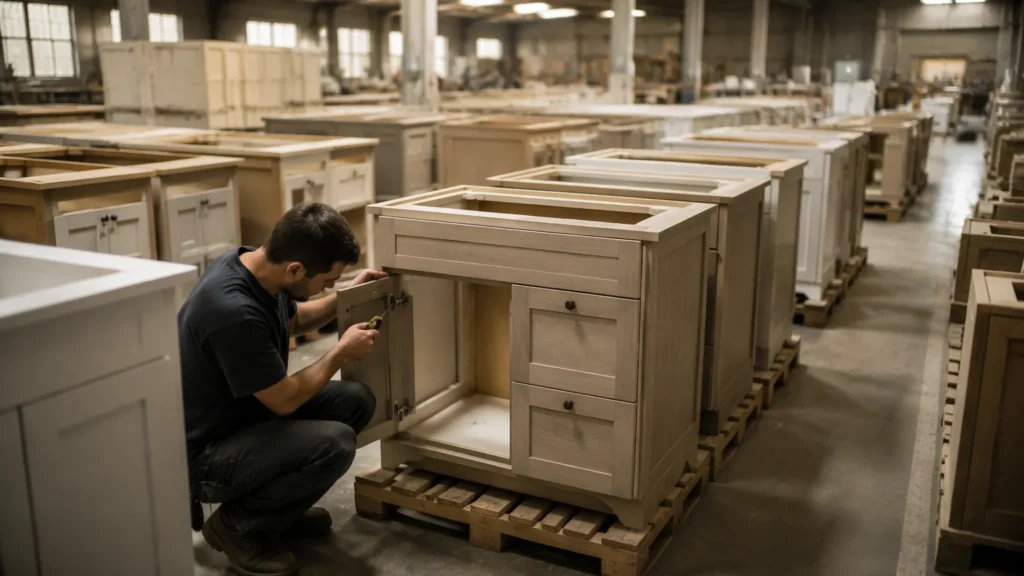
You just won a 36-unit apartment renovation contract. The client approved solid-surface countertops and soft-close hardware, and now you need to source 36 bathroom vanities that meet the spec and fit the budget. Your first quote comes in at $120 per unit. Your second is $85. How do you decide which one to specify?
This guide breaks down everything a contractor needs to know about bathroom vanity wholesale sourcing: material grades, construction quality markers, standard dimensions, and the questions that separate reliable suppliers from the rest.
Why Buying Bathroom Vanity Wholesale Demands a Contractor Mindset
Residential vanities from big-box stores are designed for single-family homeowners. Commercial-grade wholesale vanity products are built for repeat installation, consistent quality across dozens of units, and durability that withstands daily use across multiple rooms.
The difference starts with the materials. A vanity that looks fine in a showroom can develop swollen edges, loose hinges, or delaminated tops within a year of installation if the wrong core material was used.
When evaluating wholesale vanity suppliers, consider three factors: material grade, joinery quality, and hardware specification. Each one directly affects how many callbacks you will face in the first year.
Bathroom Vanity Materials: What Actually Lasts in Contractor Work
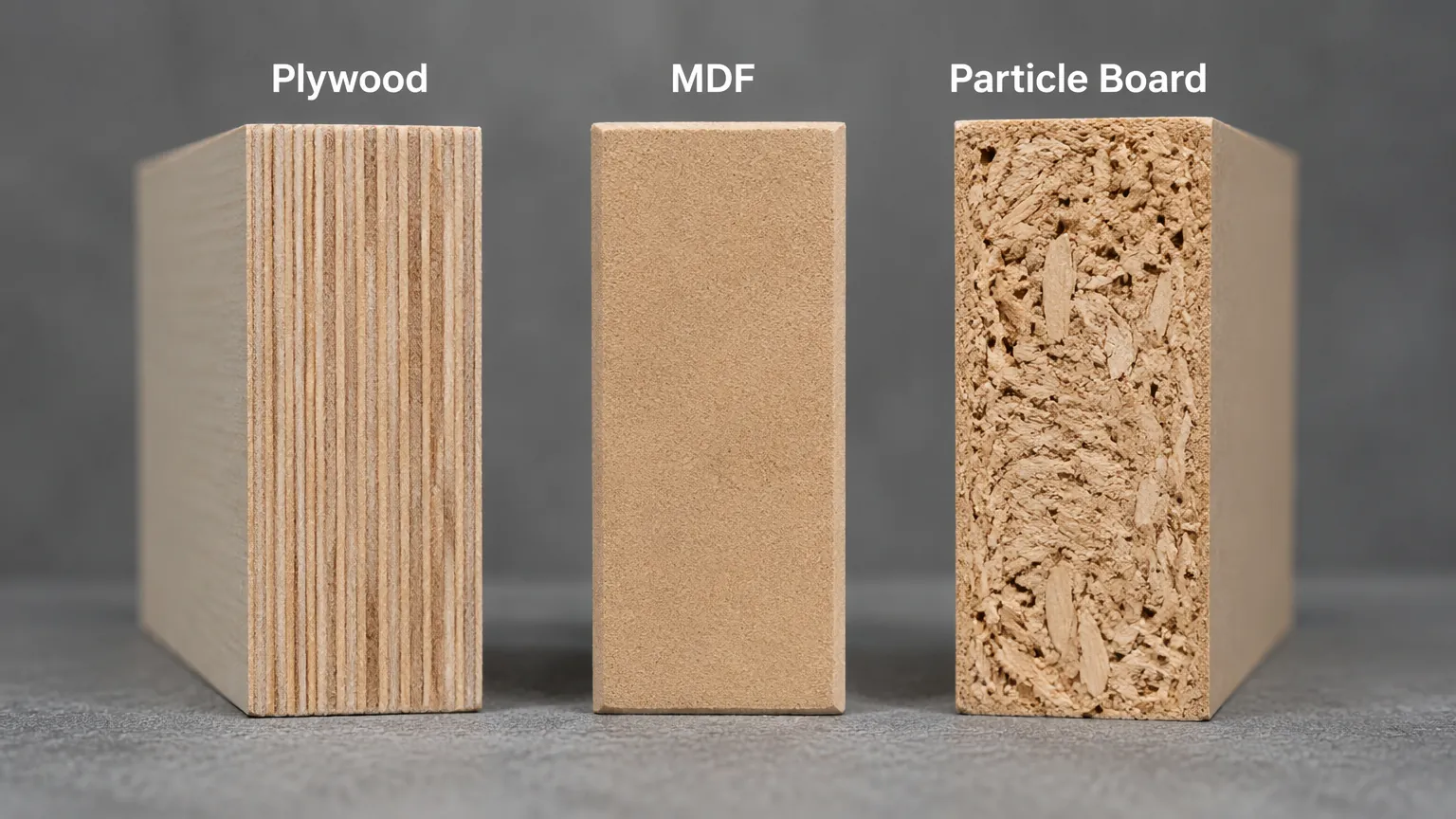
Material choice is the single biggest quality differentiator. Here is how the three most common vanity cabinet materials compare for professional use.
Solid Plywood
Plywood is the contractor’s preferred material for vanities that need to last. High-quality plywood uses multiple cross-laminated veneer layers that resist warping and moisture absorption.
- Moisture resistance: Good. Marine-grade or exterior-grade plywood handles bathroom humidity well.
- Screw holding: Excellent. Plywood holds screws firmly, so hinges and drawer slides stay aligned.
- Weight: Heavier than MDF, which signals quality to experienced buyers.
- Price premium: 20–40% above MDF at wholesale level.
- Best for: Hotels, apartment complexes, commercial washrooms.
However, plywood comes at a higher price. The cost premium is usually justified for long-term projects.
Medium-Density Fiberboard (MDF)
MDF is widely used in mid-range vanities. It offers a smooth surface ideal for painted finishes but has clear limitations in moisture-prone bathrooms.
- Moisture resistance: Marginal. Unsealed edges swell when exposed to standing water or high humidity.
- Screw holding: Moderate. Screws strip more easily than in plywood, especially after removal and reinsertion.
- Weight: Dense and heavy.
- Price range: Budget to mid-range.
- Best for: Residential bathrooms with good ventilation, short-term rentals.
Particle Board
Particle board is the lowest-cost option and the most common source of contractor callbacks. For example, a $40 particle board vanity may need replacement within 18 months in a high-humidity bathroom.
- Moisture resistance: Poor. Even brief exposure causes swelling and disintegration.
- Screw holding: Weak. Hinges and slides loosen over time.
- Weight: Light, which often signals low quality.
- Best for: Avoid in any professional specification. The short-term savings rarely justify the long-term service cost.
Countertop Materials
Most wholesale vanity units include one of three countertop options:
| Material | Durability | Stain Resistance | Wholesale Premium |
|---|---|---|---|
| Engineered marble (cultured stone) | Good for residential | Moderate | Baseline |
| Natural marble/quartz | High | High | +40–80% |
| Solid surface (Corian-style) | Very high | Excellent | +60–100% |
For contractor-grade projects, engineered marble offers the best balance of cost and performance. Similarly, natural stone works well for high-end hospitality projects. In contrast, solid surface is ideal for commercial restrooms where consistent appearance matters across multiple units.
Standard Bathroom Vanity Sizes for Contractors Buying Wholesale
Vanity dimensions vary by market, but most wholesale vanity catalogs follow these size conventions:
| Width | Configuration | Typical Use |
|---|---|---|
| 24 in (600 mm) | Single sink, no counter space | Small powder rooms, guest baths |
| 30 in (760 mm) | Single sink, minimal counter | Standard residential |
| 36 in (900 mm) | Single sink, generous counter | Primary bathrooms |
| 48 in (1,200 mm) | Double sink | Master baths, hotel rooms |
| 60 in (1,500 mm) | Double sink with storage | Large master suites, hospitality |
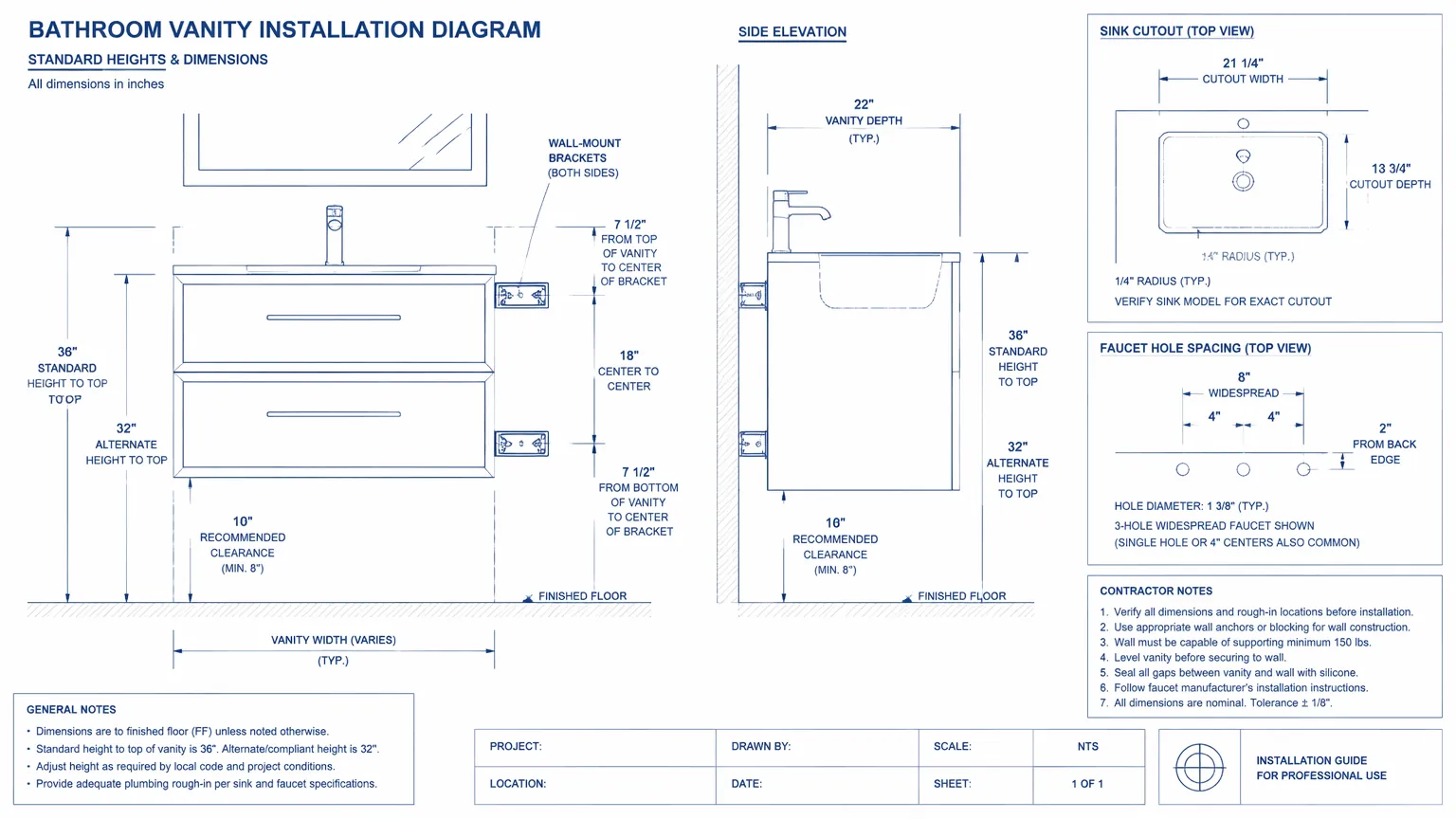
Depth typically ranges from 18–21 in (450–530 mm). Most contractors prefer 21-inch depth for standard installation because it provides adequate counter space without protruding into the traffic path.
Height is another variable. Standard vanity height is 32 in (810 mm), but comfort-height vanities at 36 in (900 mm) are increasingly common in senior living, accessible design, and hotel projects. Additionally, consider ADA compliance requirements for public facilities.
Construction Quality Markers for Bathroom Vanity Wholesale Orders
When reviewing samples from wholesale suppliers, first inspect these details:
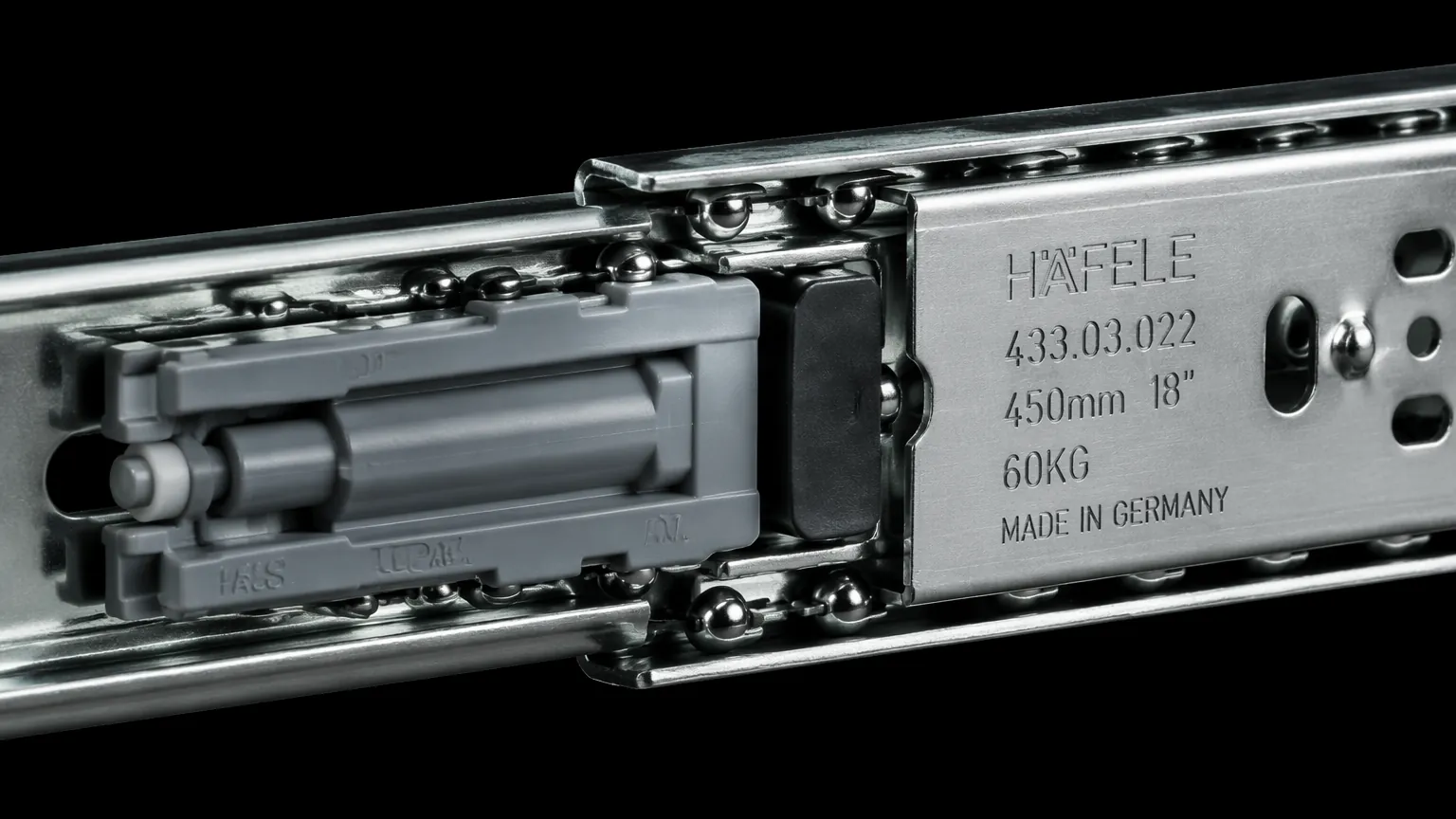
Drawer construction. Dovetail joinery signals quality. In contrast, stapled or glued joints signal cost-cutting. Full-extension drawer slides with soft-close mechanisms are the minimum standard for professional projects.
Cabinet box assembly. Dowel-and-glue construction is stronger than staple-and-glue. Plywood box construction with dovetail joints indicates long-term durability.
Back panel. A full back panel adds structural rigidity. In comparison, many budget vanities use a thin hardboard back that flexes during installation.
Hinge quality. Self-closing hinges with integrated dampers should be standard. Check whether hinge screws bite into solid wood or particle board.
Edge banding. On painted or laminate vanities, verify that edge banding is applied to all exposed edges, including inside drawer fronts and cabinet door backs. Moisture penetrates through unsealed edges first.
Finish consistency. Place two units side by side and check for color variation. Reputable suppliers control batch-to-batch finish consistency.
Wholesale Pricing Benchmarks for Bathroom Vanities
Understanding price bands helps you negotiate and avoid overpaying. These are approximate FOB China ranges for standard 36-inch single-sink vanities:
| Grade | Cabinet Material | Countertop | FOB Price Range | Typical Application |
|---|---|---|---|---|
| Economy | Particle board | Engineered marble | $45–65 | Budget apartments, short-term rentals |
| Mid-range | MDF/plywood mix | Engineered marble | $65–95 | Standard residential, mid-tier hotels |
| Premium | All-plywood | Quartz or solid surface | $95–150 | Luxury residential, branded hotels |
| Custom | Solid wood + plywood | Natural stone | $150–250+ | High-end hospitality, custom projects |
For a contractor buying 30–50 units per project, mid-range to premium grade is usually the sweet spot. Furthermore, the incremental cost of upgrading from economy to mid-range is typically recovered within the first year through reduced service calls.
How to Evaluate a Bathroom Vanity Wholesale Supplier
Use this checklist when vetting a supplier for your next project:
- Request material specifications in writing. Ask specifically for cabinet box material, drawer construction type, hinge model number, and countertop composition.
2. Inspect a pre-production sample. Never place a volume order based on catalog photos alone. Pay for an air-shipped sample — it is the cheapest insurance you can buy.
3. Check for certification. For US projects, look for cUPC or IAPMO certification on plumbing components. For European projects, CE marking. For Middle East projects, SASO or WaterMark.
4. Ask about moisture resistance testing. Reputable suppliers can provide data on edge swell and dimensional stability after 24-hour moisture exposure.
5. Confirm packaging and shipping. Vanities are freight-heavy products. Ask whether cabinets are shipped assembled, RTA (ready-to-assemble), or flat-packed. Each option affects shipping cost and on-site labor.
6. Check warranty terms. Industry standard is 1–2 years for construction defects. Furthermore, premium suppliers may offer 5-year warranties on cabinet construction. Consequently, a longer warranty often correlates with better build quality.
7. Ask about minimum order quantities. Many wholesale suppliers require an MOQ of 10–50 units per style. Some offer mixed containers for first-time buyers.
Sink and Faucet Compatibility for Wholesale Vanities
Most wholesale vanity units come pre-drilled for specific sink configurations.
First, verify these dimensions before ordering:
- Undermount vs drop-in sinks. Undermount sinks look cleaner but require precise countertop cutouts. Conversely, drop-in sinks are more forgiving for fast installation.
- Faucet hole spacing. Standard single-hole faucets require a 1.375-in (35 mm) hole. Widespread faucets need 8-in (200 mm) centerset spacing.
- Backsplash height. Standard is 4 in (100 mm). Some projects prefer no backsplash for a seamless look.
For commercial projects, specify vanities with backsplashes. They protect the wall from water damage and reduce callbacks related to caulk failure.
Installation Tips for Bathroom Vanity Wholesale Projects
When installing multiple wholesale vanity units across a project, follow these guidelines for consistency and efficiency.
First, level the floor. Concrete slabs often have minor slope variations. Use leveling shims under the vanity base before securing to the wall.
Secure to wall studs. Vanities must be anchored to structural framing, not just drywall. This prevents the unit from pulling away from the wall when the countertop is loaded.
Seal all edges. Apply a thin bead of silicone sealant along the backsplash-wall joint and around the sink rim. This prevents water intrusion that causes long-term damage.
Pre-assemble hardware. For projects with 20+ units, pre-assemble drawer pulls and hinges in a staging area rather than room-by-room. This saves significant labor time.
Vent plumbing correctly. Vanity cabinets with interior plumbing runs need adequate ventilation in the cabinet box to prevent moisture buildup and mold.
References
- [Bathroom Vanity Sets Product Page](https://www.yidabath.com/sets/bathroom-vanities/)
- [Porcelain Toilet Buying Guide for Contractors](https://www.yidabath.com/porcelain-toilet-buying-guide-contractors/)
- [Hand Wash Basin Buying Guide for Contractors](https://www.yidabath.com/hand-wash-basin-buying-guide-contractors/)
- [Browse All Yida Product Lines](https://www.yidabath.com/catalogue/)
- [Contact Yida for Project Requirements](https://www.yidabath.com/contact-us/)
- [ANSI KCMA A161.1-2022 Performance and Construction Standards for Kitchen and Bathroom Cabinetry](https://www.kcma.org/standards/)
- [ASTM E1337-19 Standard Test Method for Determining the Water Absorption of Materials](https://www.astm.org/e1337-19.html)
- [NKBA Kitchen & Bathroom Planning Guidelines](https://www.nkba.org/planning-guidelines)