
You have 72 hours before the frame order locks in for a 140-room hotel renovation. The architect has revised the drawings. The spec sheet reads “wall hung toilet, concealed cistern, dual flush.” Plumbing rough-in starts Monday. Get the rough-in height wrong and every bathroom becomes a callback that follows your team for years. This guide walks through what to check before you order, how to set the frame correctly, and which details actually matter on site.
Why Floating Pans Keep Winning Commercial Specs
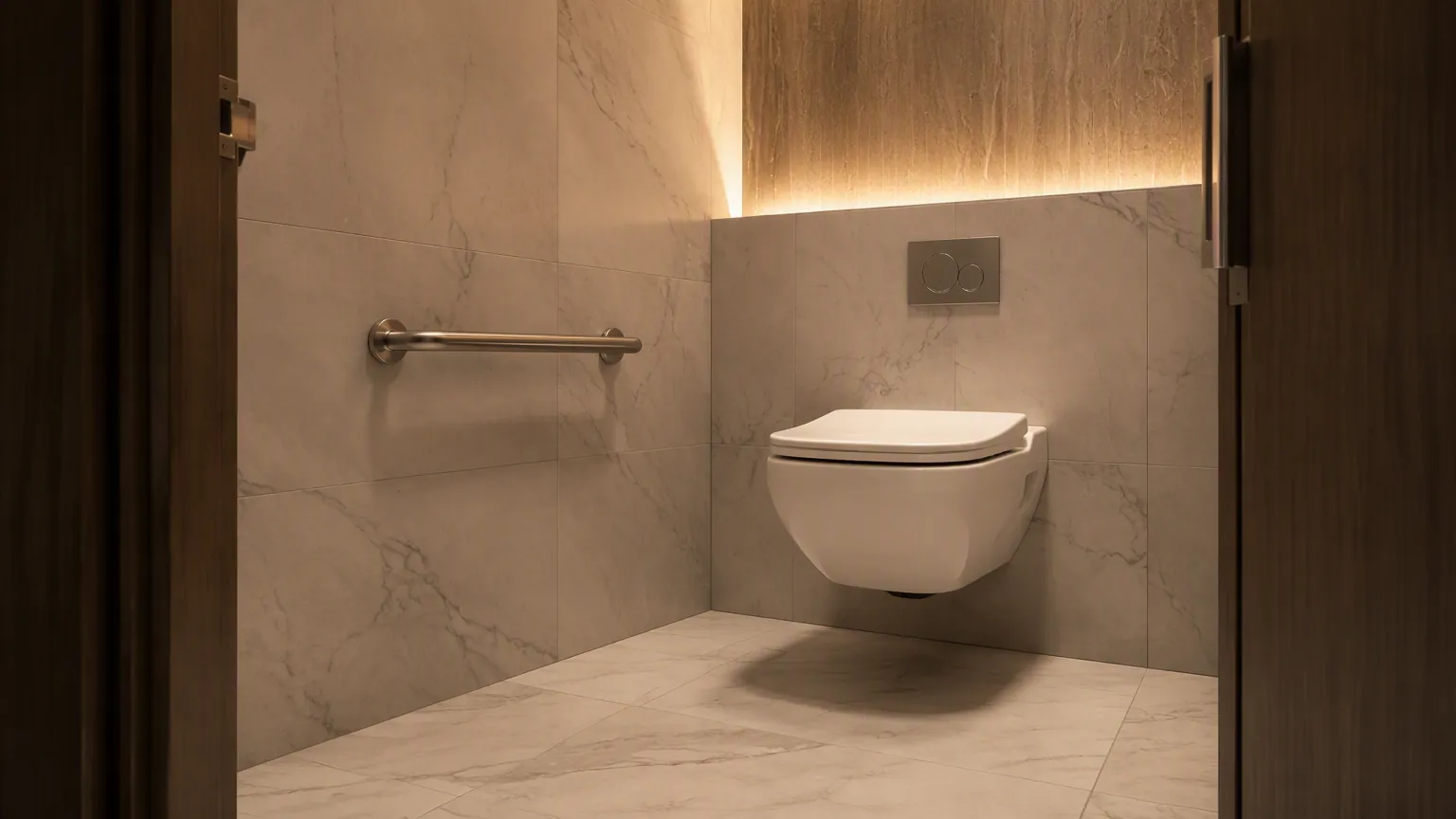
Wall-hung toilets dominate European hotel bathrooms, and their share in Middle East and Asia projects is climbing fast. See the wholesale toilet procurement guide for volume buying details. The reason is practical, not aesthetic. With the pan suspended from a steel frame, the floor below stays clear. Cleaning crews finish a bathroom in minutes instead of working around a pedestal, and housekeeping departments measure savings in labor hours per room per day.
For contractors, the commercial case is equally strong. A floating pan solves three recurring problems. These are inconsistent floor heights in retrofit work, drainage layouts that fight the floor slab, and accessible requirements that demand clear knee space. When the architect asks for a suspended pan, the decision comes down to three items. Frame load, rough-in position, and whether the wall can take the weight.
Wall Hung Toilet Frame Systems: Load Ratings and Structure
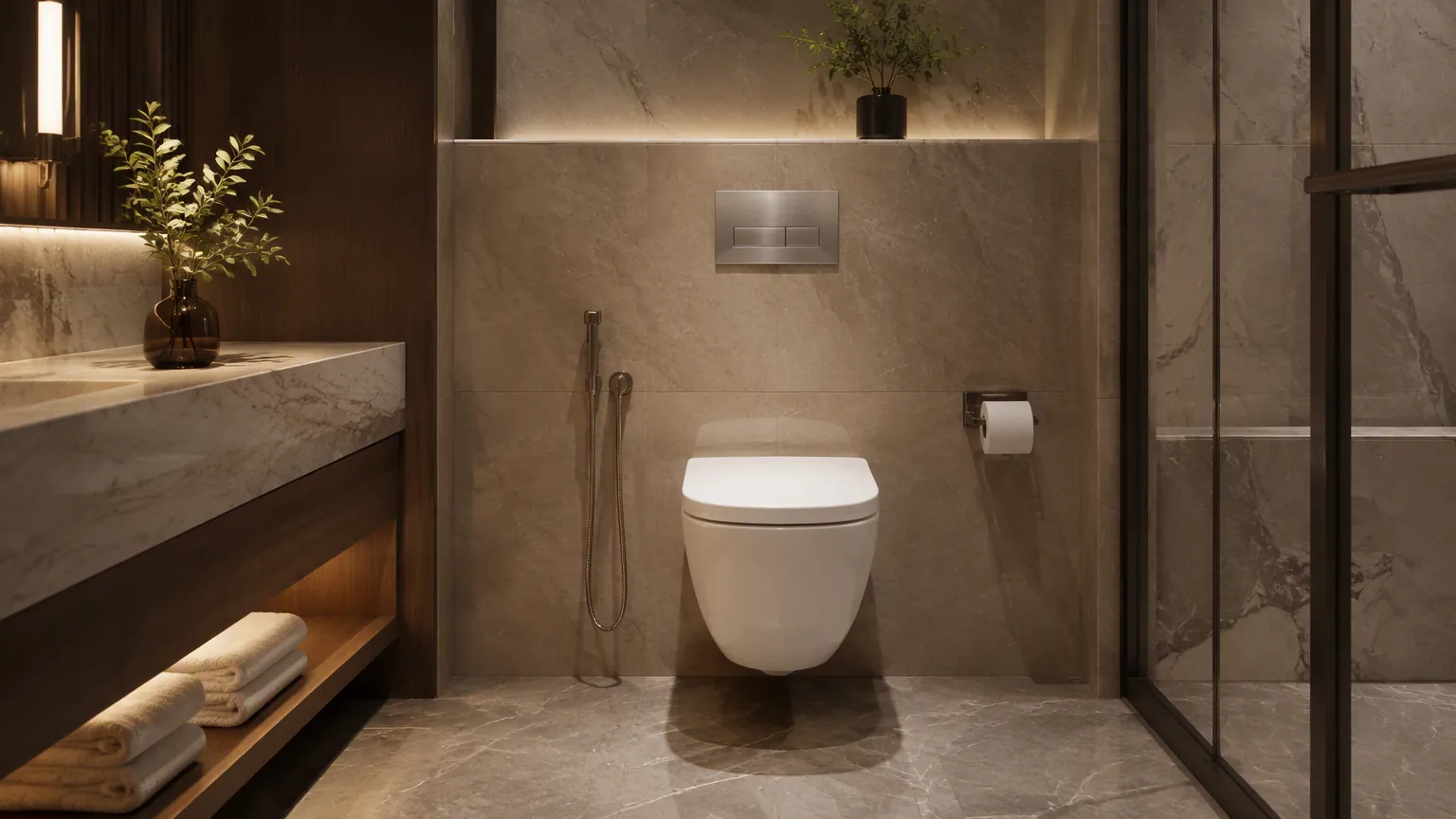
Every suspended pan installs on a steel frame that carries both the ceramic and the concealed cistern. Frame design varies by manufacturer, but the critical number is the load rating. European frames are tested to roughly 400 kg under dynamic load. That covers normal seated use plus the occasional heavy guest. Cheaper frames rated at 300 kg may pass a bench test yet flex in service, and flex leads to cracked wall tiles.
Check three things before you approve the frame spec.
Check the YIDA factory product page for factory credentials. Look at the certified load rating, the corrosion treatment on the steel, and the brand of the concealed cistern. Frames and cisterns from different brands can be paired. Still, verify the cistern brand is one your plumbers can service locally. A frame is a long-life component, and replacement parts matter a decade later.
The frame carries a second hidden component worth checking: the fixing kit. Most kits ship with the frame, but the correct bolts, wall plugs, and height adapters vary by substrate. A concrete wall takes one anchor pattern, a hollow block another, and a stud partition a third. Order the kit for your actual wall type, not the generic box that comes in the carton. Contractors who reuse leftover fixings from earlier projects are the ones who return to site a year later with a tile repair crew.
Rough-In Heights: The Dimensions That Decide the Install
The rough-in height is the most common source of callbacks on these projects.
Cross-check the porcelain toilet dimensions guide for rough-in standards. Pan outlet center measurements normally sit 180–220 mm above the finished floor. The exact figure depends on the frame and pan model. The frame legs adjust within roughly 100 mm to fine-tune it. Confirm the dimension against the exact pan you will hang. The outlet position varies between brands.
Mark the finished floor level first, then set the frame so the outlet center lands at the specified height. If the frame goes in before the screed is poured, add the screed thickness to the calculation. A 20 mm error in floor finish translates directly into a pan that hangs high or low. A pan that does not sit level on the frame is a defect you cannot fix after tiling.
Wall Outlet vs Floor Outlet: Which Rough-In Do You Have?
These toilets come in two outlet configurations. Wall outlet models discharge through the frame into a horizontal branch in the wall. These suits rooms where drainage runs in a service void or a false wall. Floor outlet models drop the discharge through the frame legs to a floor connection. Those helps in slab-on-grade projects where horizontal drainage is hard to build.
Choose the configuration before you order the frame, because it changes the pipework layout and the connection height. For a wall hung toilet in a renovation, this single decision often drives whether the project keeps the existing floor slab or builds a service wall. In retrofit work, measure the existing drain position and match it to the frame inlet. This decision can save days on site, provided you give the supplier the drain location and the floor build-up thickness in advance.
Concealed Cisterns: Flush Volume, Fill Valves, and Noise
The cistern hides inside the frame, so its specification is easy to overlook. Flush volume matters most. Dual-flush cisterns offer a reduced flush of 3 L and a full flush of 6 L. That meets most European and Middle East water-efficiency requirements. For US projects, check the WaterSense threshold of 1.28 gallons per flush and confirm the cistern is certified for that market.
Noise is the second factor. A hotel bathroom with a screaming fill valve generates guest complaints, so specify slow-fill valves and insulated bodies where the client asks for quiet operation. Access is the third. Every concealed cistern needs a maintenance access path, typically through the flush plate. Confirm the plate design gives service access to the fill valve and the dual-flush mechanism.
Rim Height, ADA Clearance, and Accessibility Requirements
Accessibility standards set the rim height, not the architect’s preference. The ADA requires the seat height between 17 and 19 inches (432–483 mm). Measure from the finished floor to the top of the seat. European projects commonly use 400 mm to the rim, and Asian markets often spec 380–400 mm. Pick the standard for the destination market and set the frame accordingly.
Clear knee space is the second requirement. A suspended pan creates the open floor area beneath the bowl that accessibility codes demand. That is why it appears so often in accessible hotel rooms and public washrooms. Keep the area under the pan clear of pedestals and pipes, and position the flush plate within reach of a seated user.
Flush Options: Dual Flush, Washdown, and WaterSense
Flush technology divides into washdown and siphonic designs. Washdown pans use a direct drop of water to clear the bowl. They are the common choice for wall-mounted models. Siphonic pans pull waste out with a siphon action.
See our flush technology comparison for the trade-offs. The design is quieter, but it is more common in floor-mounted American-style toilets. For a hotel bathroom, washdown is usually the practical pick, and it pairs well with low-volume dual flush.
Check the flush performance data before you buy. European and US markets publish flush test results, and the standard tests confirm both solids removal and surface wash. Ask the supplier for the flush test certificate for the exact pan model, not the range, because results vary by ceramic geometry.
Flush performance data also feeds your warranty position. If the client later complains about incomplete flushes, the flush test certificate is your evidence that the installed unit met the spec on day one. Keep a copy in the project file with the frame serial numbers. It sounds like paperwork, but it has settled more than one payment dispute.
Frame Materials and Corrosion Protection
The frame lives inside a wall cavity that can stay damp for years, so corrosion protection is not a marketing detail. Look for hot-dip galvanized or equivalent coated frames. Also check that the cistern connections and fixing brackets are corrosion-resistant. Stainless steel fasteners for the pan fixing are non-negotiable. Plain steel screws rust and seize, turning a simple pan replacement into a demolition job.
Frame steel thickness also matters. A heavier gauge frame resists torsion when the pan is loaded off-center, and it holds the pan bolts in alignment. Specifying a wall hung toilet from a manufacturer who documents frame steel grade saves you from guessing on site. If the frame flexes, the pan wobbles, and a wobbling toilet is an instant complaint in any hotel room.
Wall Construction: Load-Bearing vs Stud Partition
A suspended pan frame must anchor to structure that can carry the load. Solid masonry and concrete walls are straightforward. Timber or steel stud partitions need the frame’s fixing kit, which spreads the load across the studs. Never let the frame hang from plasterboard alone, regardless of what the wall board manufacturer claims.
For stud walls, confirm the stud spacing matches the frame fixing points. Non-standard spacing means extra noggins, and that is a site instruction you want in writing before the walls close up. If the frame includes floor support legs, use them even in solid walls. They carry part of the load and stop the frame from settling over time.
Installing a Wall-Mounted Frame: Step by Step
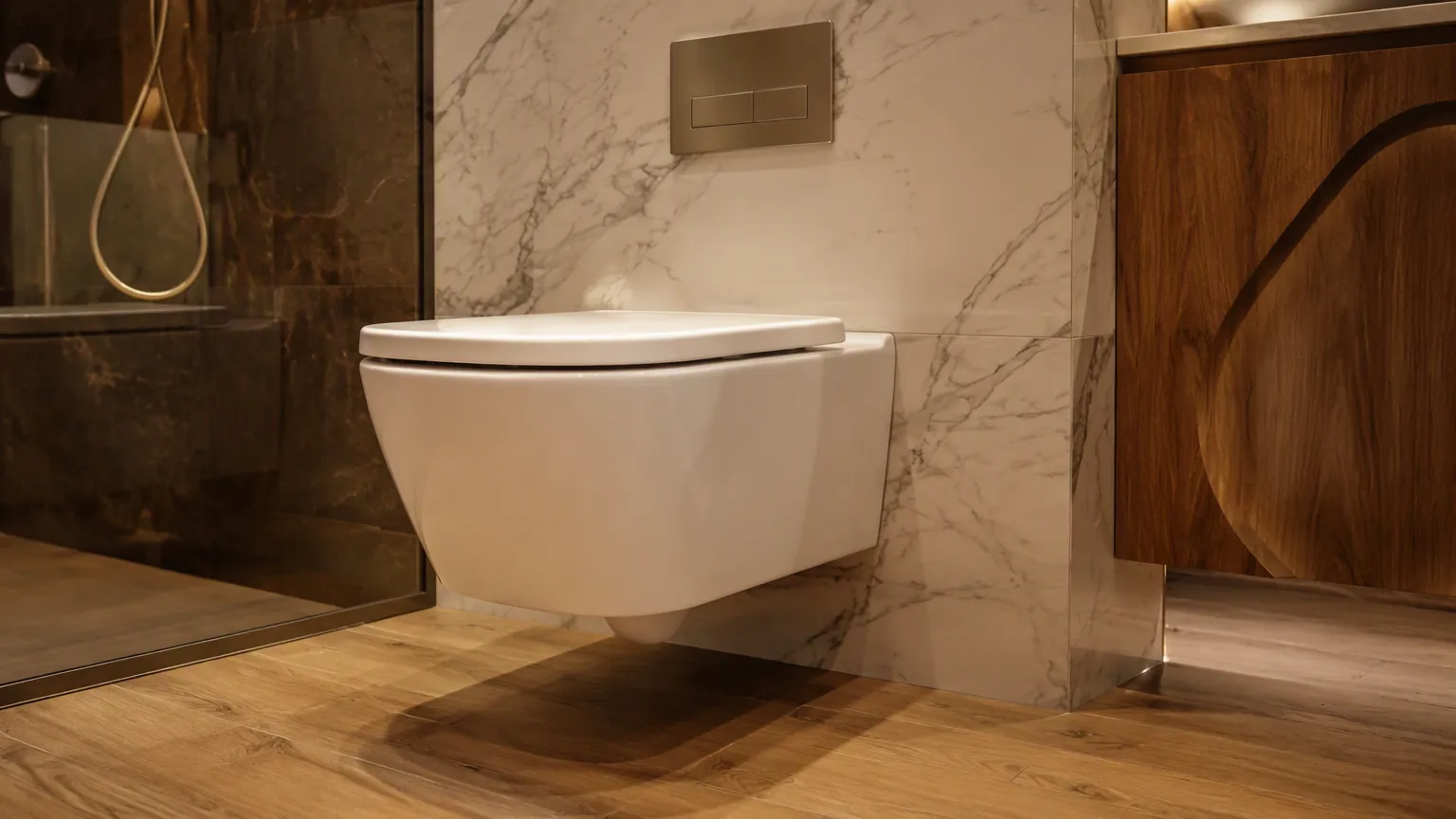
A clean install follows a fixed sequence. Position the frame against the wall and mark the fixing points. Then drill and anchor the frame using the supplied kit. Set the outlet height against the finished floor level and lock the legs. Connect the drainage and the water supply, pressure-test the connections, and fit the flush plate only after the wall is finished.
The pan goes on after tiling. Align the pan over the frame studs and push it home. Tighten the fixings evenly to avoid cracking the ceramic. Fit the seat, then test the flush cycle several times before you hand the bathroom over. Ten minutes of testing on site beats a warranty call a month later.
Choosing the Right Wall Hung Toilet Pan
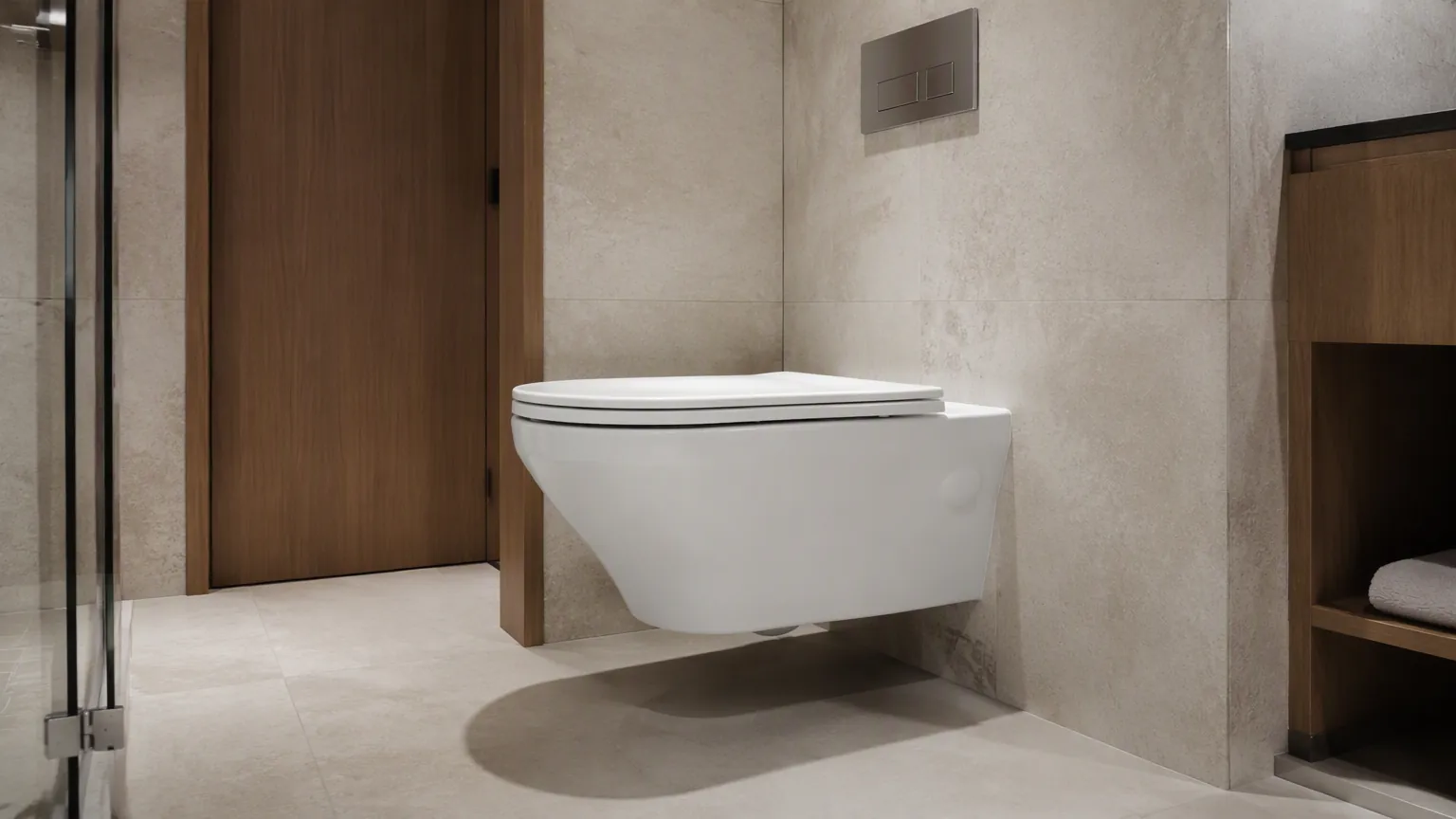
The pan spec affects both the install and the long-term service life. Check the glaze quality on the trap and the rim, because hidden surfaces get the least attention and cause the most staining. Look for full-coverage glaze that extends inside the trap, and confirm the pan carries the certification your market requires.
Pan geometry matters too. Compact pans suit small hotel bathrooms, while elongated pans improve comfort in accessible rooms. Ask your wall hung toilet supplier for the projection drawing before you finalize the bathroom layout, because wall clearance changes with every model. Match the pan projection to the bathroom dimension. Remember that a suspended pan sits off the wall, so the projection dimension is wall to pan front, not just the pan length.
Pan finish also deserves attention in coastal and Gulf projects. Salt-laden air attacks poor glaze over time, leaving a dull, etched surface that guests notice immediately. Specify glaze that meets the manufacturer’s abrasion and chemical resistance class. Ask whether the same glaze recipe is used on the rim and the trap. Budget pans often glaze the visible surfaces well and cut corners where nobody looks, until the trap stains in year two.
Common Mistakes That Turn These Jobs Into Callbacks
The mistakes repeat on site, so they are worth listing. Frames anchored only to plasterboard fail within months. Rough-in heights set before the floor build-up is known create pans that hang at the wrong level. Wrong outlet configuration for the drain layout forces ugly adapters. Mixing frame and cistern brands without checking service parts creates long-term maintenance problems. And skipping the flush test after installation turns a quiet defect into a guest complaint.
Every one of these is preventable with a pre-order checklist. Write down the finished floor level, the drain position, the wall construction, and the market certification. Send that sheet to your supplier before you commit to an order.
Certification Checklist by Market
Certification is where projects stall, so match the standard to the destination market. US projects need ASME A112.19.2 for the ceramic fixture. They also need EPA WaterSense for the flush volume. Canada adds cUPC certification. Australia requires WaterMark. Saudi Arabia and the Gulf markets commonly require SASO certification for imported sanitary ware. Europe relies on EN standards, including EN 14055 for flushing cisterns.
Ask the supplier for the certificate that names the exact model you are buying.
Browse the full toilet range for related models. A certificate for the range, or for a similar model, is not proof of compliance. This is the fastest way to filter serious manufacturers from resellers, and it protects you when the project is audited.
Cost and Lead Time Estimates
Budget figures help, but they need context. For a complete package including frame, cistern, and pan, FOB China estimates typically range from $45 to $90 per set. That assumes MOQ 100–500 units per model. European-brand frames add a significant premium.
Compare the YIDA wall hung and floor-mounted range before ordering. Lead time runs 30–45 days for standard models, longer when you add custom colors or modified rough-in positions.
Small orders under 100 units push the per-unit cost up by 15–30%, because tooling and setup costs spread over fewer pieces. Plan the order around the project schedule, and order spare flush plates and fixings with the main shipment. Replacement parts shipped alone are expensive and slow.
FAQ: Wall Hung Toilet Questions Contractors Actually Ask
What load rating should the frame have?
Look for a certified dynamic load rating of around 400 kg for commercial use. Lower-rated frames may flex over time and crack wall tiles.
Can a wall hung toilet be installed on a stud partition wall?
Yes, with the frame’s stud-wall fixing kit. Confirm the stud spacing matches the frame, and never fix the frame to plasterboard alone.
What is the standard rough-in height for a wall hung toilet?
The pan outlet center typically sits 180–220 mm above finished floor level, and the frame legs adjust to fine-tune it. Confirm against the exact pan model.
Which flush volume should I specify for a wall hung toilet project?
Dual flush at 3 L reduced and 6 L full covers most markets. For the US, confirm the model meets the WaterSense 1.28 gallons per flush threshold.
Do I need SASO certification for a wall hung toilet in Saudi Arabia?
Saudi Arabia and several Gulf markets require SASO certification for imported sanitary ware. Confirm the certificate names the exact model you are buying.
How long does an order from China take?
Standard orders typically ship in 30–45 days from order confirmation, plus transit time. Custom finishes or modified rough-ins add one to two weeks.
Contractor’s Wall Hung Toilet Checklist
- Finished floor level confirmed and marked before frame setting
- Drain position and outlet configuration matched to the frame
- Wall construction verified, fixing kit correct for the substrate
- Frame load rating certified for commercial use
- Rough-in height set against the exact pan model
- Dual-flush cistern selected, market certification confirmed
- Flush plate gives service access to valves and mechanism
- Pan glaze coverage checked, including inside the trap
- Stainless steel pan fixings supplied with the order
- Flush cycle tested after installation, not just fitted
Conclusion
A floating pan rewards the contractor who plans the details. Frame load, rough-in height, outlet configuration, and certification decide whether the project installs clean or becomes a callback factory. Lock those decisions down before the frame order. Share the dimensions with your supplier, and test every unit after installation. The specification work happens on paper, but the reputation is earned on site.
Ready to spec your next project? Contact YIDA Bath with your floor build-up, drain position, and destination market for a quote that includes certification documentation.
References
ASME A112.19.2: Ceramic Plumbing Fixtures
EPA WaterSense Specification for Tank-Type Toilets