Managing material costs across multiple projects is one of the biggest challenges contractors face. Toilets, a necessity in every residential and commercial build, represent a recurring expense that can quickly erode profit margins when purchased at retail prices.
Bulk purchasing allows contractors to save between 15% and 40% per unit compared to standard retail. These savings compound across projects, directly boosting your bottom line.
Standardizing on wholesale toilets also ensures consistent design and installation workflows, reducing variability from job to job. Bulk purchasing simplifies procurement planning: you can schedule deliveries in advance and avoid last-minute supply scrambles. In short, buying toilets in volume solves both cost and operational problems, helping contractors complete projects faster while protecting their margins.
- Significantly lower per-unit costs: Contractors pay far less per unit when buying in bulk compared to retail, with savings that add up to thousands over multiple projects.
- Greater consistency across jobs: Using the same models ensures uniform fit and installation, making your work more predictable and efficient.
- Simplified procurement and logistics: Bulk orders streamline purchasing and reduce delays caused by last-minute sourcing.
What Are Wholesale Toilets, Exactly?
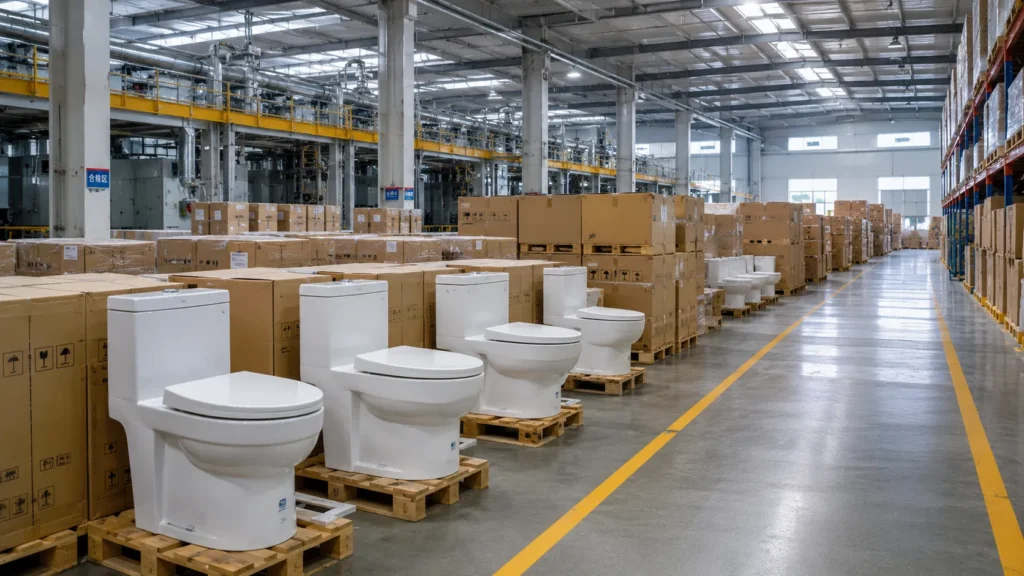
Wholesale toilets are fixtures purchased directly from a distributor, manufacturer rep, or plumbing supply house, not off the retail shelf at a big-box store.
The core difference isn’t necessarily brand or quality. It’s the pricing structure. Wholesale accounts give contractors access to trade pricing unavailable to the general public, with volume tiers that reduce per-unit costs as order quantities increase.
A standard two-piece toilet retails for around $200. A comparable unit sourced through a wholesale plumbing supplier on a volume order typically falls between $110 and $160, depending on quantity, brand, and your account terms. That’s a meaningful difference on any job with multiple bathrooms.
How Wholesale Volume Pricing Actually Works
The Basics of Tiered Pricing
Most wholesale plumbing suppliers structure pricing in quantity bands. The more units you commit to in a single order, the lower your per-unit cost. A typical structure looks like this:
- 1–4 units: base trade price
- 5–9 units: 10–15% discount
- 10–24 units: 20–25% discount
- 25+ units: 30–40% discount
These aren’t universal figures—they vary by brand, supplier, and region—but the structure remains consistent across most wholesale accounts. McKinsey research on B2B pricing found that tiered pricing increases average order values by 25–40% because it incentivizes buyers to consolidate purchases rather than split orders across vendors. The tiers are designed to pull you toward larger commitments.
All-Units vs. Incremental Discounting
There are two ways wholesale discounts get applied, and knowing which one your supplier uses matters:
- All-units pricing: Once you hit a threshold, every unit in the order gets the discounted rate, including those below the threshold. Buy 10 units at the 10-unit price, and all 10 benefit.
- Incremental (tiered) pricing: Each band is priced separately. Your first 5 units are at one rate, units 6–10 at a lower rate, and so on. Your blended per-unit cost is lower than retail, but you don’t get the full discount on every unit until you reach higher quantities.
Always ask your rep which model applies. The difference can run to hundreds of dollars on a mid-size job.
Where Smart Contractors Actually Buy Their Toilets
Plumbing Supply Houses
This is the traditional channel—regional distributors with established trade account programs. Companies like Ferguson, Hajoca, and Reece (and their regional equivalents) give licensed contractors access to wholesale pricing on Kohler, American Standard, TOTO, and other major brands. You typically need a contractor’s license, a tax exemption number, and a credit application to open an account. Once approved, pricing is consistent and you get dedicated account reps who can pull quotes on specific SKUs for project bids.
Manufacturer Direct Programs
Some manufacturers run contractor loyalty or volume programs directly. Kohler’s Pro program, for example, offers tiered rebates and pricing for high-volume purchasers. These programs don’t replace distributor relationships—they layer on top of them—but they can improve your effective per-unit cost on jobs where you specify a single brand.
Online Wholesale Platforms
B2B wholesale platforms have expanded significantly in recent years. They’re worth using for price comparison and smaller fill-in orders, but most experienced contractors keep their core purchasing through a supply house where they have established account terms, delivery scheduling, and clear return policies.

The Real Cost Equation: More Than Just Unit Price
Here’s where many contractors get tripped up. Unit price is only part of the cost picture.
A real project cost analysis on a townhouse renovation found initial toilet costs of $687 per unit, including installation labor. By consolidating material purchasing and grouping installations, the team reduced that to $477 per unit—a 22% saving. The bulk pricing on fixtures contributed, but so did the labor efficiency of performing multiple installs in sequence. That’s the contractor advantage: you control both variables.
What to Factor Into Your Unit Cost
When pricing a multi-unit job, account for:
- Fixture cost: Your negotiated wholesale price per unit, including any delivery charges.
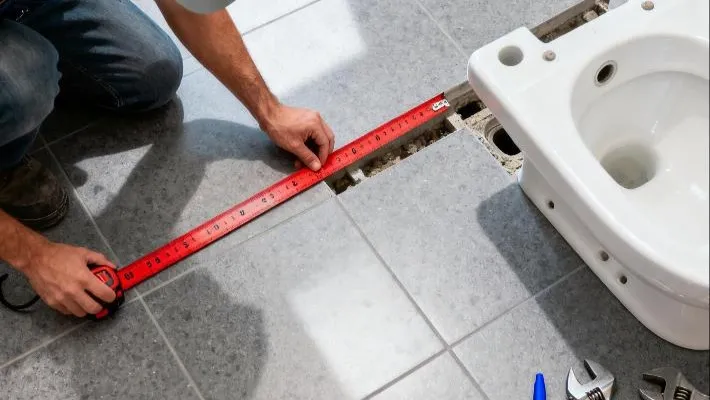
- Rough-in compatibility: Most residential jobs use 12-inch rough-ins. Non-standard rough-ins (10 or 14 inches) require specific SKUs that may not qualify for the same volume tiers. Always confirm before you commit.
- Water efficiency requirements: EPA WaterSense-certified toilets (1.28 gpf or less) are now required in many states and municipalities. These units sometimes carry a small price premium at wholesale, but they can qualify for rebate programs that offset the cost.
- Warranty and returns: Wholesale accounts typically offer better return terms than retail. Confirm what happens if a unit arrives damaged. On a 20-unit order, one cracked vitreous china bowl is practically inevitable.
One-Piece vs. Two-Piece: What Sells at Wholesale
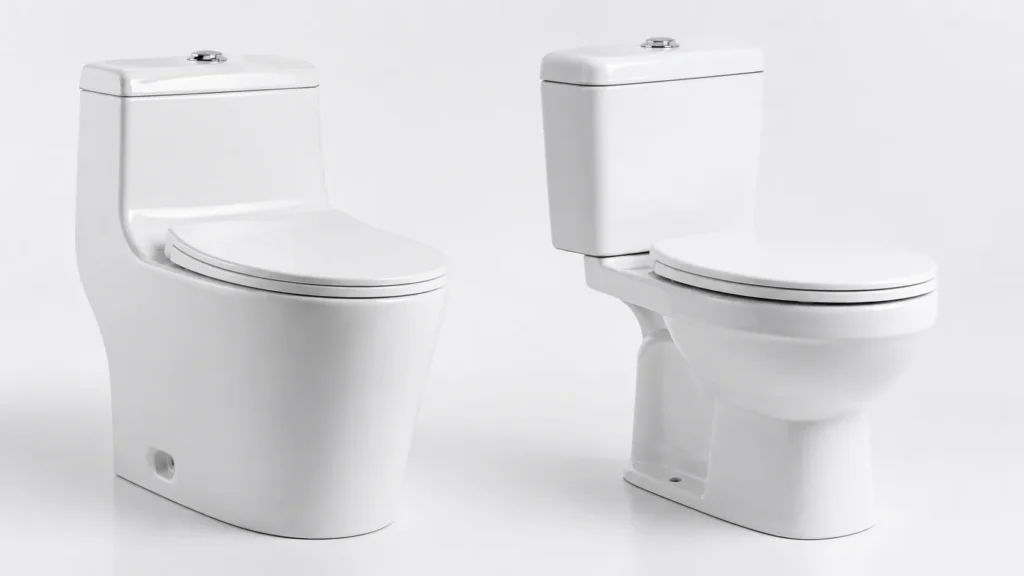
Two-piece toilets (separate tank and bowl) dominate wholesale volume pricing for contractors. They’re cheaper to produce, easier to ship without damage, and simpler to replace in the field if a component fails.
One-piece units are increasingly specified in multifamily and hospitality projects where the client wants a cleaner, more contemporary aesthetic. They cost more at wholesale but command higher installation rates, so your margin can hold up well.
Low-Flow and Dual-Flush Toilets
Water-efficient models now make up a significant share of contractor wholesale purchases. Consumer demand for low-flow options has grown year-over-year, and many states have mandated 1.28 gpf or lower as the standard. From a pricing standpoint, dual-flush units often sit in a similar wholesale price band to standard one-piece toilets—the per-unit cost is slightly higher but not dramatically so on volume orders.
Branded vs. Private Label at Wholesale
Kohler, American Standard, and TOTO consistently command higher wholesale prices due to brand recognition and consumer pull-through. If you’re doing developer work where the spec matters less to the end buyer, private-label or second-tier brands from your supply house can hit lower price points with perfectly acceptable performance. Just check the warranty terms carefully. On a 30-unit new build, the difference between a 1-year and a 5-year warranty from your fixture supplier carries real liability implications.
How to Negotiate Better Wholesale Pricing
Most contractors treat their supply house price sheet as fixed. It isn’t. Here are a few practical levers you can pull:
- Consolidate across product lines: If you’re already buying PVC, fittings, and fixtures from the same distributor, use your total account value in pricing conversations. Suppliers want share of wallet, not just toilet orders.
- Commit to a project quantity upfront: Even if you’re not buying all 25 units today, a written commitment for a 3-month project timeline gets you better pricing than buying 5 at a time as you need them.
- Ask about manufacturer rebates: Several major brands run quarterly or annual rebate programs for contractors who hit volume thresholds. Your rep may not volunteer this information—ask directly.
- Time larger orders around freight cycles: Suppliers have freight costs baked into their pricing. If you’re flexible on delivery timing, you can sometimes negotiate delivery included on large orders, especially if you’re on their existing delivery route.
What to Watch Out For
A few things commonly catch contractors out on wholesale toilet orders:
- Discontinued SKUs: A supply house may quote you a great price on a model that’s being phased out. Replacement parts availability matters significantly on units going into rental properties or multi-family buildings. Ask about the product lifecycle before committing.
- Minimum order requirements for trade pricing: Some suppliers require a minimum spend (not just a unit count) to access wholesale rates. Know the threshold before you quote a client.
- Lead times on non-stock items: Standard white, elongated, 12-inch rough-in units are almost always in stock. Anything with a specific color, non-standard rough-in, or specialty features may have a 4–6 week lead time. Price these separately from your stock-unit volume.
Key Advantages of Choosing Yidabath Wholesale Toilets
Yidabath offers a comprehensive portfolio designed to meet modern construction demands while ensuring durability, water efficiency, and easy maintenance. Here’s what you can expect:
- Wide product range including two-piece, one-piece, wall-hung, and smart toilets.
- Bulk pricing advantages that directly reduce overall project costs.
- Dual-flush and water-efficient technology supporting sustainability goals.
- Consistent product specifications for faster, more predictable installation.
- Durable ceramic construction ensuring long-term performance.
- Complete bathroom solutions including basins, vanities, faucets, and accessories.
- Reliable supply chain supporting large-scale residential and commercial projects.
Yidabath helps contractors simplify procurement, maintain consistency, and deliver high-quality bathroom spaces efficiently across multiple projects.
Conclusion
Yidabath offers a complete portfolio of bathroom solutions designed to meet modern construction needs while ensuring durability, water efficiency, and easy maintenance. Their toilets are engineered with high-performance ceramic materials, ergonomic designs, and advanced flushing technologies that enhance reliability and reduce long-term maintenance costs.
By partnering with a trusted supplier like Yidabath, contractors gain access to scalable product options, dependable supply availability, and consistent quality standards across projects. In addition to toilets, Yidabath provides basins, vanities, faucets, shower enclosures, and accessories—making it easy to source complete bathroom solutions from a single brand.
Ultimately, wholesale purchasing combined with high-quality products helps contractors increase profitability, reduce procurement challenges, and deliver reliable bathroom spaces that meet both functional and design expectations.
A Simple Framework for Your Next Volume Order
Before placing your next multi-unit toilet order, run through these five questions:
- What quantity puts me into the next pricing tier?
- Is this all-units or incremental tiered pricing?
- Are these units WaterSense certified for this jurisdiction?
- What are the return and damage terms on delivery?
- Is there a manufacturer rebate program I should register for before this order ships?
Five minutes of preparation on those questions can consistently save you 10–15% against your standard account pricing.
Frequently Asked Questions
Q: What’s the difference between wholesale and trade pricing for toilets?
Wholesale pricing refers to bulk purchasing directly from a distributor or manufacturer at reduced per-unit cost. Trade pricing is a contractor-specific discount offered by suppliers based on your account status—not necessarily tied to quantity. In practice, most contractor accounts give you trade pricing from unit one, with wholesale volume tiers kicking in at 5+ units.
Q: How do I know if a wholesale toilet supplier is legitimate?
Look for three things: a physical warehouse or distribution address (not just a website), verifiable brand authorization for the products they sell (Kohler, American Standard, TOTO authorized dealers are listed on manufacturer websites), and clear return and damage policies in writing. Avoid suppliers who can’t provide a product warranty or who list prices significantly below every competitor—grey market fixtures do exist.
Q: Can I mix toilet models in a volume order and still get the discount?
It depends on the supplier. Some apply volume discounts across your total unit count regardless of model—meaning 10 units of three different SKUs still qualifies for the 10-unit tier. Others apply discounts per SKU, so you’d need 10 of the same model. Always confirm this before building your order, especially on mixed-spec jobs.
Q: What payment terms do wholesale toilet suppliers typically offer contractors?
Most established wholesale suppliers offer net-30 terms to contractors with approved accounts—meaning you receive the fixtures and have 30 days to pay. Some extend net-60 on larger project orders. New accounts usually start with prepayment or credit card until a payment history is established. Yidabath offers net-30 from account approval for licensed contractors.
Q: What happens if a toilet arrives damaged on a wholesale order?
Reputable wholesale suppliers have a damaged goods policy that covers units damaged in transit—typically requiring you to note the damage on the delivery receipt and submit photos within 24–48 hours of delivery. Most will replace or credit the unit without requiring a full return. Always inspect deliveries before signing off, and photograph any damaged packaging before opening it. On large orders, a single unlogged damaged unit can cost you more than the freight charges you negotiated away.