
If you are planning a bathroom renovation or a new build, one shower decision locks in earlier than almost any other. It is not the shower head size. It is not the finish colour. It is whether the pipework and valve sit on the wall or inside it. The industry calls these two approaches exposed shower systems and concealed shower mixers. Both deliver hot water at the right temperature. Both work in residential and commercial settings. However, the installation path, the long-term maintenance story, the aesthetic outcome, and the cost structure differ significantly. Neither system is universally better. Each one fits certain bathrooms, certain budgets, and certain priorities more naturally than the other. This guide explains both options honestly, so you can choose with confidence—whether you are buying for a compact apartment in London, a luxury villa in Dubai, a condominium in Singapore, or a family home in Chicago.
1. What Each System Actually Is
Before diving into the trade-offs, let me clarify the terminology. These two systems look different on the finished wall. They also imply different things about what happens behind the tiles.
Exposed Shower System
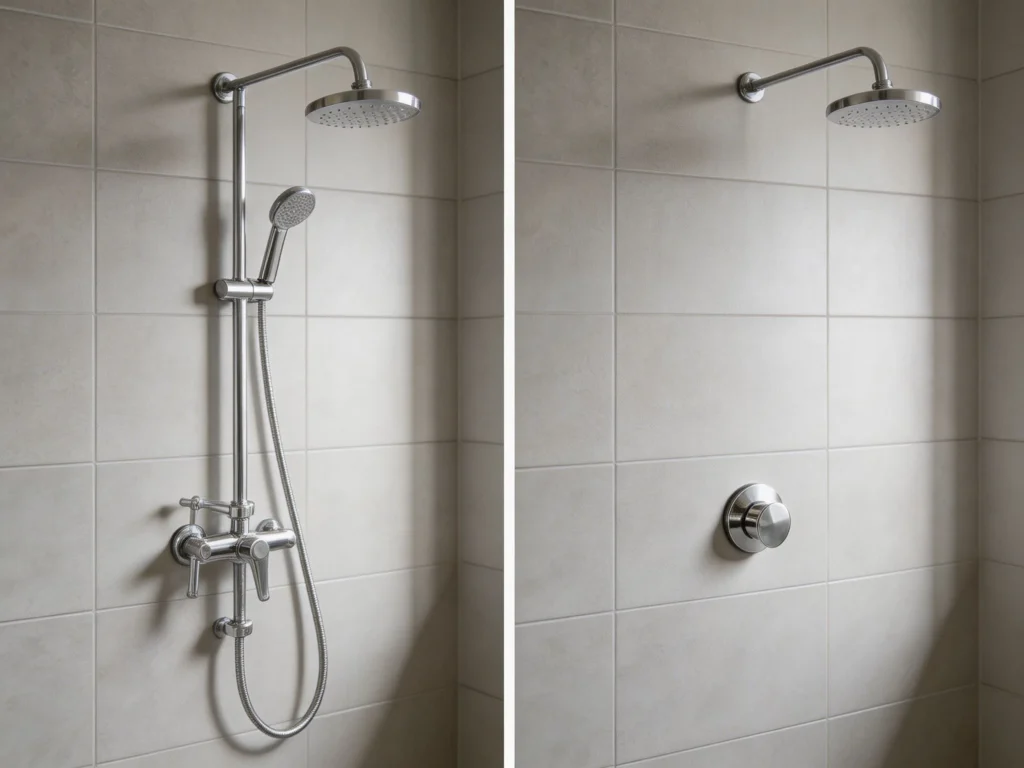
An exposed shower system mounts the mixer valve, the pipework, and the shower head bracket directly onto the finished wall surface. The hot and cold water supplies connect to the mixer through exposed pipe inlets. The mixed water then travels upward through a visible riser rail or rigid pipe to the shower head. Everything you see on the wall is part of the functional plumbing.
This is the traditional format, and it remains the most common shower installation globally. The visibility of the components is not a design compromise; it is a deliberate aesthetic choice. Many high-end exposed shower systems use beautifully finished brass, stainless steel, or matte black components that function as bathroom jewellery.
The exposed format also makes every connection accessible. If a joint weeps or a washer wears out, you can see the problem and reach it without opening the wall.
Concealed Shower Mixer
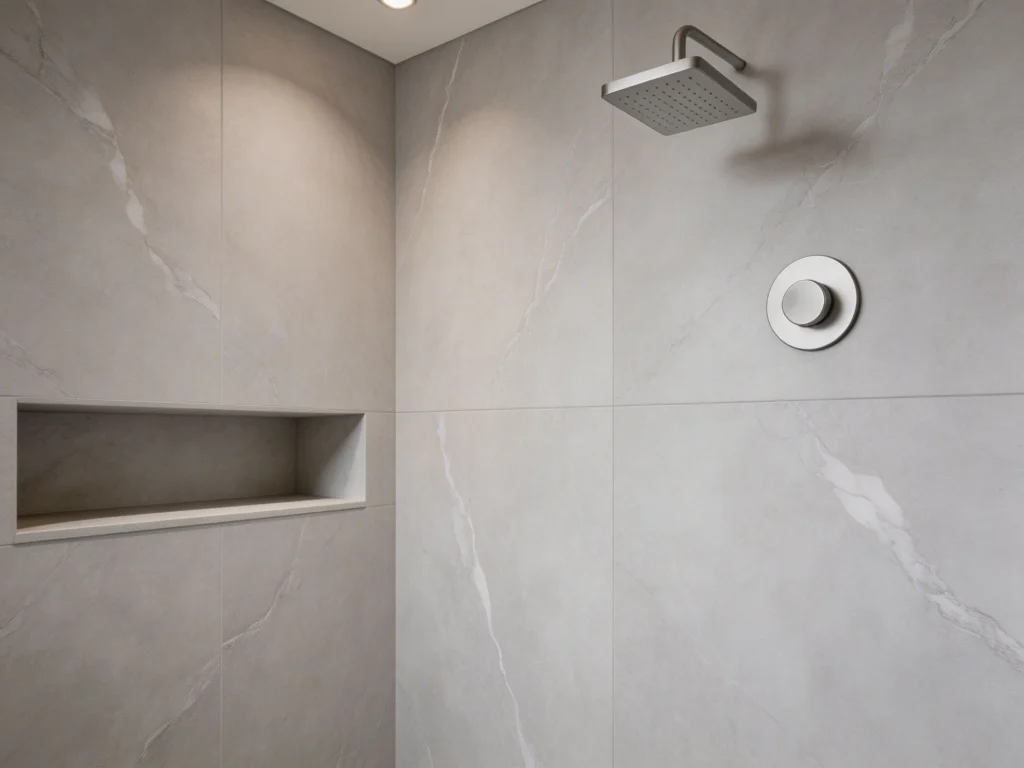
A concealed shower mixer hides the valve body and all pipework inside the wall cavity. The only visible elements are the control plate with the handle or knob, and the shower head and arm protruding from the wall or ceiling. The hot and cold water mixing, the pressure balancing, and the diverter switching all happen behind the tiles.
This format has become the standard in new construction across much of Europe, particularly in Germany, Scandinavia, and the UK. It is also increasingly common in high-end projects across the Middle East and Asia. The appeal is primarily visual. A concealed mixer creates a clean, uncluttered wall surface that makes the shower area feel larger and more serene. The trade-off, which we will explore in detail, is that everything that makes the system work is buried in a wall that you really do not want to open up.
2. Installation: When the Wall Decides for You
The most important difference between exposed and concealed systems is when and how you install them. This timing affects everything from the renovation schedule to the final cost.
Exposed Shower Installation
You install an exposed shower system after the bathroom is finished. The wall is tiled, the waterproofing is done, and the plumbing supplies terminate in two stub-outs protruding from the finished wall. The installer mounts the mixer valve to these stub-outs, connects the riser rail and shower head, and the system is ready to test.
This late-stage installation offers significant flexibility. You can choose your exposed shower system after the tiler has left. You can change your mind about the finish, the style, or the brand without redoing any waterproofing. If you are renovating an existing bathroom and the plumbing positions are already fixed, an exposed system often works with the existing pipe centres without major alteration.
The installation cost for an exposed shower system is lower. A qualified plumber can install a standard exposed mixer and rail in one to two hours, assuming the supply pipes are already in place. There is no chasing, no embedding, no patching.
Concealed Shower Installation
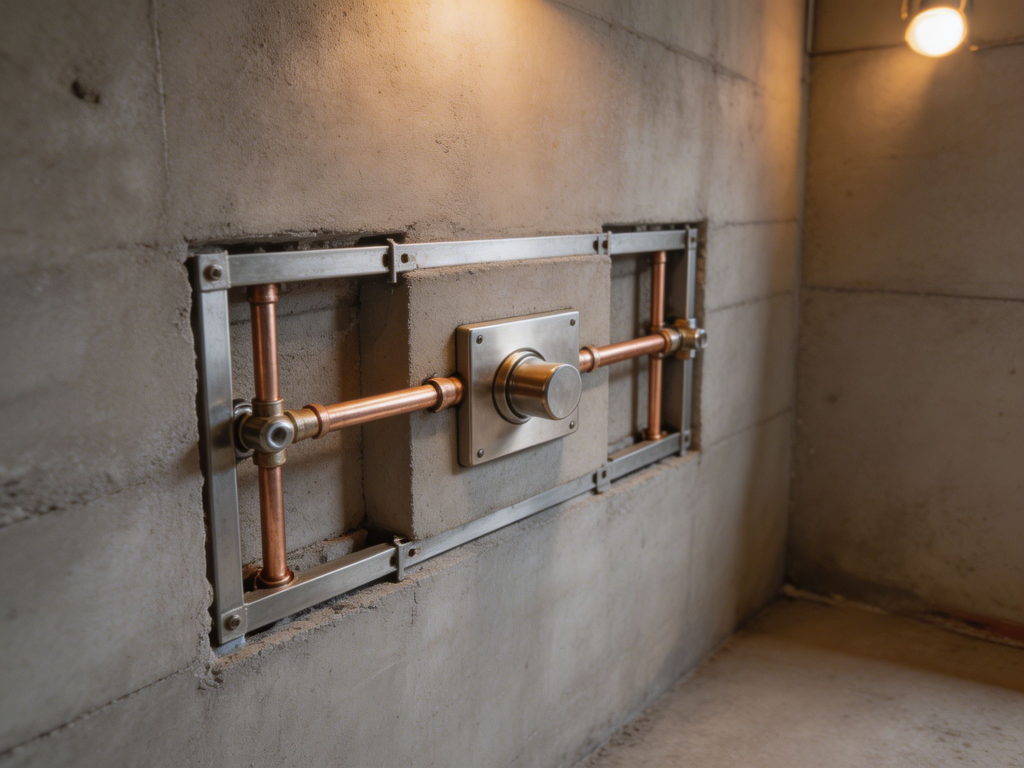
You install a concealed shower mixer before the wall is closed. The valve body must sit inside the wall cavity, connected to the hot and cold supplies, and fixed at precisely the right depth relative to the future finished wall surface. Most concealed valves include a plaster guard or mounting frame that sets this depth. The tolerance is tight—typically plus or minus four millimetres.
A valve set too deep prevents the control plate from seating correctly. The handle will not engage the valve stem. A valve that protrudes too far leaves the trim plate sitting proud of the wall with an unsightly gap. This means you must make the concealed shower decision early. Buy the rough-in valve body before the plumber runs the supply lines. Buy it before the tiler starts. If you change your mind later, you are opening the wall.
The installation time runs longer. The plumber must mount the valve, level it, pressure-test it, and protect it while the wall is finished around it. This adds to the plumbing cost. The result, however, is a wall surface with almost no visible hardware.
3. Aesthetics: Two Different Design Languages
Neither system is objectively more beautiful. They are different visual strategies.
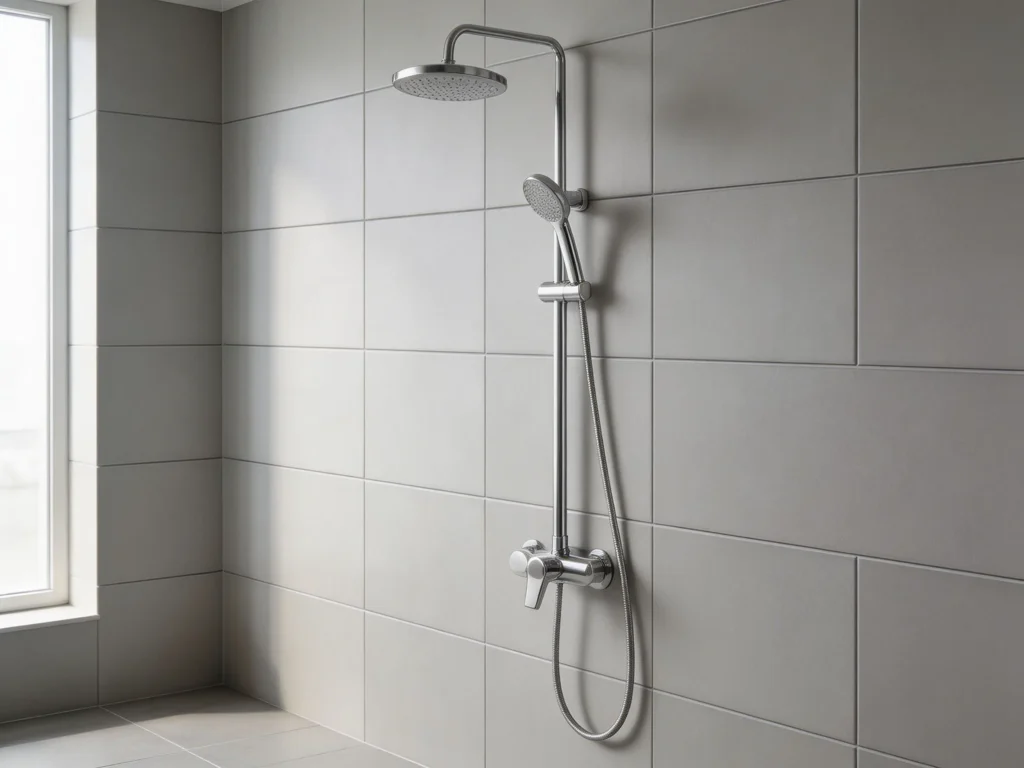
An exposed shower system celebrates the plumbing. The pipes, the valve body, and the riser rail are part of the composition. In a bathroom with an industrial edge—exposed brick, concrete, metal accents—an exposed shower system in matte black or brushed steel reinforces the aesthetic. In a traditional bathroom with classic chrome fixtures, an exposed system with cross-head handles and a rigid riser looks correct and intentional.
A concealed shower mixer, in contrast, celebrates the absence of clutter. The wall is a clean plane with a single control plate and a shower head that appears to float. In a minimalist bathroom, a concealed mixer contributes to the sense of calm. In a small bathroom, the reduced visual busyness makes the space feel larger. In a luxury bathroom with statement marble or stone slabs, a concealed mixer avoids interrupting the veining and pattern of the expensive material.
The choice is partly about the bathroom’s overall design language and partly about your personal taste. There are no wrong answers here. Some people find exposed pipework honest and appealing. Others find it visually heavy. Neither group is incorrect.
4. Maintenance and Repairs: Access Matters
This is where the two systems diverge most sharply in practical terms. Maintenance difficulty is the single most common complaint I hear about concealed mixers. It is also the single strongest argument for exposed systems in certain scenarios.
Maintaining an Exposed System
An exposed shower system is inherently serviceable. The valve, the connections, the diverter—everything sits within reach. If a cartridge needs replacement, a plumber removes the handle and retaining nut, swaps the cartridge, and reassembles. The job takes fifteen to thirty minutes. If a connection weeps, the leak is visible and the repair is straightforward. The wall is never touched.
For the homeowner who wants to handle their own repairs, an exposed system is the more DIY-friendly option. You can find cartridge replacement tutorials for most major-brand exposed mixers online, and the job requires only basic tools.
Maintaining a Concealed System
You can usually replace a concealed mixer cartridge through the control plate opening without damaging the wall. The manufacturer designs the trim plate to be removable, and the cartridge sits in a serviceable position behind it. This is the routine repair scenario, and it works well on quality concealed mixers.
The more serious scenario involves a leak inside the wall—at a connection fitting, a valve body crack, or a pipe joint that has failed. Diagnosing the leak usually means cutting an inspection hole in the wall or accessing the valve from the reverse side. Repairing it often means opening the tiles. Finding matching replacement tiles years after the original installation proves difficult. The repair cost, including tile work, waterproofing, and refinishing, can exceed the original installation cost.
This is not an argument against concealed mixers. It is an argument for installing them correctly the first time, using quality components, and testing thoroughly before the wall is closed. The system is reliable when well-installed. The risk concentrates in installation quality and component longevity. This is why I always recommend using a concealed mixer from a manufacturer with a proven track record in valve engineering, rather than an unbranded alternative.
5. Cost Comparison: Upfront vs. Long-Term
The cost difference between exposed and concealed systems is not as simple as one number being higher than the other. The costs hit at different stages of the project.
Exposed Shower System Costs
The hardware cost for a quality exposed shower system—mixer, riser rail, shower head, handset—ranges from approximately 150forabasicchromesetto800 or more for a premium brand in a PVD finish. Installation is relatively quick, typically one to two hours of plumbing labour. The total installed cost for an exposed system is transparent and predictable. There are no hidden wall-work costs.
Concealed Shower Mixer Costs
A concealed system splits the cost into two components: the rough-in valve body, and the visible trim kit. The rough-in body is the part that goes in the wall, and it typically costs 100to300 for a quality unit. The trim kit—the control plate, the handle, the shower head—is purchased separately and costs 150to600 depending on finish and design. So the hardware cost alone is comparable to a mid-range exposed system. The installation labour, however, is higher.
Chasing the wall, embedding the valve, protecting it during tiling, and connecting the supplies adds several hours to the plumbing scope. The total installed cost for a concealed system typically runs 30% to 60% higher than an equivalent-quality exposed system.
Over the long term, the exposed system may have a slight cost advantage due to easier maintenance, but the difference is marginal if both systems are well-installed. The real cost risk with a concealed system is the repair scenario described above—a leak inside the wall. That is a low-probability, high-impact event. For most homeowners, it will never happen. For a small percentage, it will, and the cost will be significant.
| Cost Factor | Exposed Shower System | Concealed Shower Mixer |
|---|---|---|
| Hardware | 150–800 | 250–900 |
| Installation Labour | 1–2 hours | 3–6 hours |
| Wall Work Required | None | Chasing, patching, tiling |
| Total Installed Cost | Lower | 30%–60% higher |
| Long-Term Maintenance | Easier, fully accessible | Routine service through trim plate; wall repair if internal leak |
6. Water Pressure Compatibility
Both exposed and concealed systems work with a wide range of water pressures, but the compatibility details differ slightly.
Exposed Systems and Pressure
Most exposed mixer showers suit high-pressure systems—typically 1.0 bar minimum, with optimal performance at 2.0 bar and above. This makes them ideal for homes with combi boilers, unvented hot water cylinders, or pumped systems. Many exposed mixers also offer a low-pressure version or include a flow restrictor that you can remove for gravity-fed systems. However, a standard exposed mixer on a low-pressure gravity system will produce a weaker flow than expected. If your home has a roof tank and a gravity-fed hot water cylinder, check the minimum pressure rating of the exposed mixer before purchasing.
Concealed Systems and Pressure
Manufacturers offer concealed mixer valves in a broader range of pressure configurations. Many European-manufactured concealed valves work from the start with low-pressure systems—0.2 bar or even lower—because gravity-fed systems remain common in parts of Europe. This makes a concealed mixer a practical choice for older properties where upgrading the plumbing is difficult. High-pressure versions are also available for modern pressurised systems.
The key difference is that a concealed valve often provides more flexibility across pressure ranges. The larger internal flow path can accommodate both high and low pressure with the appropriate cartridge. The same valve body can sometimes be configured with a high-flow cartridge for a pumped system or a low-pressure cartridge for a gravity system.date both high and low pressure with the appropriate cartridge. The same valve body can sometimes be configured with a high-flow cartridge for a pumped system or a low-pressure cartridge for a gravity system.
7. Regional Preferences and Recommendations
The exposed versus concealed decision is also shaped by where in the world the bathroom is located. Here is how I see the preference split across key markets.
Europe
Concealed mixers dominate new construction in Germany, Scandinavia, the Netherlands, and increasingly the UK. The preference aligns with the European design language of clean, uncluttered surfaces and the widespread use of wall-hung sanitary ware. Exposed systems remain common in renovation projects where the wall structure is difficult to alter. They also appear in traditional bathrooms where exposed chrome pipework is part of the period aesthetic. In Southern Europe—Italy, Spain, Portugal—exposed systems hold a larger share, partly because solid brick and stone walls make chasing for concealed valves more labour-intensive.
Middle East
The Gulf market leans toward concealed systems in luxury residential and hospitality projects. Specifiers value the clean wall aesthetic and the ability to order premium control plates in gold, rose gold, or bespoke finishes. Exposed systems appear in mid-market and renovation projects, and in bathrooms where the design language is more traditional. The region’s widespread use of block wall construction makes chasing for concealed valves relatively straightforward. This reduces the installation cost premium compared to markets with timber stud walls.
Southeast Asia
The market is mixed. In Singapore and Malaysia, concealed mixers are gaining share in new condominium construction, influenced by European design trends and the compact bathroom sizes that benefit from uncluttered walls. In Thailand, Vietnam, and Indonesia, exposed systems remain the more common choice. Lower cost, simpler installation, and the prevalence of instantaneous water heaters that feed directly into exposed shower units drive this preference. The humid climate also makes fully accessible plumbing a practical advantage.
Americas
In North America, the standard shower valve has historically been a concealed mixer behind a large trim plate. This makes the concealed format the default rather than a premium upgrade. Exposed systems are a specialty category, often associated with vintage, industrial, or high-design bathrooms. In Latin America, exposed systems are more common, particularly in retrofit scenarios where opening walls is expensive and disruptive. Electric shower heads that mount directly on the wall are also widely used in markets like Brazil.
8. How to Decide: A Straightforward Decision Framework
With everything laid out, the decision usually comes down to a few clear factors. Here is the framework I use when helping someone choose.
Choose an exposed shower system if:
- You are renovating an existing bathroom and do not want to open the walls.
- You value maintenance access and prefer to handle repairs yourself.
- Your bathroom design celebrates visible plumbing—industrial, traditional, or vintage styles.
- Your budget is tighter and you want a predictable, transparent installation cost.
- You are installing in a solid wall that would be expensive or difficult to chase.
Choose a concealed shower mixer if:
- You are building new or doing a full gut renovation where the walls are already open.
- You want the cleanest possible wall surface, especially in a minimalist or luxury bathroom.
- Your bathroom is small and you want to reduce visual clutter.
- You are comfortable with the installation discipline required—getting the depth right, testing before tiling, and accepting that major repairs would mean opening the wall.
Either system works well if:
- You buy from a reputable manufacturer with proven cartridge life and warranty support.
- You verify your water pressure before selecting the specific model.
- You have the system installed by a qualified plumber who understands the rough-in requirements.
Neither choice is a mistake. The mistake would be installing a system without understanding the trade-offs, and discovering them only after the tiles are up and the grout is dry. That is what this article is designed to prevent.