
Most people choose a toilet based on three things: how it looks, how much it costs, and whether it fits in the bathroom. Almost nobody asks about the flush system. Yet that hidden engineering decision determines how clean the bowl stays, how much water the toilet uses, how loud it is at two in the morning, and whether the drain line will clog ten years down the road.
There are two dominant flush technologies in the global toilet market: siphonic and wash-down. If you have ever used a toilet in North America and then used one in Europe or Southeast Asia, you have probably experienced the difference without knowing what to call it. This article explains exactly how each system works, where each one performs best, and why choosing the wrong flush type for your plumbing and climate can lead to years of quiet frustration.
1. What Is a Siphonic Toilet? The Pull, Not the Push
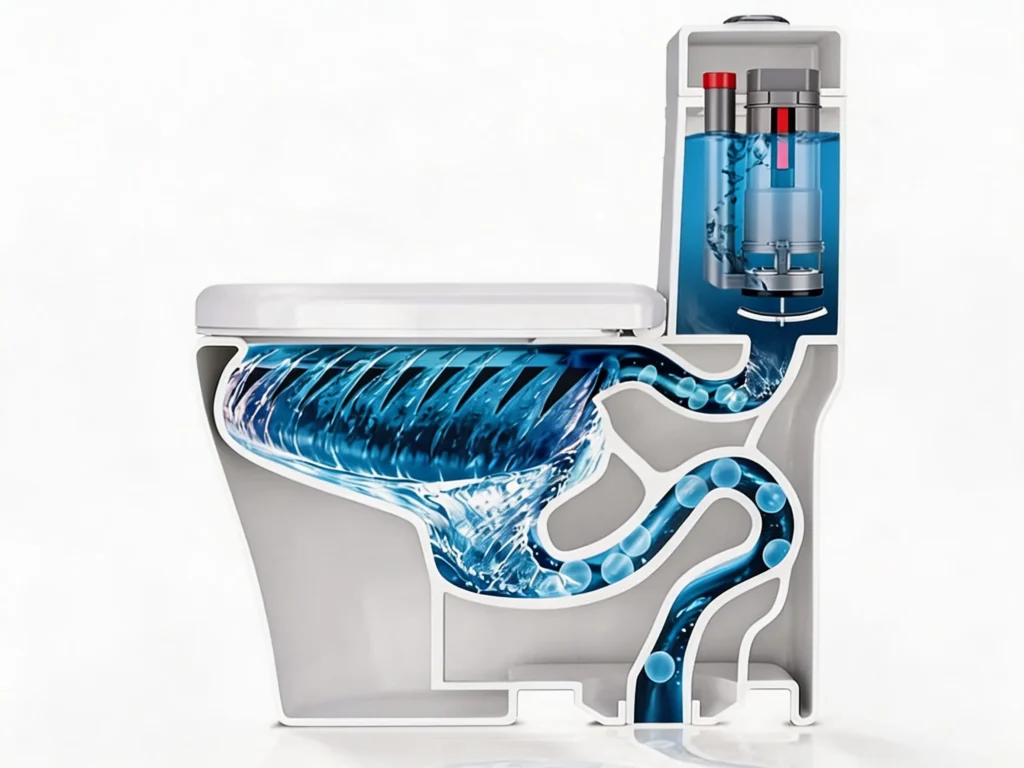
A siphonic toilet does not simply push water into the bowl and hope waste disappears. It creates a siphon — a continuous column of water that pulls the entire contents of the bowl through the trapway and into the drain line. Understanding how this works explains almost everything about the toilet’s performance.
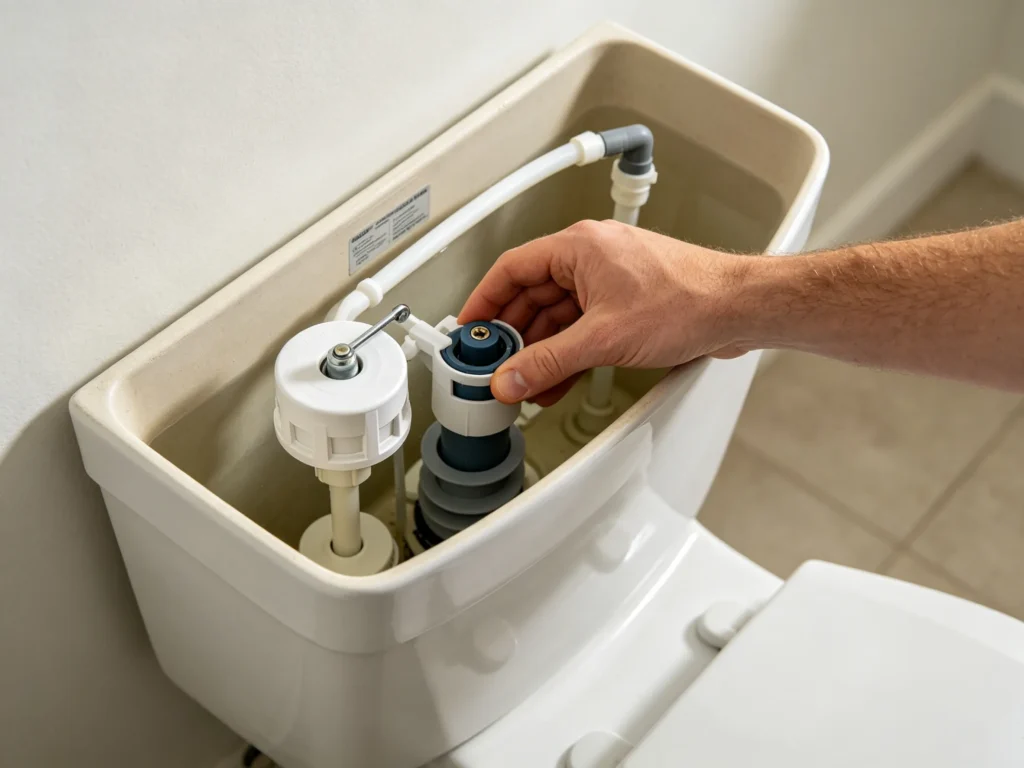
When you press the flush button or lever, water rushes from the cistern into the bowl through rim jets. The water level in the bowl rises rapidly. The trapway — the S-shaped passage at the back of the toilet — fills completely with water. Once the trapway is full and the water column inside it is continuous, gravity pulls that column downward. This creates negative pressure behind it, which sucks the remaining water and waste out of the bowl in one decisive motion. After the siphon breaks, the cistern refills and a small amount of water returns to the bowl to create the standing water seal.
This mechanism produces a strong, complete flush with relatively little noise. Because the siphon pulls waste out rather than simply pushing it, the bowl clears cleanly with each flush. However, the trapway on a siphonic toilet is relatively narrow and has a tight bend. This is necessary to create the siphon effect, but it makes siphonic toilets more susceptible to clogging if someone flushes too much solid waste or non-flushable items. The narrow passage also means siphonic toilets need a minimum amount of water per flush — typically 6 liters or more in older models, though modern designs have reduced this to 4.5 to 5 liters — to reliably initiate the siphon.
Siphonic toilets dominate in North America, where they are the standard across virtually all residential and commercial installations. They are also common in older European housing stock, parts of the Middle East, and Australia. The large water surface area in the bowl — a characteristic of siphonic designs — keeps waste submerged, which reduces bathroom odour between flushes.
2. What Is a Wash-Down Toilet? Direct Force, Fewer Blockages
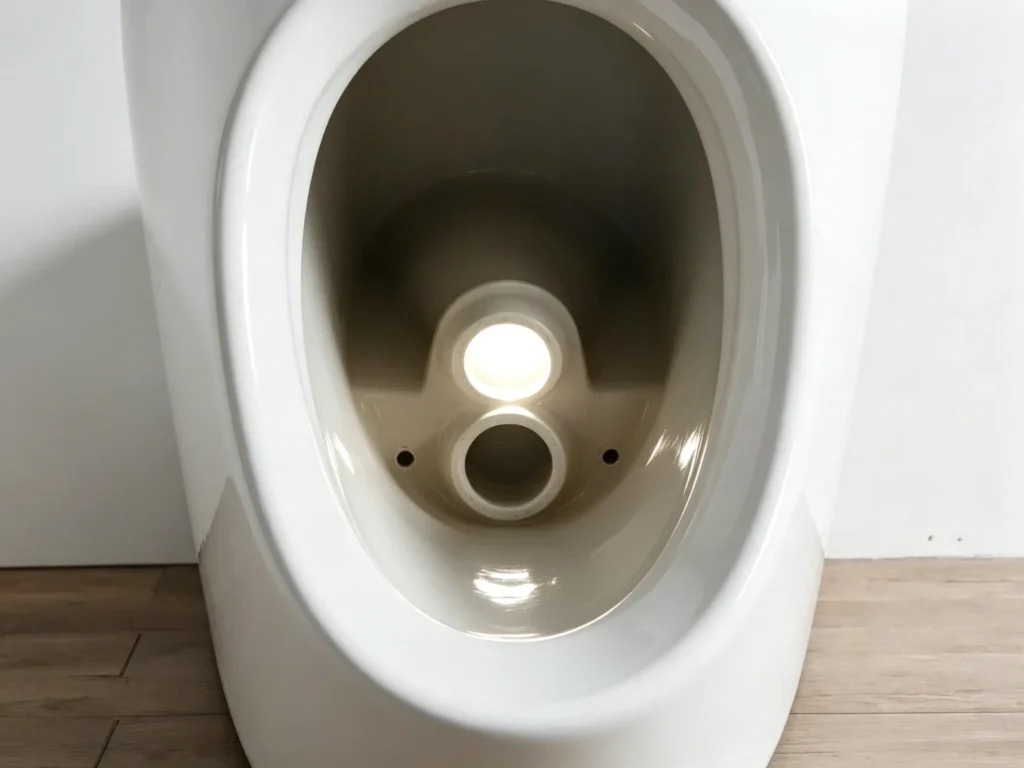
A wash-down toilet takes a different approach. Instead of creating suction, it relies on the direct force of water dropping from the cistern to push waste through the trapway by sheer volume and gravity. The trapway on a wash-down toilet is shorter and significantly wider than on a siphonic model — typically 100 mm in diameter compared to 60 to 80 mm for a siphonic design. This wider passage has real-world implications that affect daily use.
When you flush a wash-down toilet, water enters the bowl from the rim and, in many modern rimless designs, also from a rear jet. The water pushes the contents of the bowl forward and over the weir of the trap. Because the trapway is wide and has a gentler bend, solid waste passes through with less resistance. Clogs are genuinely less common in wash-down toilets, which is why they are the dominant design in markets where plumbing infrastructure may be older, narrower, or more prone to blockages.
The trade-off is the water spot. A wash-down toilet holds a smaller standing pool of water in the bowl, and the waste tends to sit on the dry surface of the bowl rather than being fully submerged. This means that if the bowl surface is not of excellent quality, waste can leave marks that require more frequent cleaning. In a high-quality vitreous china bowl with a nano-glaze surface, this is a minor issue. In a cheap ceramic bowl with a rough glaze, it becomes a daily annoyance.
Wash-down toilets also tend to be noisier than siphonic models during the flush, though modern rimless wash-down designs have reduced this gap considerably. The flush action is faster and more mechanical in feel — a brief, powerful surge rather than a sustained pull.
3. Siphonic vs. Wash-Down: A Direct Comparison
Understanding how each system works leads to a practical set of trade-offs. Here is how they compare across the dimensions that actually matter in daily use.
Clog Resistance
Wash-down toilets win this category decisively. The wide trapway — typically 100 mm versus 60 to 80 mm in a siphonic toilet — simply leaves more room for solid waste to pass. In households with children who may flush too much toilet paper, or in buildings with older drain lines that do not flow as freely as they once did, a wash-down toilet meaningfully reduces the frequency of plunger emergencies. A siphonic toilet is more sensitive to the volume and consistency of what goes through it. The tight bend that creates the siphon is the same feature that makes blockages possible.
Bowl Cleanliness and Odour Control
Siphonic toilets win this category. The large water surface area submerges waste completely, which significantly reduces bathroom odour. The standing water also keeps the bowl surface wet, which prevents waste from drying onto the ceramic and leaving marks. A wash-down toilet, by contrast, has a smaller water spot and waste often rests on the bowl surface until flushed. With a high-quality glaze, this is manageable. With a rough or low-quality glaze, it leads to visible staining that demands more frequent scrubbing.
Water Consumption
Both systems have improved dramatically on water efficiency over the past two decades. A modern siphonic toilet can achieve a full flush at 4.5 to 5 liters. A wash-down toilet can often go lower — 3 to 4.5 liters for a full flush, with some models achieving even lower volumes — because the system does not need a minimum water volume to initiate a siphon. This makes wash-down toilets particularly attractive in water-stressed regions like the Middle East, parts of Southeast Asia, and drought-prone areas of North America and Australia.
Noise Level
Siphonic toilets are generally quieter because the flush action is a sustained pull rather than a sudden surge. Wash-down toilets are louder, though the difference has narrowed in recent years. Rimless wash-down designs with engineered vortex flow paths are noticeably quieter than older wash-down models that simply dumped water into the bowl. If the toilet is next to a bedroom or a nursery, the noise level difference is worth experiencing in a showroom before deciding.
Installation Flexibility
Wash-down toilets are more tolerant of suboptimal drain line configurations. The wide trapway and direct push action mean the toilet can function effectively even with horizontal drain runs that are not perfectly sloped, or with drain lines that have internal scaling or partial restrictions. Siphonic toilets rely on a complete, uninterrupted siphon, which means the drain line must be properly vented and sloped to allow the siphon to form and break correctly.
Service Life and Maintenance
Both systems, when manufactured from quality vitreous china with a good glaze and paired with a reliable fill and flush valve, should last twenty years or more in residential use. The more important variable is the quality of the internal components — the fill valve, flush valve, and flapper or seal — rather than whether the toilet is siphonic or wash-down by design. These wear parts will need replacement several times over the toilet’s lifespan regardless of the flush system.
Price
In most global markets, wash-down toilets are less expensive to manufacture and purchase than equivalent-quality siphonic models. The simpler trapway design requires less precision in casting and finishing. For large projects — apartment buildings, hotels, student housing — the per-unit cost difference multiplied across hundreds of units adds up quickly. This is one reason wash-down designs dominate volume construction in Europe and Asia.
4. Regional Dominance: Who Uses What and Why
North America and Australia: Siphonic Territory
The siphonic toilet is the overwhelming standard across the United States, Canada, and Australia. This dominance developed partly for historical reasons — early American plumbing codes effectively required the large water spot that only a siphonic toilet could provide — and partly because North American drain lines are generally larger in diameter and better vented than their European counterparts. The infrastructure supports the siphon. When a siphonic toilet is connected to a properly installed 4-inch drain line with adequate venting, it performs exactly as designed.
Australian regulations have historically also favored siphonic designs, though the Australian market has diversified in recent years with the introduction of high-efficiency wash-down models from European and Asian manufacturers.
Europe: The Wash-Down Stronghold
Wash-down toilets are the standard across most of Europe, particularly in Germany, Scandinavia, the Netherlands, and Eastern Europe. The European preference for wash-down stems from several factors. Building codes in many European countries historically required smaller drain lines — often 80 mm or 90 mm rather than 100 mm or 110 mm — and wash-down toilets handle these smaller diameters more reliably. European bathrooms also tend to be compact, and the shorter projection and lighter weight of a typical wash-down pan suit smaller spaces.
The near-universal adoption of rimless technology in European wash-down toilets over the past decade has addressed the bowl cleanliness concern that was once the main criticism of the wash-down design. A high-quality European wash-down toilet with a nano-glaze and a rimless bowl is a very different product from the wash-down toilets of thirty years ago.
Middle East: A Mixed Market with Specific Demands
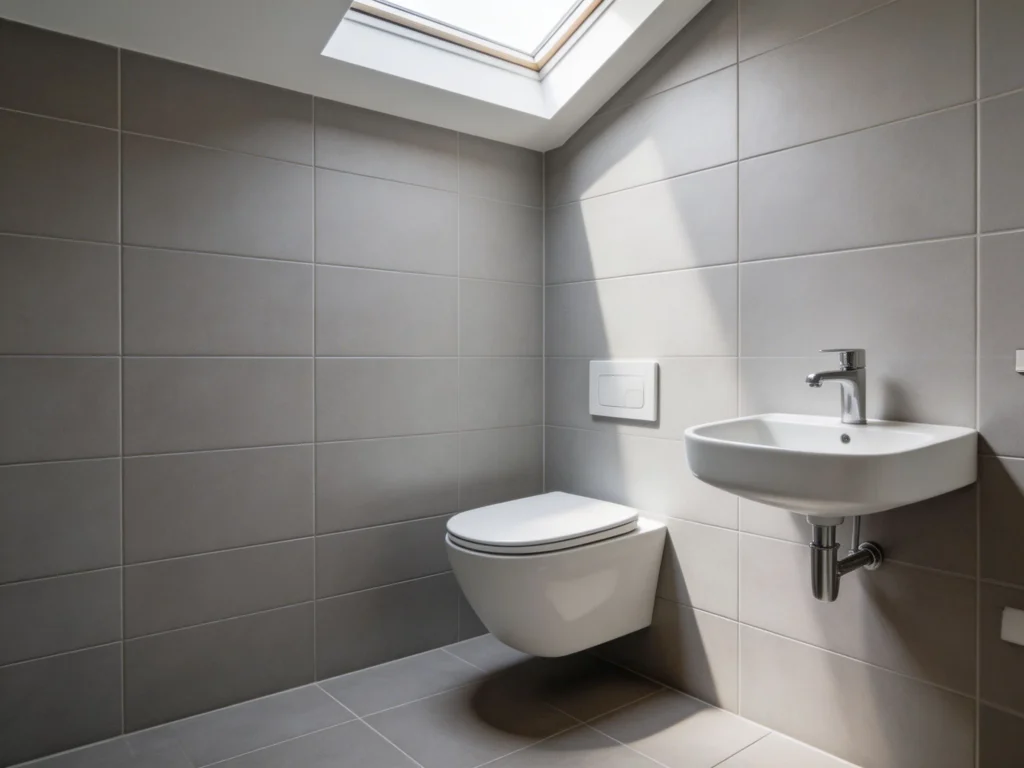
The Gulf region imports toilets from both European and North American supply chains, so both siphonic and wash-down designs appear in the market. High-end residential and hospitality projects often spec European wash-down wall-hung units because the concealed cistern and clean lines suit the luxury aesthetic. At the same time, siphonic toilets remain common in older buildings and mid-market projects influenced by American design standards.
Water conservation is the driving regulatory force across the region. Full flush volumes of 4 to 5 liters are the expectation in new projects. The wash-down toilet’s ability to achieve reliable flush performance at lower volumes gives it a slight advantage in markets like Dubai and Abu Dhabi, where green building codes increasingly mandate water-efficient fixtures.
Southeast Asia: Wash-Down for Practicality
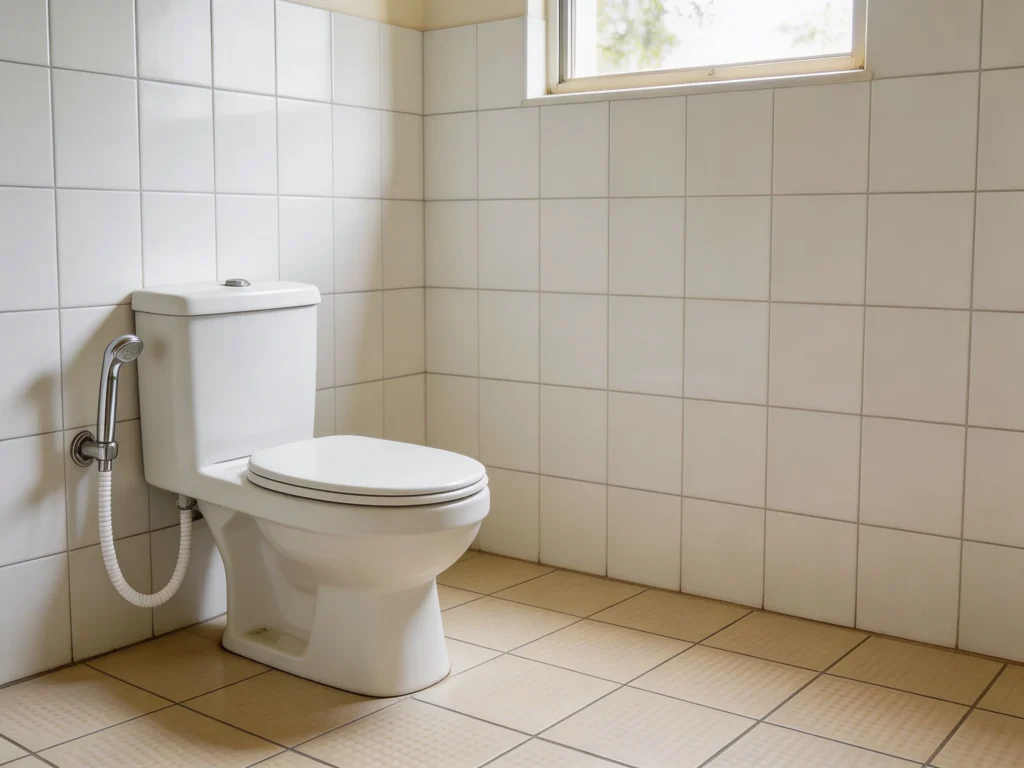
Southeast Asian markets overwhelmingly favor wash-down toilets. The wide trapway handles the region’s common plumbing challenges — older drain lines, lower water pressure in some areas, and the widespread use of jet pumps and roof tanks that create variable flush pressure. Wash-down toilets are also less likely to clog, which is a genuine concern in households where toilet paper usage varies and wet cleaning methods (using water from a hand sprayer or bidet) are common.
In Singapore, where the PUB mandates toilet flush volumes of no more than 4.5 liters for a full flush under the Water Efficiency Labelling Scheme, wash-down toilets dominate because they achieve reliable performance at these low volumes. In Indonesia, Vietnam, and the Philippines, floor-standing wash-down pans with a rear discharge into a wall-mounted cistern are the most common configuration in mid-market residential construction.
5. Rimless Technology: The Feature That Changes the Conversation
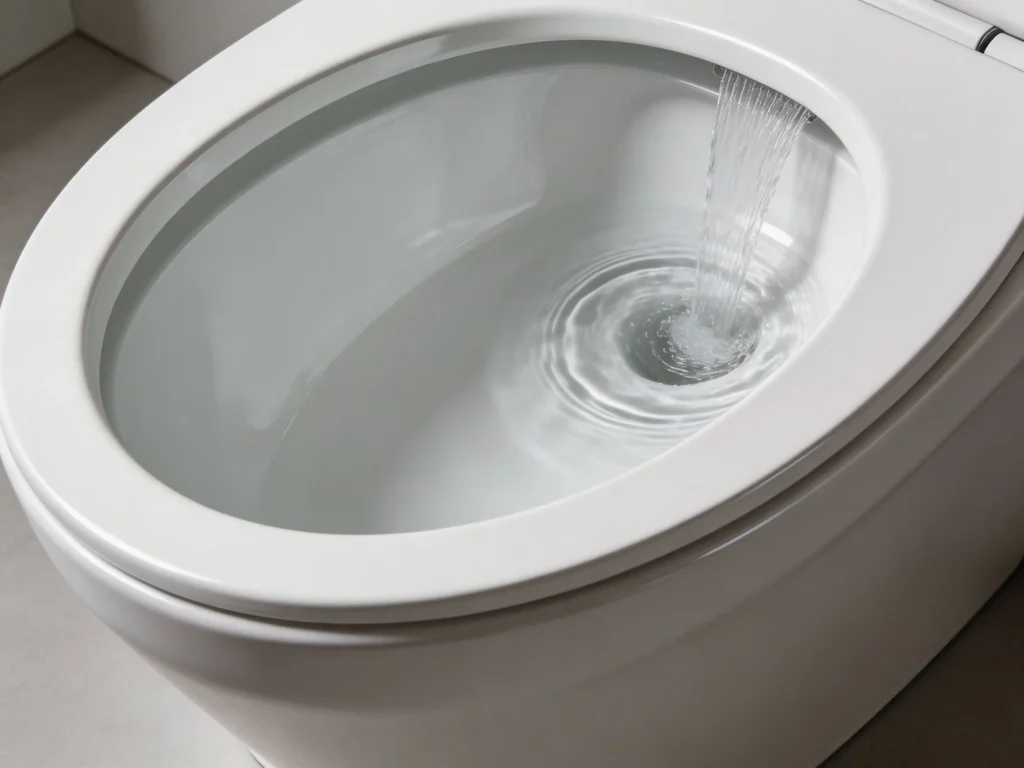
Regardless of whether a toilet is siphonic or wash-down, the adoption of rimless bowl design has been the most significant innovation in toilet engineering in the past twenty years. A traditional toilet has a hollow rim under the edge of the bowl. Flush water exits through small holes in this rim. The cavity is almost impossible to clean, and it harbours bacteria and limescale. A rimless toilet eliminates this cavity entirely, replacing it with a smooth, open bowl surface and a precision-engineered water distribution system at the rear.
Rimless technology has been particularly transformative for wash-down toilets. The historical criticism of wash-down designs was that the small water spot left waste on the bowl surface, requiring more frequent brushing. A rimless wash-down toilet with a high-quality vortex flush directs water in a powerful circular motion that scrubs the entire bowl surface. When paired with a nano-glaze that resists adhesion, the performance gap between wash-down and siphonic on bowl cleanliness narrows considerably.
Today, the vast majority of new wash-down toilets sold in Europe and a growing share of those sold in Asia are rimless. Siphonic rimless toilets are also available, though the engineering challenge of creating a reliable siphon without a traditional rim is more complex, and rimless siphonic models remain a smaller segment of the global market.
6. How to Check Which Flush System You Are Buying
Most toilet product pages and packaging do not prominently label the flush system as “siphonic” or “wash-down.” If you are shopping in a showroom or online and want to identify the system, here is what to look for.
Visual inspection: Look at the trapway shape visible from the side of the toilet. A siphonic toilet has a tighter, more pronounced S-curve at the back of the bowl. A wash-down toilet has a wider, more open passage that curves more gently toward the floor. If the trapway at the back of the pan looks large enough to pass a fist, it is almost certainly a wash-down.
Water spot size: Lift the seat and look at the standing water. A large, deep pool of water — roughly the size of a dinner plate — indicates a siphonic design. A smaller, shallower water spot, often located toward the front or center of the bowl, points to wash-down.
Brand and origin: North American brands (American Standard, Kohler, Toto’s North American line) predominantly manufacture siphonic toilets. European brands (Geberit, Villeroy & Boch, Duravit, Ideal Standard) predominantly manufacture wash-down toilets. This is not a universal rule — Toto, for example, produces both — but it is a reliable starting point.
Ask the specification directly: If you have access to a technical data sheet, look for the trapway diameter. A specification of 60 to 80 mm typically indicates siphonic. A specification of 90 to 100 mm typically indicates wash-down.
7. Making the Right Choice for Your Situation
There is no universally correct answer in the siphonic versus wash-down debate. The right choice depends on your plumbing, your priorities, and where in the world you live.
Choose a siphonic toilet if you prioritize a quiet flush, a large water spot that submerges waste and reduces odour, and your drain lines are properly vented and sloped. This is the default recommendation for most North American homes and for bathrooms where noise is a primary concern — master suites, nurseries, guest rooms.
Choose a wash-down toilet if you prioritize clog resistance, lower water consumption, and installation flexibility. This design works particularly well in older buildings with less-than-perfect drain lines, in water-stressed regions, and in bathrooms where a compact footprint matters. Wash-down is also the more practical choice for most Southeast Asian installations and for European-standard plumbing systems.
Whichever system you choose, buy the best quality your budget allows. A well-made wash-down toilet with a nano-glaze and a rimless bowl will outperform a cheap siphonic toilet with a rough glaze. The ceramic quality, the glaze technology, and the internal valve components matter more for long-term satisfaction than the flush system itself.
A toilet is a long-life fixture. You interact with it multiple times a day for decades. The cost difference between a good toilet and a mediocre one, spread over twenty years of daily use, works out to fractions of a cent per flush. Spend the extra money on quality engineering, and you will never think about your toilet — which is exactly how it should be.