
When renovating or designing a bathroom, selecting the right shower shape is a critical decision that impacts space usage, aesthetics, and daily comfort. Among popular options—round, square, and rectangular—rectangular showers stand out for their unique blend of functionality and style. This guide explores the key advantages, potential drawbacks, and diverse types of rectangular showers to help you determine if they’re the ideal fit for your bathroom.
1. Key Advantages of Rectangular Showers
Rectangular showers have gained widespread popularity among homeowners and designers alike, thanks to their practical and aesthetic benefits. Below are their most notable strengths:
① Exceptional Spaciousness
The elongated shape of rectangular showers creates more interior room compared to square or round alternatives. This extra space enhances comfort by allowing for natural movement—whether you’re lathering up, rinsing, or reaching for toiletries—reducing the risk of slipping or bumping into walls. For households with multiple users (or anyone who values a roomy shower experience), this spaciousness is a game-changer.
② Unmatched Versatility
Rectangular showers adapt seamlessly to almost any bathroom layout, making them suitable for both large and small spaces:
- Large bathrooms: They can be installed as standalone fixtures (e.g., along a wall or in a corner) to fill empty space without feeling cramped.
- Small bathrooms: Customizable dimensions let you tailor the shower to fit tight spots—for example, a narrow rectangular shower can fit along a wall without crowding vanities or bathtubs.
This flexibility ensures you don’t have to compromise on a shower due to odd room shapes or limited square footage.
③ Sleek, Sophisticated Aesthetics
With clean, straight lines and a minimalist silhouette, rectangular showers exude modern elegance. They complement contemporary, Scandinavian, and even transitional bathroom styles, adding a touch of refinement to the space. Additionally, their shape serves as a blank canvas for design customization:
- Use bold tile patterns on the walls or floor to create a focal point.
- Incorporate built-in benches, floating shelves, or niche storage for both functionality and style.
- Pair with frameless glass doors to amplify the “open” feel and showcase your bathroom’s design elements.
④ Superior Functionality & Easy Maintenance
Rectangular showers are designed with practicality in mind:
- Flat walls & floors: Unlike curved showers, their straight surfaces are easy to wipe down, reducing the time and effort needed for cleaning. This also minimizes hidden crevices where mold, mildew, or soap scum can accumulate.
- Efficient drainage: Most rectangular showers feature a sloped base (or can be paired with a sloped tray) that directs water toward the drain, preventing pooling or stagnant water— a common issue in irregularly shaped showers.
⑤ Enhanced Accessibility
For users with mobility needs (e.g., seniors, individuals with injuries, or those using assistive devices), rectangular showers offer better accessibility:
- Their spacious interior provides room for shower seats, grab bars, or walkers.
- Many rectangular models (especially walk-in variants) have low or no thresholds, eliminating the need to step over high edges—a major safety benefit for those with balance issues.
- Customization options let you install accessibility features (like handheld showerheads or non-slip flooring) without sacrificing space or style.
⑥ Water-Saving Potential
The spacious design of rectangular showers doesn’t just boost comfort—it also supports eco-friendly choices. The extra room allows for easy installation of low-flow showerheads (which reduce water usage by 20–50% compared to standard models) without making the shower feel cramped. This means you can save on water bills and reduce your environmental footprint while still enjoying a satisfying shower experience.
2. Potential Disadvantages of Rectangular Showers
While rectangular showers offer numerous benefits, they aren’t without limitations. It’s important to consider these drawbacks before making a purchase:
① Space Requirements
Their elongated shape means rectangular showers can occupy more floor space than compact square or corner showers. In very small bathrooms (e.g., less than 50 square feet), a full-sized rectangular shower may crowd other essential fixtures like vanities, toilets, or bathtubs. This can make the entire bathroom feel cramped and hinder movement. Always measure your bathroom and map out fixture placement to ensure the shower won’t disrupt functionality.
② Accessibility Challenges (for Some Models)
While customizable rectangular showers can be accessible, standard prefabricated models often have high thresholds (3–4 inches) to prevent water leakage. These thresholds can be difficult to step over for users with mobility issues (e.g., those in wheelchairs or with joint pain). Additionally, some narrow rectangular showers may lack space for assistive devices like shower chairs—so it’s crucial to prioritize “walk-in” or low-threshold variants if accessibility is a priority.
③ Cleaning Difficulties in Corners
Though flat walls are easy to clean, the inner corners of rectangular showers (where two walls meet) can be hard to reach. Soap scum, mold, and mildew tend to build up in these tight spots, requiring specialized tools (e.g., small scrub brushes) or more frequent deep cleaning to keep them hygienic. Framed rectangular showers may also have metal tracks (for sliding doors) that trap dirt, adding to maintenance efforts.
④ Higher Cost
Rectangular showers—especially custom-built or high-end models—are often more expensive than basic square or corner showers. Factors that drive up costs include:
- Custom dimensions (requiring tailored materials like glass panels or tiles).
- Premium features (e.g., frameless glass doors, stone resin bases, or built-in storage).
- Installation complexity (especially if plumbing or wall modifications are needed).
For budget-conscious homeowners, prefabricated rectangular shower kits (made of acrylic or fiberglass) are a more affordable alternative—but they may limit design flexibility.
3. Common Types of Rectangular Showers
Rectangular showers come in a variety of styles to suit different needs, budgets, and bathroom layouts. Below are the most popular types:
① Rectangular Shower Kit
A pre-packaged all-in-one solution that includes a shower tray (base), wall panels, and a door. Most kits are made of lightweight, durable materials like acrylic or fiberglass, and they’re designed for easy DIY or professional installation.
- Pros: Affordable, quick to install, and low-maintenance.
- Cons: Limited design options (e.g., fixed sizes, basic finishes) and less customization than custom builds.
- Best for: Renters, budget renovations, or anyone wanting a hassle-free upgrade.
② Rectangular Shower Tray
The base of the shower, which sits on the floor and collects water for drainage. It’s a standalone component that pairs with separate walls and doors.
- Materials: Acrylic (affordable, lightweight), fiberglass (durable, easy to clean), or stone resin (premium, heat-resistant).
- Key Feature: Most have a built-in slope to direct water to the drain; some are anti-slip for safety.
- Best for: Custom shower builds or replacing an old, damaged shower base.
③ Rectangular Shower Enclosure with Sliding Door
A complete enclosure featuring tempered glass walls and a sliding door (instead of a hinged door). The sliding design saves space, as it doesn’t swing outward into the bathroom.
- Finishes: Available in chrome, brushed nickel, matte black, or brass to match bathroom hardware (faucets, towel bars).
- Pros: Sleek appearance, space-efficient, and easy to access.
- Best for: Small to medium bathrooms where hinged doors would block movement.
④ Rectangular Walk-In Shower
A doorless or low-threshold enclosure that offers maximum accessibility and a “spa-like” open feel. It typically has a wide entry and no door, making it easy to step in/out.
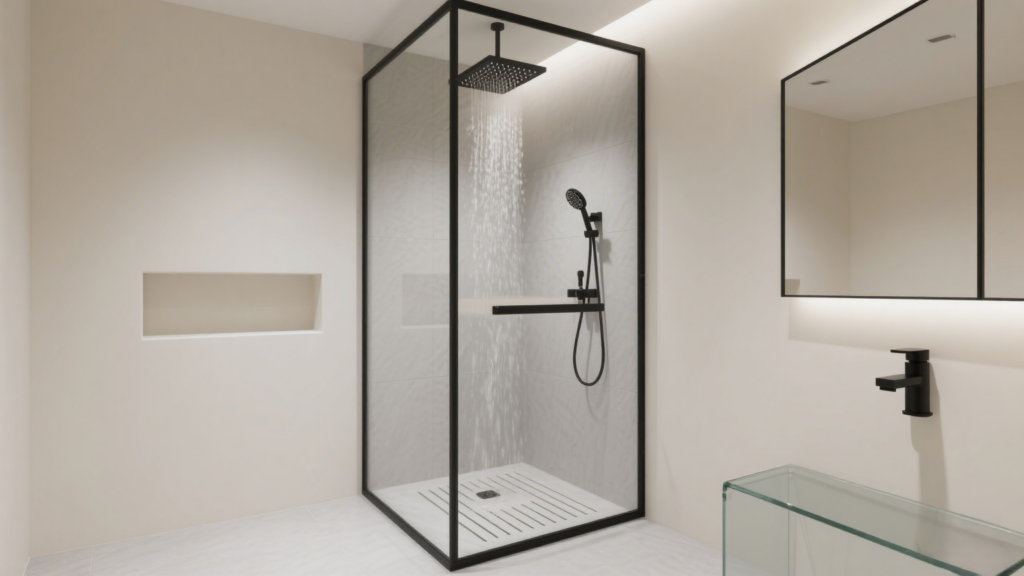
- Customization: Can include built-in benches, niche storage, or rainfall showerheads.
- Pros: Accessible for all users, easy to clean (no door tracks), and visually expands small bathrooms.
- Best for: Seniors, users with mobility needs, or anyone wanting a luxurious, modern look.
⑤ Rectangular Corner Shower Kit
A space-saving variant designed to fit into the corner of a bathroom. It features two glass panels (forming a right angle) and a sliding or hinged door.
- Pros: Maximizes floor space, ideal for small bathrooms.
- Cons: Smaller interior than standard rectangular showers; limited room for customization.
- Best for: Compact bathrooms or bathrooms with multiple fixtures (e.g., a tub + vanity).
⑥ Rectangular Rain Shower Head (Accessory)
While not a shower enclosure itself, a rectangular rain shower head is a popular accessory for rectangular showers. It’s larger than traditional shower heads (often 8–12 inches wide) and distributes water in a gentle, rainfall-like pattern.
- Mounting Options: Ceiling-mounted (for a spa feel) or wall-mounted (for flexibility).
- Finishes: Matches most bathroom hardware; materials include stainless steel or brass for durability.
- Best for: Enhancing the luxury of any rectangular shower.
⑦ Rectangular Shower Drain
An essential component that ensures efficient water removal. High-quality rectangular drains are designed to prevent clogs and fit seamlessly with rectangular shower bases.
- Features: Many include built-in hair catchers to trap debris; some are “linear” (long, narrow) to blend with the shower’s shape.
- Materials: Stainless steel or brass (resistant to rust and corrosion).
- Best for: All rectangular showers—especially those with large interior space (to avoid water pooling).
4. Conclusion: Is a Rectangular Shower Right for You?
Rectangular showers excel in spaciousness, versatility, and modern style, making them an excellent choice for most bathrooms—especially if:
- You value a roomy shower experience (for yourself or multiple users).
- Your bathroom has a linear layout (e.g., long walls) that can accommodate an elongated fixture.
- You prefer a sleek, contemporary aesthetic that complements modern decor.
- You need a customizable shower (e.g., for accessibility features or built-in storage).
However, they may not be ideal if:
- Your bathroom is extremely small (and a compact corner shower would save more space).
- You’re on a tight budget (and can’t afford custom or high-end prefabricated models).
- You or a family member has mobility issues and can’t access standard high-threshold rectangular showers.
By weighing these factors—along with the type of rectangular shower that fits your needs—you can transform your daily shower routine into a comfortable, stylish experience that enhances your bathroom’s overall functionality.