

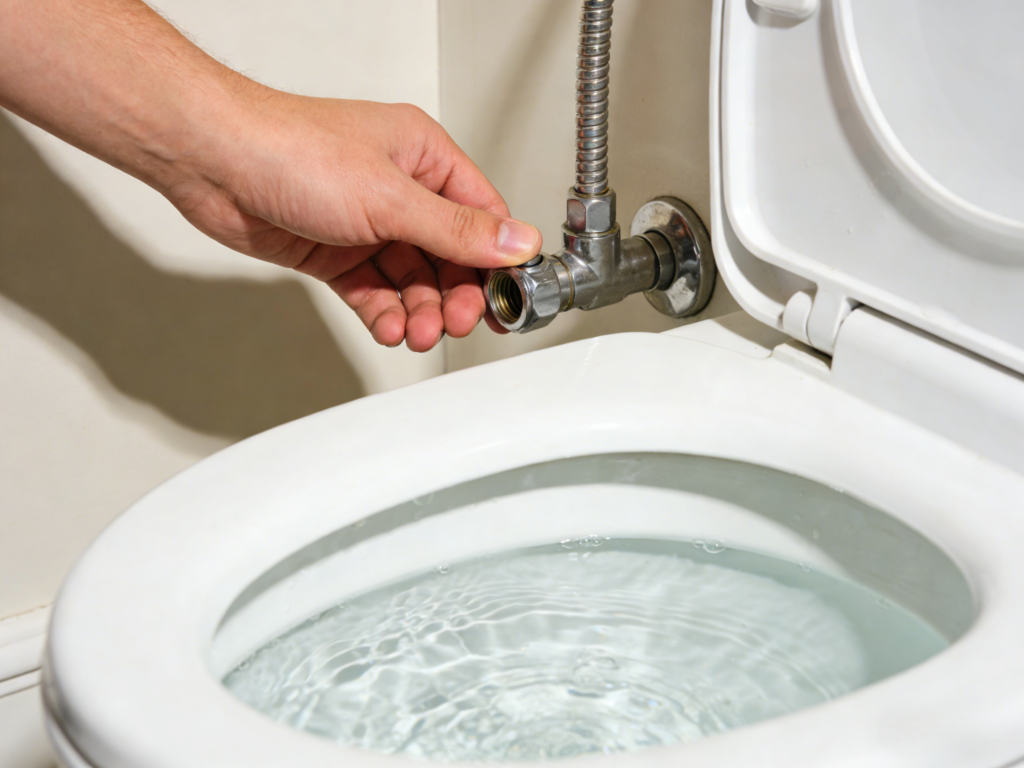
The water is creeping toward the rim, and your first instinct is to jiggle the handle—don’t. Instead, look behind the toilet base near the floor for a football-shaped or round metal knob. Turn this valve clockwise (to the right) immediately to cut the supply. Professional plumbers agree that cutting the water source, rather than flushing again, is the most critical step if your toilet overflows.
Not every blockage begins with a flood; often, you will notice water draining sluggishly or hear gurgling sounds long before a total stop. Recognizing these “slow drain” symptoms early prevents disaster and lets you use simple household fixes to avoid calling a plumber.
The Dish Soap Lubricant: A Tool-Free Method for Soft Clogs
If you lack a plunger or want a gentle approach first, check your kitchen. The dish soap and hot water method lubricates the tight curve of the P‑trap, helping soft obstructions like excess toilet paper slide through more easily. While heat aids the process, never use boiling water. Extreme heat causes “thermal shock,” which can crack the cold porcelain base and ruin the fixture.
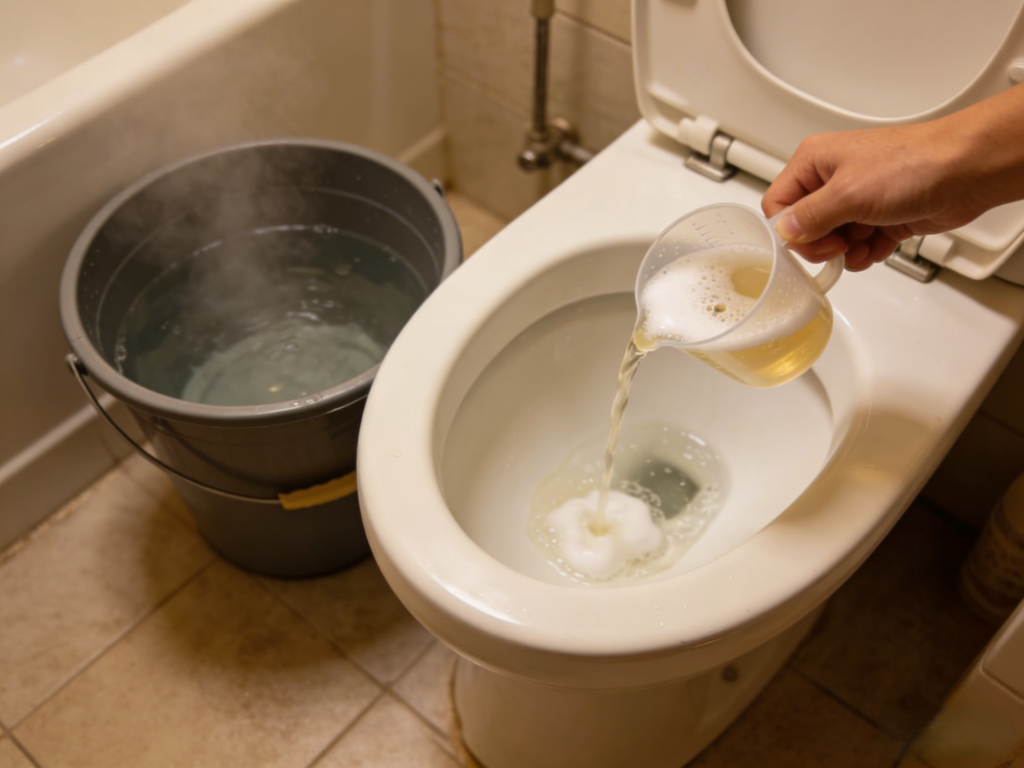
This septic-safe solution requires patience. Follow this safe sequence:
- Pour a half-cup of liquid dish soap into the bowl and let it settle for 5 minutes.
- Fill a bucket with hot tap water (hot tea temperature, not boiling).
- Pour the water slowly from waist height to create mild pressure without splashing.
- Wait 20 minutes to see if the water level drops.
When gravity alone isn’t enough, you need mechanical pressure from a plunger.
Mastering the Plunger: Why Technique Trumps Force
Many bathrooms have the classic red rubber cup plunger—but it is made for flat sink drains, not curved toilet bowls. For toilets, you need a tight seal to keep pressure from escaping. A flange plunger (often black, bell-shaped) has a rubber flap that tucks inside the drain for an airtight seal.
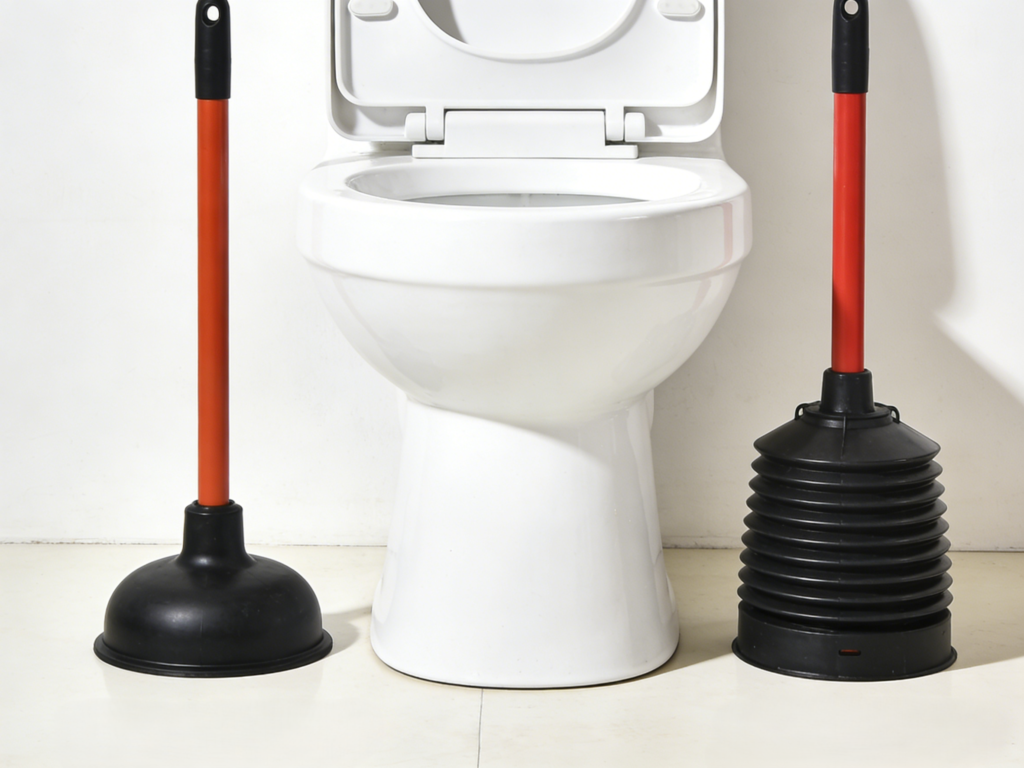
Plunger Type Comparison
| Type | Shape | Best For |
|---|---|---|
| Standard Cup Plunger | Flat bottom | Sinks, tubs; poor seal on toilets |
| Flange Plunger | Bell-shaped with fold-out flap | Toilets; locks into drain for maximum pressure |
Once you have the right tool:
- Tilt the plunger while submerging to release trapped air.
- Press down firmly to create a seal.
- Use a steady, rhythmic push‑pull motion. The upward pull creates a vacuum that breaks up the clog.
If plunging doesn’t clear it, try a natural chemical reaction.
The Baking Soda Fizz: A Natural Alternative to Harsh Chemicals
Harsh liquid drain cleaners often generate extreme heat that can melt plastic pipes or crack old porcelain. A safer option uses baking soda and vinegar, whose fizz creates carbon dioxide pressure to dislodge waste and dissolve organic material.
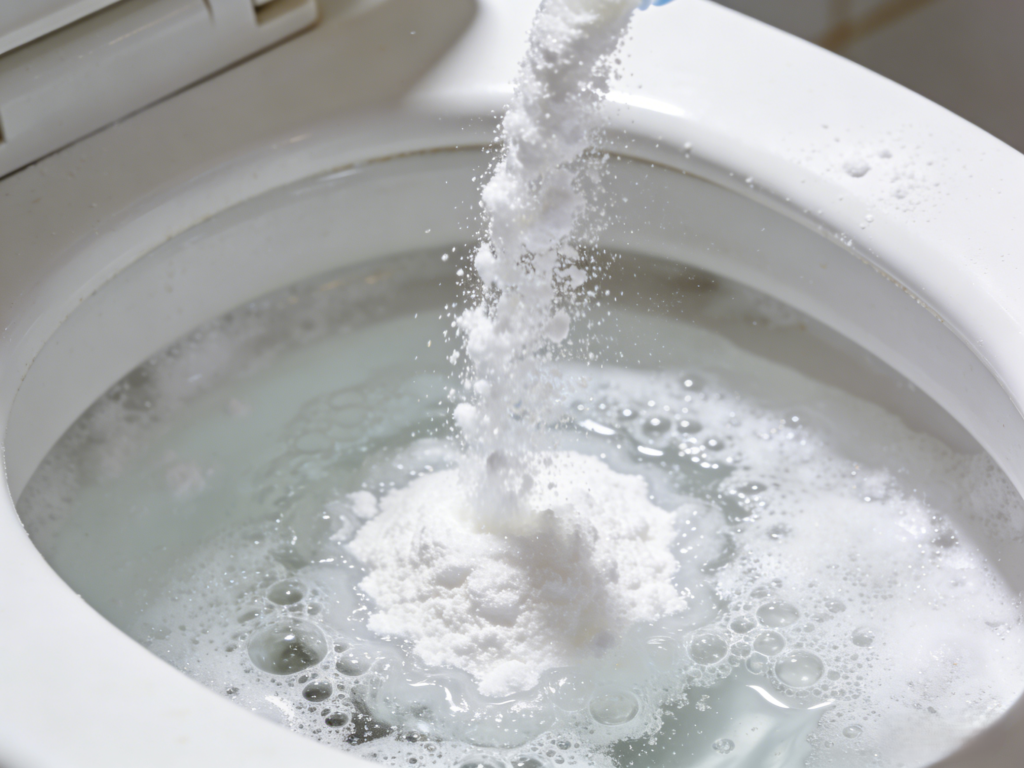
For best results:
- Pour 1 cup of baking soda directly into the water.
- Slowly add 2 cups of white vinegar (expect immediate foam).
- Let the mixture sit for 30 minutes to break down the clog.
This natural solution won’t damage your plumbing. If the water still won’t drain, use a closet auger.
The Homeowner’s Secret Weapon: Using a Toilet Auger Correctly
For deep obstructions, a closet auger (toilet snake) is necessary. Its rigid J‑shape and rubber boot protect the porcelain from scratches, and it extends up to 3 feet to reach hidden clogs.
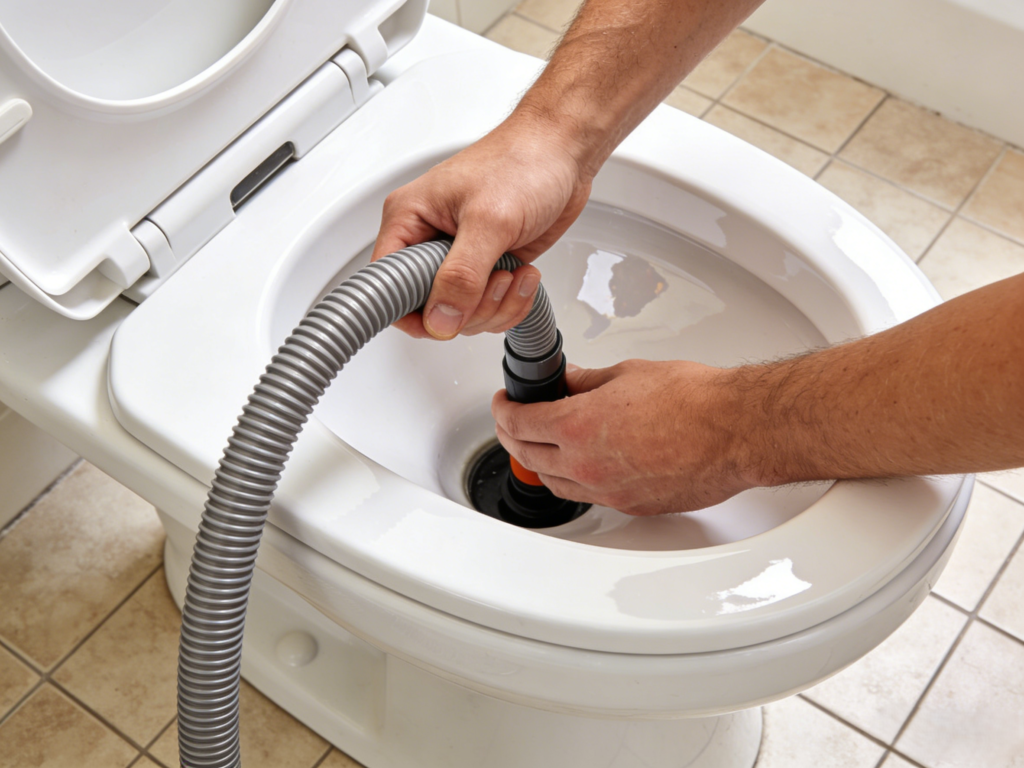
How to use it safely:
- Insert the cable until you feel resistance.
- Turn the handle clockwise while applying gentle downward pressure.
- The corkscrew tip hooks solid objects instead of jamming them deeper.
Using a regular snake on a toilet risks permanent damage.
When DIY Fails: Professional Red Flags
Most clogs clear with the above methods. However, forcing a stubborn blockage can crack porcelain or damage the wax ring, turning a small problem into a costly renovation.
If you suspect a solid object (toothbrush, toy) is stuck, stop immediately. Call a professional plumber if you see these warning signs:
{Icon-style infographic showing three red flags: gurgling water in shower, repeatedly clogging toilet, foreign object stuck in drain, simple clean vector design}
- Water gurgles in the shower or sink when you flush.
- The toilet clogs again every few days.
- A closet auger cannot grab a non‑flushable object.
Knowing when to call a pro protects your home and saves money in the long run.