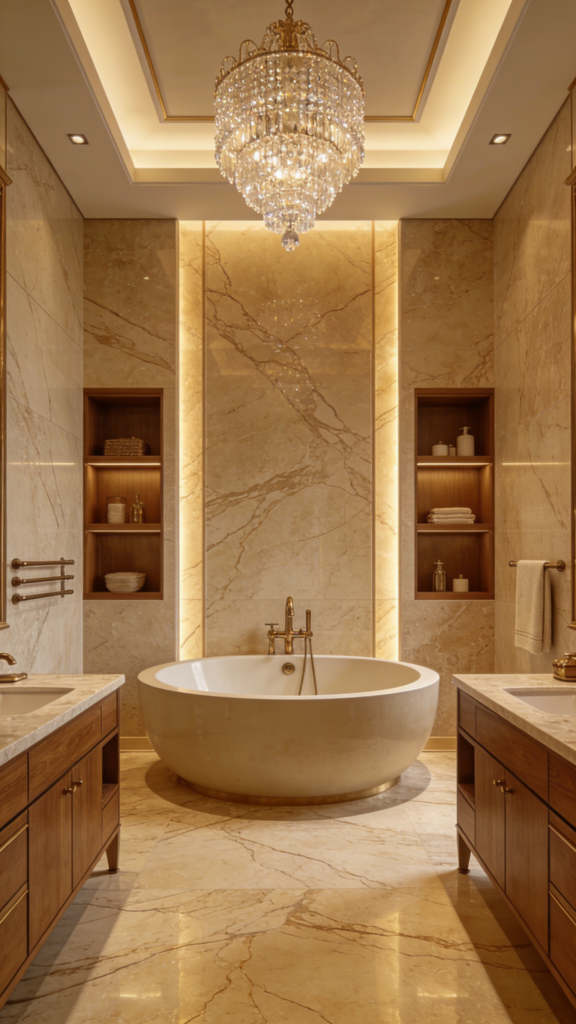
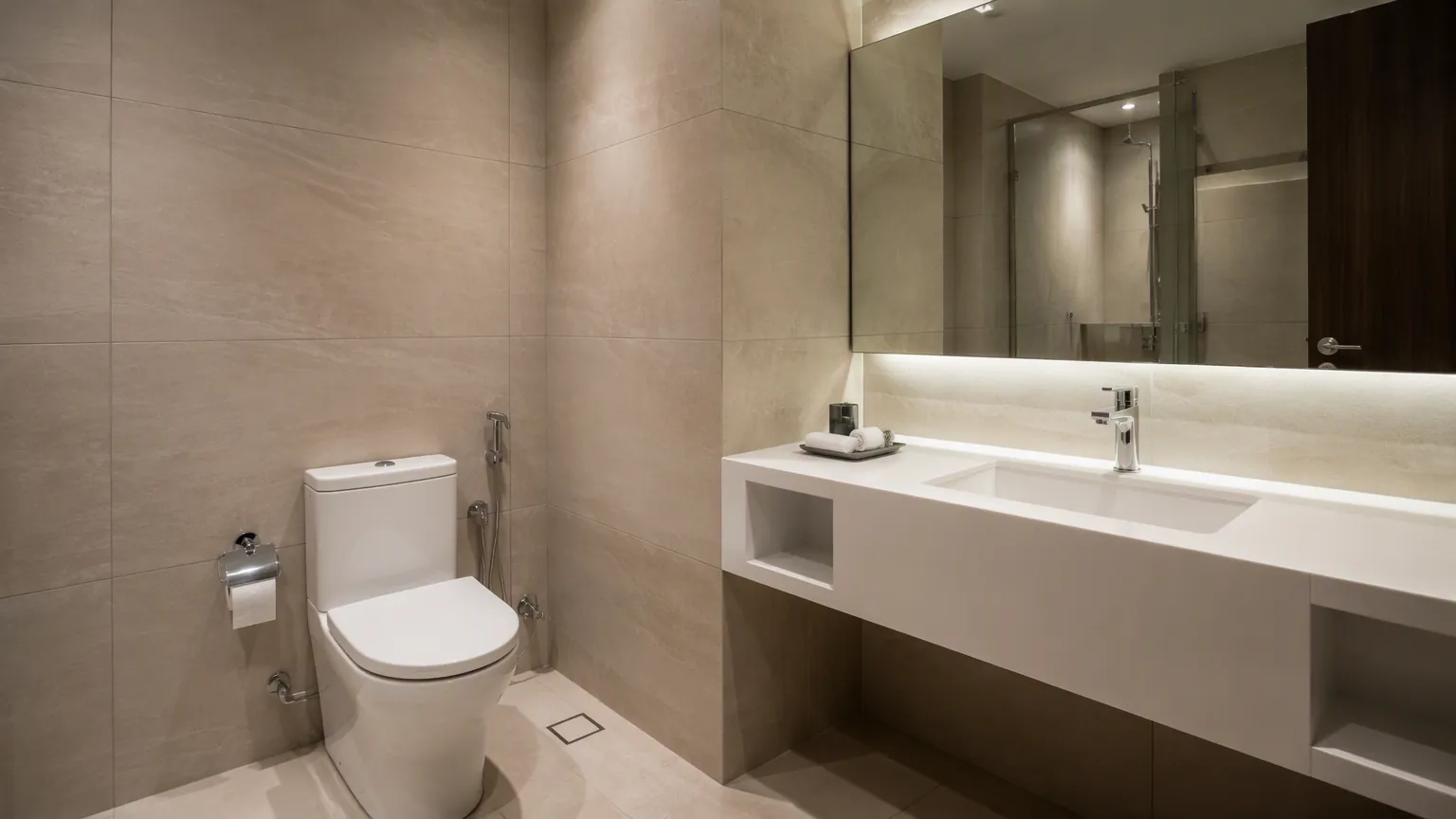
A procurement manager in Riyadh sent a one line inquiry last spring. He needed 320 units of a single item, and he wrote that item as one Arabic word. Our export team read the word as a water closet and priced 320 ceramic pans. What the consultant had specified was 320 complete bathroom sets. Each set included a pan, a cistern, a seat, a wash basin and a basin mixer. Every one also needed a mirror, plus the hand held bidet spray that inspections in the region check for. The shortfall filled a second container and pushed handover back by five weeks.
Nobody in that exchange was careless. The word simply carries more weight on a Gulf project than it does in a dictionary. Look up hamam in arabic and most references give you one answer: bathroom. That translation is correct, yet it is also the reason shipments land short. On a bill of quantities the same word often stands for every fixture in the room. The piece count behind it can differ by a factor of six.
What “Hamam in Arabic” Covers on a Gulf Drawing
The word حَمَّام comes from a root meaning to heat water. It is the same word behind the bathhouse tradition described in the history of the hammam. In modern Gulf speech it means the bathroom as a room. So a drawing labelled حمام is labelling a space, not a product.
That distinction decides what you ship. Hamam in arabic points at a room, so its scope depends on the document it sits in. When a consultant writes one حمام per apartment, the line usually covers the whole wet room. That means the closet, the basin, the mixers, the mirror and the accessories. Sometimes it includes the floor drain as well. When a site foreman says the same word, he may mean something much smaller. He could be pointing at the room where one pan needs replacing. The same term therefore moves between six products and one, depending on who typed it.
Dialect adds a second layer. In Egypt and the Levant the word still leans towards a bathhouse or a public bath. In Saudi Arabia, the UAE, Qatar, Kuwait and Oman it means the bathroom in your own home or hotel room. Moreover the transliteration wanders: hamam, hammam, and a doubled middle letter all point at one Arabic spelling. Your quotation software will treat those as three different inquiries, so confirm before you file them.
Plural forms matter too. حمامات means bathrooms, and it appears on drawings as a room count rather than a product count. A tender that lists 320 حمامات is describing 320 rooms. It is not asking for 320 closets, and it is certainly not asking for 320 mixers. Read the number as rooms first, then multiply by the fixture list.
Mirhad and Twalet: The Words That Decide Which Fixture Ships
Two more words sit next to hamam on most Gulf documents, and they are not synonyms. مِرْحَاض, transliterated as mirhad, is the formal word for a lavatory. It points at the fixture rather than the room. تْوَالِيت, transliterated as twalet, is a borrowing from English. On site it usually means the assembled unit rather than the bare ceramic.
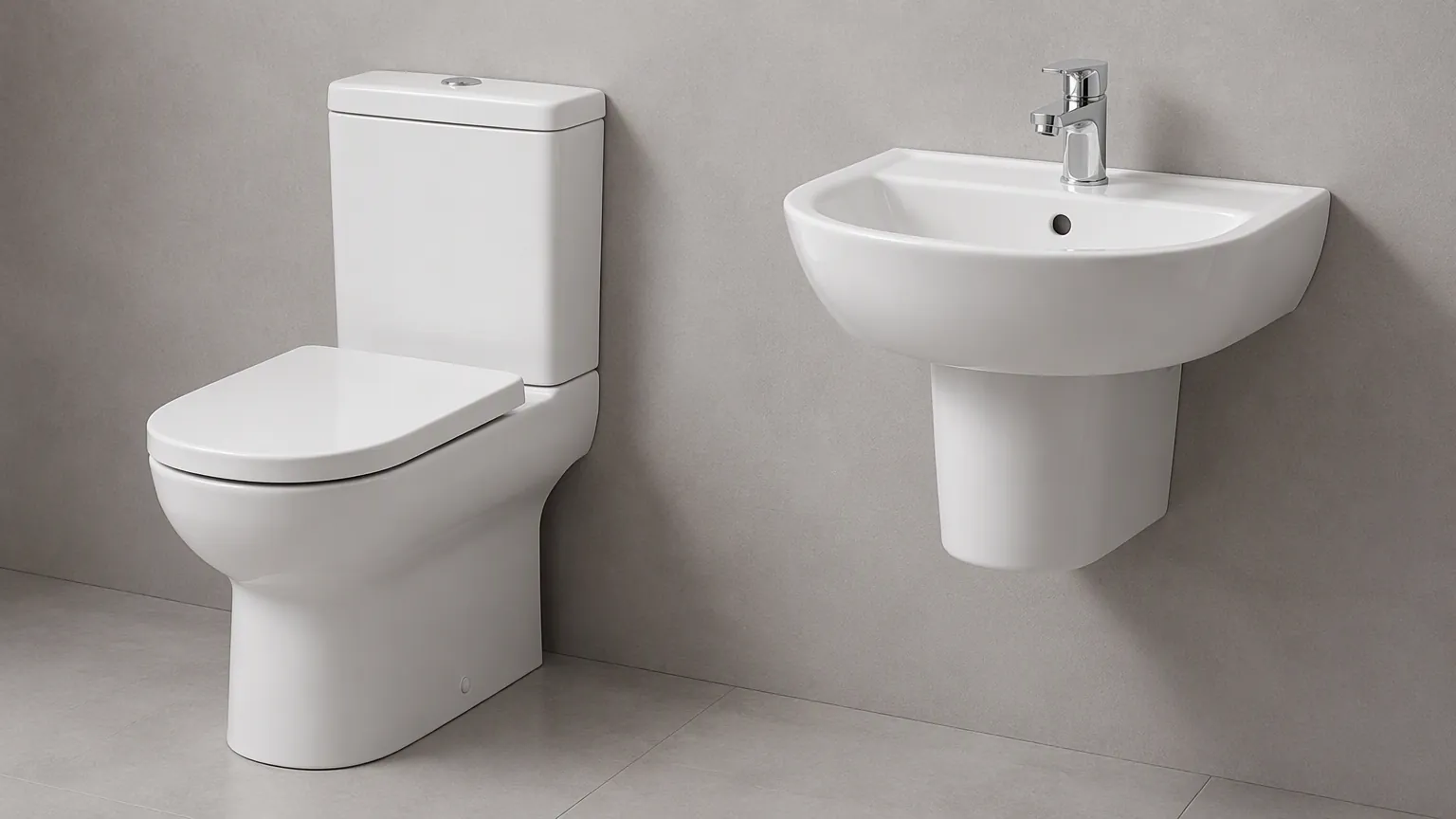
In practice the two drift apart. Mirhad tends to mean the pan, so it drives the trap decision. You still need to know whether the outlet is S-trap or P-trap, and whether it leaves through floor or wall. Twalet tends to mean the whole close coupled assembly, and in some offices it means only the seat. That is why the commode versus western toilet question matters twice here, once in English and once in Arabic.
Ask three questions before you price either word. Is the unit floor mounted or wall hung? Does the outlet leave through the floor or through the wall? Is the specification for a one piece unit or a two piece set? They turn a word into a product code. Every code in the toilet range can then be matched to a drawing.
A fourth question saves the most money. Does the buyer want a soft close seat, and does he want it in the same carton? Seats ship separately on many projects. A missing seat is the most common reason a bathroom fails its own handover list.
Regional habit shifts the answer as well. Saudi teams lean towards the formal mirhad in writing. UAE and Qatar site teams often say twalet out loud, and they type it the same way into a phone order. Kuwaiti documents tend to keep both, so a single line can carry two words for one fitting. None of this is wrong, but none of it is consistent either. What matters is that your reply repeats whichever word the buyer used, so he can see that you read his line rather than a dictionary.
Banyo, Maghsala, Hawd: The Rest of the Wet Room
Bathtubs arrive as بَانْيُو, transliterated banyo, borrowed from French rather than from classical Arabic. It is unambiguous, and it is usually the easiest line on the document. The basin is where the trouble starts.
مَغْسَلَة, transliterated maghsala, means a place for washing. On a hotel drawing it is the hand wash basin. On a staff accommodation drawing it can be the laundry sink, which is deeper, wider, and a completely different product. حَوْض, transliterated hawd, is looser still. It can be a basin, a tub, a trough, or the low ablution basin set outside a prayer room.
One contractor in Doha ordered 120 units of hawd for a labour accommodation block. The supplier shipped countertop basins with chrome wastes and decorative trap covers. What the site wanted was a wall hung basin. It had to be bolted to blockwork at a fixed height, with a bottle trap and no pedestal. Every unit went back into storage. As a result the project paid for two freight movements and three weeks of delay on one ambiguous word.
Shattaf, Sifon, Khallat: The Small Words That Cause Big Claims
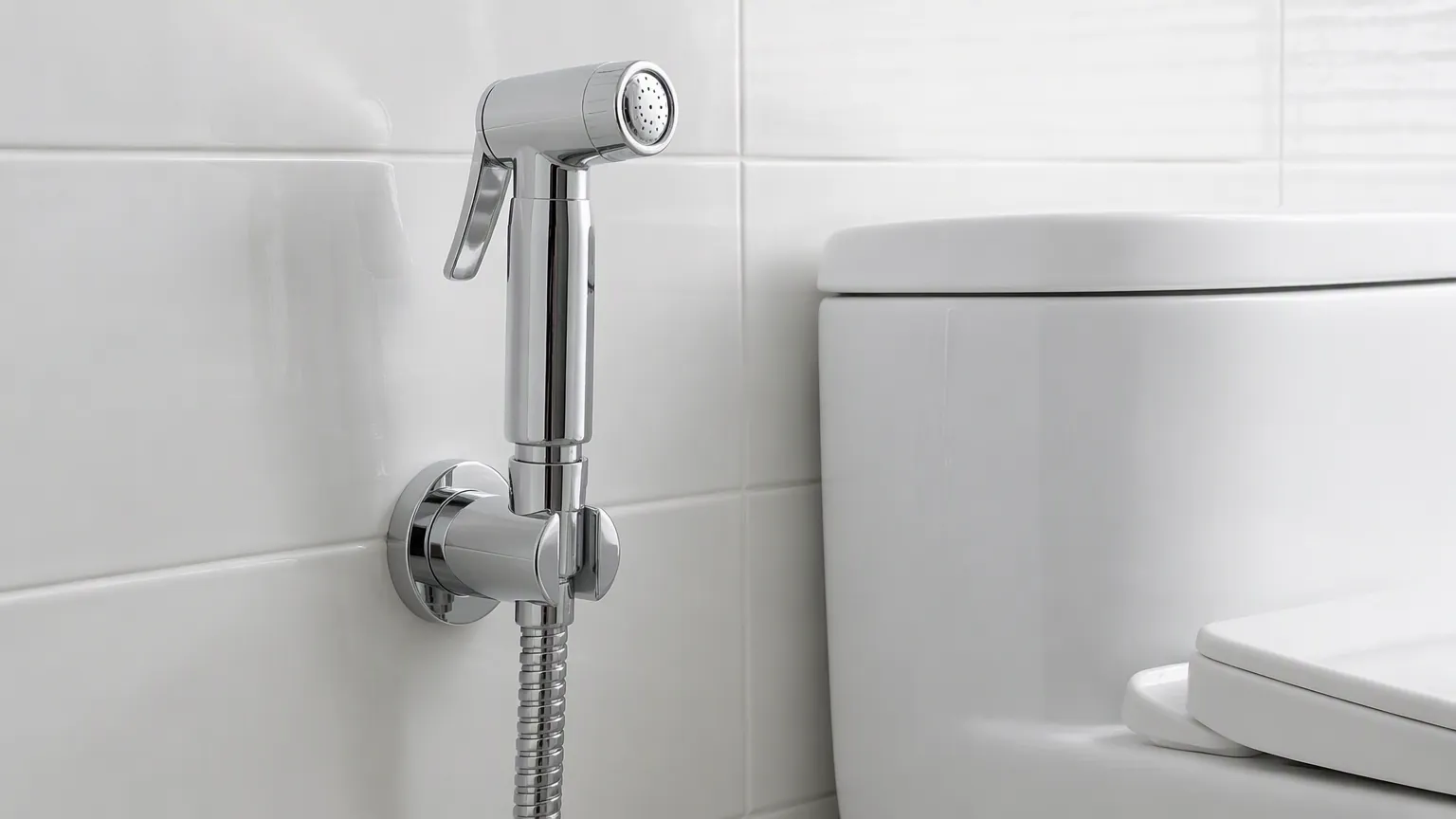
Accessories carry the smallest unit prices and the largest failure rates. شَطَّاف, transliterated shattaf, is the hand held bidet spray, and it is standard in almost every Gulf bathroom. A specification that omits it will still fail inspection. The site team expects the spray, the hose, the wall bracket, and the angle valve behind it. The bidet shower entry describes the fixture well enough to show a buyer a photograph.
سِيفُون, transliterated sifon, comes from siphon, and it is the most overloaded word on the page. It can mean the flush action, the flush tank, or the exposed high level cistern. It can also mean the flush valve inside a concealed system, which is the flush mechanism most hotel specs now assume. A line reading sifon may call for a ceramic cistern, a plastic concealed tank, or nothing more than a valve. Confirm the mounting height and the access panel before you commit.
خَلَّاط, transliterated khallat, is a mixer tap, and دُوش is a shower. Both are safe when they carry a qualifier: خلاط حوض for a basin mixer, or كابينة دوش for a shower enclosure. Two more words round out the drainage. بَلَّاعَة is the floor gully, and تَأْسِيسَات is the rough in that has to sit in the slab before the tiles arrive.
Why “Hamam in Arabic” Splits Into Two Documents
Most Gulf projects carry two descriptions of the same bathroom. The consultant writes the specification in English, often months before anyone orders. The quantity surveyor then writes the bill of quantities, and the site team works from the Arabic version. Hamam in arabic is written into the Arabic bill, while the English document says water closet or sanitary set.
These two papers are produced by different people at different times. Therefore they disagree more often than anyone admits. The English specification may list a wall hung pan with a concealed cistern. The Arabic line still reads sifon, and the local team reads that as an exposed tank. Both drawings are correct in their own language, and only one of them matches the wall that gets built.
Contractors who work across the region learn to read both. They mark the Arabic line, then the English line. They query every mismatch before the first container is packed. In practice this takes an hour per project, and it is the cheapest hour in the schedule.
What the Quantity Column Really Counts
A bill of quantities counts rooms, not cartons. That is the habit that breaks quotations. Six pieces per room turns 320 rooms into close to two thousand packed units, and the packing list ends up longer than the price table. So always restate the number in two ways: rooms first, then total pieces.
Spare parts make the number move again. Many consultants ask for two to five percent extra, written as قِطَع غِيَار, and they expect it inside the same shipment. Five percent of two thousand pieces is a hundred boxes that nobody priced. Therefore ask whether the spare allowance is included, excluded, or a separate line you are expected to add for free.
The unit rate hides the same trap. When a buyer asks for one rate per حمام, he is asking you to average six products into a single figure. That figure will be wrong for every line inside it, and it will be impossible to adjust later when the mix changes. Quote per piece instead, then show a room total at the bottom for his convenience. He gets the comparison he wanted, and you keep every product defensible.
Piece based pricing also protects you when the room count moves. A revised drawing that adds ten rooms adds sixty pieces, not ten. Your quotation absorbs that change without a renegotiation, because every line already carries its own rate.
Four Orders That Went Wrong on One Word
The Riyadh case is the classic one. Hamam was read as a pan, so the container arrived with 320 closets and no basins, mixers, mirrors or sprays. The correction cost a second shipment and five weeks. The fix was cheap in hindsight: one question about piece count per room.
Case two started with a maintenance order in Kuwait. A maintenance order listed 60 maghsala for a school. The supplier quoted countertop basins. What the site needed was the deep utility sink used in art rooms and cleaning stores. It had to be wall mounted, and it had to ship without a decorative trap. Because the two products share a name, the order was re-made and the first batch was written off.
The third case hurt the most. A Jeddah villa project specified sifon for 40 bathrooms, and the quotation covered exposed ceramic cisterns. The architect had drawn a concealed cistern system behind a tiled wall. That system needs a frame, a flush plate, and an access opening the blockwork has to be built around. Once the walls were up, there was no way back.
The fourth case is the quiet one. A hotel in Abu Dhabi passed its plumbing inspection with a full set of closets and basins. Then it failed the final handover, because 180 bathrooms had no shattaf. The spray cost less than two percent of the order. Still it held the retention money for a month. The fix meant opening finished walls to add angle valves.
What to Write Back: A Bilingual Spec Table
| Arabic | Transliteration | Dictionary meaning | On a Gulf bill of quantities | Confirm before quoting |
|---|---|---|---|---|
| حَمَّام | hamam | bathroom, bathhouse | the wet room, often the full fixture set | fixtures per room, not rooms |
| مِرْحَاض | mirhad | lavatory | the closet itself | trap type and mounting |
| تْوَالِيت | twalet | toilet | the assembled unit, sometimes the seat | one piece or two piece |
| بَانْيُو | banyo | bathtub | the tub only | size and material |
| مَغْسَلَة | maghsala | washing place | hand basin or laundry sink | which one, and mounting |
| حَوْض | hawd | basin, trough | basin, tub or ablution trough | dimensions and height |
| شَطَّاف | shattaf | bidet spray | spray, hose, bracket, angle valve | whether the valve is included |
| سِيفُون | sifon | siphon, flush | cistern, tank or flush valve | exposed or concealed |
Send this table back with your quotation. Buyers recognise their own wording instantly, and the act of confirming turns an assumption into a record. Moreover it gives the site team something to check against when the crates open. A table also travels well. The purchasing office forwards it, the site engineer reads it, and nobody translates anything twice.
Where “Hamam in Arabic” Still Fools Buyers
Three traps remain even after the vocabulary is clear. First, the two documents disagree, as the section above explains. Second, product names on certificates have to match the shipment. The Saudi standards organisation runs clearance through the SABER platform. A mismatch between an Arabic description and the declared product can hold a container at port. The Gulf standardisation body issues the regional scheme behind it.
Third, the word travels into maintenance long after handover. A facilities team asking for hamam spare parts may want seat covers, flush valves, or spray hoses. The sourcing route you already use in Saudi Arabia is the fastest way to settle it. So the vocabulary problem does not end at delivery, and it rarely ends with the first container.
How to Confirm “Hamam in Arabic” Before You Quote
Write back in the buyer’s own language, one line at a time. Repeat the Arabic term, add the transliteration, then state the product code you intend to ship. Finish with the quantity per room. A photograph attached to each line removes the last doubt, and it takes ten minutes.
Then confirm four things that decide the shipment. How many pieces sit behind the word? Which mounting and outlet does the rough in allow? Which accessories are inside the scope, and which are extra? Does the order need a certificate carrying the Arabic description? Four questions, one reply, and the container lands complete.
Two more words close the loop. عَيِّنَة means a sample, and مُعْتَمَد means approved. Together they form عينة معتمدة, the approved sample that many Gulf consultants require before bulk production starts. Send one early, keep one on your own shelf, and refer to it whenever a word is disputed later. A photograph of that approved sample settles arguments that a specification sheet cannot.
Mixers deserve the same treatment, because a bathroom line item usually includes them. The faucet range splits by basin, kitchen, bathtub and shower application. Vanity units follow the same pattern. The bathroom vanity range treats the cabinet, the top and the basin as three separate decisions under one heading.
The Verdict: Count Pieces, Not Words
Treat every Arabic fixture word as a package until the buyer confirms the piece count in writing. Hamam in arabic means bathroom, yet on a Gulf project it behaves like a scope of work. Mirhad narrows it to a fixture. Twalet narrows it to an assembly. Shattaf and sifon point to the parts that fail inspection when they go missing.
The cost of confirming is an email. The cost of assuming is a second container and a delayed handover. It is also a client who remembers the error far longer than the discount. So decode the word, then count the pieces, and only then send the price.