
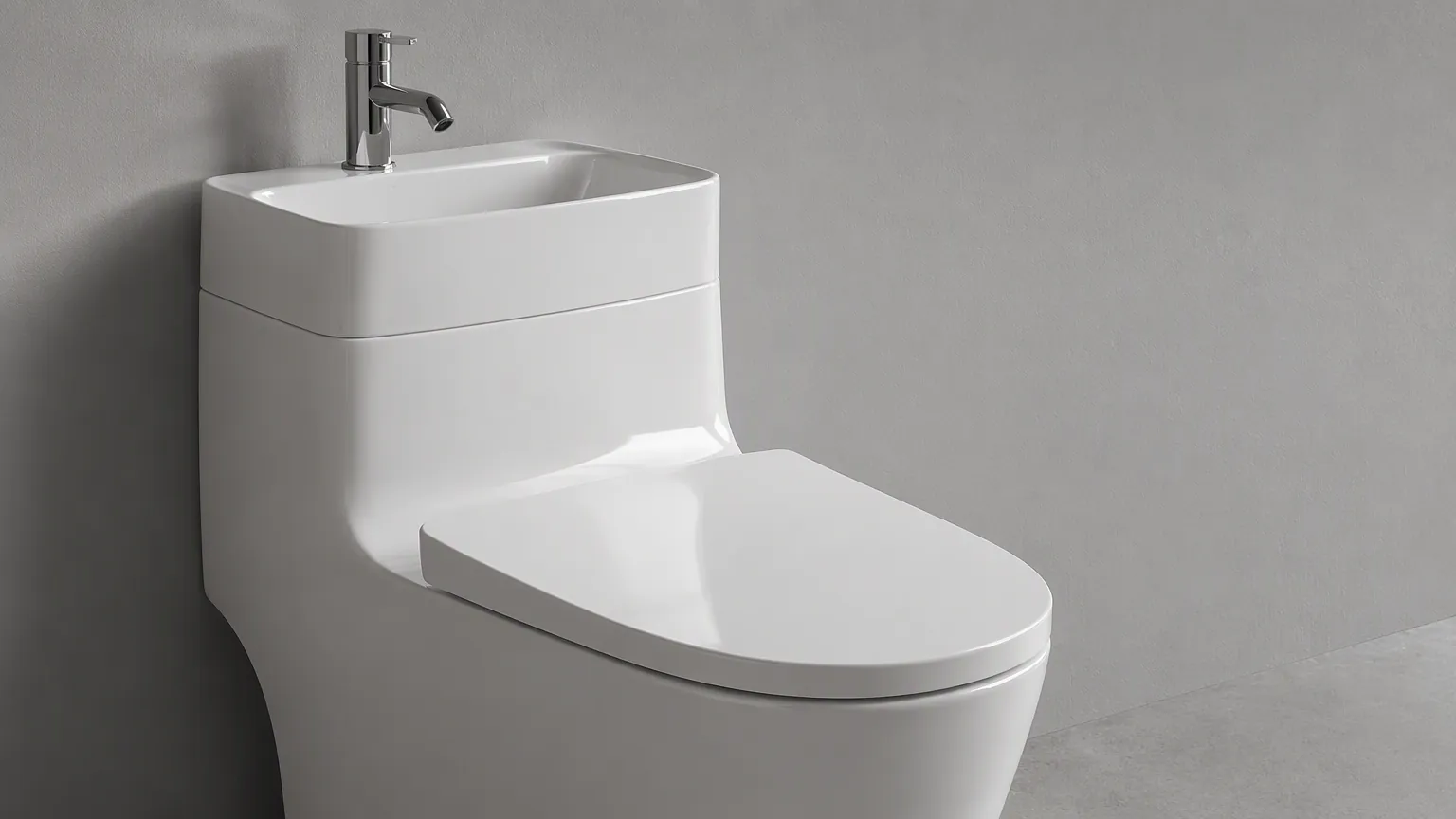
A developer in Jeddah handed our team a studio layout last spring. Forty units, each one 28 square metres, and the brief was blunt. Find room for a hand wash basin without moving a single drain point. The drawing that came back specified a toilet with wash basin on top, and the idea looked clever on paper. One fixture replaced two, and the floor plan gained roughly half a square metre. The marketing team loved the reuse story. Then the defects started. Within three months of handover, eleven units reported a sour smell from the pan. Four reported a dripping tap above the cistern. Two reported water on the floor from a hose that had worked loose behind the pan. Nobody had made a bad product decision. Everybody had made a servicing decision without asking who services it.
What a Toilet With Wash Basin on Top Actually Does
The concept is simple. That simplicity is exactly why it reaches a drawing before anyone checks the maintenance path. In practice a basin sits on the cistern lid. You wash your hands, and the water runs down the basin waste into the cistern. That stored water becomes the next flush. A toilet with wash basin on top does two jobs with one footprint, so it needs a single water supply.
In practice, the assembly adds four things a standard pan does not have. First, a tap and spout sit above the pan, fed by an angle valve and a braided hose. Second, the basin waste discharges into the cistern rather than into a trap and soil pipe. Third, the cistern needs an overflow path, because a basin full of water must not overfill the tank. Fourth, the lid carries the weight of a ceramic basin, a tap, and a person leaning on it.
Therefore the pan stops being a single-purpose ceramic body. It becomes a small water system. Every added function also brings a joint. Every joint above a finished floor is a leak that nobody notices until the ceiling below stains.
The Space Saving Is Real, but Smaller Than It Looks
Nobody should argue with the floor area. For instance a conventional basin needs a pedestal or a vanity, a wall or floor waste, and clearance in front of it. In a studio, that costs you 0.3 to 0.5 square metres. It also costs a second trap and a second supply line. Fold the basin into the pan and you delete all of it. Therefore across forty units, that is real money.
However, the clearance rules do not disappear. A pan still needs clear space beside its centreline and in front of it. Most codes describe those numbers in hundreds of millimetres. The basin occupies the space directly above the cistern. That is precisely where a user leans while washing their hands. So a tall user leans forward, finds the lid closer than expected, and complains. The plan gained area, but the user gained a compromise.
Measure the saving honestly. Subtract the basin footprint, then add back the comfort penalty at the pan. In our experience the net gain on a typical studio is closer to 0.25 square metres.
The Water Saving Claim, Measured
A hand wash uses between half a litre and one litre, depending on the tap and the user. Route that into the cistern and you displace part of the next flush. Over a year in a small household, the maths looks attractive. It is also genuinely attractive where water is expensive or trucked in.
Yet the compliance picture differs. Rating tools assess the fixture, not the reuse behaviour. A WaterSense labelled toilet meets a maximum flush volume under the EPA-Produktprogramm „WaterSense“. That rating comes from the delivered flush, not from what a user pours into the tank. Hotel sustainability submissions normally document rated fixture volumes too. So the reuse story is a marketing asset, not a compliance asset. Never write it into a water-efficiency submission as a guaranteed saving.
| Claim | What the drawing suggests | What the site usually sees |
|---|---|---|
| Space | 0.4–0.5 m² recovered per unit | 0.2–0.3 m² net, after user clearance |
| Water | 20–30% flush water reused | Unmetered; rarely accepted in rating submissions |
| Cost | One fixture instead of two | Extra supply line, angle valve, specialist cistern |
| Servicing | Standard pan service | Basin removal before any cistern work |
Plumbing Access: The First Hidden Cost
Here is where budgets break. On a standard pan, you lift the lid. The fill valve, flush valve, and overflow tube sit in front of you. A plumber replaces a fill valve in minutes, using a generic part from any hardware shop. But on an integrated unit, the basin sits on that lid. So the same job now starts with disconnecting a hose, unbolting the basin, and lifting a sealed ceramic part.
Moreover, the tap and hose add a second failure point above the pan. Braided hoses have a service life, and they are rated for a pressure range. Whoever is on site that week installs them. When one lets go, the water does not land in a basin with a drain. It lands on the floor, runs to the pan base, and finds the nearest unsealed penetration.
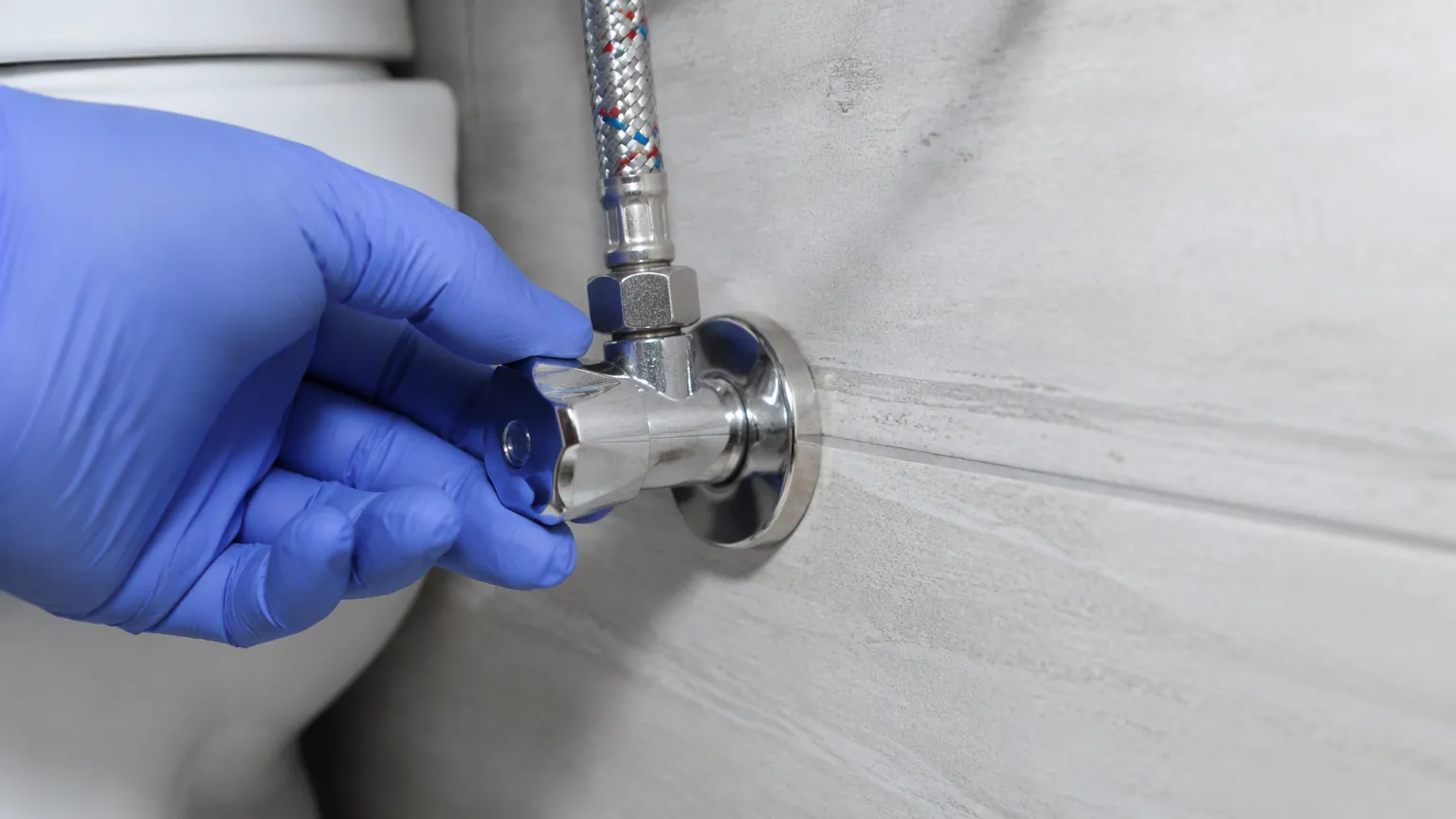
For that reason, specify the supply side as carefully as the ceramic. Insist on a named hose rating and an accessible angle valve. Demand a documented torque check at commissioning. Then write the servicing sequence into the O&M manual, because the maintenance contractor will not guess it.
A Toilet With Wash Basin on Top and the Backflow Question
This issue decides most projects, and most specifications skip it. A toilet with wash basin on top puts a potable outlet above a tank of used water. The tap above the pan is a potable outlet. Below it sits a tank of used water. If the spout ends below the cistern overflow level, you have a cross-connection. If the hose fails while the tank is full and supply pressure drops, you have one too. In plain terms, used water can be drawn back into a drinking water line.
So plumbing codes treat that as a protection problem. The accepted answers are an air gap or a mechanical device. Standards bodies publish performance requirements for those devices. ASSE International covers North America, and the WRAS approval scheme covers the United Kingdom. Some markets treat a cistern of used water as a high fluid category. That pushes the required protection up, and it shortens the list of acceptable products. The International Code Council publishes the model codes that many jurisdictions adopt and amend. The local inspector then applies the local amendment.
So ask before the order, not after the container arrives. Send the assembly drawing to the authority having jurisdiction. Ask whether the spout height above the overflow counts as an air gap there. Then get the answer in writing. The person who signs off the unit is not the person who bought it.
Hygiene: What Sits in the Cistern
After all, hand wash water is not clean water. It carries soap, skin oils, and whatever the user just touched. Store it in a warm, dark tank for hours, and biology does what biology does. Biofilm forms on the tank wall, and the smell reaches the room through the pan.
Still in a domestic studio, that is only a nuisance. In healthcare, food service, or education, it is an audit finding. Public health guidance treats stored water and hard-to-clean surfaces as separate risks. The WHO drinking-water guidance is the reference most auditors cite when they justify a rejection. Healthcare environmental guidance rests on the same principle: remove the surface you cannot clean properly instead of asking staff to clean it harder.
Cleaning access makes it worse. A conventional cistern is a smooth box you can wipe. An integrated unit has a waste outlet, a tap base, and a lid seam. All three sit above the pan. Housekeeping cannot reach them quickly, so they get wiped less often than they should.
Maintenance and Spare Parts Across a Ten-Year Life
Indeed a project is not handed over once. It runs for a decade or more. The fixture that wins the tender is the one still working in year nine. Integrated units concentrate risk in non-standard parts. The tap, the basin waste, the lid seal, and the cistern internals are all model-specific. So a discontinued product strands the whole assembly.
Before approval, ask the supplier four questions. Which parts are proprietary? How long are spares guaranteed? What is the lead time to your market? And what happens if the model is superseded? Then compare the answer with a standard pan, where fill valves and flush valves interchange across brands and cost very little.
Also confirm certification for the destination. IAPMO lists products against North American requirements. SASO covers Saudi projects, and CE or cUPC markings appear elsewhere. A basin above a potable outlet makes certifiers cautious, so expect to supply more documentation than a standard pan needs.
Housekeeping Labour and Guest Complaints
Hotels count minutes. A room attendant has a fixed time per room. Any fixture that adds a wipe surface adds seconds. An integrated unit adds the basin, the tap, the lid seam, and the splash zone around the pan. Two minutes per room across two hundred rooms is a real staffing cost over a year. It never appears in the procurement comparison.
Besides guest perception is harder to quantify and easier to lose. Travellers expect a basin at a normal height, with hot water. A basin above a pan gives them cold water, a forward lean, and splash onto the seat. Then they mention it in a review, and the review is public.
Where a Toilet With Wash Basin on Top Still Wins
Overall a toilet with wash basin on top is not a mistake. It is a special case, and special cases have their place.
- Micro-apartments and studio rentals, where the alternative is no hand wash facility at the pan.
- Retrofits and conversions, where a new waste point would mean breaking a slab or a waterproofing layer.
- Temporary and site accommodation, replaced on a known short cycle.
- Water-scarce locations with metered supply, where reuse behaviour is a genuine operating saving.
- Projects with an owner who accepted the trade-offs in writing, and an inspector who confirmed the assembly.
In each case the decision holds because someone with authority accepted the specific risk. That is the standard. Without it, the specifying contractor owns the consequence alone.
When to Walk Away From a Toilet With Wash Basin on Top
Now the other side of the ledger. Decline the specification, or offer an alternative in writing, when any of these apply.
- Healthcare, food service, education, or childcare, where stored used water invites audit findings.
- Hotels and serviced apartments, where guest expectation, hot water, and housekeeping minutes all matter.
- Markets with strict cross-connection enforcement, including most of the United Kingdom, Australia, and much of North America.
- Projects without a spare parts channel, where a proprietary tap failure in year six means replacing the fixture.
- Tenders that price only the ceramic, because the supply line, valve, and servicing labour carry the real cost.
The Specification Checklist Before You Approve One
If the project still calls for the format, put these items on the submittal. Each one closes a gap that otherwise becomes a defect after handover.
| Item | What to require | Why it matters |
|---|---|---|
| Backflow protection | Named device type, standard, and certificate number | Decides whether the inspector passes the unit |
| Spout air gap | Dimensioned height above the cistern overflow | The cheapest protection, and the easiest to get wrong |
| Supply hose | Pressure rating, length, and material stated | The most common leak point on site |
| Angle valve | Accessible and isolatable without moving the pan | Service isolation without dismantling the basin |
| Cistern access | Basin removable without breaking seals, or a side panel | Turns a two-hour job back into twenty minutes |
| Overflow capacity | Sized for a full basin discharge | Prevents an overfilled tank and a wet floor |
| Spare parts | Written spares guarantee and lead time | Protects year six, not just day one |
| Certification | SASO, CE, cUPC, or WaterMark for the market | Customs clearance and project sign-off |
| Cleaning access | Housekeeping sequence written into the O&M manual | Surfaces nobody can reach never get cleaned |
Alternatives to a Toilet With Wash Basin on Top
In fact most briefs that lead here are really asking for a basin in a room with no space. Several answers beat the integrated unit on risk. A corner basin at 350 to 400 millimetres uses dead corner area, and it needs only one waste and one supply. Wall-hung basins do the same: a 300 millimetre projecting model keeps the floor clear and reads as intentional design. A semi-pedestal basin beside the pan shares the existing waste run where the rough-in allows it. Where the wall is unavailable, a narrow basin on a slim vanity still costs less over ten years than a proprietary cistern with no spares.
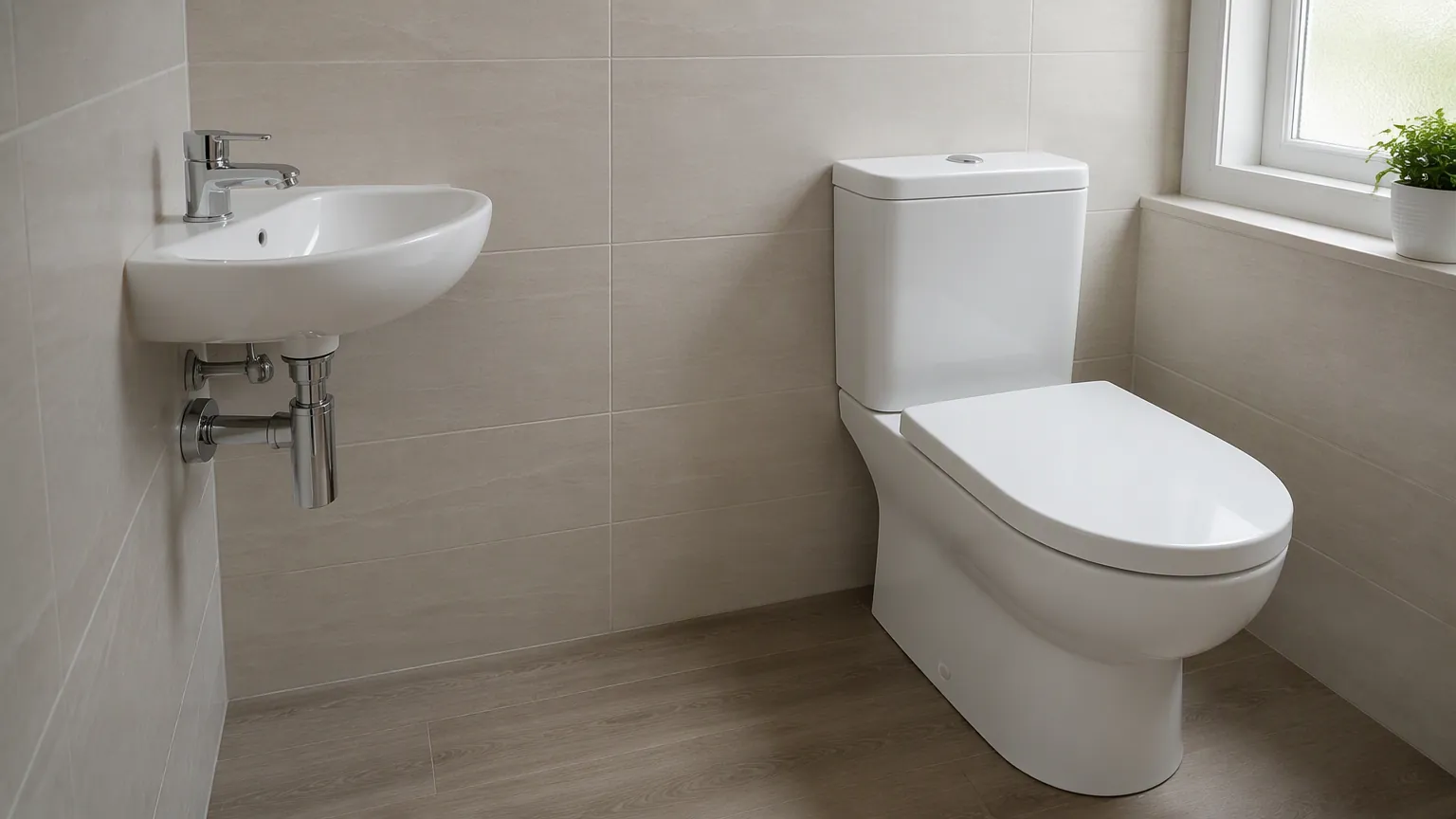
Our team has covered basin formats for tight rooms in the hand wash basin buying guide, and commercial heights and materials in the commercial hand wash basin specification guide. Both explain the clearance numbers that decide whether a separate basin fits at all. The modern one-piece versions appear on the toilet and basin combination unit page. Pair that choice with the right trap decision in our S-trap versus P-trap comparison, and confirm the rough-in against the porcelain toilet dimensions guide.
FAQ
Does the reused water reduce the flush volume?
Specifically it displaces part of it. However, the saving depends on user behaviour, and no rating programme accepts it as a rated flush volume.
Can the tap deliver hot water?
Only with a second supply and, in most layouts, a small heater nearby. That also adds cost and another joint above the pan, so most projects stay on cold.
How often does the cistern need cleaning?
More often than a standard tank, because hand wash water carries soap and organics. Build the task into the housekeeping schedule, or the smell arrives first.
What fails first?
In our experience, the tap and the hose, not the ceramic. Both sit above a finished floor, which is the worst place for a slow leak.
Is it ever cheaper overall?
Yes, when a new waste point would need structural work. The saving sits in the building, not in the fixture.
Das Urteil
A toilet with wash basin on top buys floor area and a water story. It pays for both in servicing access, certification effort, and user comfort. Those costs stay small on day one, and they grow large by year six. So treat the format as an exception the owner approves in writing, never as the default answer to a tight room.
Where the room cannot take a separate basin, specify the supply side like a plumber. Specify the backflow device like an inspector. Specify the spares like a facilities manager. Then document all three. Where the room can take a narrow basin at a normal height, take it, and spend the risk budget somewhere else. Our team helps contractors compare basin and pan formats against rough-in limits, certification markets, and spares availability. Send the drawing through the contact page and we will mark up what we would change.
Literaturverzeichnis
- U.S. Environmental Protection Agency. (2026). *WaterSense labelled products*. Retrieved from https://www.epa.gov/watersense/products
- World Health Organization. (2026). *Drinking-water*. Retrieved from https://www.who.int/news-room/fact-sheets/detail/drinking-water
- ASSE International. (2026). *Plumbing product performance standards*. Retrieved from https://www.asse-plumbing.org/
- WRAS. (2026). *Water Regulations Advisory Scheme approvals*. Retrieved from https://www.wras.co.uk/
- International Code Council. (2026). *Codes and standards*. Retrieved from https://www.iccsafe.org/
- IAPMO. (2026). *Plumbing and mechanical product certification*. Retrieved from https://www.iapmo.org/